White Tower
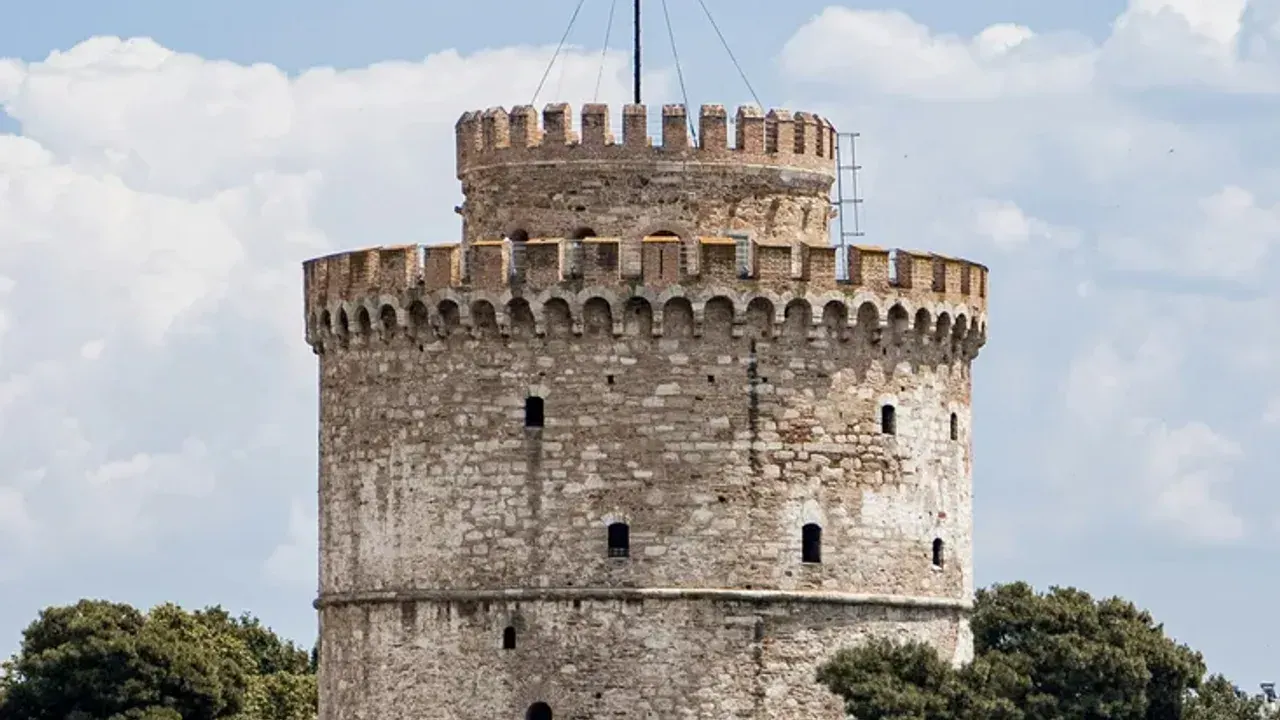
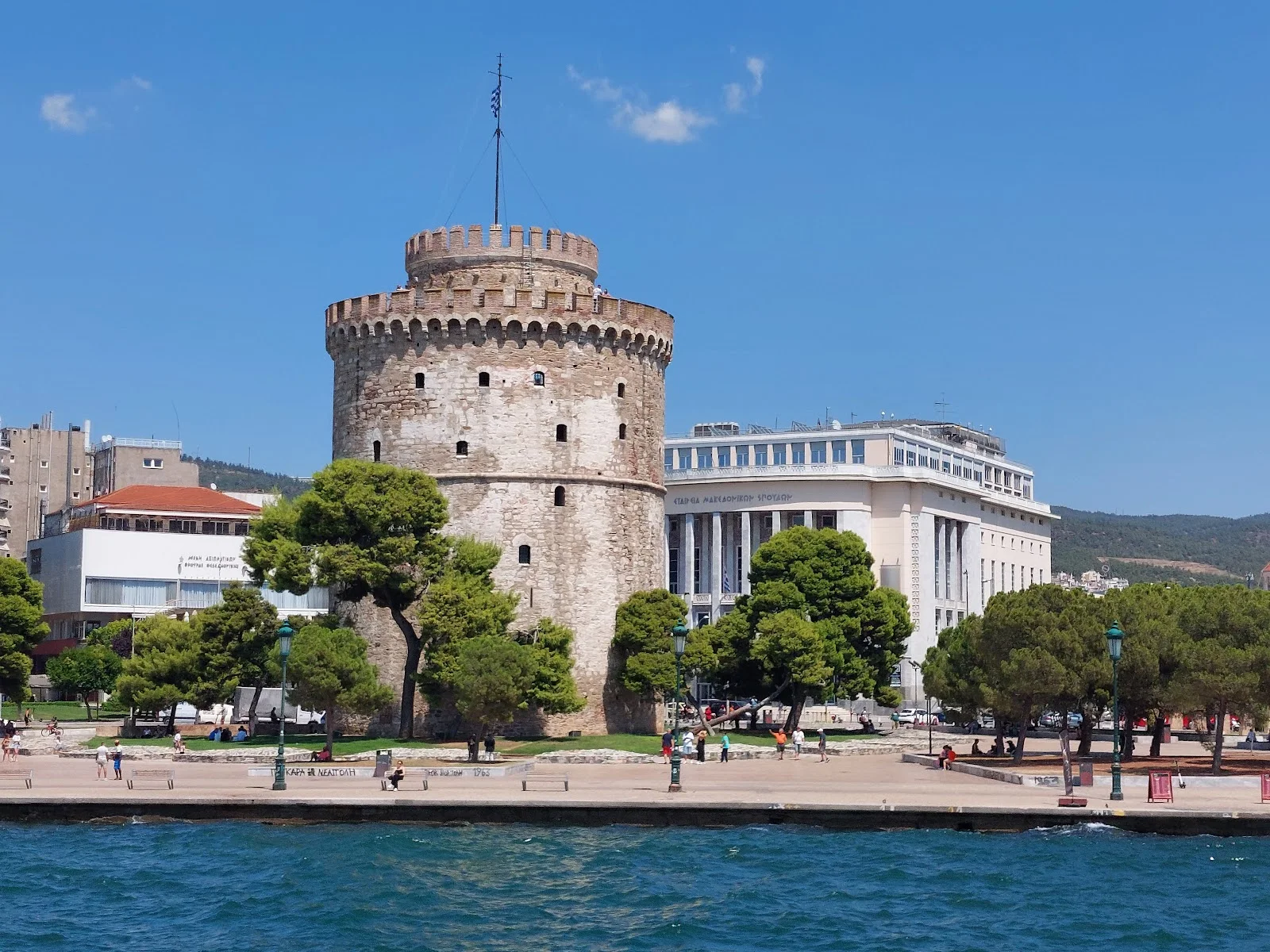
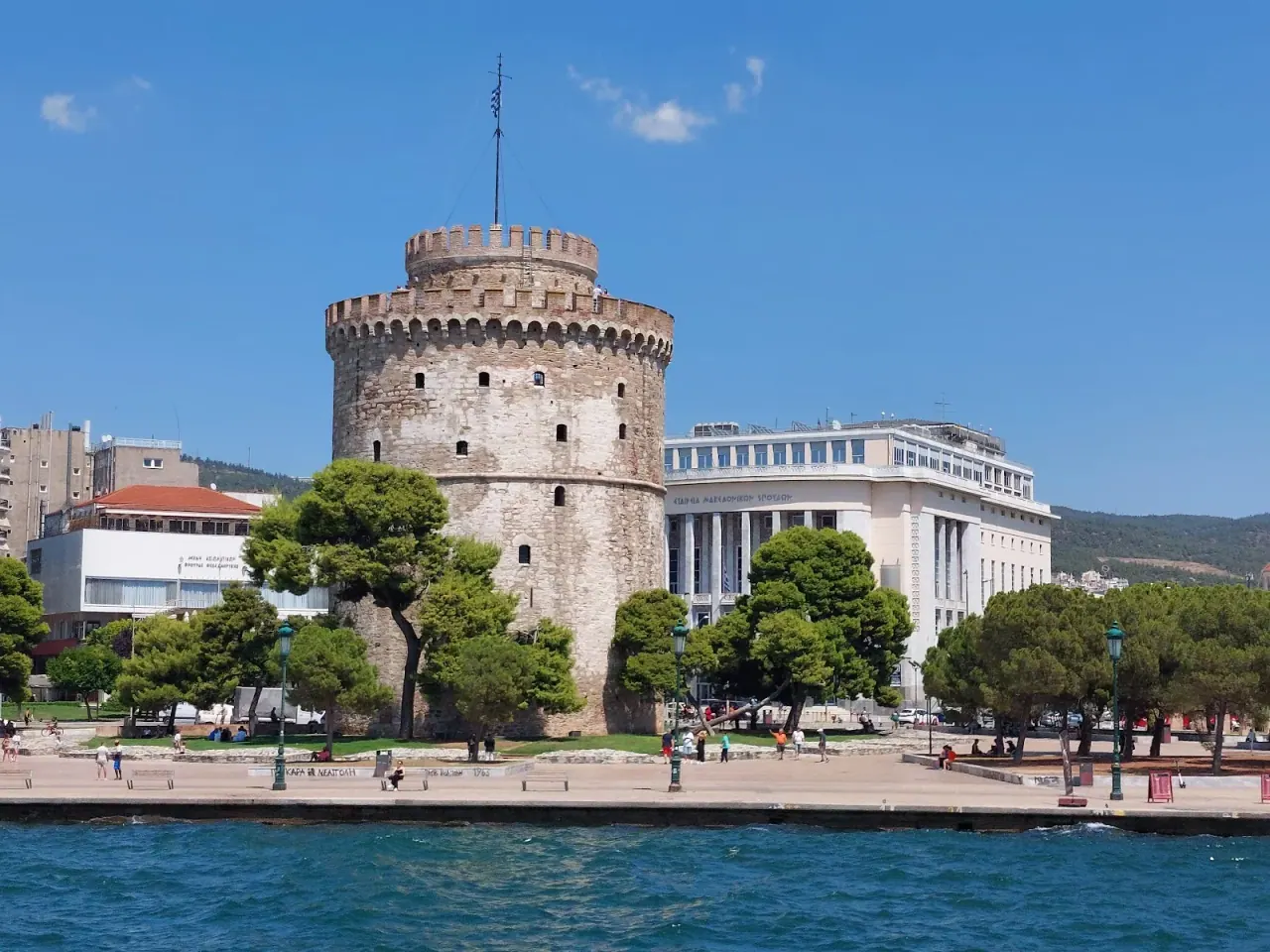
The White Tower is the emblem of Thessaloniki — a 34-metre cylindrical bastion on the waterfront that now holds a museum of the city's history across its spiralling six floors.

35 römische Monumente, byzantinische Kirchen, Türme und Museen in ganz Thessaloniki — von der Rotunde aus dem 4. Jahrhundert bis zur osmanischen Oberstadt, fast alles zu Fuß erreichbar.
Thessaloniki trägt 2.300 Jahre in Schichten — römische Monumente, byzantinische Kirchen und osmanische Überreste, fast alle innerhalb eines 20-minütigen Spaziergangs vom Zentrum. Fünfzehn seiner frühchristlichen und byzantinischen Monumente sind gemeinsam in die UNESCO-Welterbeliste (1988) eingetragen, die größte Konzentration byzantinischer Welterbestätten in einer griechischen Stadt. Zum ersten Mal hier? Beginnen Sie mit diesen dreien.
Eine 1.700 Jahre alte römische Kuppel, ausgekleidet mit Goldmosaiken — die eine Sehenswürdigkeit, die kein erster Besuch auslassen sollte.
Nicht verpassenDas Wahrzeichen der Stadt am Meer, mit einem spiralförmigen Museum und Dachterrassenblick über den Golf.
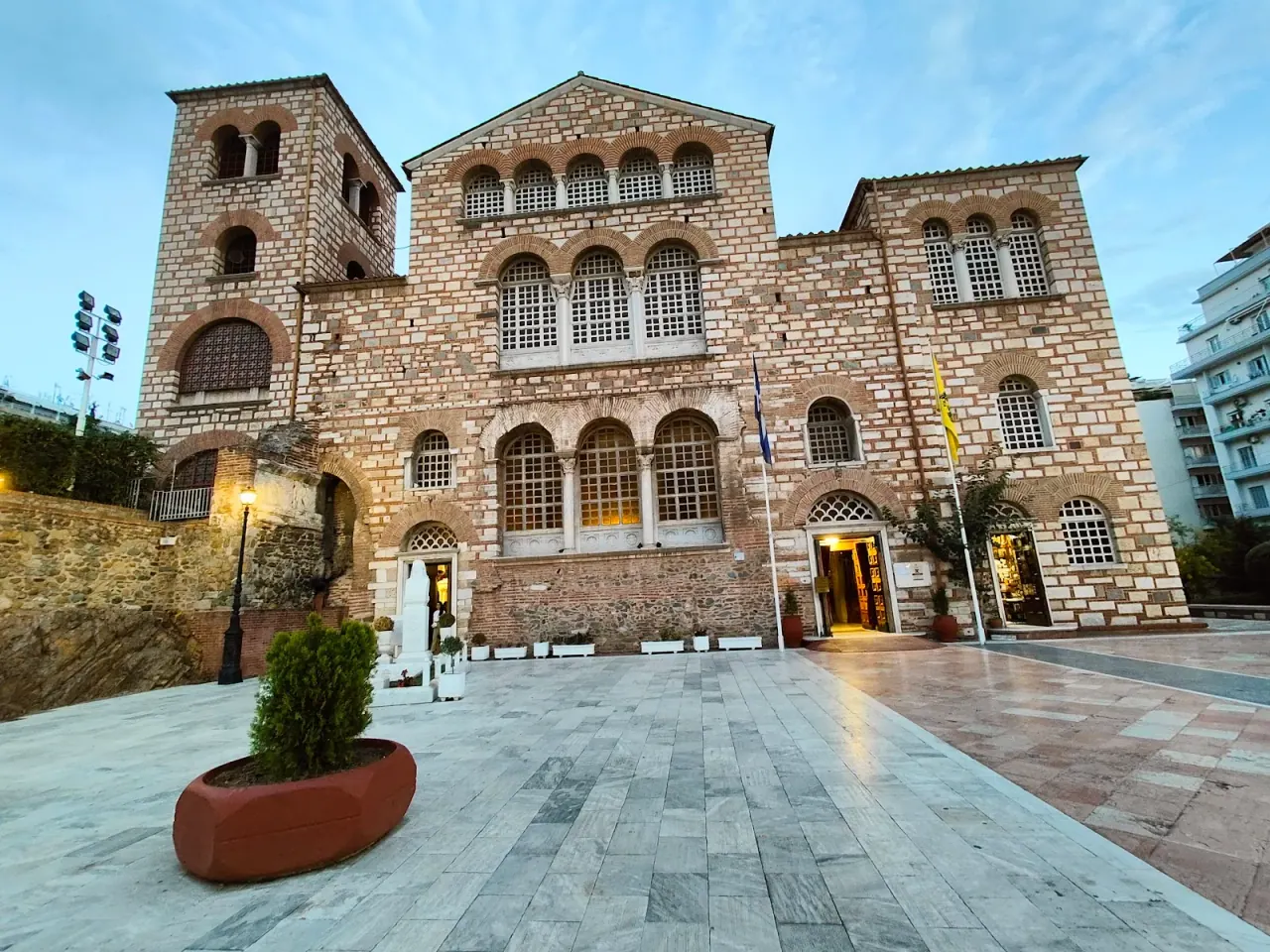
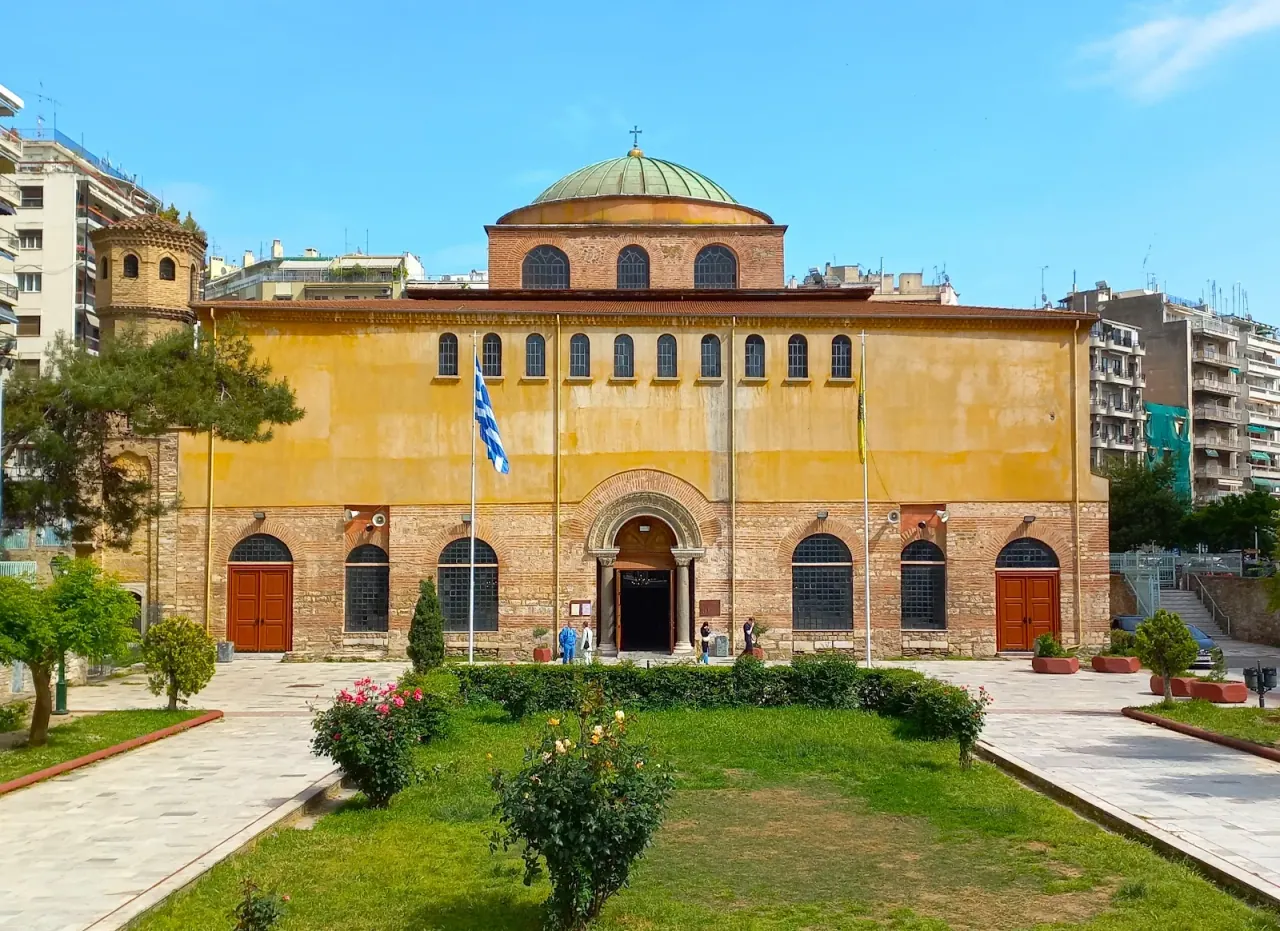
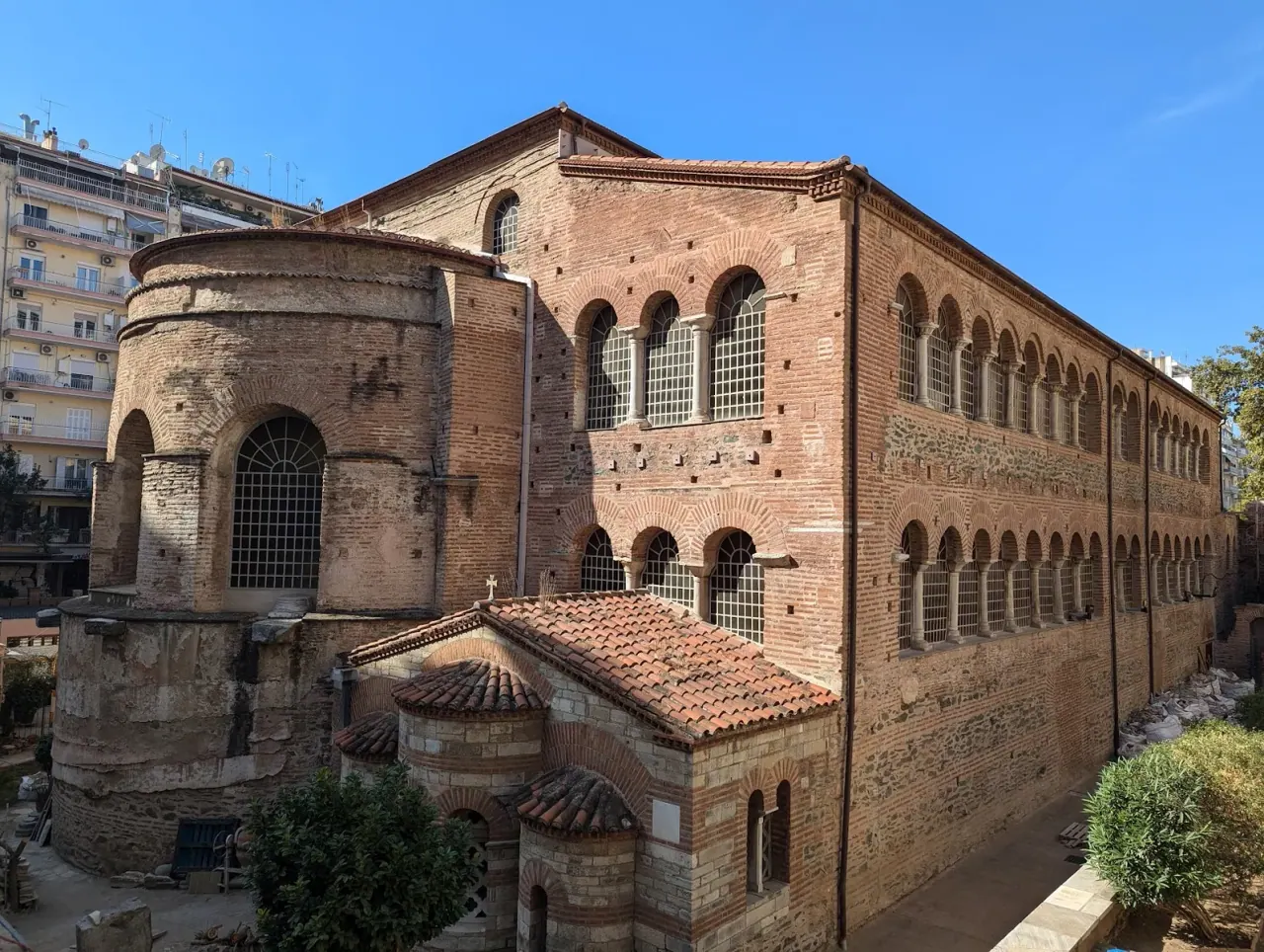
Nicht verpassenDie weitläufige Basilika des Schutzheiligen der Stadt, erbaut über den römischen Bädern, wo er das Martyrium erlitt.
Tickets: ein Kombiticket für €15 (3 Tage gültig) deckt den Weißen Turm, die Rotunde, das Archäologische Museum und das Museum für Byzantinische Kultur ab. Staatliche Stätten und Museen sind auch an einigen Tagen im Jahr kostenlos — jeden ersten und dritten Sonntag von November bis März, plus 6. März, 18. April, 18. Mai und das letzte Wochenende im September.
Der Weiße Turm, die byzantinischen Land- und Seemauern, und das Heptapyrgion auf dem Hügel — die Verteidigungsanlagen, die Thessaloniki sechzehn Jahrhunderte lang umschlossen.

The White Tower is the emblem of Thessaloniki — a 34-metre cylindrical bastion on the waterfront that now holds a museum of the city's history across its spiralling six floors.

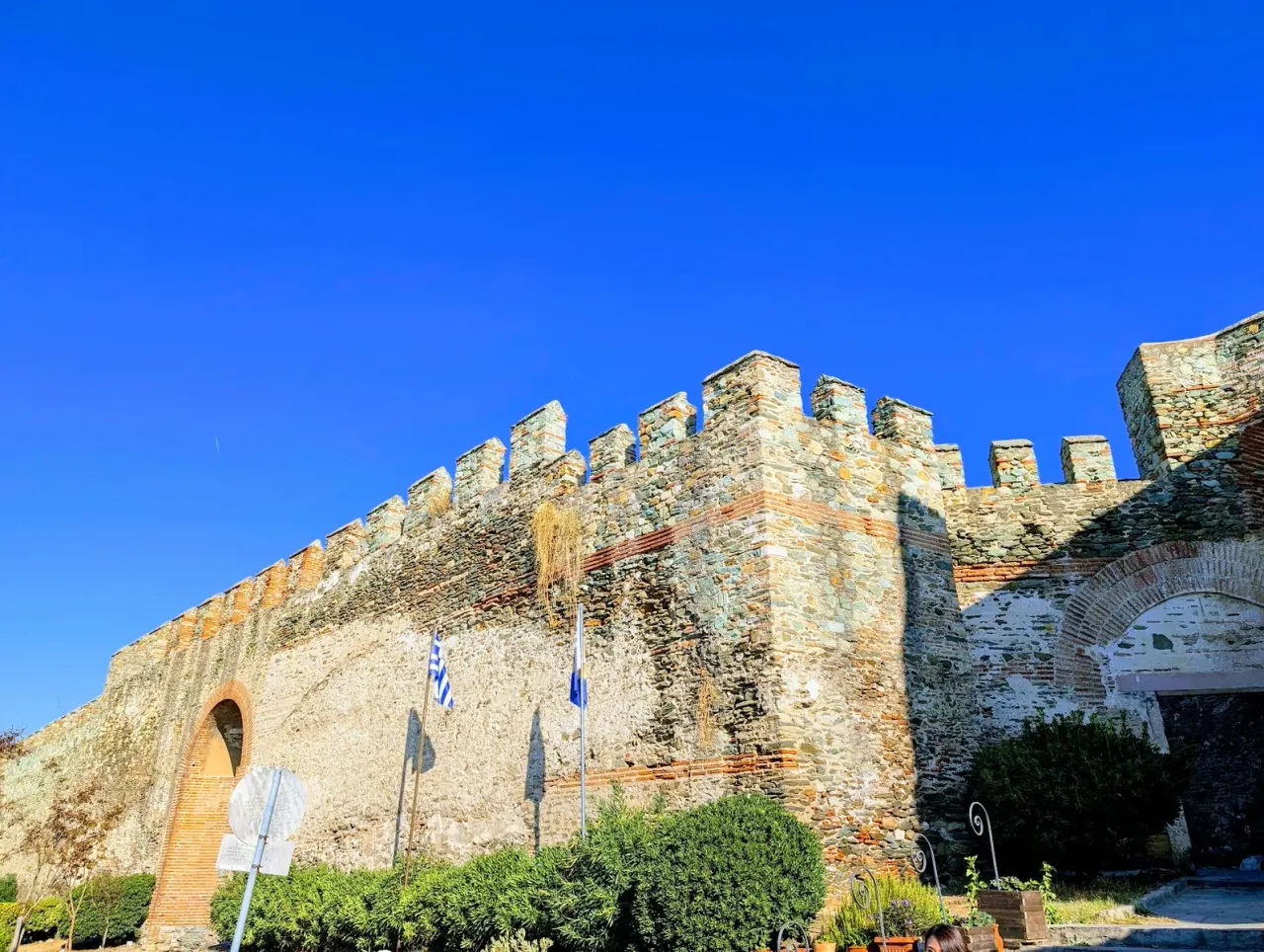
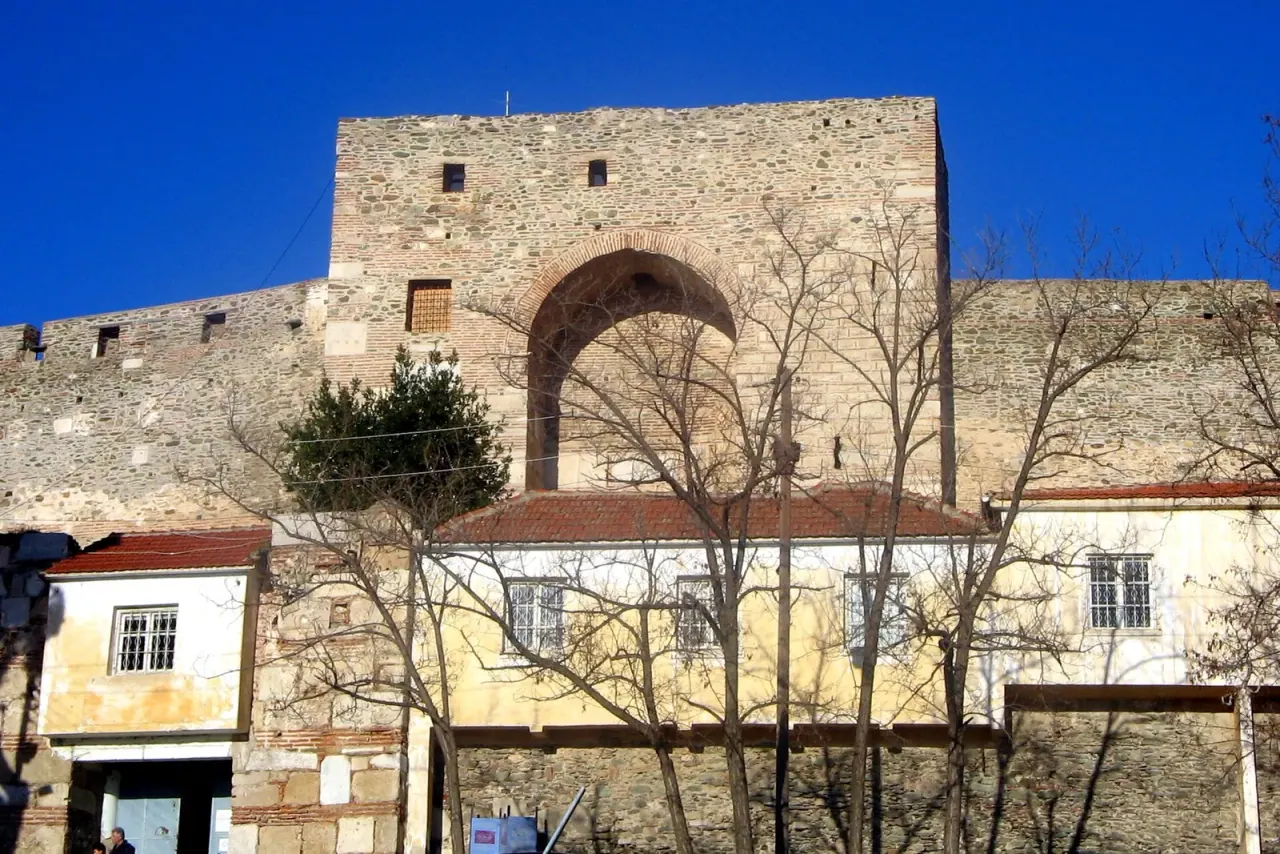
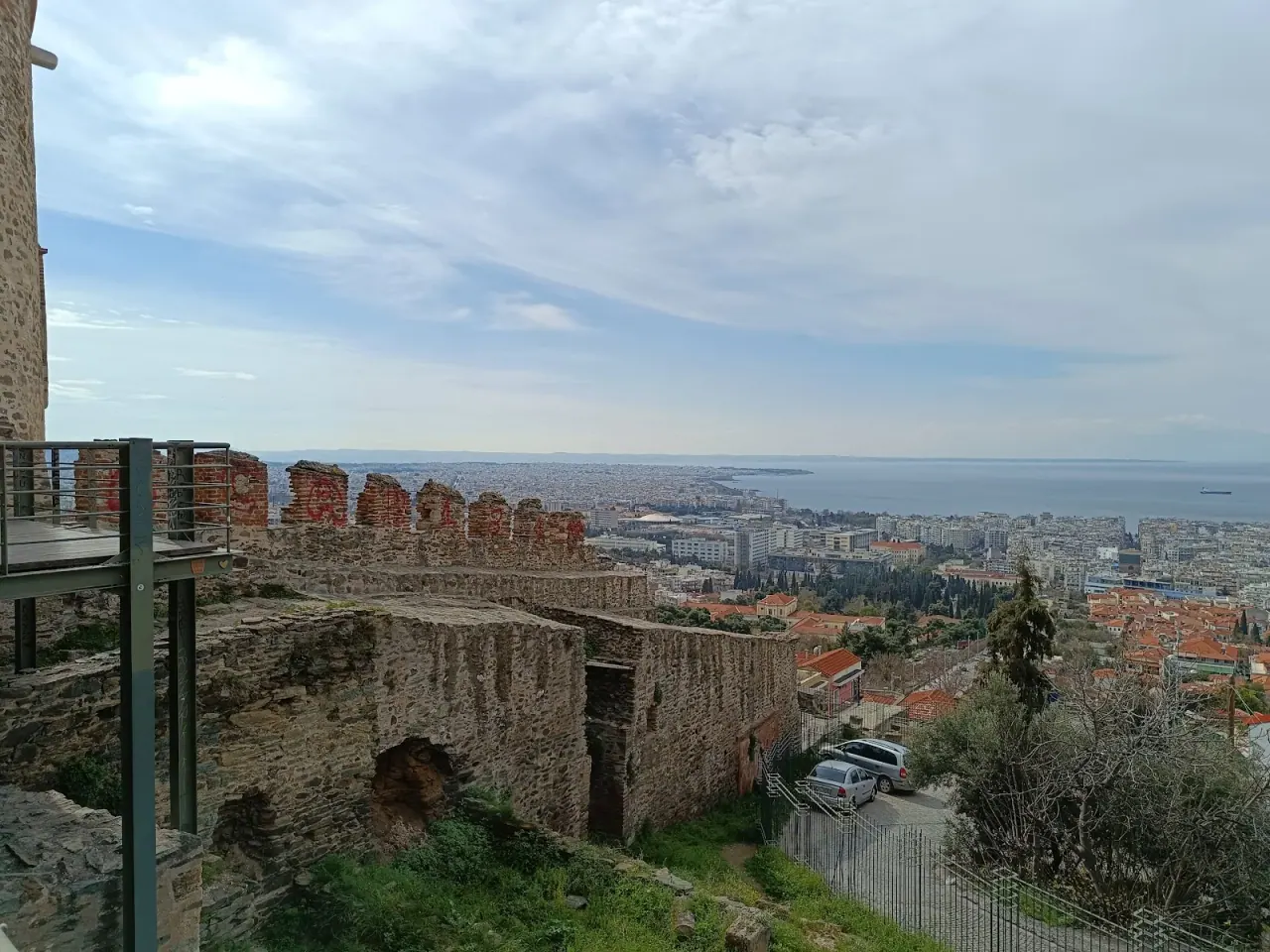
Long stretches of the city's late-Roman and Byzantine fortifications still stand, climbing the hillside around Ano Poli and offering some of the finest views in Thessaloniki. The walls are among the UNESCO-listed Paleochristian and Byzantine Monuments of Thessaloniki.

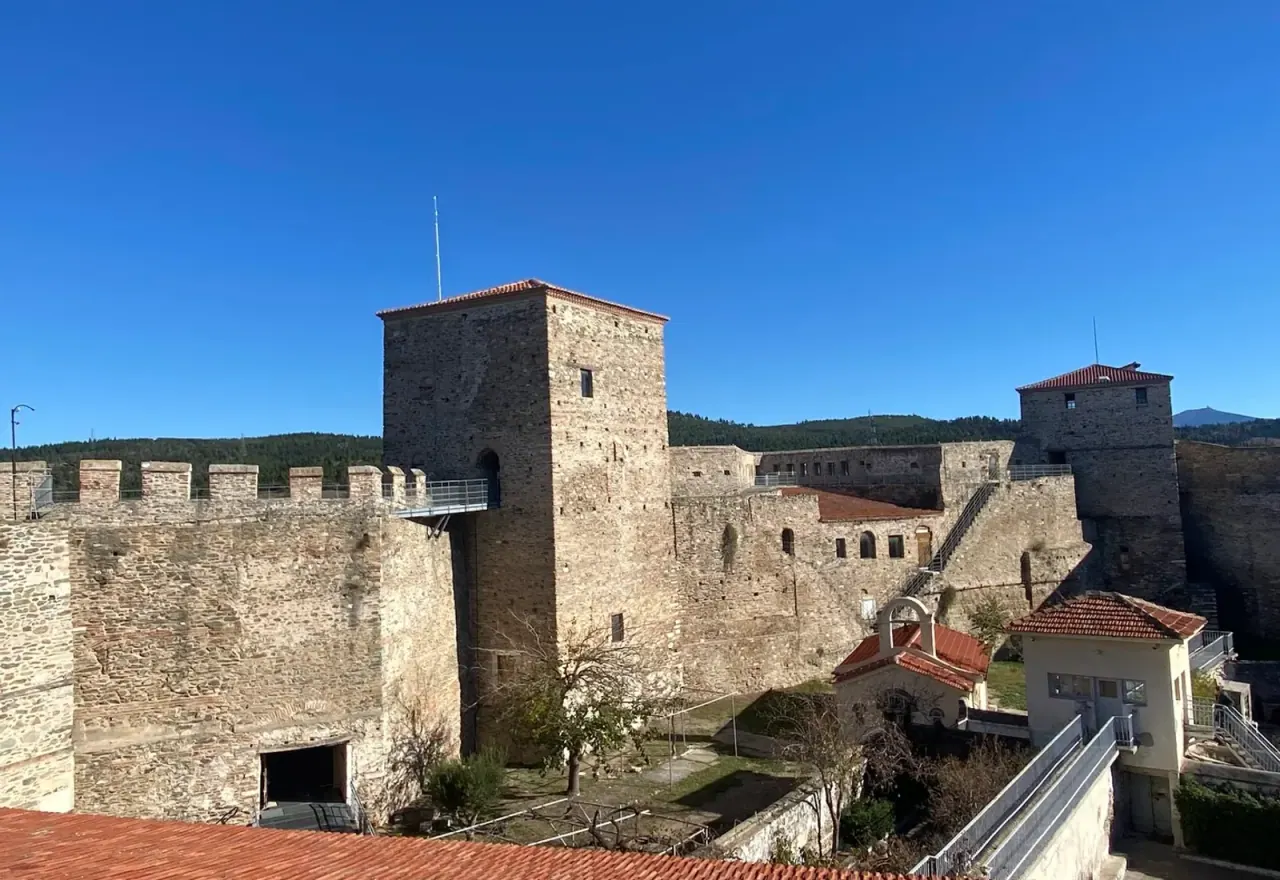
The 'Fortress of Seven Towers' — which despite its name has ten — crowns the acropolis of Thessaloniki, a walled citadel that guarded the city's highest ground before spending nearly a century, from the 1890s to 1989, as its most feared prison. It held political prisoners through the turbulent 20th century and lives on in old rebetiko songs by its Ottoman name, Yedi Kule.

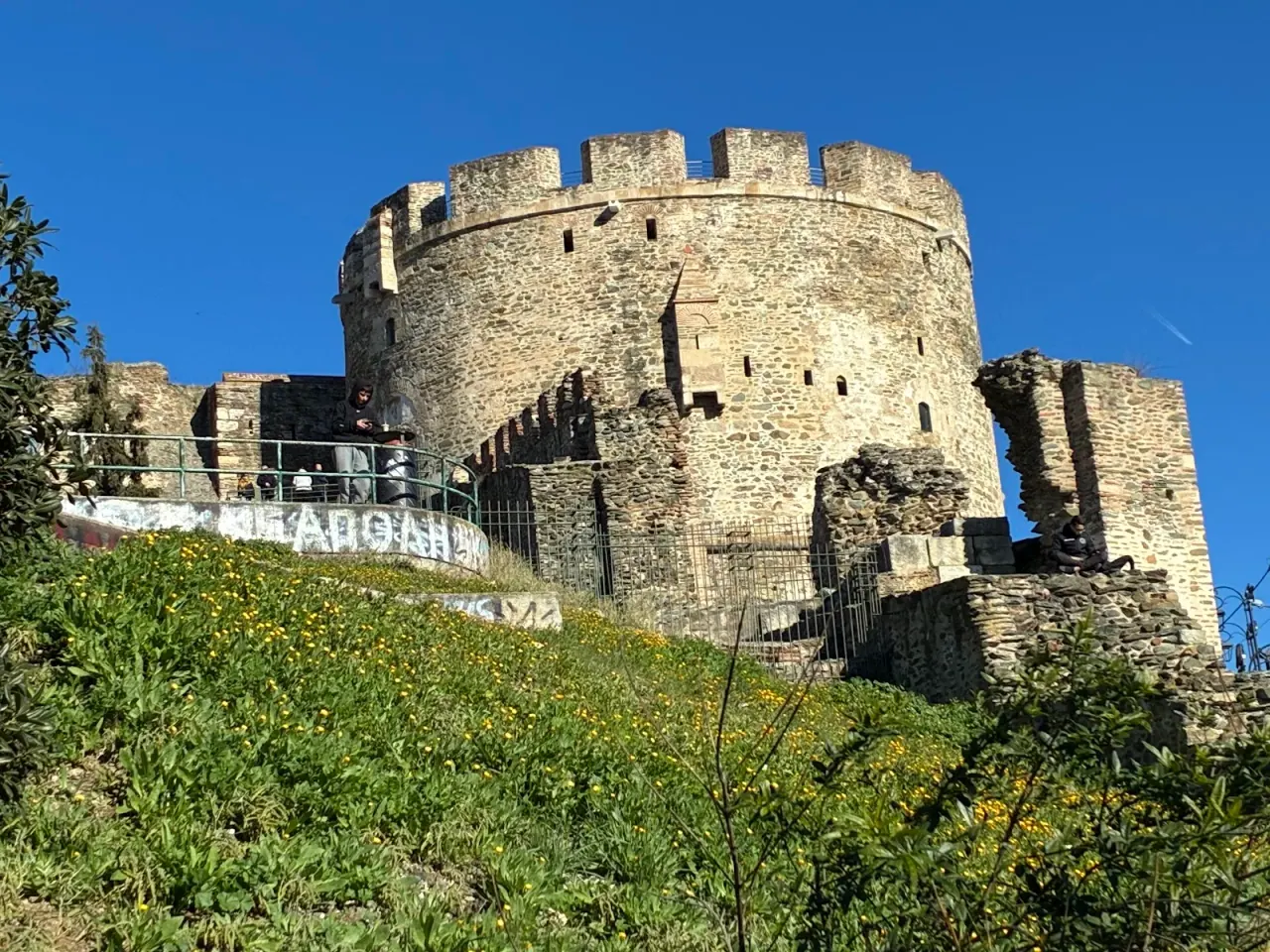
A massive cylindrical artillery tower at the corner of the city walls — built by the Ottomans late in the 15th century to mount cannon after their conquest, and known in Ottoman times as the Chain Tower. The Trigonion is the classic viewpoint over Thessaloniki's rooftops and the sweep of the Thermaic Gulf.
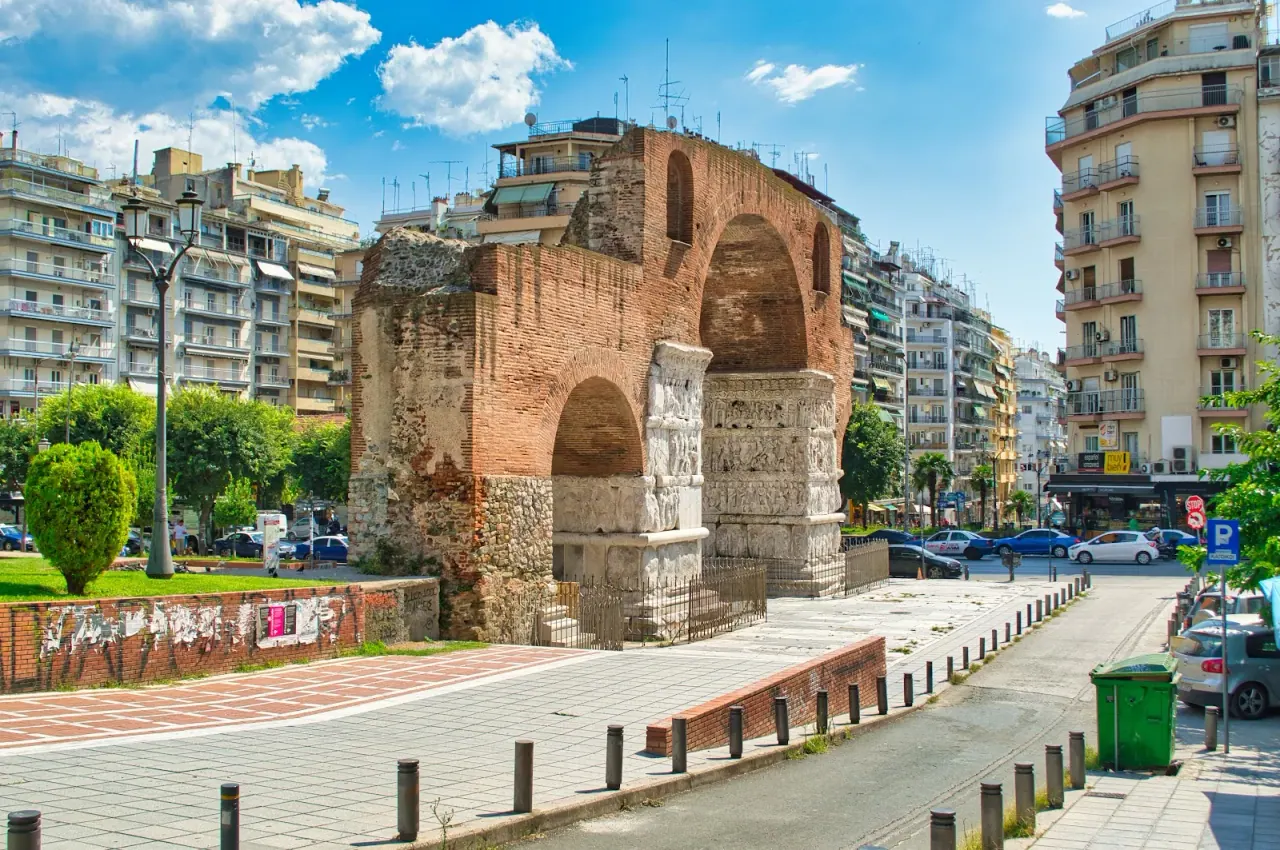
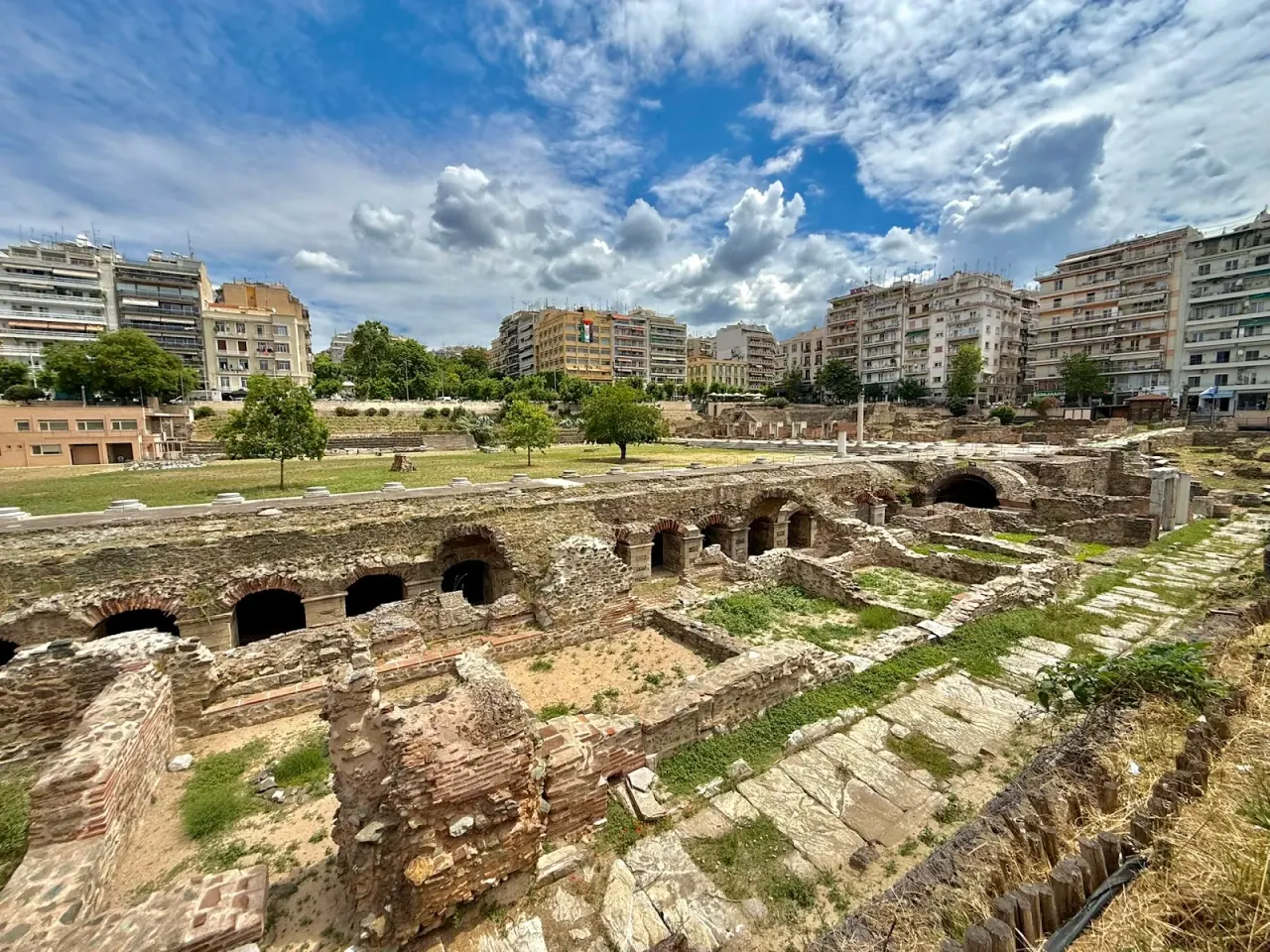
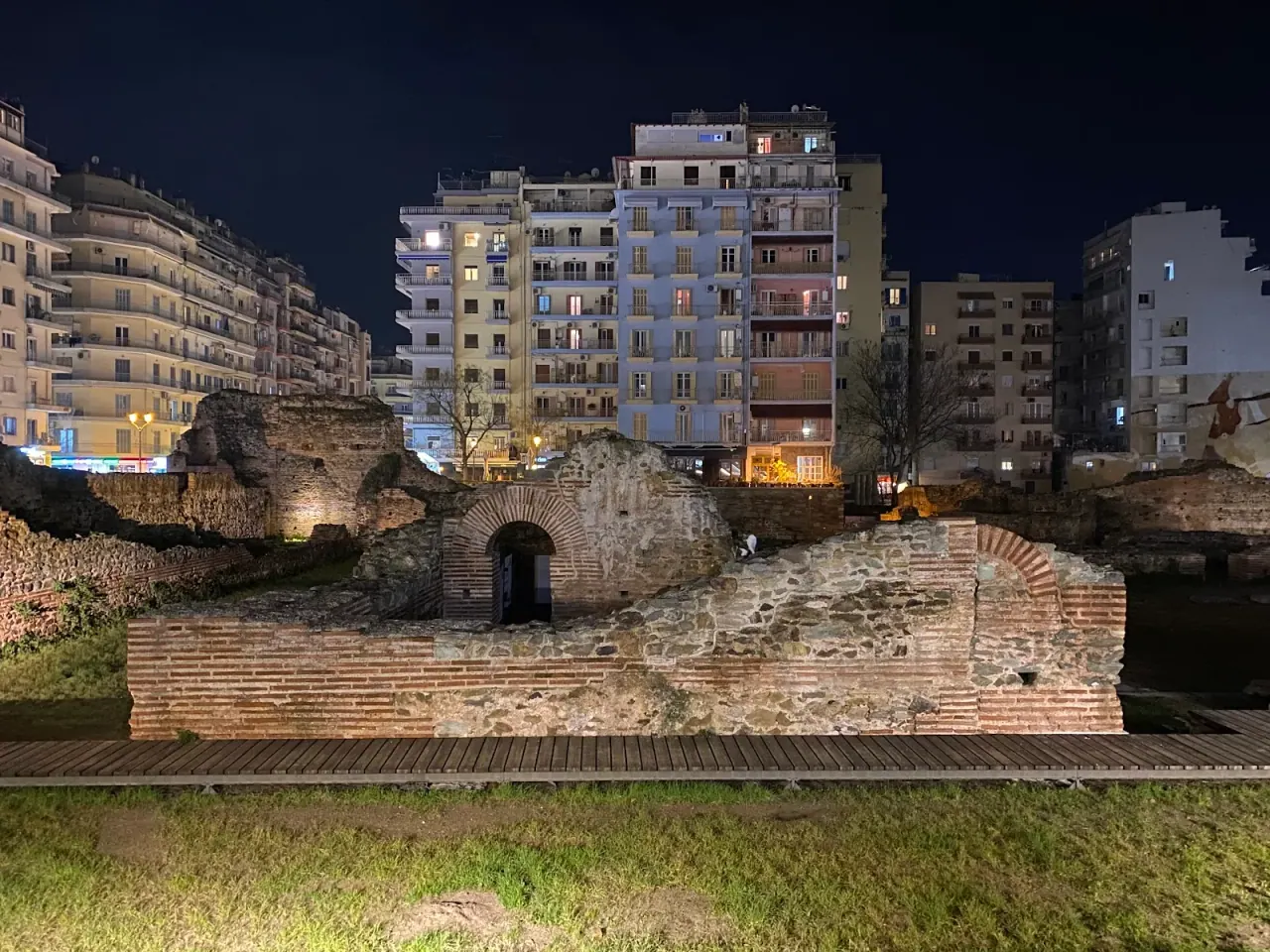
Kaiser Galerius hinterließ seine Spuren in der ganzen Stadt: einen Triumphbogen, eine gewölbte Rotunde, einen weitläufigen Palast und das Forum in seinem Herzen.

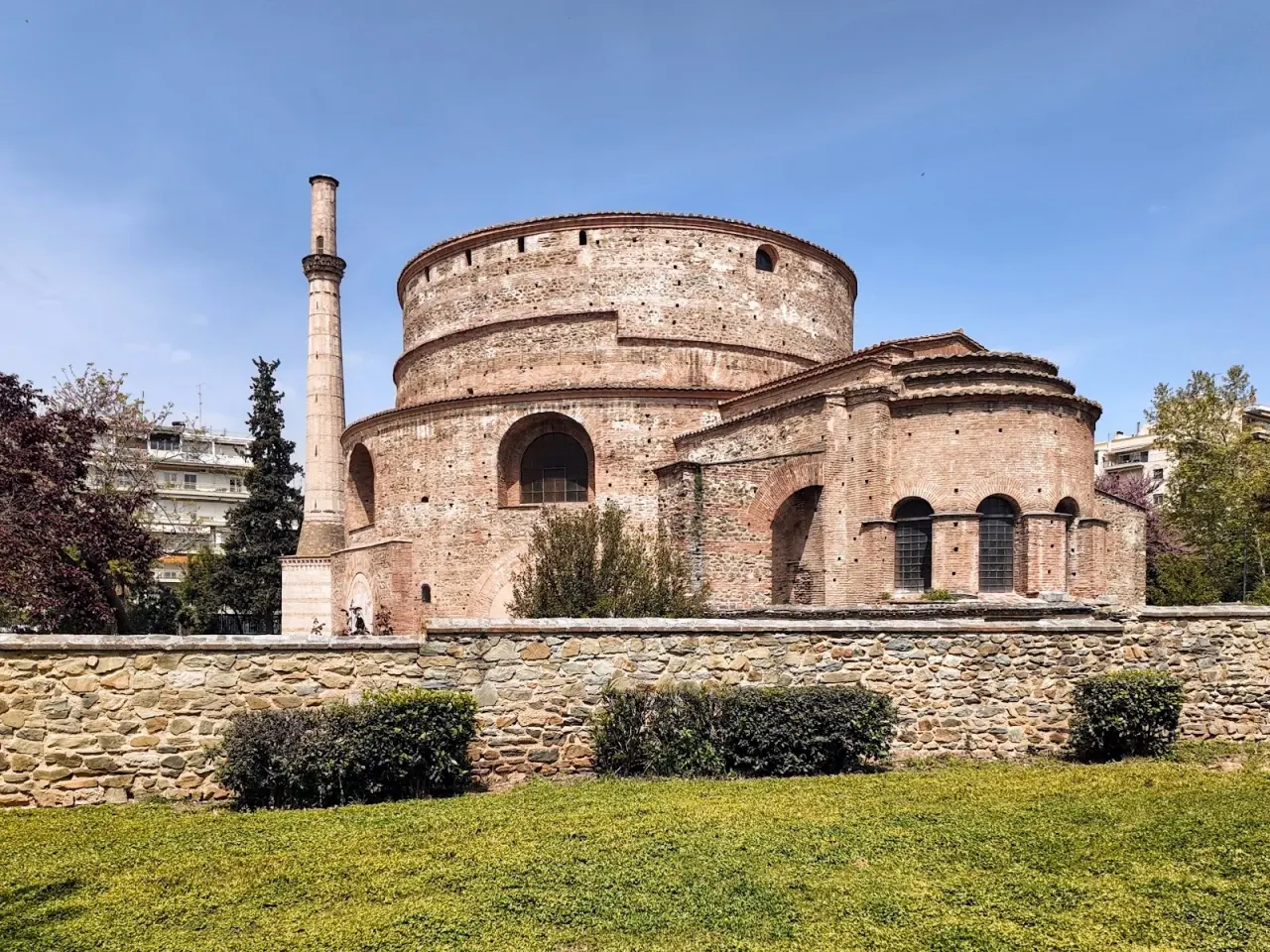
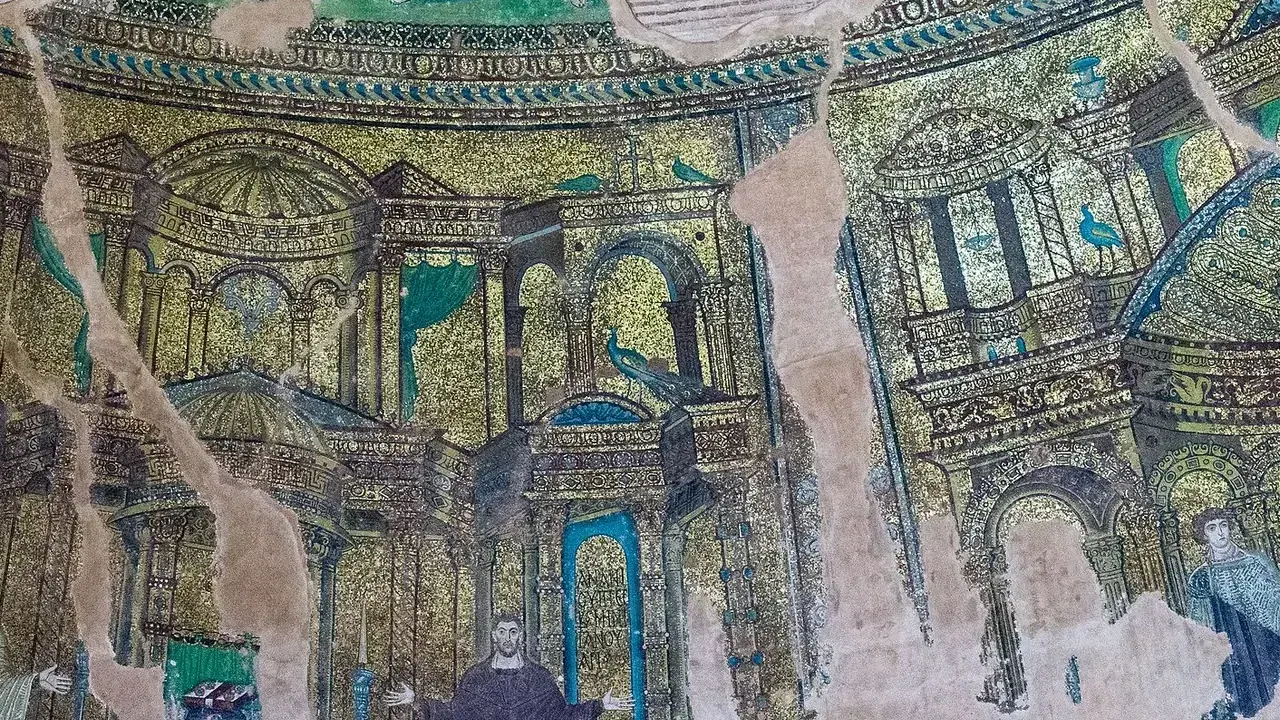
A colossal Roman domed rotunda built around 306 AD under the emperor Galerius, later a church and then a mosque, whose interior preserves some of the most important early-Christian mosaics in the world — one of the UNESCO-listed Paleochristian and Byzantine Monuments of Thessaloniki.

Known to everyone simply as 'Kamara', this triumphal arch from around 298–303 AD is the natural meeting point of the city. Its piers are carved with reliefs of the emperor Galerius's victory over the Sassanid Persian king Narseh at the Battle of Satala (298 AD), and it once stood on the ceremonial avenue that linked his palace to the Rotunda.

The administrative heart of Roman Thessaloniki, an excavated two-level forum built over an earlier Hellenistic agora, with a restored odeon (a small Roman theatre for performances and shows), colonnaded porticoes, and an underground cryptoporticus that now houses a small museum.

The excavated remains of the emperor Galerius's early-4th-century palace lie open in the middle of lively Navarinou Square, including an octagonal throne hall and mosaic floors. It was the heart of his imperial complex, linked by a ceremonial avenue to the Arch of Galerius and the Rotunda.
Thessalonikis UNESCO-gelistete Kirchen zeichnen den gesamten Bogen der byzantinischen Architektur nach, ihre Wände ausgekleidet mit Mosaiken auf Goldgrund und Fresken.

The five-aisled basilica of Saint Demetrius, patron of Thessaloniki, built over the Roman baths where he was martyred and home to rare 7th-century mosaics and an atmospheric crypt.

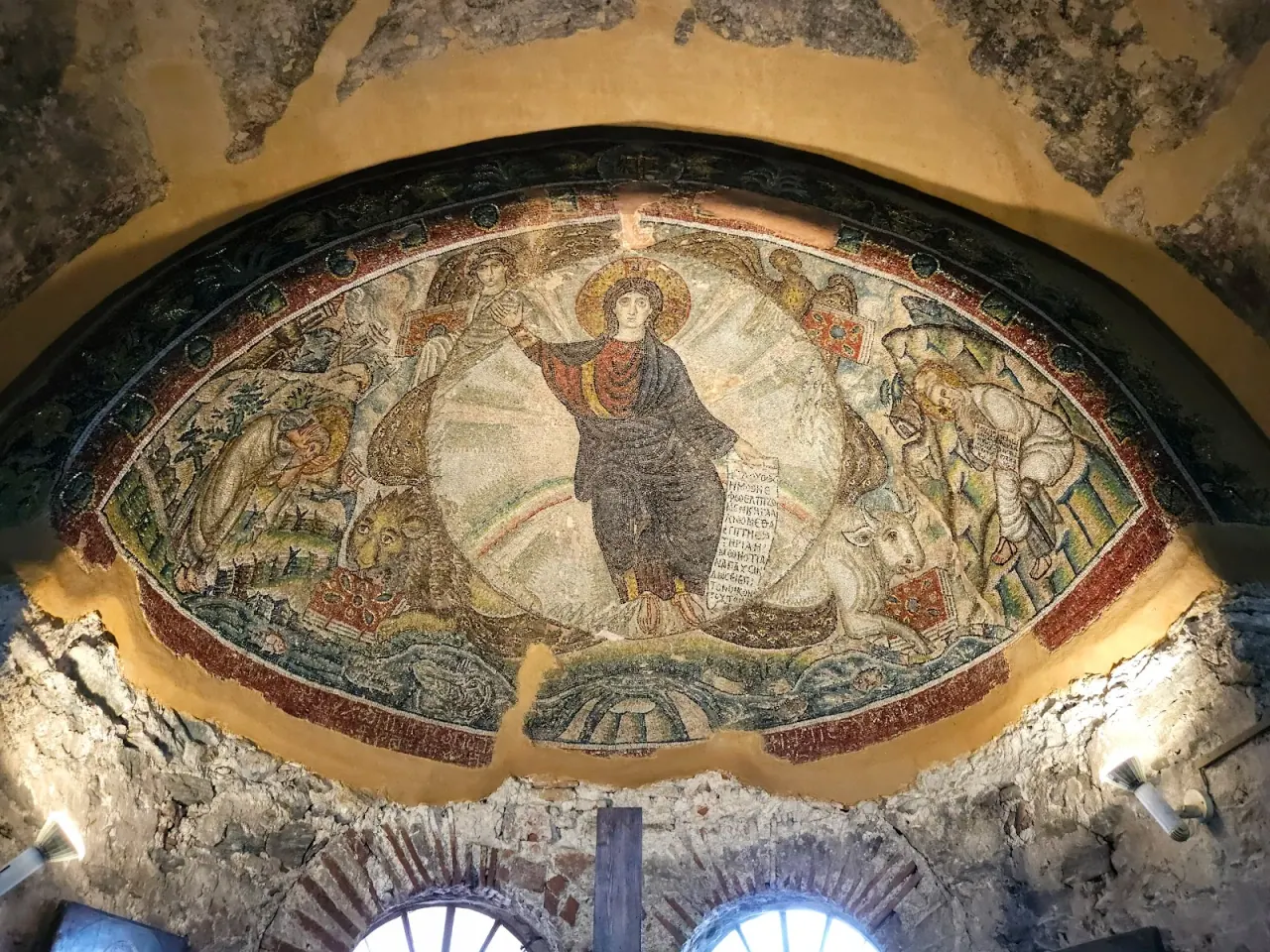
A squat, powerful 8th-century domed church modelled on its namesake in Constantinople, with a luminous mosaic of the Ascension in the dome.

One of the oldest churches in the city still in continuous use — a 5th-century early-Christian basilica with elegant columns and fine mosaic fragments.

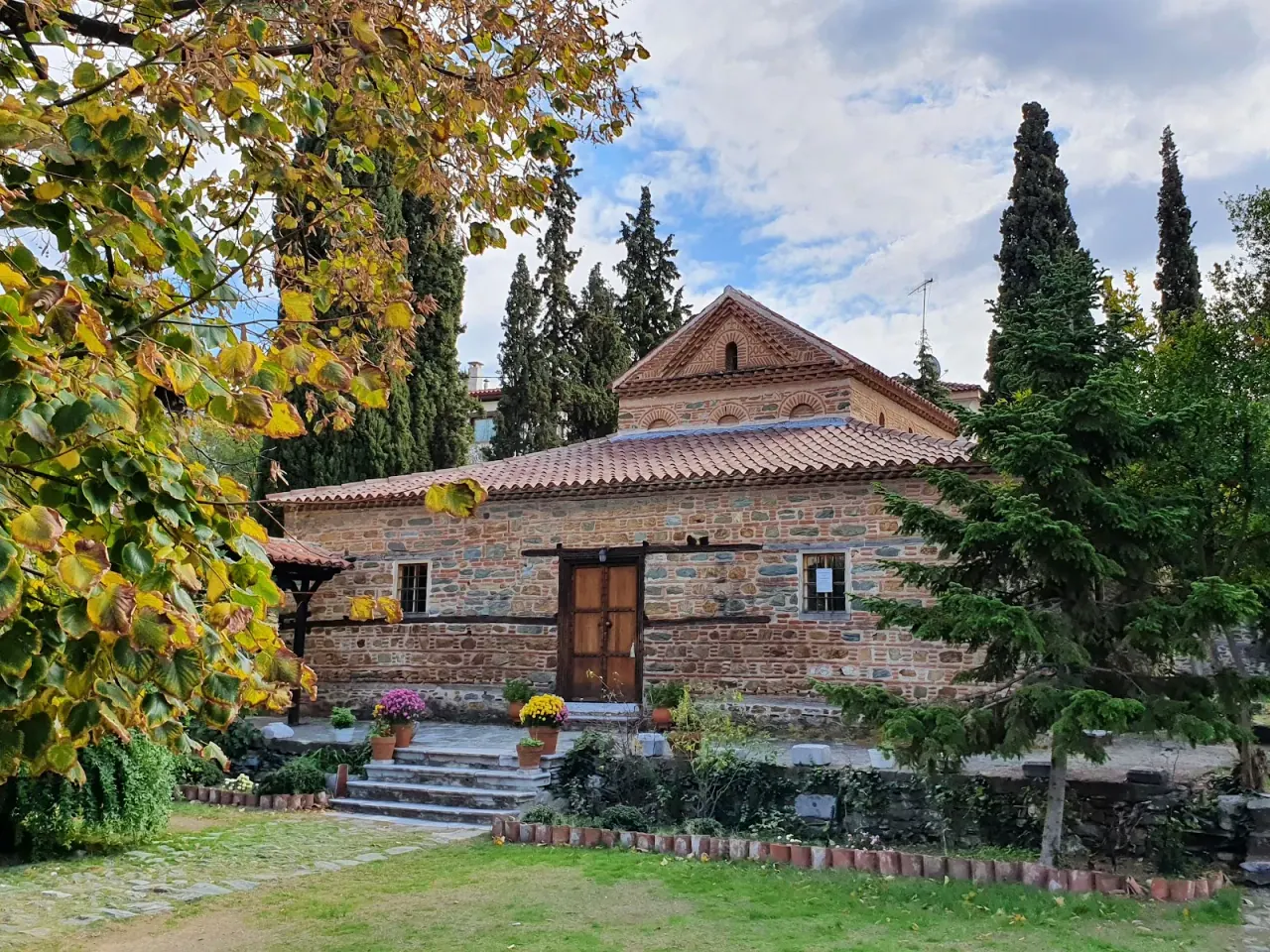
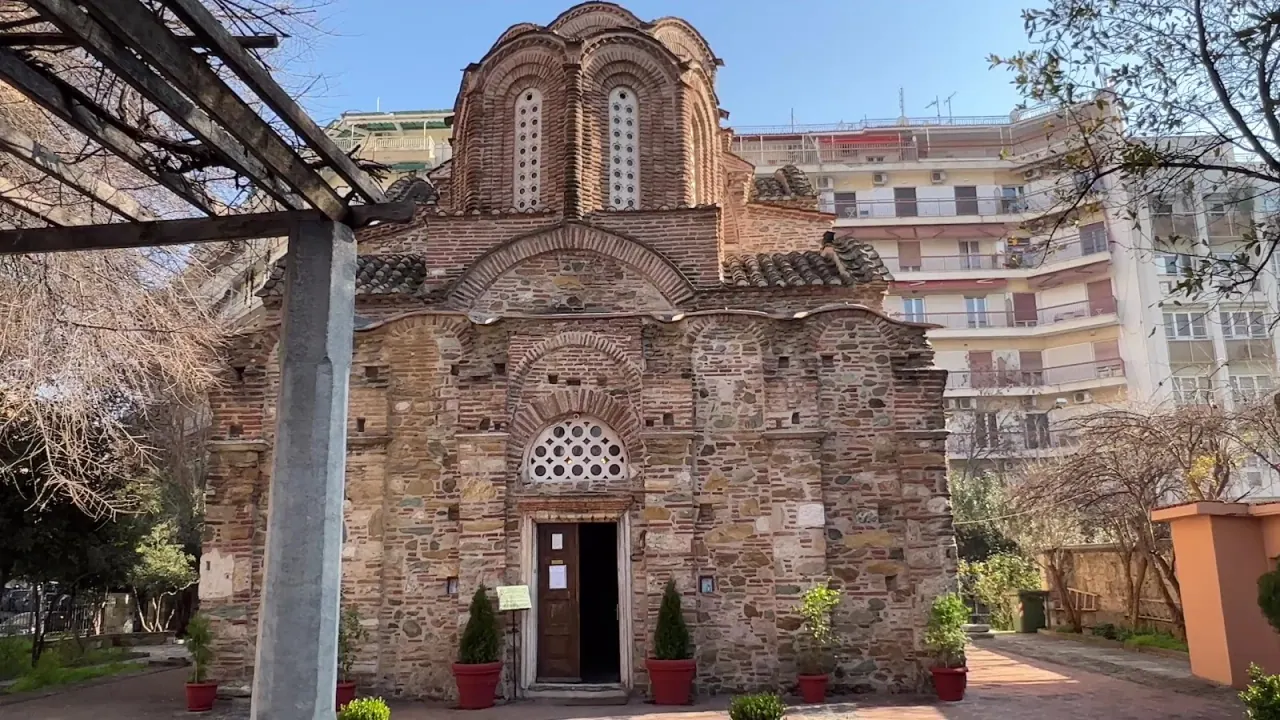
A small church of around 1310–1320 in the upper town whose interior is covered, almost wall to wall, with exceptionally well-preserved Palaiologan frescoes — spared because, unusually among the city's Byzantine churches, it was never turned into a mosque under Ottoman rule, so its walls were never plastered over.

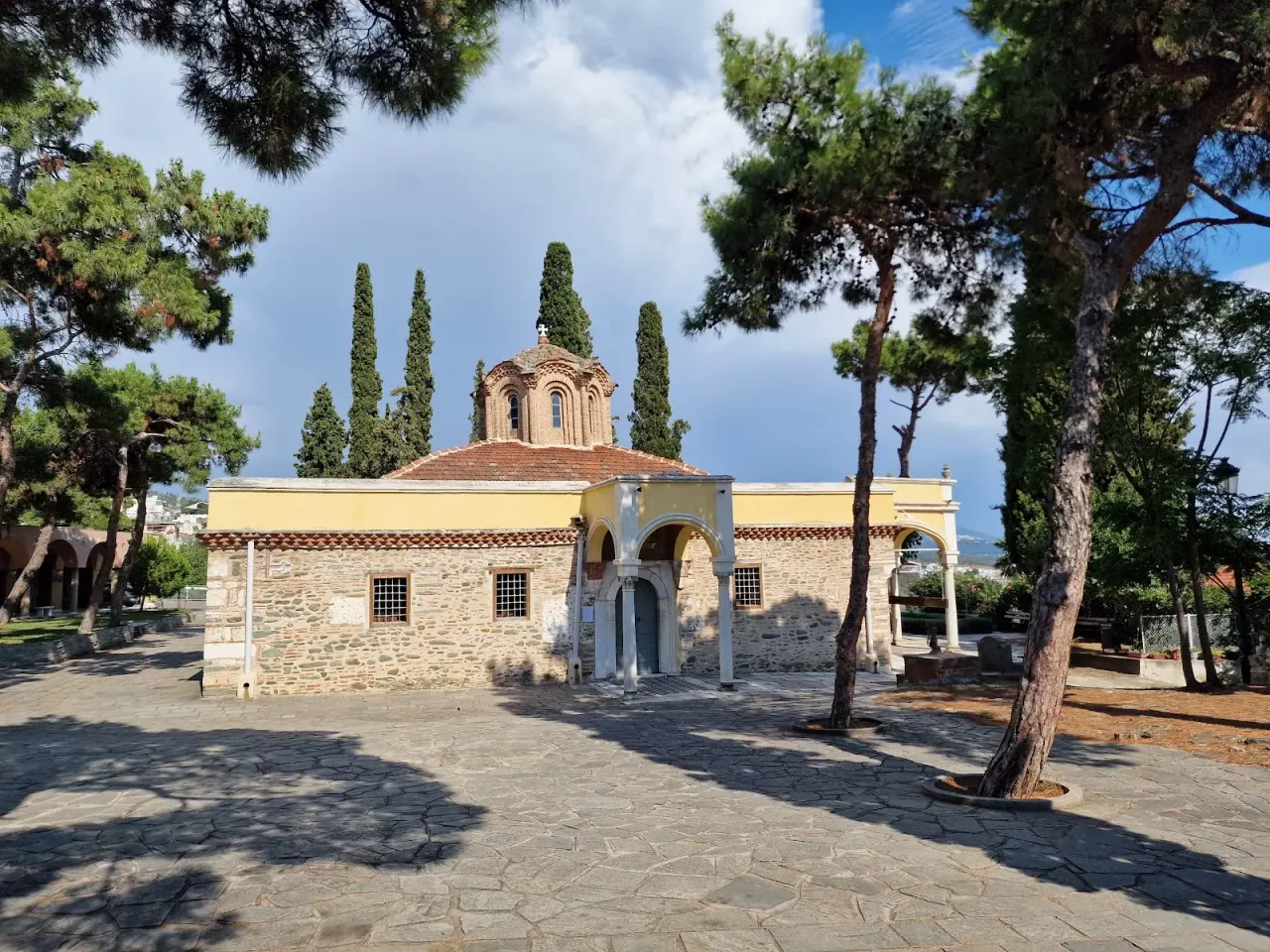
Founded in the later 14th century by the brothers Dorotheos and Markos Vlatades, disciples of Gregory Palamas, it is the only Byzantine monastery in the city still active — set in gardens high in the upper town with a small church, peacocks, and a commanding view of the gulf.

A tiny chapel in the lanes of Ano Poli that holds one of the most important early-Christian mosaics in the world — a UNESCO-listed treasure most visitors walk straight past.

An elegant all-brick cross-in-square church of 1028, nicknamed the 'Red Church' for its warm terracotta masonry, sunk in a small garden beside the Roman Forum in the heart of the city.

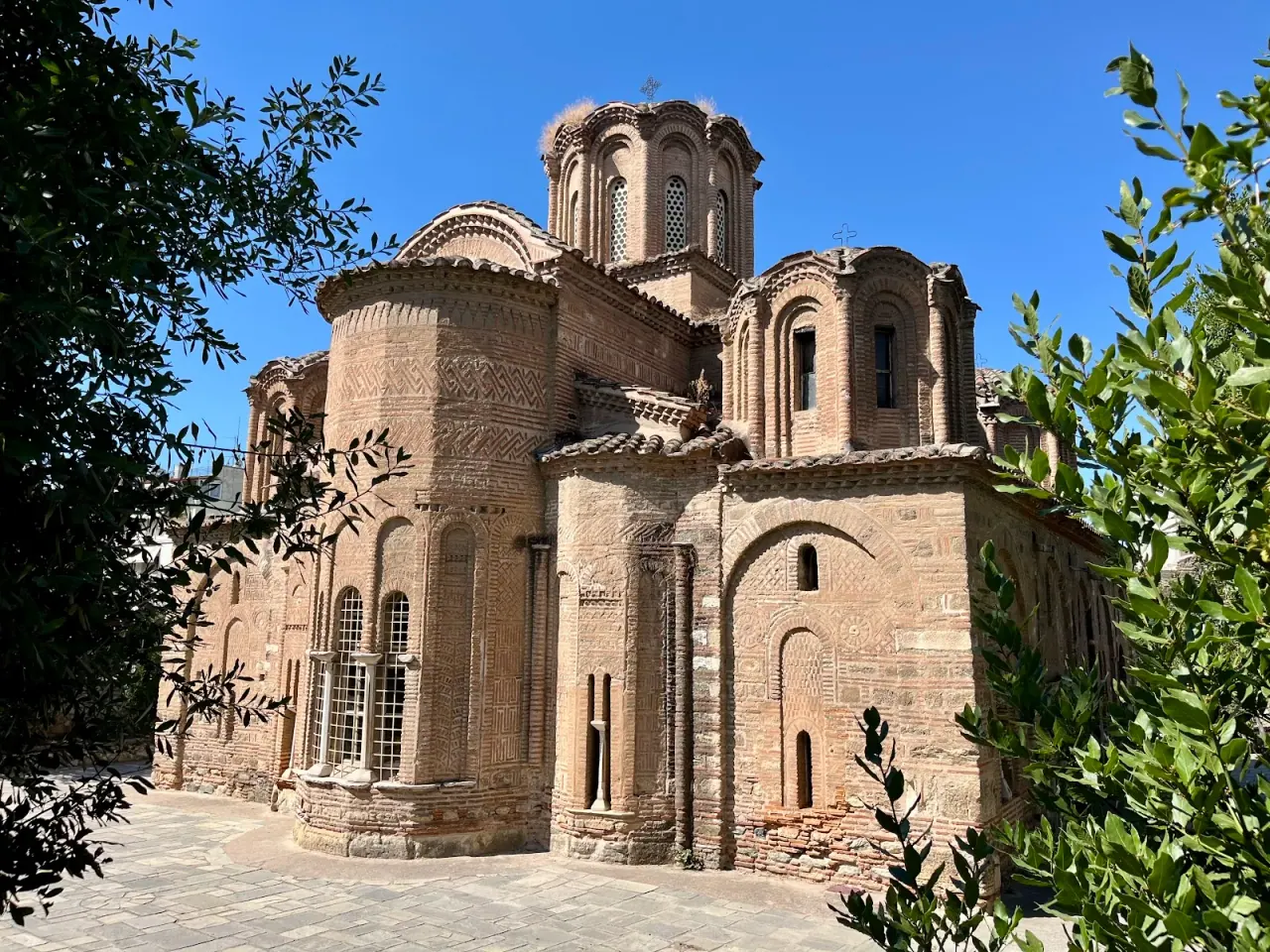
A jewel-box five-domed church founded around 1310–1314 by Niphon I, Patriarch of Constantinople, as a monastery's katholikon — famous for some of the most dazzling decorative brickwork in the Byzantine world and for the Palaiologan mosaics and frescoes preserved inside. A UNESCO monument many visitors walk straight past.

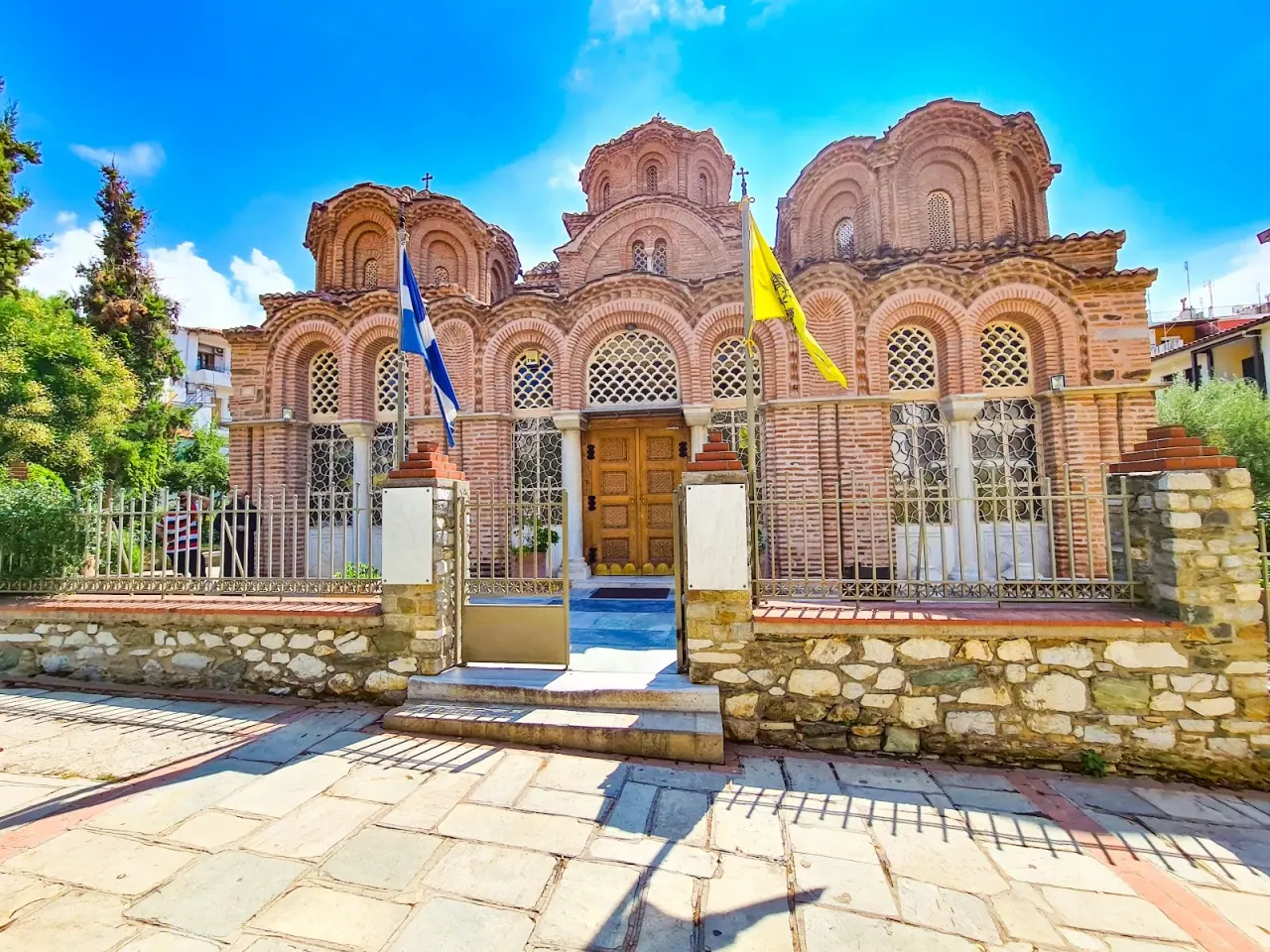
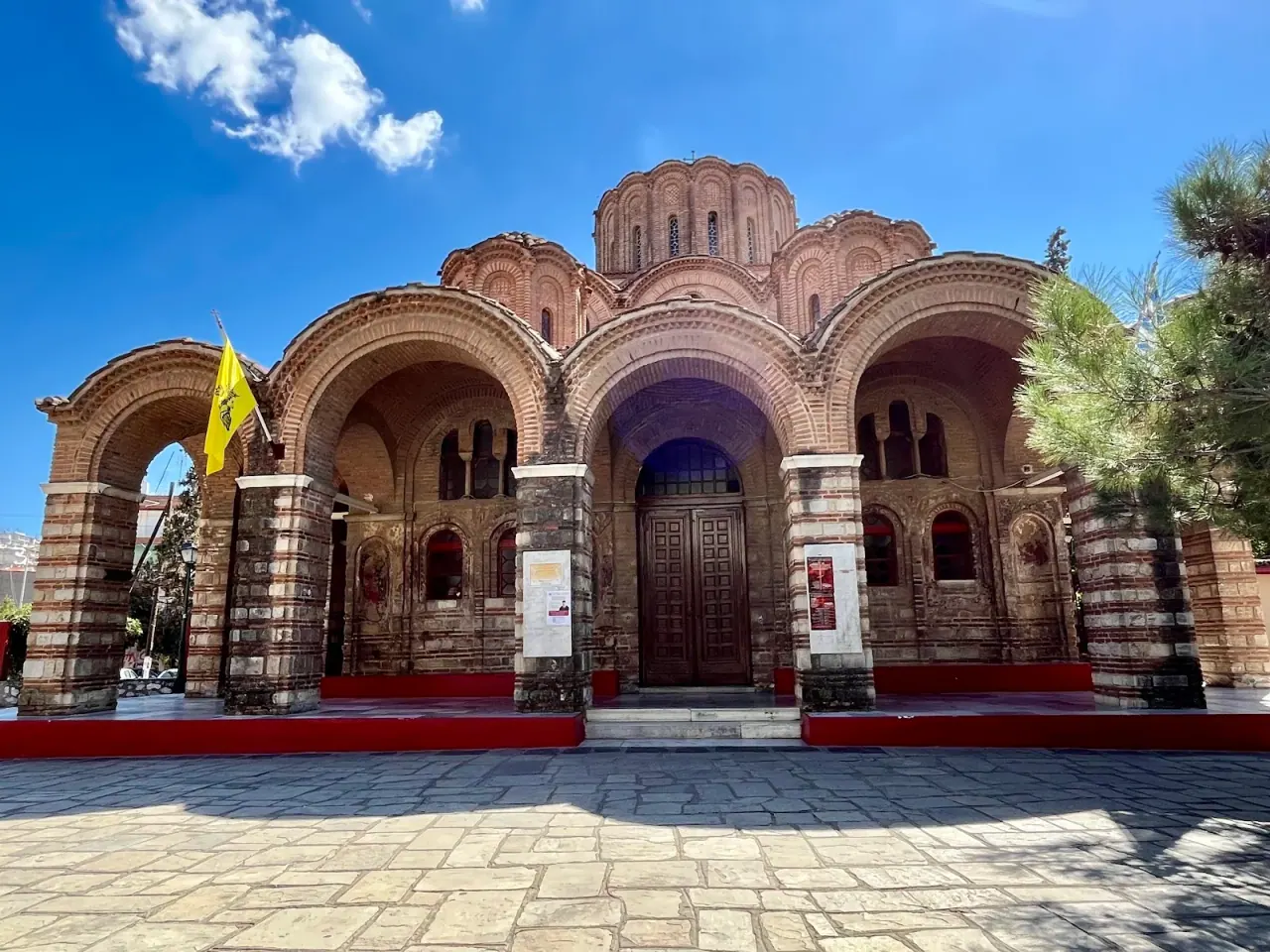
One of the most graceful of the city's Byzantine churches — a five-domed Palaiologan jewel of the late 13th or early 14th century, wrapped in a columned ambulatory and bands of fine brickwork, tucked into the northwestern lanes of Ano Poli. Its original name is lost; under the Ottomans it became the Yakup Pasha Mosque. A UNESCO monument most visitors never reach.

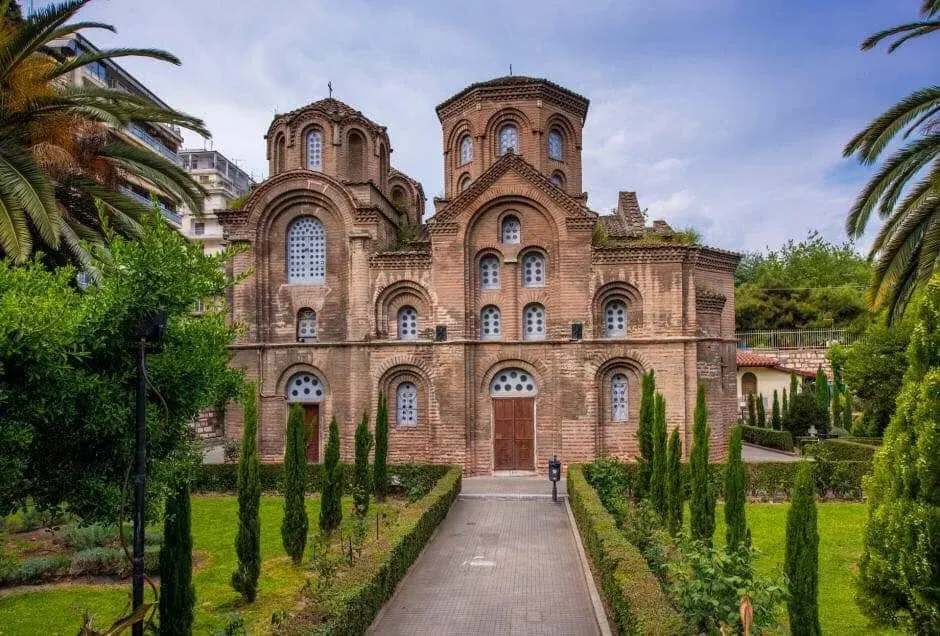
A well-proportioned Palaiologan church with a central dome and a wraparound ambulatory, set in a planted courtyard just steps from the Rotunda and the Arch of Galerius — the easiest of the UNESCO Byzantine churches to fold into a city-centre walk.

A grand mid-14th-century church and the only one in Thessaloniki built on the Athonite plan used by the monasteries of Mount Athos — a tall central dome over a sweeping arcaded portico. Converted to a mosque soon after the Ottoman conquest of 1430, it is now a UNESCO monument on the slope below Ano Poli.
Fünf Jahrhunderte osmanischer Herrschaft hinterließen Hammams, überdachte Märkte und Moscheen, verstreut durch die moderne Stadt.

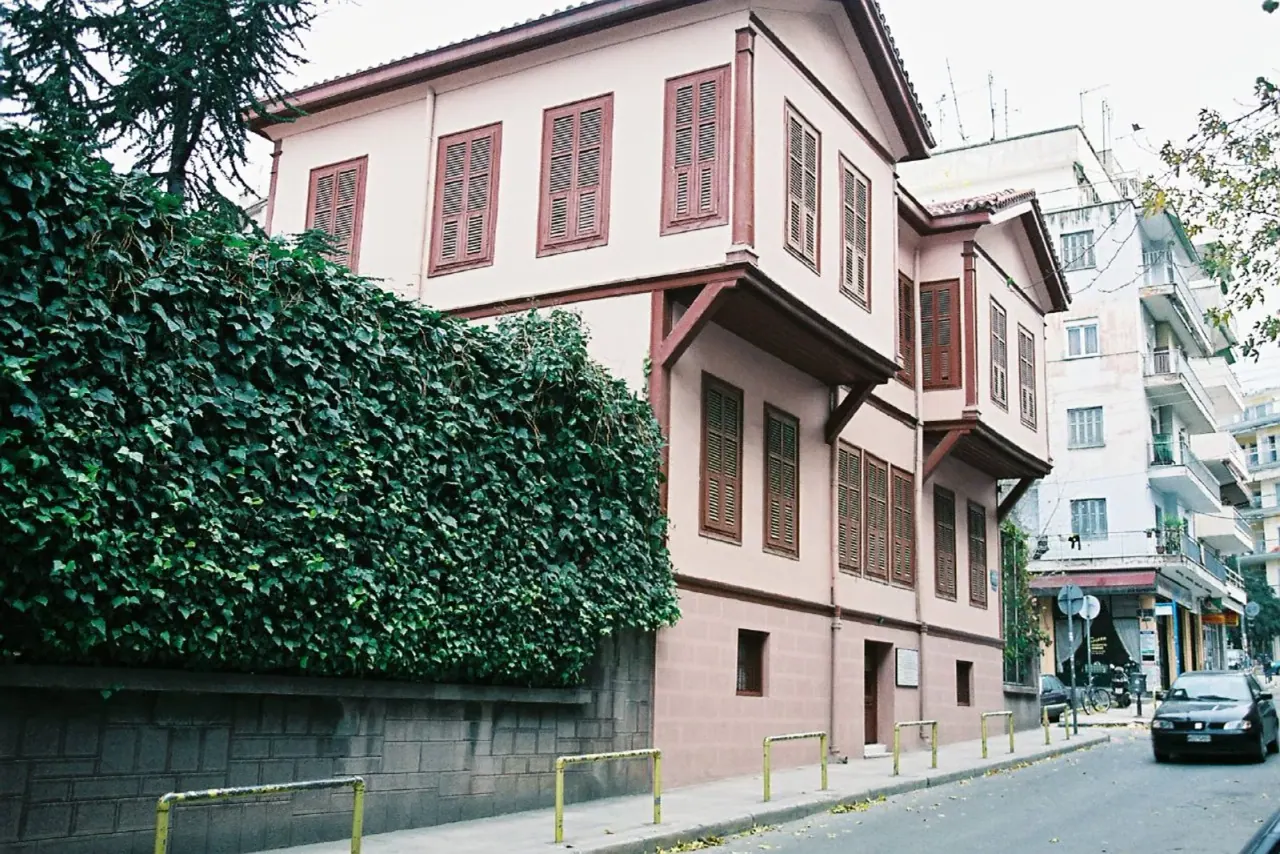
The pink three-storey house where Mustafa Kemal Atatürk, founder of modern Turkey, was born in 1881 — now a museum furnished in period style. It stands within the grounds of the Turkish consulate, so bring photo ID and expect a security check to visit.

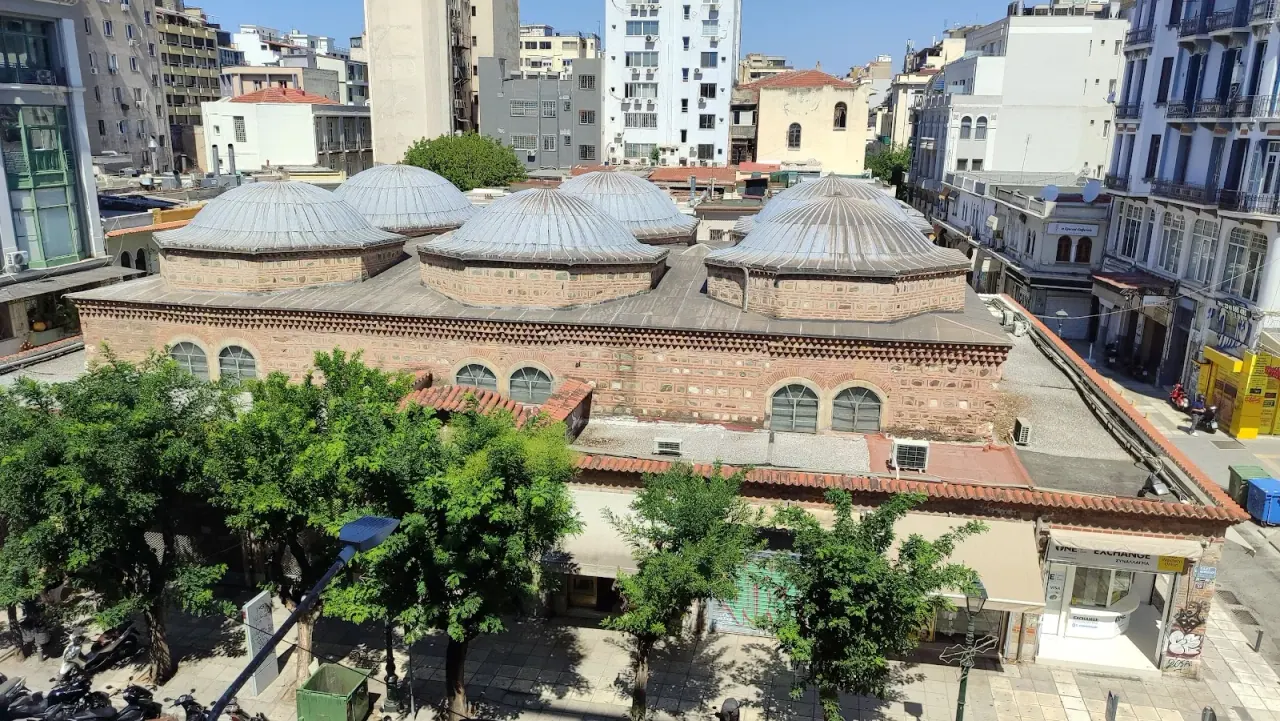
A lead-domed Ottoman covered market from the late 1400s — six brick-vaulted bays that still trade today, lined with little shops of fabric, trimmings and jewellery in the commercial heart of the city. One of the few working Ottoman commercial buildings left in Thessaloniki.
Weltklasse-Sammlungen makedonischen Goldes und byzantinischer Kunst, einen kurzen Spaziergang vom Meer entfernt.

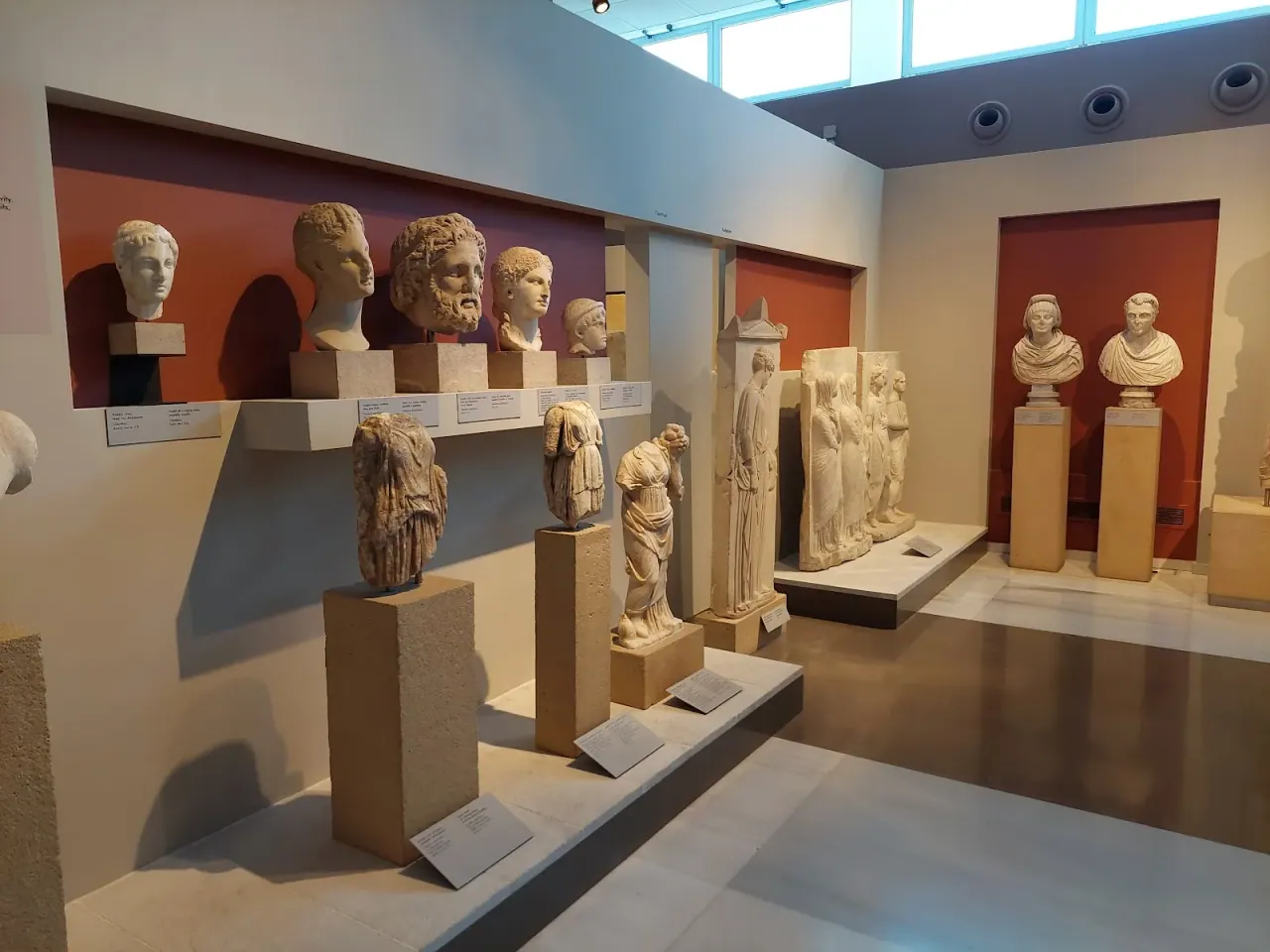
The leading museum of Macedonian antiquity, famous for its Hellenistic gold — including the dazzling Derveni Krater and the Derveni papyrus, a 4th-century-BC scroll that UNESCO's Memory of the World register lists as the oldest surviving book in Europe.

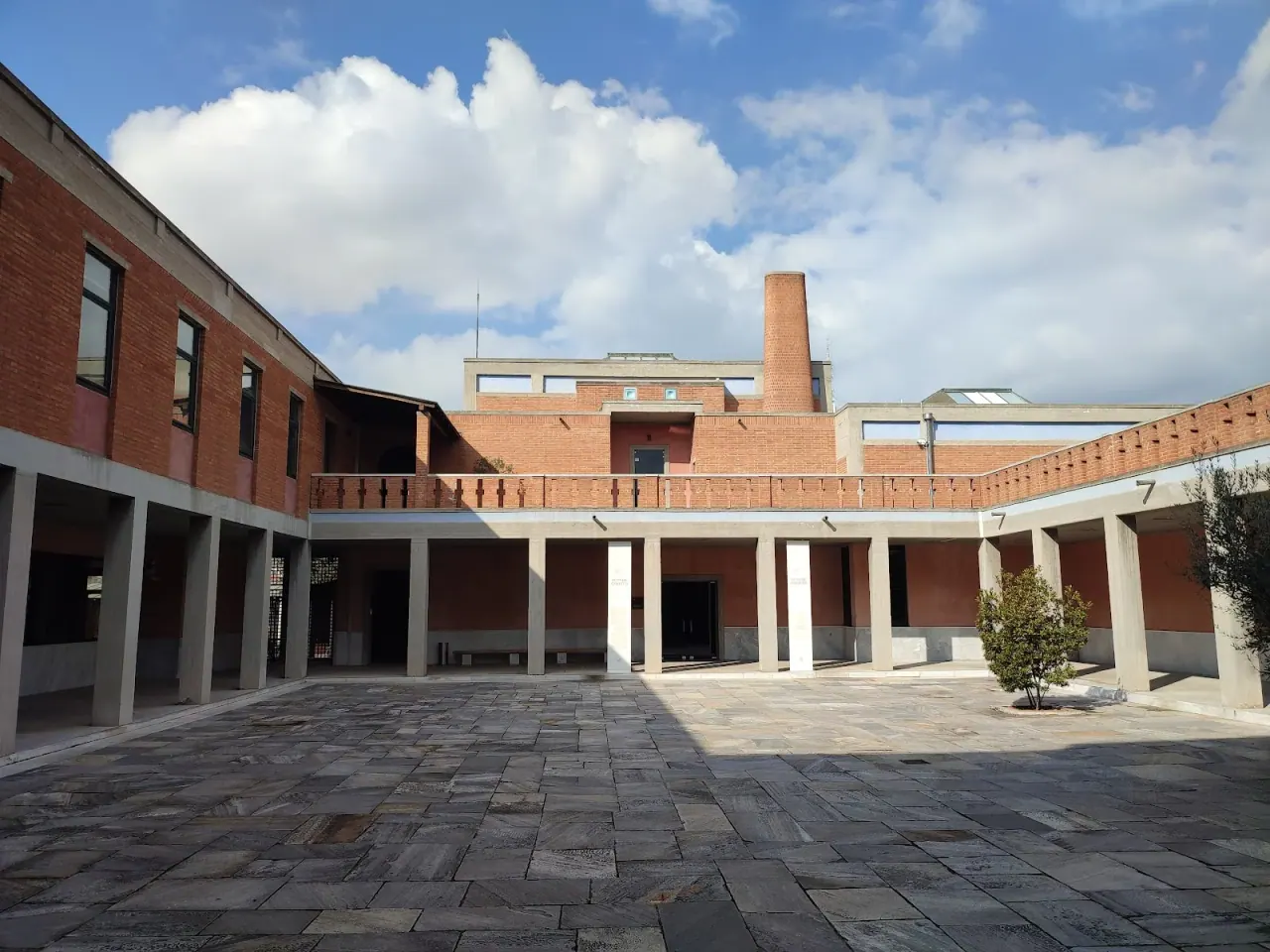
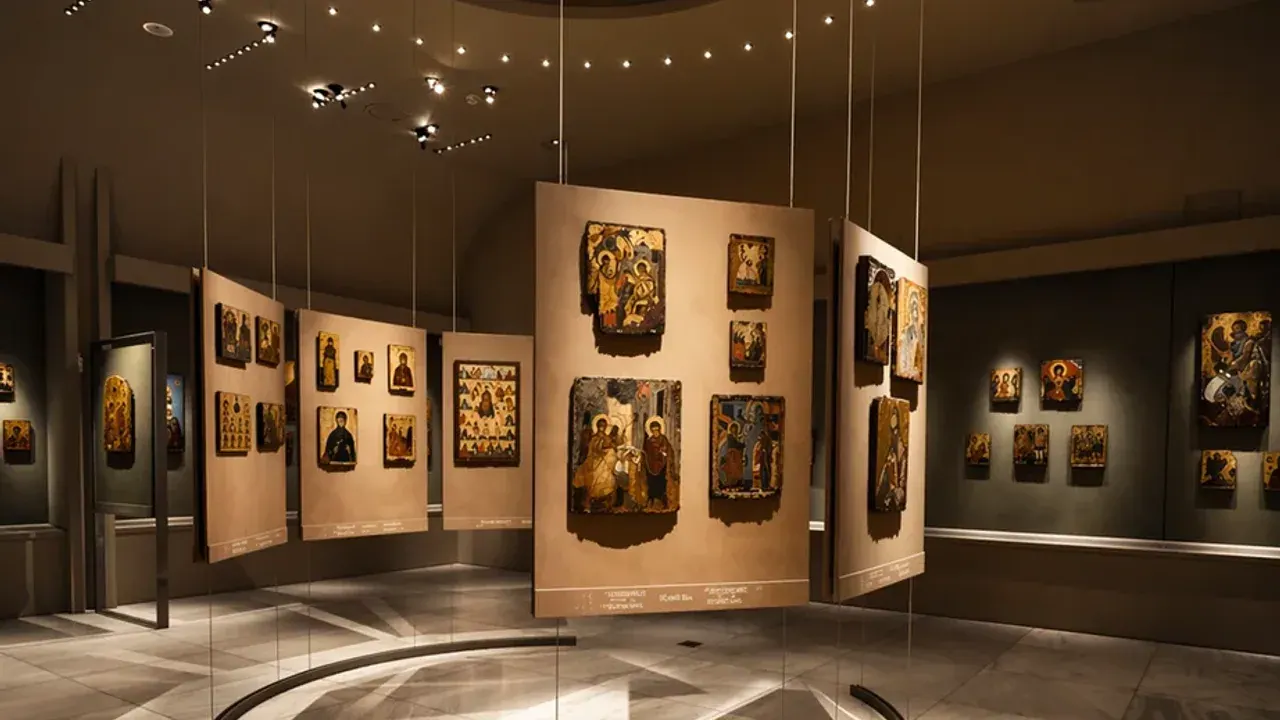
An award-winning museum tracing Byzantine and post-Byzantine life through mosaics, icons, frescoes, jewellery, and everyday objects, set in a calm modern building.

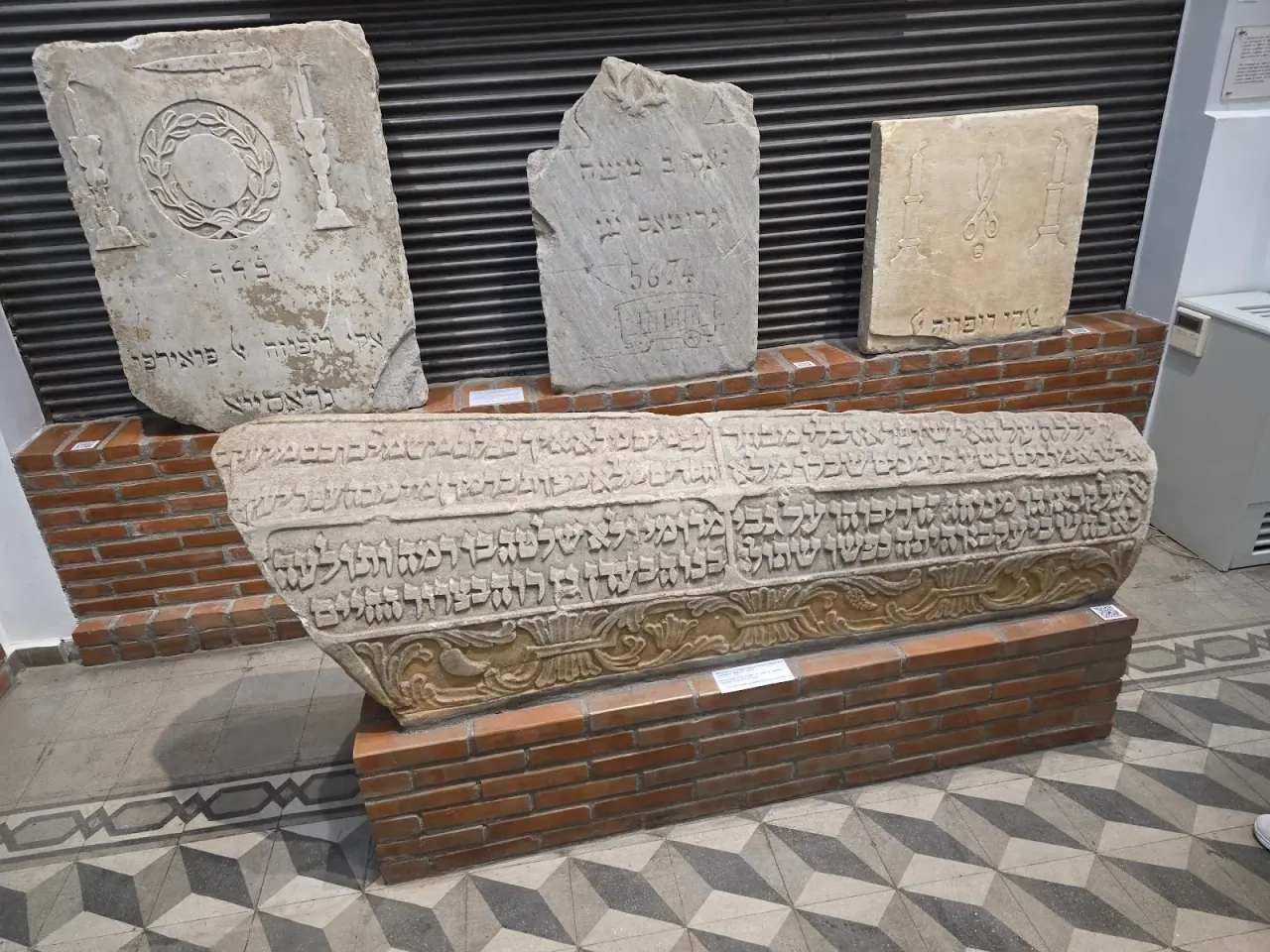
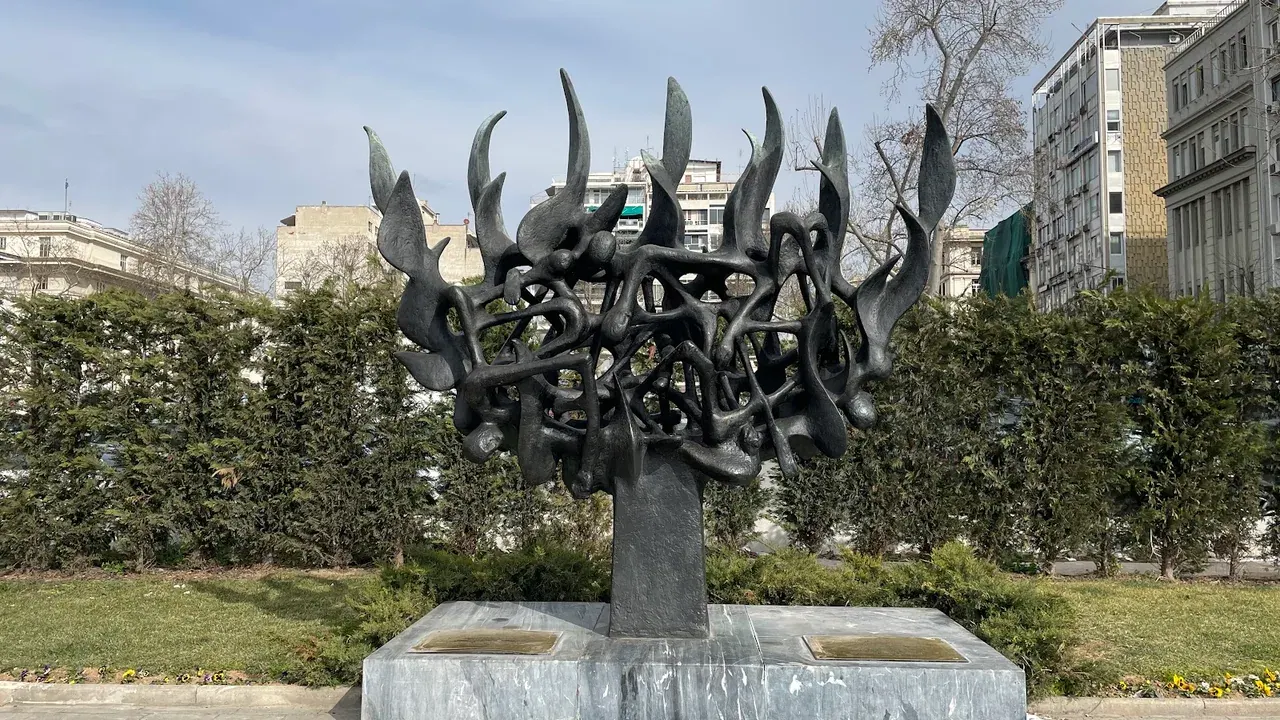
A small but moving museum telling the story of the Sephardic community that made Thessaloniki one of the only majority-Jewish cities in the world for four centuries — until 1943, when the Nazis deported almost the entire community, some 45,000–50,000 people, to Auschwitz-Birkenau. Over 90% were murdered and fewer than 2,000 survived.

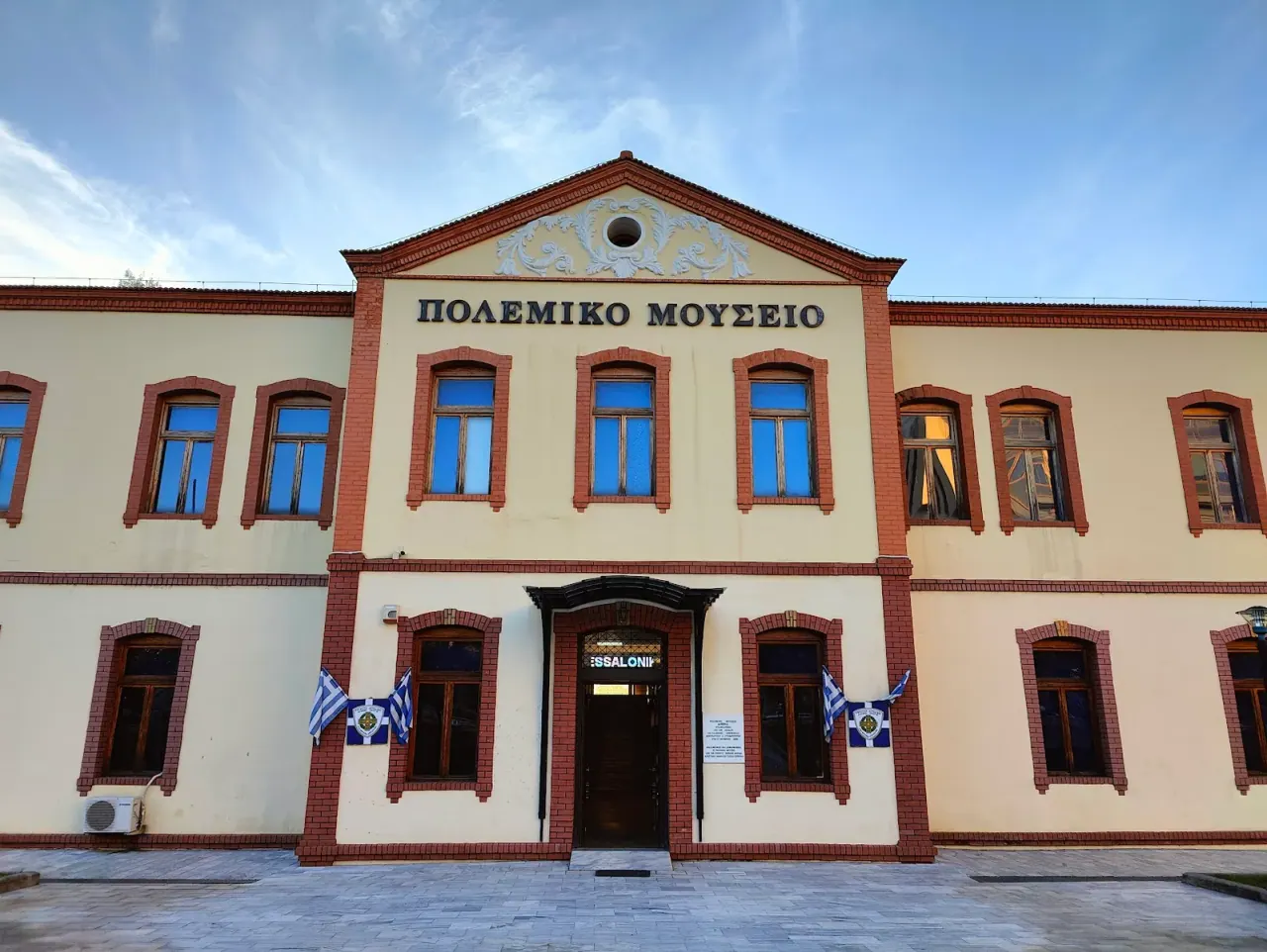
A compact military-history museum in a restored early-1900s army building, tracing Greece's modern wars through uniforms, weapons, war art, maps and photographs — with an outdoor forecourt of tanks and a fighter jet. Its focus fits the city perfectly: Thessaloniki was the great Allied base of the First World War's Macedonian Front.
Das gelebte Herz der Stadt — die osmanische Oberstadt, der Marmorplatz am Meer, und das zur Nachtlebenviertel gewordene Lagerhausviertel.

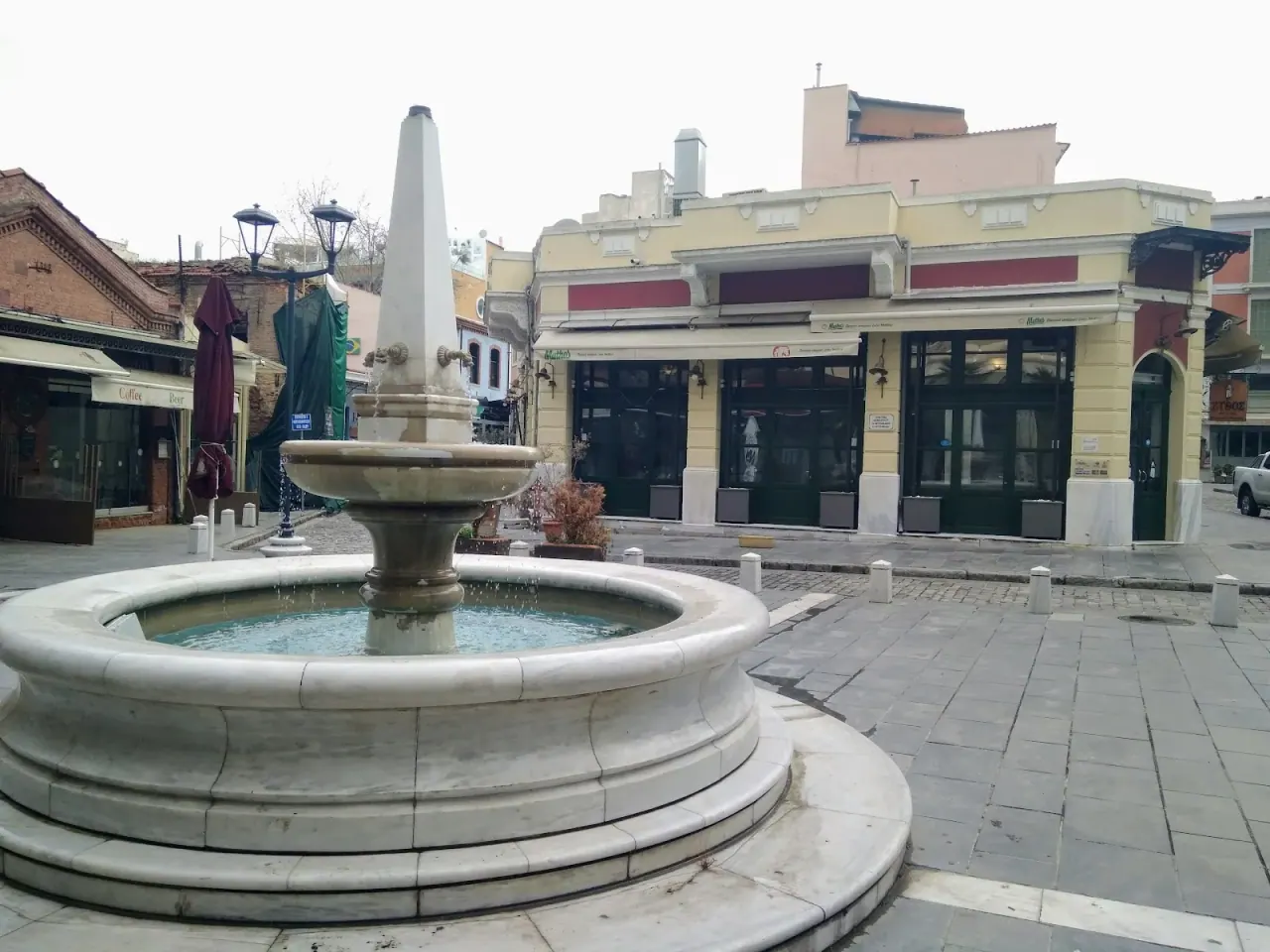
Largely spared by the great fire of 1917 that razed the lower city, Ano Poli is Thessaloniki's best-preserved old quarter — a maze of timber Ottoman houses, tiny chapels, and cobbled lanes climbing to the castle walls and the best views in the city.

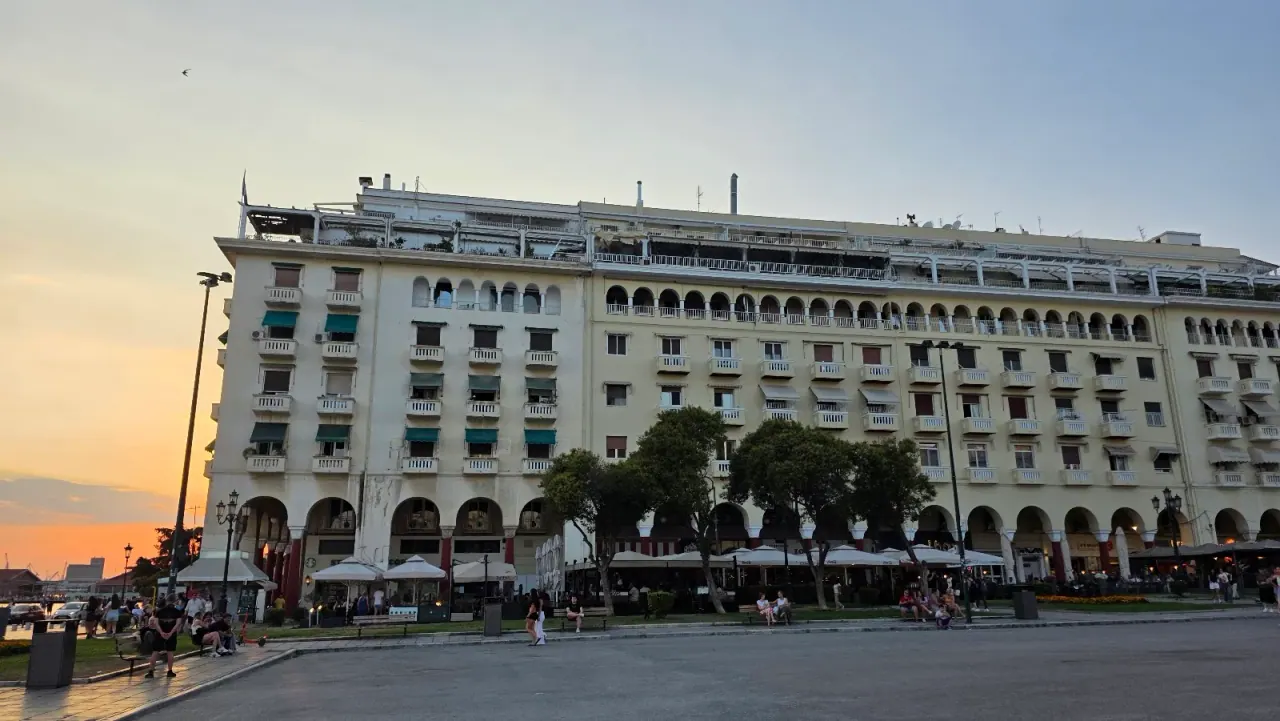
The grand civic square of Thessaloniki, opening straight onto the waterfront — a sweep of arcaded, monumental architecture that is the city's living room. It was designed by the French architect Ernest Hébrard in 1918, the seafront centrepiece of his plan to rebuild the city after the Great Fire of 1917, though most of the square as it stands was built in the 1950s.

A pocket of colourful 19th-century warehouses near the port — once the olive-oil market (ladi means oil), and one of the very few quarters left almost untouched by the Great Fire of 1917, which is why its old buildings still stand. Declared a protected district in the 1980s, it is now the city's most concentrated cluster of tavernas, mezedopoleia, and bars.

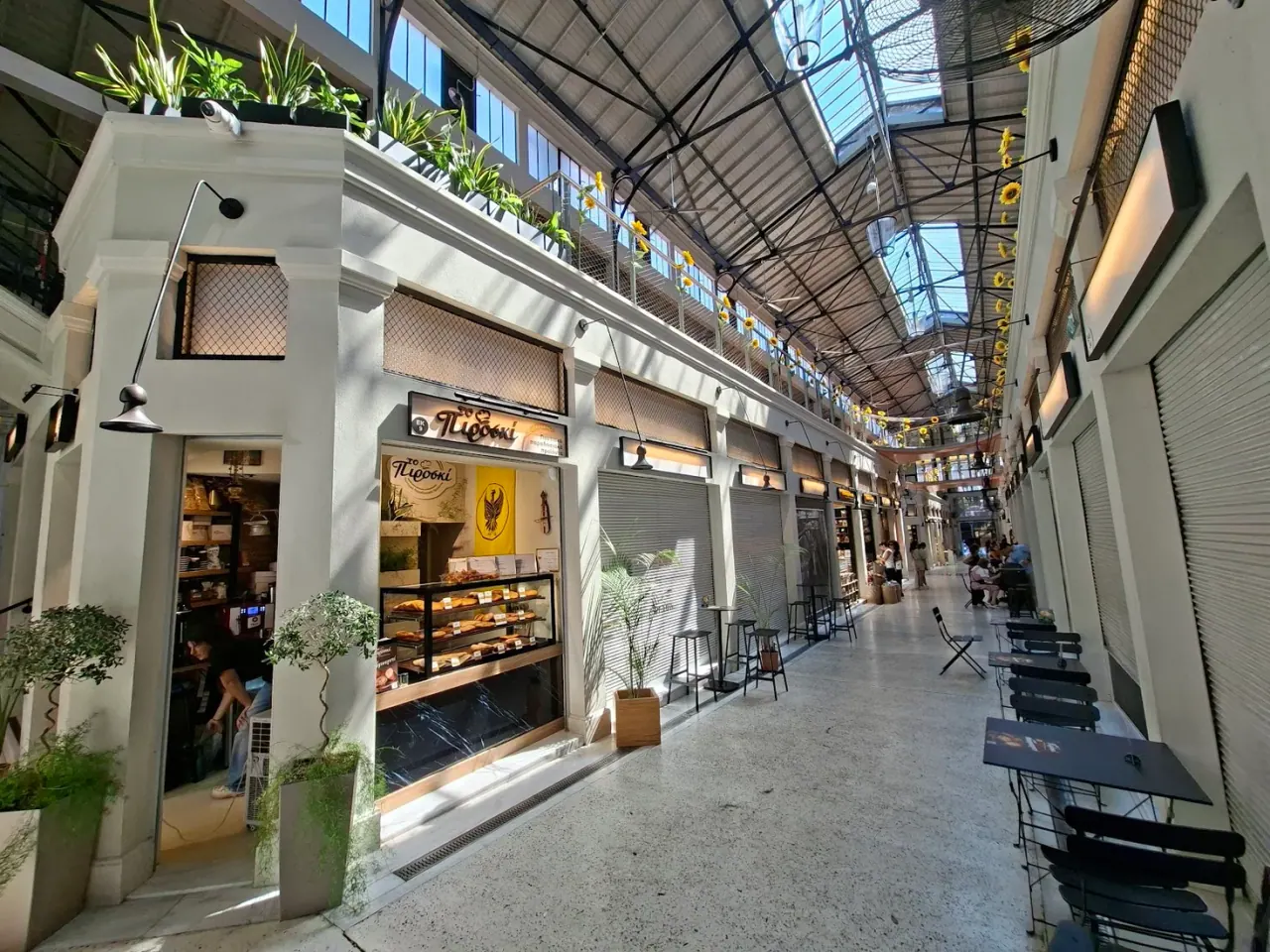
The city's historic covered food market, reborn in 2022 as a buzzing gourmet hall under a restored glass roof — meze bars, tavernas, delis and grocers all under one elegant 1920s arcade.

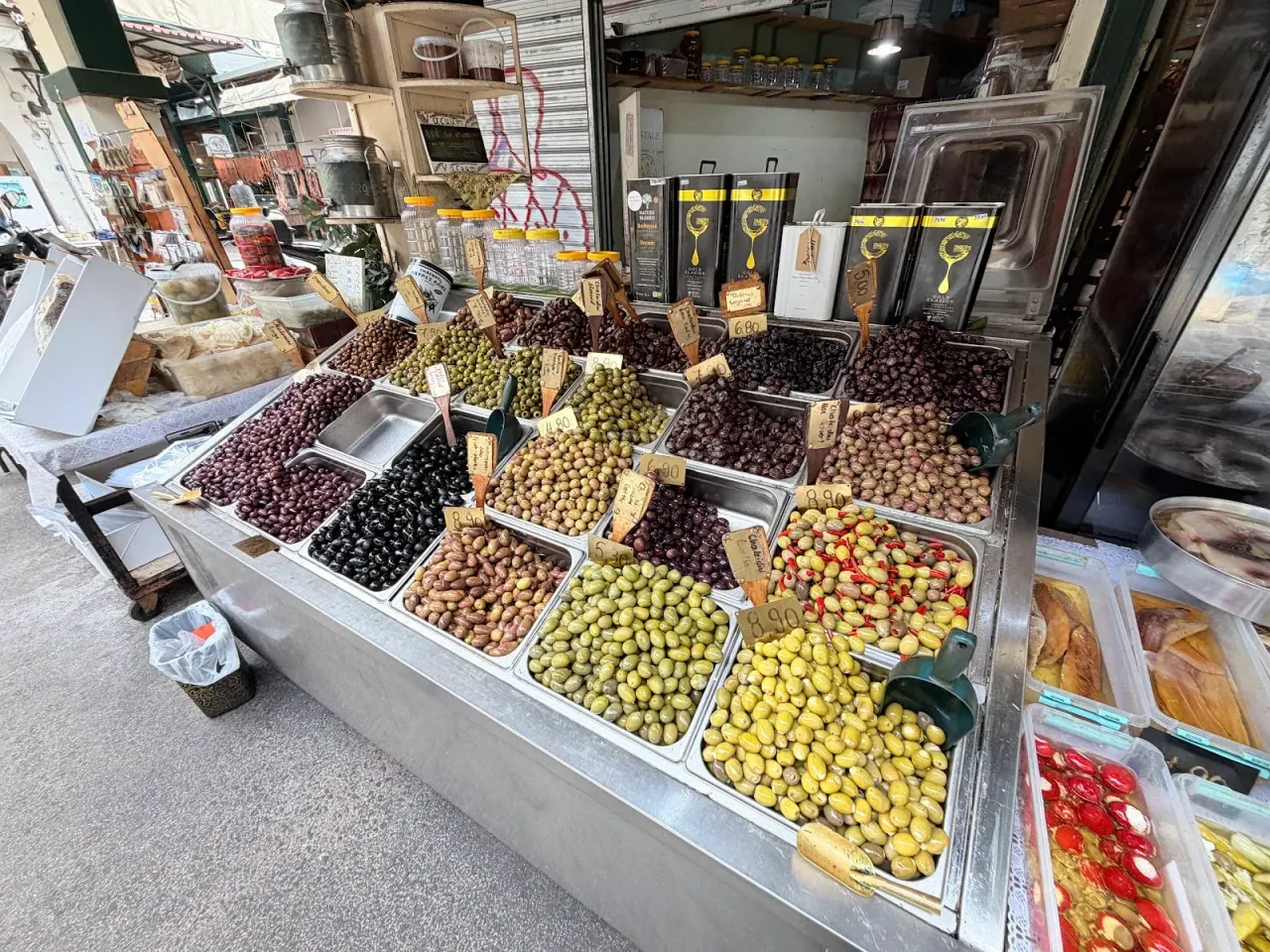
The oldest market in Thessaloniki — a warren of covered lanes and open stalls heaped with produce, fish, meat, olives, cheese and spices. Loud, cheap and thoroughly local, Kapani (officially Vlali) is the working food market next door to the gentrified Modiano.
Die modernen Ikonen der Neuen Uferpromenade — George Zongolopoulos' aufragende Regenschirme und der große Reiter Alexander der Große — und die beliebtesten Plätze der Stadt, um den Sonnenuntergang einzufangen.

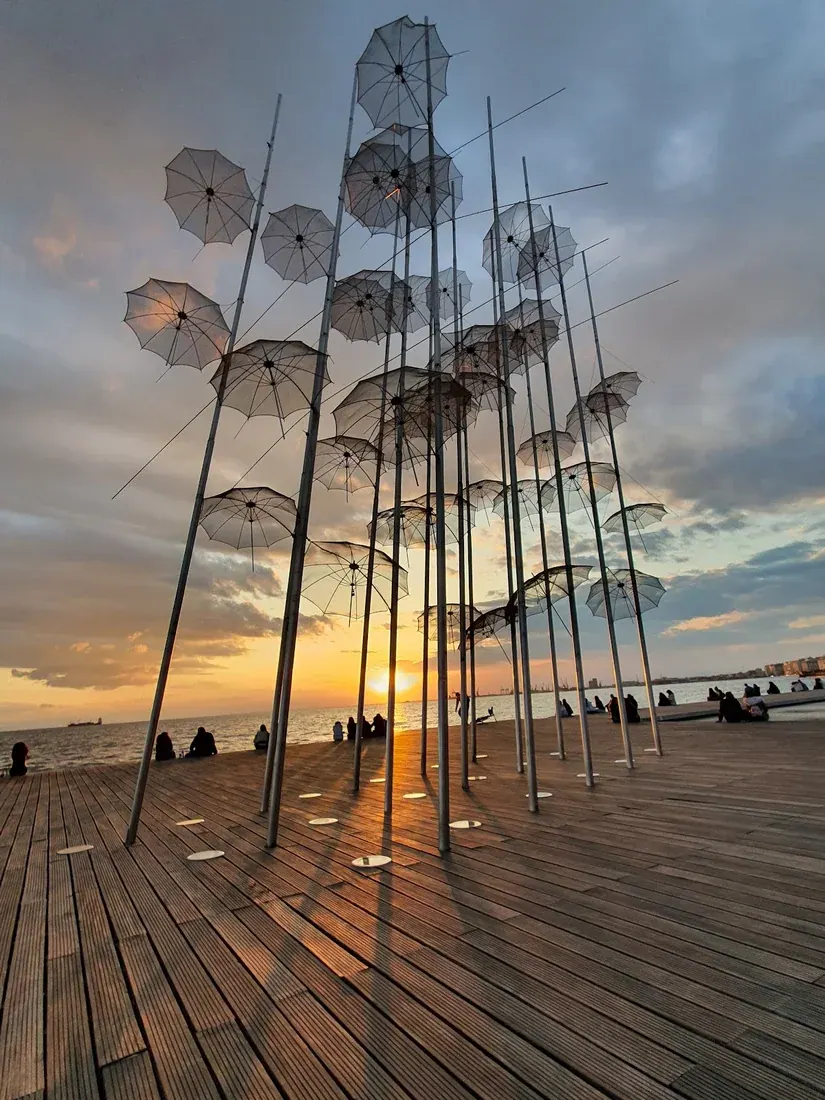
A cluster of stainless-steel umbrellas striding up out of the boardwalk into the sky — George Zongolopoulos first showed the work at the 1995 Venice Biennale and installed this 13-metre version on the waterfront in 1997, the year Thessaloniki was European Capital of Culture. It is now the emblem of the redesigned New Waterfront and the city's single most photographed modern landmark, especially at sunset.

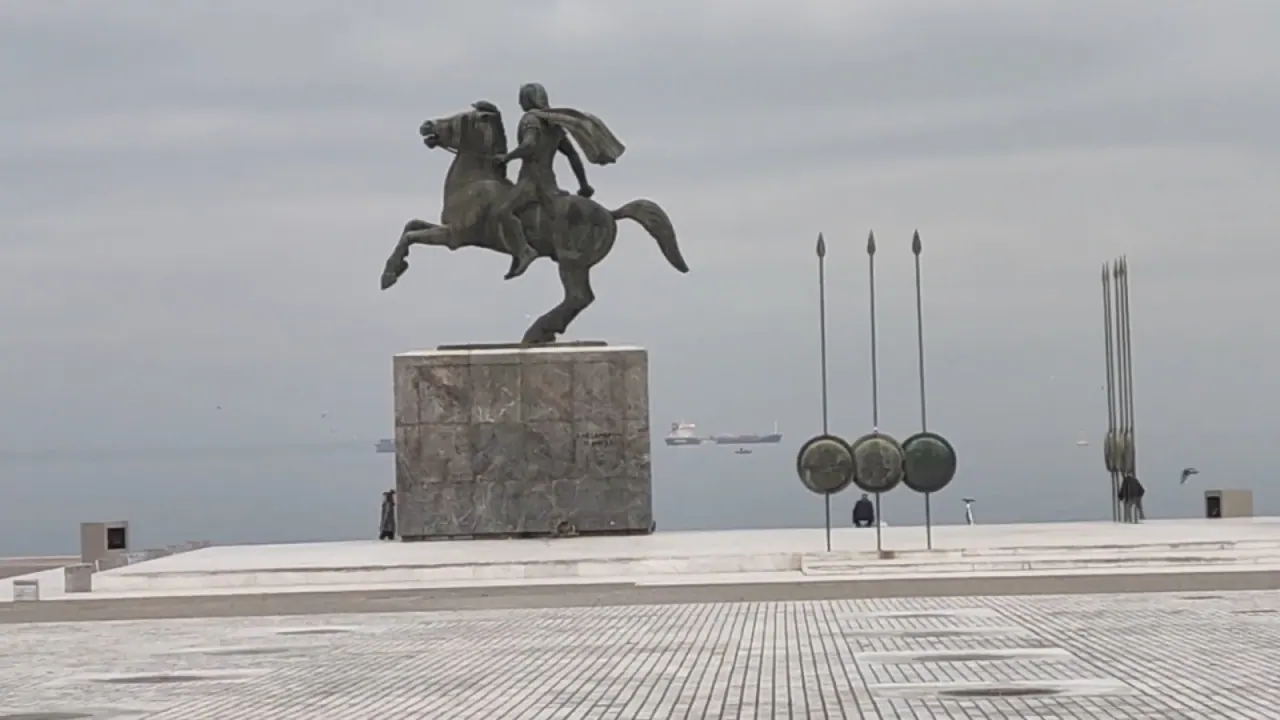
A monumental bronze of Alexander the Great astride his horse Bucephalus, sword drawn, on the Nea Paralia seafront. Erected in 1973 and unveiled in 1974, the work of sculptor Evangelos Moustakas, it stands six metres tall — eleven with its plinth — one of the largest equestrian statues in Greece, flanked by his sarissas (spears) and a row of shields.

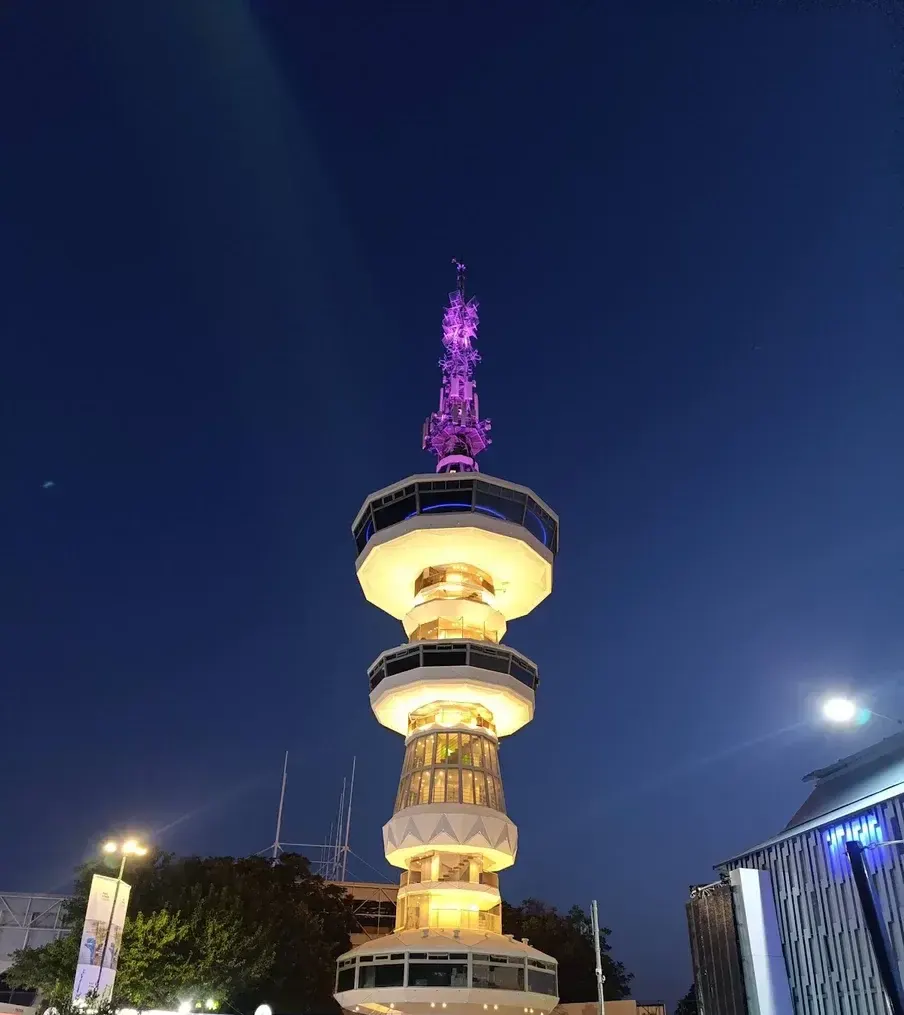
Thessaloniki's 76-metre landmark tower on the Thessaloniki International Fair grounds — built in the late 1960s, on the site where Greece's first television broadcast took place at the 1960 Fair — crowned by a revolving café-bar that turns a full circle roughly once an hour for 360° views over the city, the seafront and the Thermaic Gulf. Picked out in colour after dark, its tiered silhouette is one of the modern skyline's most recognisable shapes.
Jahrhunderte der Badekultur in Ziegel und Stein — ein seltenes erhaltenes byzantinisches Badehaus und ein prächtiges osmanisches Hammam, beide noch stehend in der Altstadt.

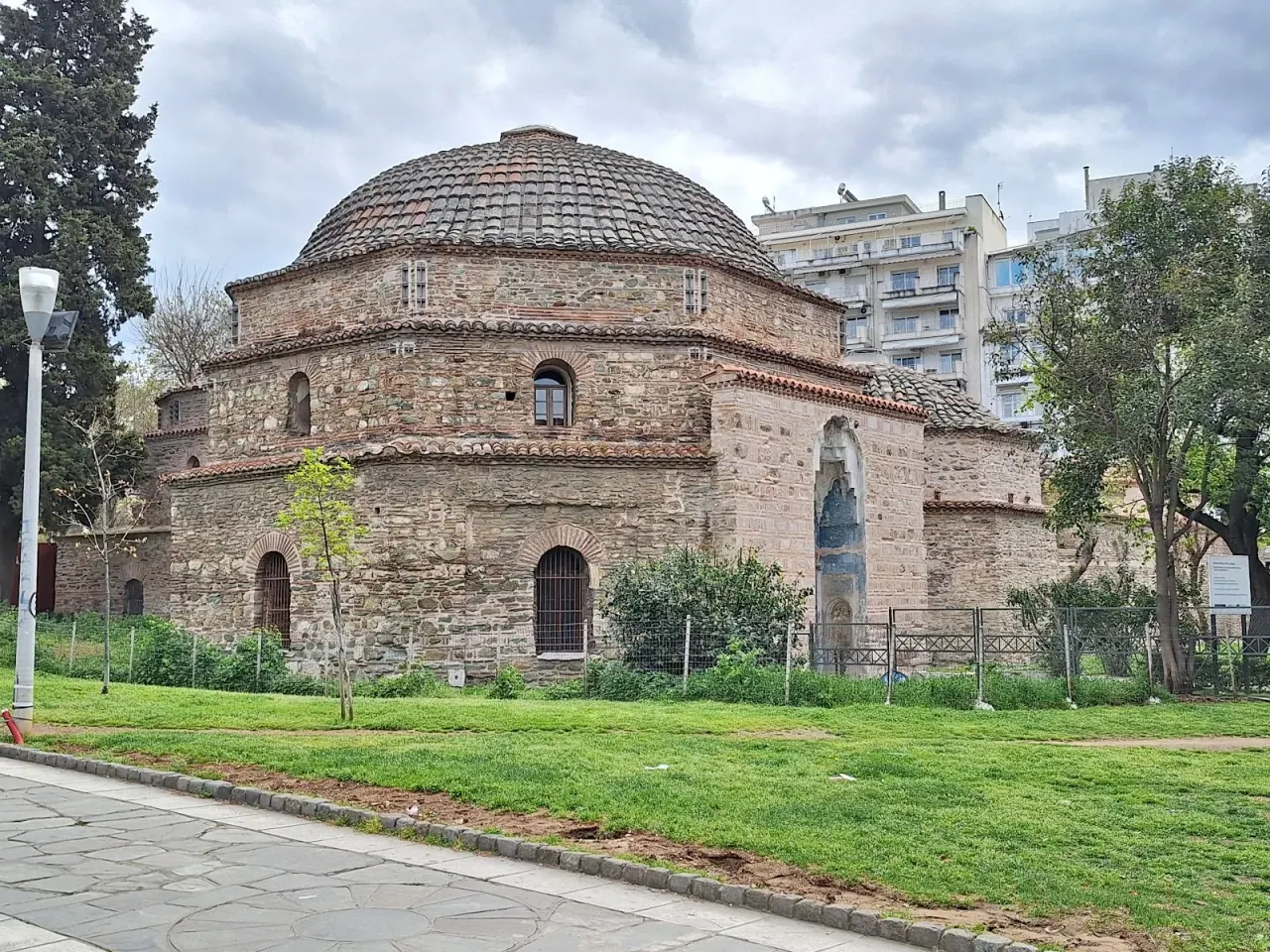
The grandest Ottoman bathhouse in Greece and the oldest in Thessaloniki, built in 1444 by Sultan Murad II, with separate men's and women's wings of domed chambers, marble basins, and traces of painted decoration.

A rare survivor from around the late 12th–13th century — the only Byzantine bath left in Thessaloniki, and the largest and most complete in Greece — a small brick-and-stone building in Ano Poli that stayed in use as a public bath until 1940, some seven centuries. Restored and reopened as a museum in 2015, it is one of the city's UNESCO-listed Byzantine monuments.
Kombinieren Sie die Sehenswürdigkeiten mit der kulinarischen Szene der Stadt und ein oder zwei Tagesausflügen — Meteora, Vergina, oder die Strände von Chalkidiki.
Beginnen Sie mit dem Weißen Turm, dem Uferwahrzeichen der Stadt, dann der Rotunde aus dem 4. Jahrhundert und dem nahe gelegenen Galeriusbogen. Fügen Sie die großen byzantinischen Kirchen hinzu — Agios Dimitrios, dem Schutzheiligen der Stadt gewidmet, und die Hagia Sophia — sowie das Römische Forum, und gehen Sie hinauf nach Ano Poli und zu den byzantinischen Wällen für die Aussicht. Fast alles liegt in bequemer Gehweite vom Zentrum.
Ja. Ein Kombiticket für €15, drei Tage gültig, deckt den Weißen Turm, die Rotunde, das Archäologische Museum und das Museum für Byzantinische Kultur ab — das beste Preis-Leistungs-Verhältnis, wenn Sie mehr als eines besichtigen möchten. Staatliche Stätten und Museen sind auch an einigen Tagen im Jahr kostenlos, darunter der erste und dritte Sonntag jedes Monats von November bis März, plus 6. März, 18. April, 18. Mai und das letzte Wochenende im September.
Die meisten aktiven byzantinischen Kirchen — darunter Agios Dimitrios, die Hagia Sophia und Panagia Acheiropoietos — sind kostenlos zugänglich, obwohl Spenden willkommen sind und angemessene Kleidung erwartet wird. Die Rotunde, als Monument geführt, und die Museen der Stadt erheben Eintritt, den das Kombiticket für €15 abdeckt.
Zwei Tage reichen für die Höhepunkte zu Fuß — die römischen und byzantinischen Monumente, die Märkte und die Uferpromenade liegen alle in einem kompakten, flachen Zentrum. Ein dritter Tag erlaubt es Ihnen, tiefer in die Museen einzutauchen oder einen Tagesausflug nach Vergina oder Meteora zu unternehmen.
Der Weiße Turm ist ein osmanischer Turm aus dem 15. Jahrhundert am Meer und das Symbol Thessalonikis. Einst eine Festung und ein Gefängnis, beherbergt er heute ein Museum der Stadtgeschichte, erklommen über eine innere Spiralrampe, mit Panoramablick über den Golf von oben — und er ist das meistbesuchte Monument der Stadt.
Die byzantinischen und UNESCO-Monumente, die besten Museen, und die Geschichten hinter den Ikonen.

A guide to Thessaloniki's Byzantine churches and UNESCO monuments — the Rotunda, Agios Dimitrios, Hagia Sophia — with what to see, ratings, and ticket tips.
7 min read

The best museums in Thessaloniki, ranked: the gold-filled Archaeological Museum to the Byzantine Culture museum, with 2026 tickets, hours and who each suits.
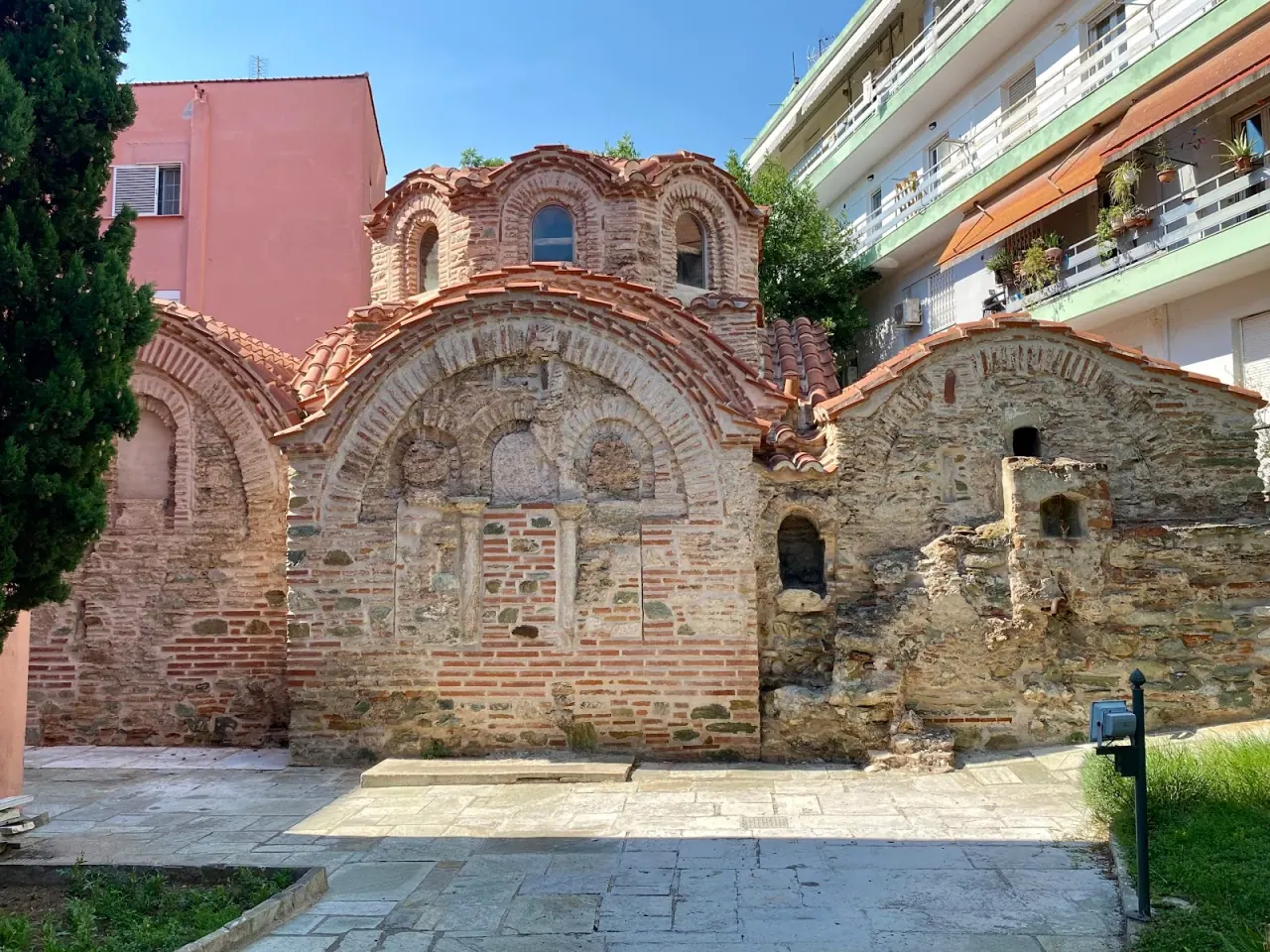
6 min read

Visiting the White Tower of Thessaloniki — 2026 tickets and hours, its dark Ottoman history, the museum inside, and whether the rooftop view is worth it.
6 min read

A guide to the Rotunda of Thessaloniki — its golden early-Christian mosaics, the temple-church-mosque history, plus 2026 tickets, hours and how to visit.
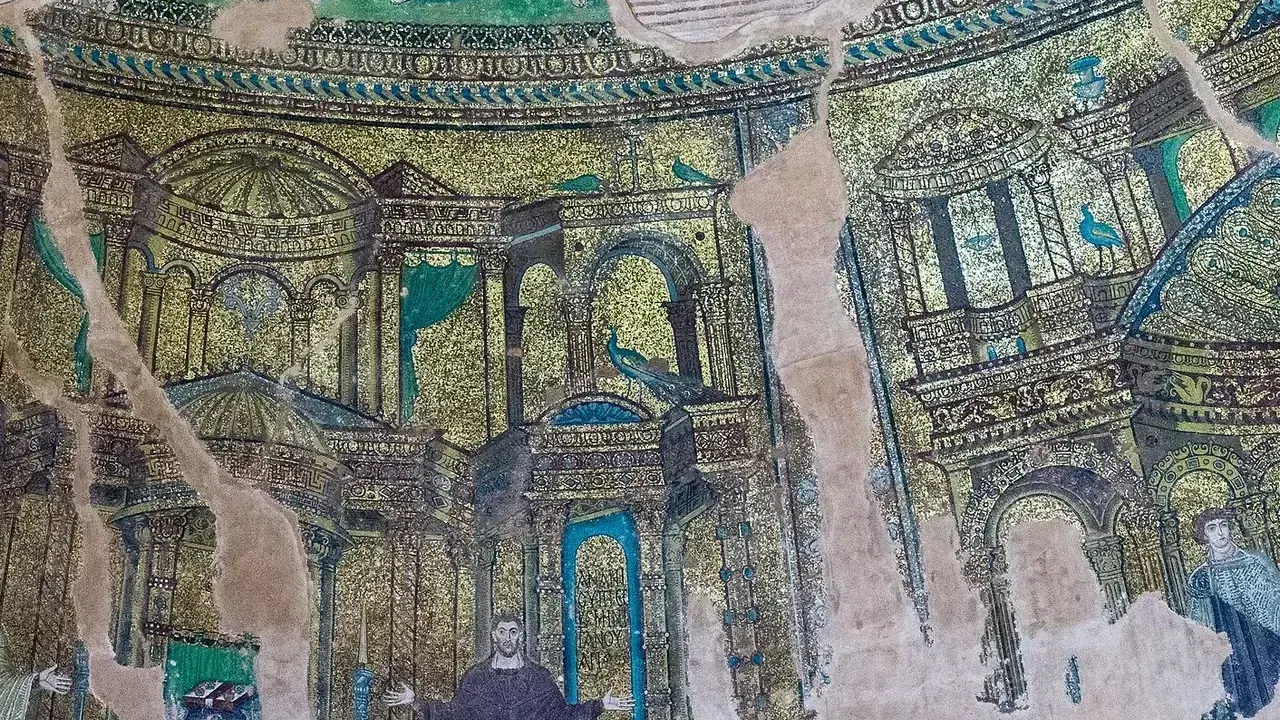
6 min read

A guide to the Arch of Galerius (Kamara) in Thessaloniki — the Roman triumphal arch of around 300 AD, its carved battle reliefs, and how to visit.
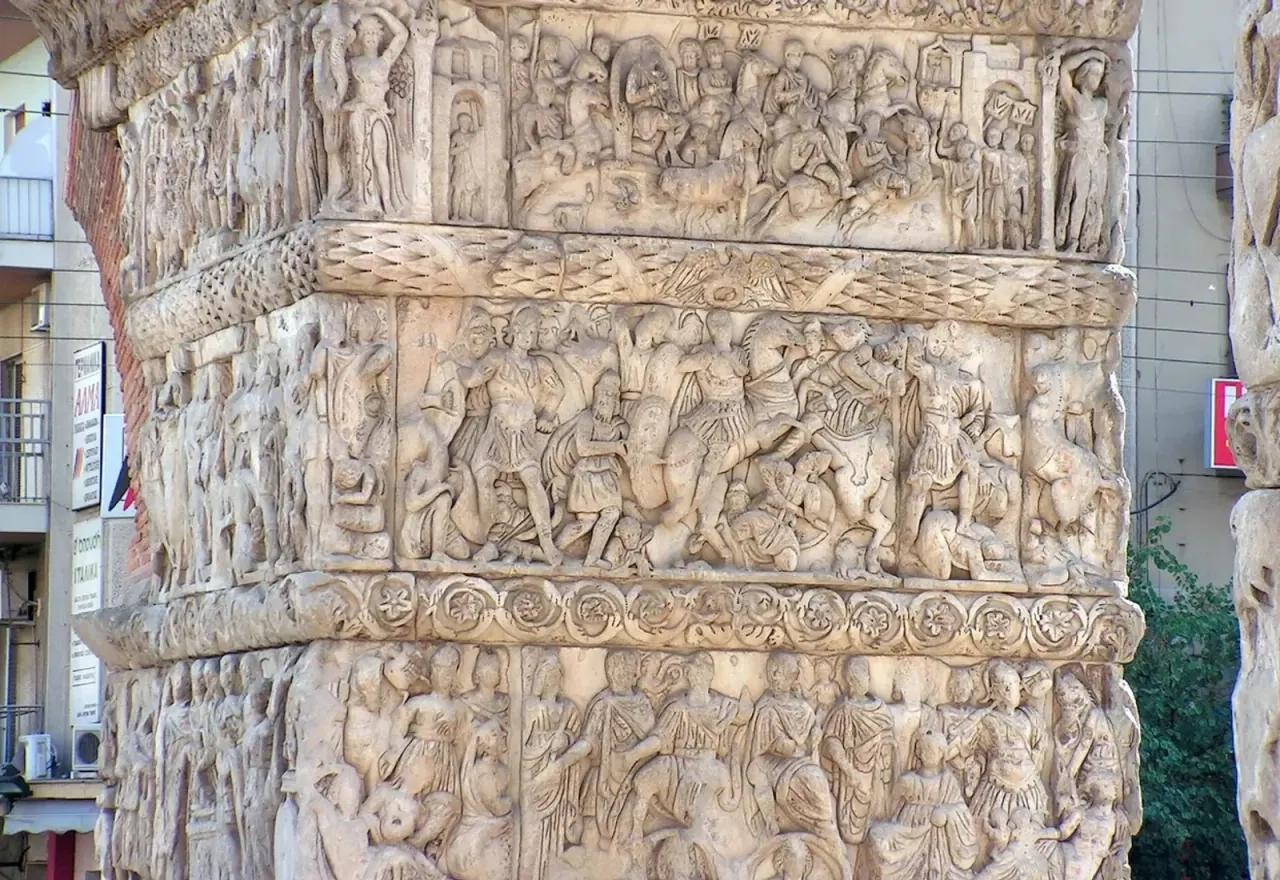
4 min read

A guide to the Heptapyrgion (Yedi Kule) fortress in Thessaloniki — the Byzantine-Ottoman citadel above Ano Poli that spent nearly a century as a feared prison.
5 min read

A guide to Jewish Thessaloniki: how a Sephardic city became the 'Jerusalem of the Balkans', what the Holocaust destroyed, and the sites you can visit.
6 min read