Geschichte
Wie es entstand
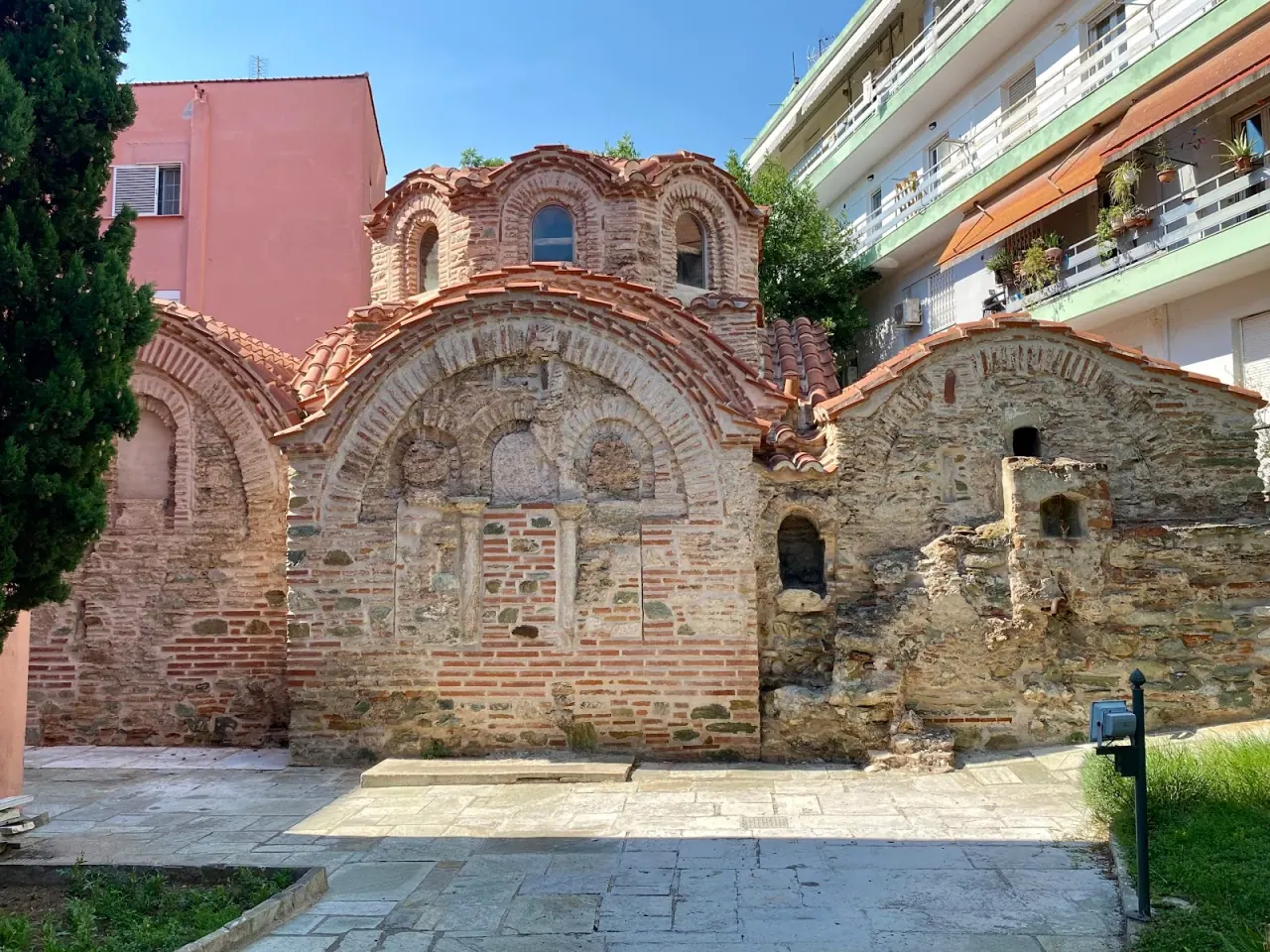
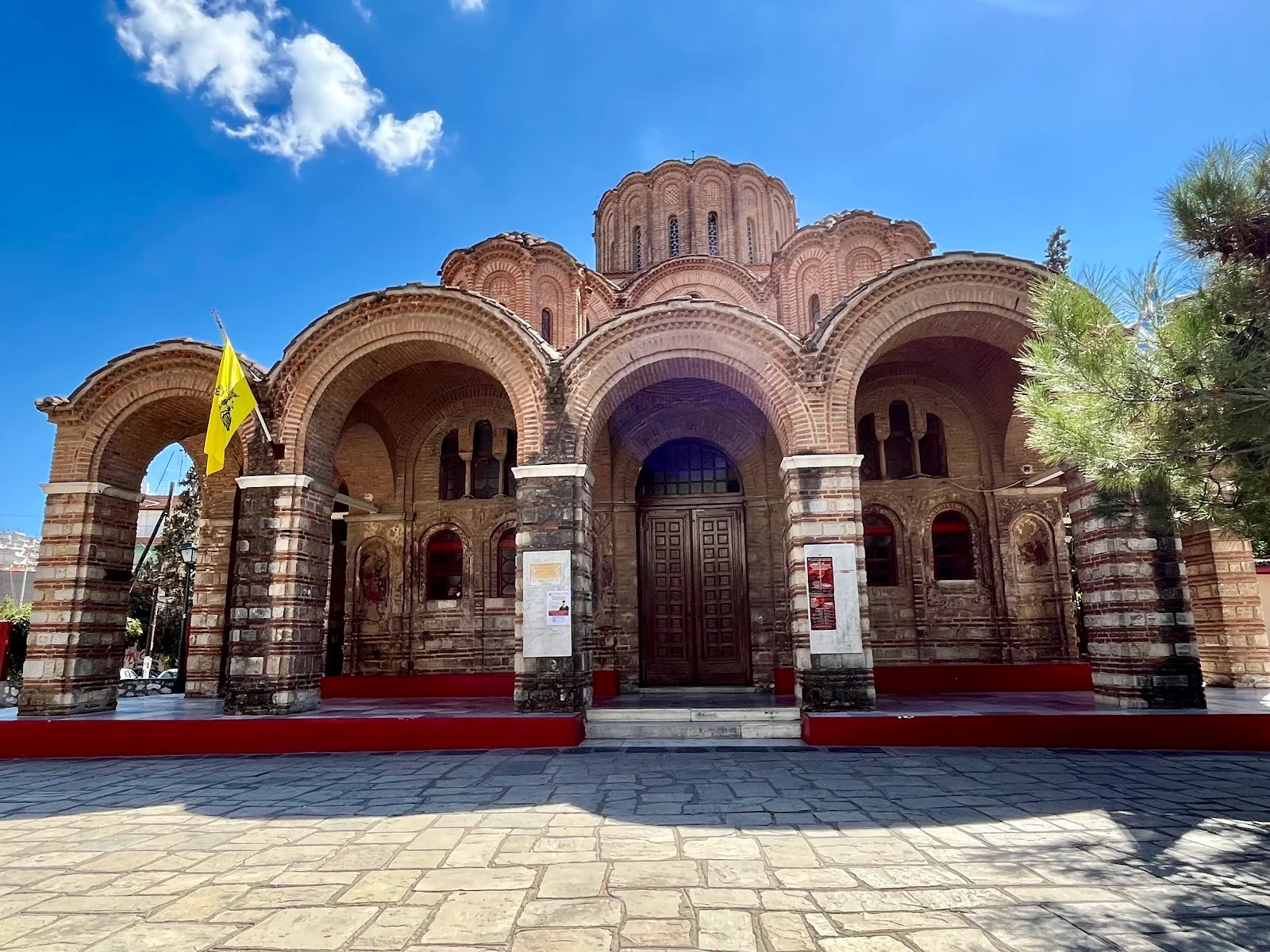
Built around the mid-14th century, most likely as the katholikon of the Nea Moni (the 'New Monastery'). It is the only church in the city of the 'Athonite' type — a triconch plan with lateral apses (choroi) for the monks' choirs, as on Mount Athos. Under Ottoman rule it became a mosque, known as the Saraylı ('palace') Mosque after the nearby site of the Byzantine governor's palace. It is one of the fifteen Paleochristian and Byzantine Monuments of Thessaloniki on the UNESCO World Heritage list.
Was Sie Sehen
Bei einem Besuch
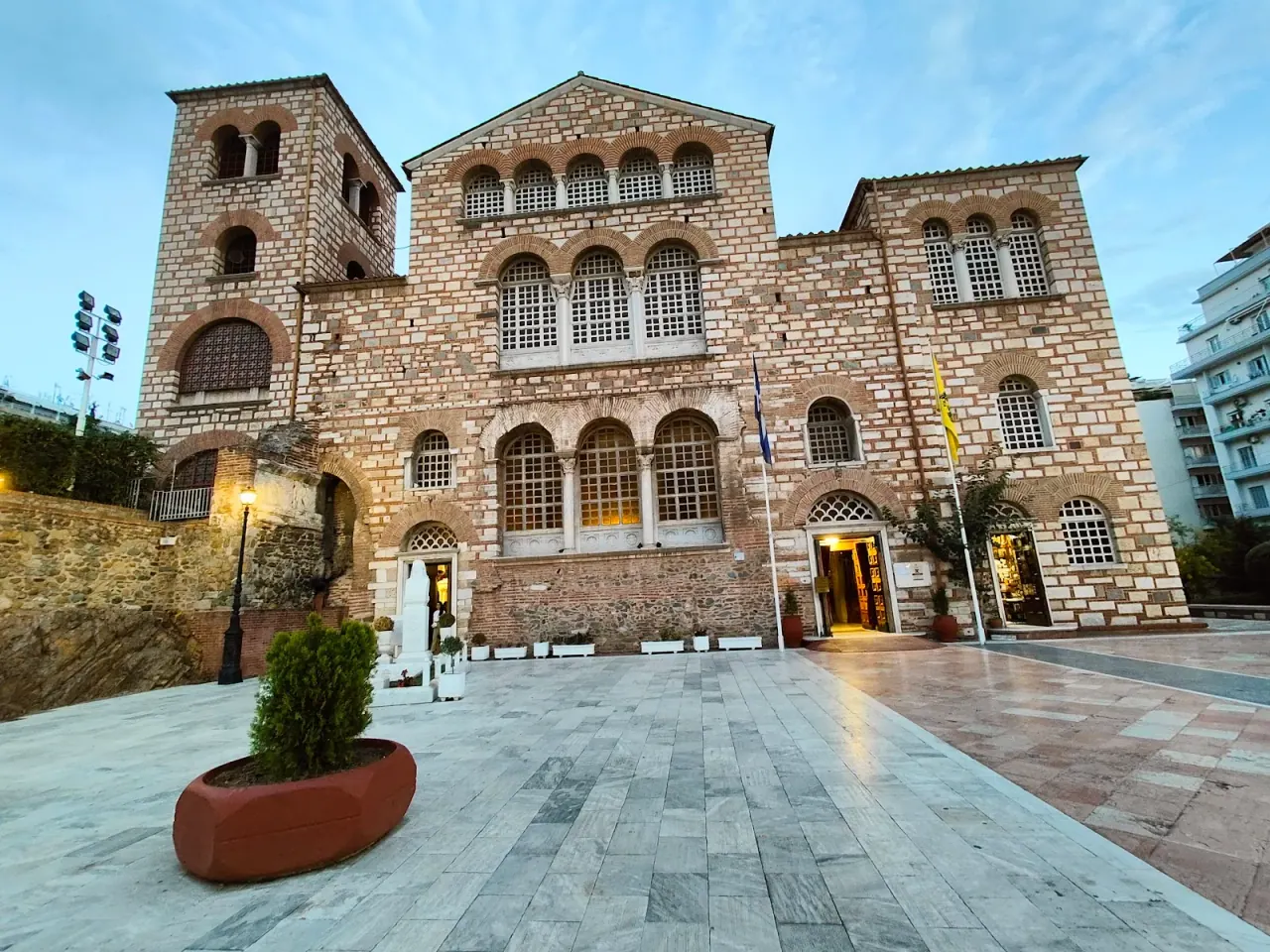
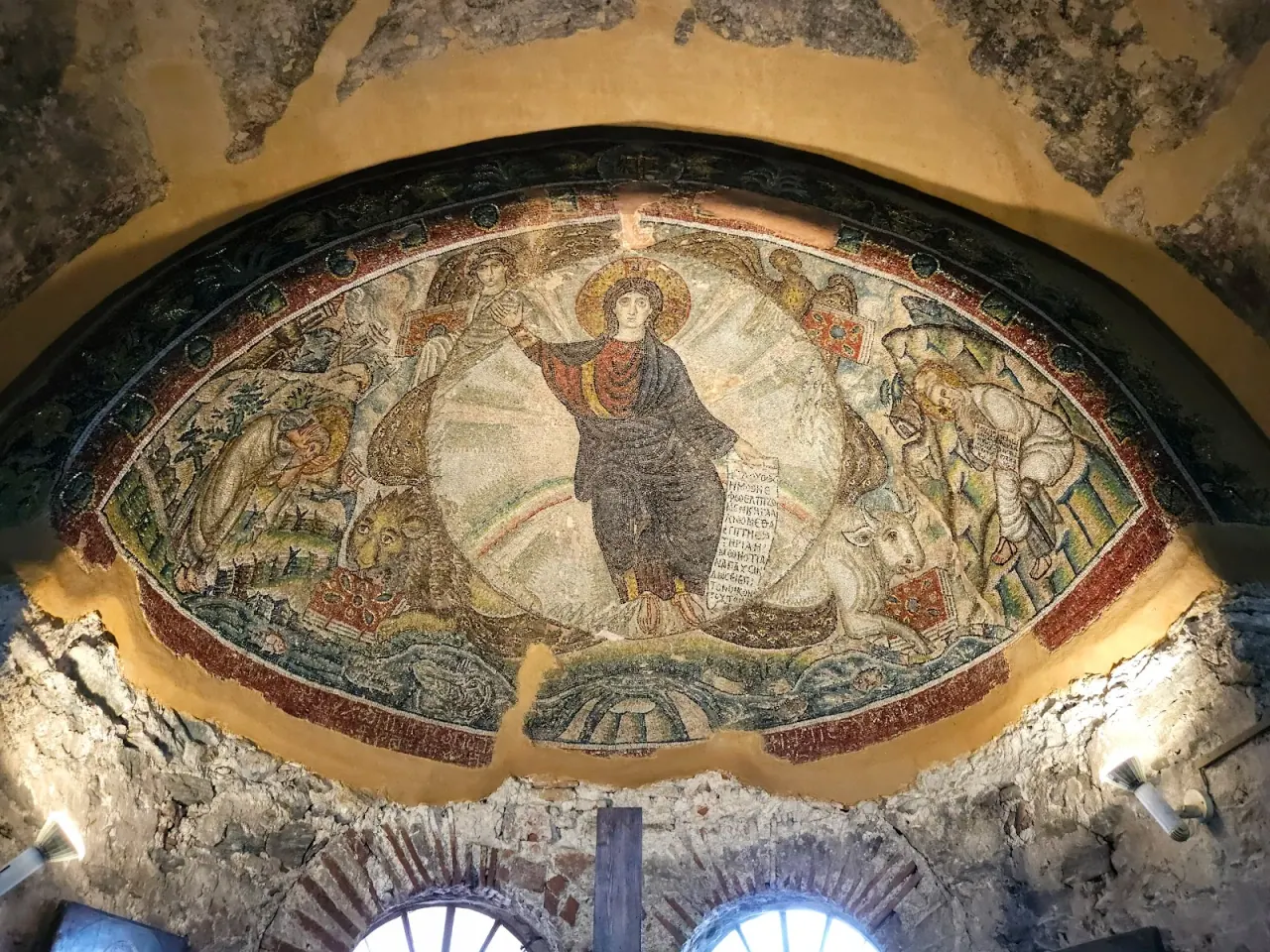
The dramatic exterior — a tall ribbed dome, warm brick masonry and a wide arched portico (exonarthex) across the front — and, inside, the spacious Athonite plan with surviving fragments of 14th-century wall painting in the narthex.
Wie man Besucht
On the slope below Ano Poli, an uphill walk from the centre; the church stands in a paved forecourt. As a working church its hours can be limited, so mornings are most reliable.
Beste Zeit
Morning, for the light on the brick portico
Galerie
Anfahrt
Gut zu Wissen
It is the only church in Thessaloniki built on the Athonite (Mount Athos) monastery plan, a grand mid-14th-century building with a tall dome and a sweeping arcaded portico, plus surviving fragments of Byzantine frescoes. It is a UNESCO World Heritage monument on the slope below Ano Poli.
It dates to the mid-14th century, in the Byzantine Palaiologan period, probably as the katholikon of the Nea Moni monastery. Under Ottoman rule it served as a mosque, and it has been on the UNESCO World Heritage list since 1988.