Actualizado 2026·Verificado a pie·Chalkeon 2, by the Roman Forum, city centre
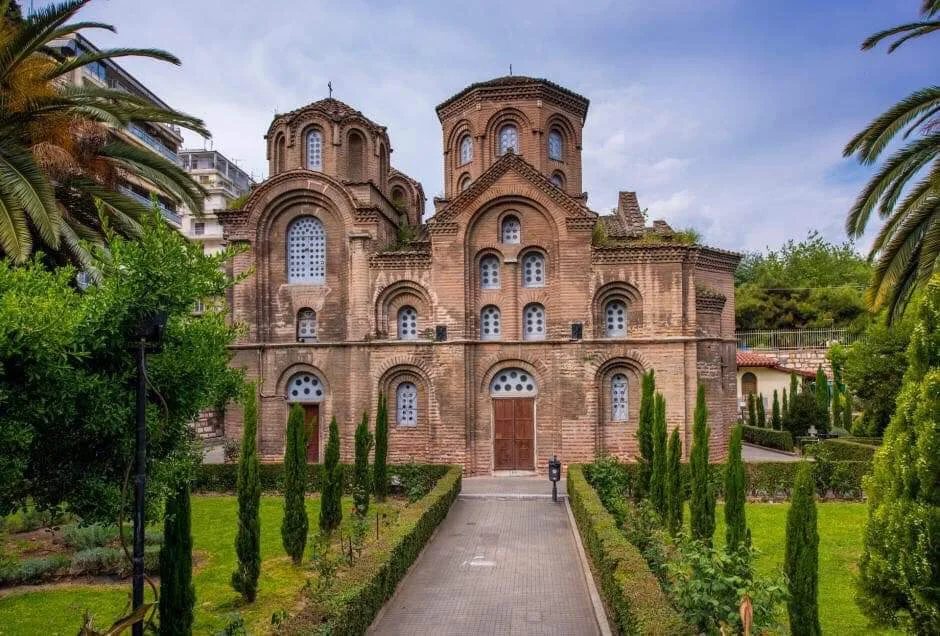
An elegant all-brick cross-in-square church of 1028, nicknamed the 'Red Church' for its warm terracotta masonry, sunk in a small garden beside the Roman Forum in the heart of the city.
Panagia Chalkeon · Byzantine (1028)
Época
Byzantine (1028)
Ubicación
City centre, a block from Aristotelous and Egnatia
Entrada
Free
Horario
Limited hours, usually mornings; check locally
Tiempo Necesario
15–20 minutes
Valoración
4.7★ · 602 reseñas
Horario y precios verificados por última vez en 2026 — cambian, así que confírmalos el mismo día.
Historia
Cómo surgió
Built in 1028 — a dated dedicatory inscription survives over the entrance, naming its Byzantine-official founder. It stood in the metalworkers' quarter, which gave it the name 'of the Chalkeon' (the coppersmiths); under Ottoman rule it became the Kazancılar (coppersmiths') Mosque before being returned to Christian worship in 1912. It is one of the UNESCO-listed Paleochristian and Byzantine Monuments of Thessaloniki.
Lo Que Verás
En una visita
The superb red-brick exterior — three tiled domes, recessed brick arches and dentil courses, a textbook of 11th-century Byzantine masonry — and inside, surviving wall paintings of the same era, all in a quiet sunken garden minutes from the markets.
Cómo Visitar
Central and flat, on Chalkeon just off Egnatia near the Roman Forum; a few minutes' walk from Aristotelous Square. The church sits below street level in its garden.
Mejor Momento
Morning, when the low sun warms the brickwork
Galería
Cómo Llegar
Ubicación
City centre, a block from Aristotelous and Egnatia · Chalkeon 2, by the Roman Forum, city centre
For its construction: it is built almost entirely of warm red brick, unusual and striking among the city's churches, so locals call it the Kokkini Ekklisia — the Red Church. The name 'Chalkeon' instead refers to the coppersmiths' quarter it was built in.
It dates to 1028 — a rare precisely dated Byzantine church, thanks to the founder's inscription above its door. It later served as a mosque under Ottoman rule and was returned to Christian worship in 1912. It's a UNESCO World Heritage monument.