Actualizado 2026·Verificado a pie·Agiou Mina 11, city centre
A small but moving museum telling the story of the Sephardic community that made Thessaloniki one of the only majority-Jewish cities in the world for four centuries — until 1943, when the Nazis deported almost the entire community, some 45,000–50,000 people, to Auschwitz-Birkenau. Over 90% were murdered and fewer than 2,000 survived.
Jewish Museum of Thessaloniki · Modern (opened 2001)
Mon–Fri 09:00–14:00 (Wed also 17:00–20:00); Sun 10:00–14:00; Sat closed
Tiempo Necesario
1–1.5 hours
Valoración
4.5★ · 2,071 reseñas
Horario y precios verificados por última vez en 2026 — cambian, así que confírmalos el mismo día.
Historia
Cómo surgió
Sephardic Jews expelled from Spain in 1492 settled here in such numbers that Thessaloniki became known as the 'Mother of Israel.' For centuries Jews were the city's largest community, dominating its commerce and its port. The 1917 fire gutted the Jewish quarter, and in 1943 the Nazi occupation deported some 46,000 Thessaloniki Jews to Auschwitz-Birkenau, where about 96% were murdered; the city's vast Jewish cemetery had already been destroyed. The museum opened in 2001 in a 1904 building — one of the few to survive the fire, once home to the Jewish newspaper L'Indépendant.
Lo Que Verás
En una visita
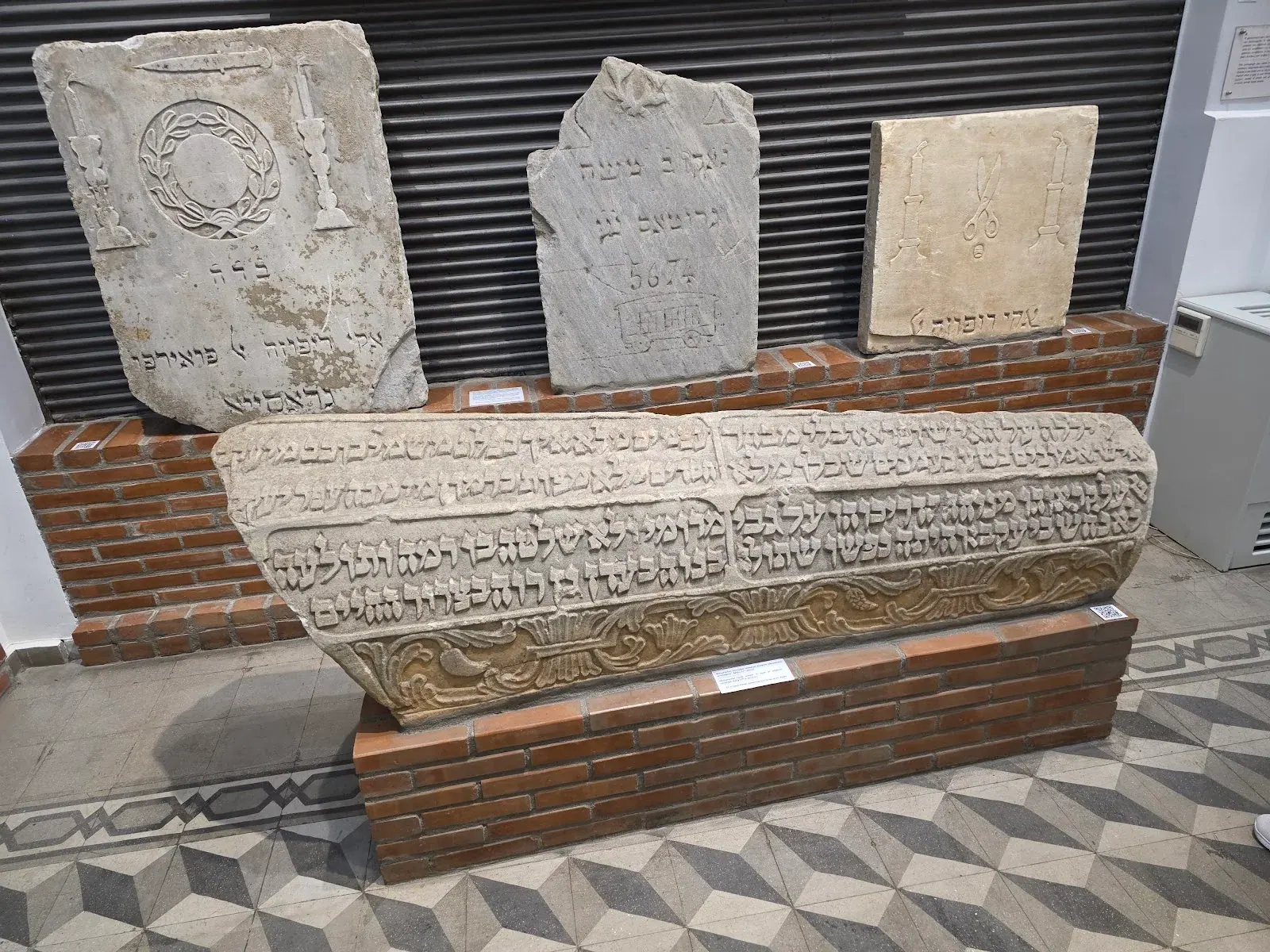
Carved marble tombstones rescued from the destroyed Jewish cemetery, large photographs of pre-war Jewish life and commerce, the printing and press rooms, and a sober ground-floor memorial to the community lost in the Holocaust.
Cómo Visitar
On Agiou Mina, a flat few-minutes' walk from Aristotelous Square and the markets.
Mejor Momento
Pair with a walk through the centre and the markets
Galería
Cómo Llegar
Ubicación
City centre, a block from Aristotelous · Agiou Mina 11, city centre
After the 1492 expulsion from Spain, Sephardic Jews settled here in huge numbers and became the city's largest community for centuries — so dominant that the port reportedly closed on the Jewish Sabbath. It was one of the only majority-Jewish cities in the world until the early 20th century.
About an hour to an hour and a half. It is a compact, two-floor museum, but the subject matter rewards a slow, attentive visit.