At a glance
| Detail | |
|---|---|
| What it is | Six working monasteries atop sandstone pinnacles — UNESCO (cultural + natural) |
| From Thessaloniki | ≈230 km · 2.5–3 h each way (A2/E90 to Kalambaka) |
| By train | To Paleofarsalos + rail-replacement bus (~3 h; Kalambaka line closed since the 2023 floods — check status) |
| Entry | €5 per monastery (cash; under-12 free); each closes a different weekday |
| Dress code | Enforced — knee-length skirt/covered shoulders (women), long trousers (men) |
| Best time | Apr–Jun & Sep–Oct; arrive early |
| Best for | UNESCO heritage, photography, hiking, history |
Why Meteora is worth the drive
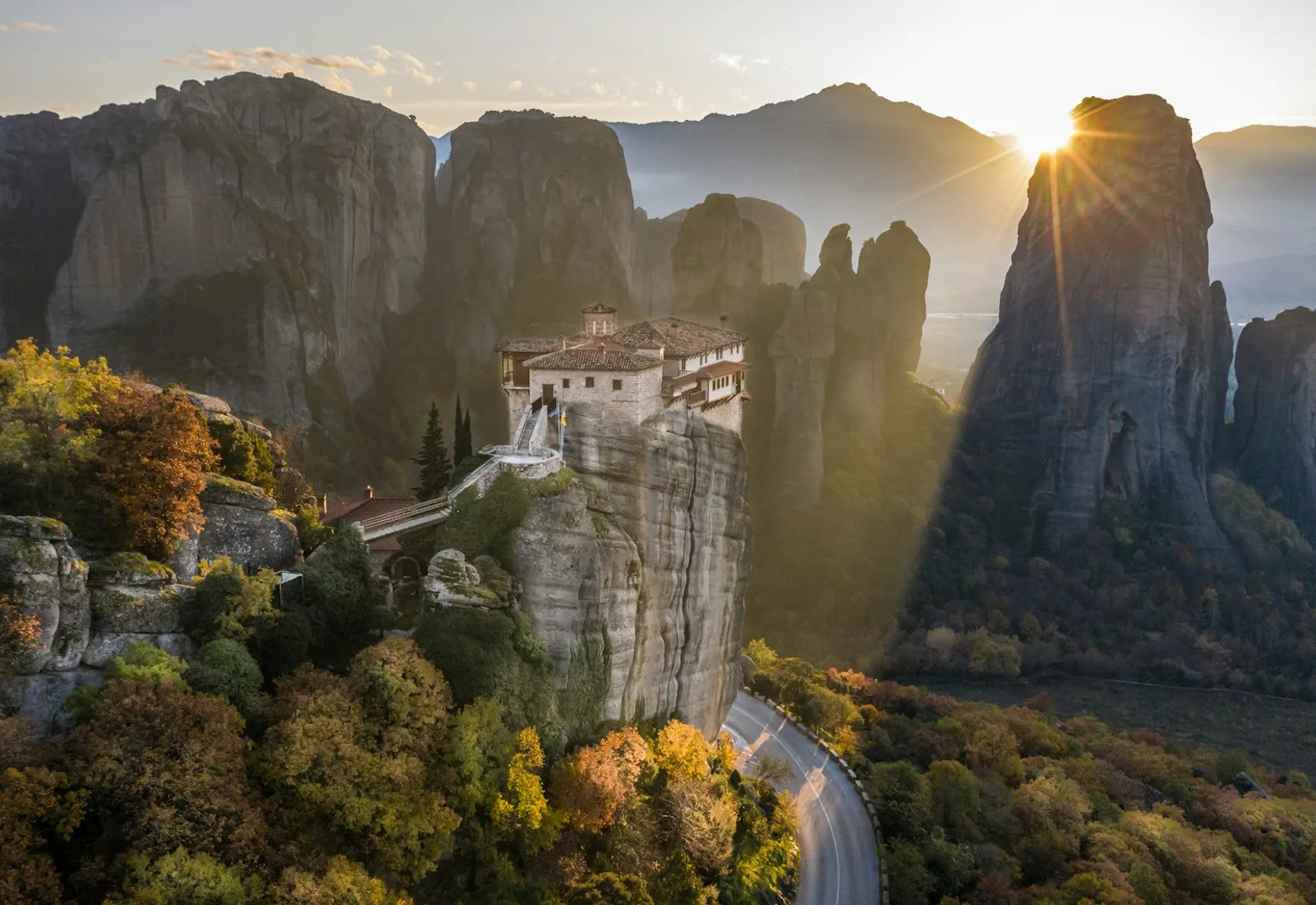
Meteora — literally "suspended in the air" — is a cluster of dark sandstone towers rising straight out of the Thessalian plain, with centuries-old monasteries built impossibly on top of them. It is one of the few places on the UNESCO World Heritage list recognised for both its cultural and its natural significance, and photographs never quite prepare you for the scale of it.
Hermits first climbed these rocks for solitude in the 11th century; by the 14th and 15th centuries organised monastic communities had built the eyries you see today, hauling up people and supplies in nets and on rope ladders. Of the 24 original monasteries, six remain active.
How to do it from Thessaloniki
It is a long but rewarding day. By car it is about 2.5 hours each way on the A2/E90 motorway to the town of Kalambaka, which sits right beneath the rocks. Without a car, take the train to Paleofarsalos and the connecting Hellenic Train rail-replacement bus on to Kalambaka (roughly 3 hours in total; the direct Kalambaka rail line has been closed since the 2023 Thessaly floods and its reopening keeps slipping, so check the current status), or join one of the guided day tours that leave Thessaloniki in the morning and handle the transport and timing for you.
Aim to arrive early. The light is best in the morning, the tour coaches thin out before lunch, and you will want time to visit more than one monastery and walk a stretch of the footpaths between them.
Visiting the monasteries
The six active monasteries each charge €5 entry (cash, children under 12 free) and each closes on a different weekday, so a little planning pays off. The largest, Great Meteoron, and its neighbour Varlaam are the most visited; Roussanou, St Nicholas Anapafsas, Holy Trinity and St Stephen complete the set, the last of which is the easiest to reach on foot.
Dress modestly — skirts below the knee and covered shoulders for women, long trousers for men — and you will be handed a wrap at the gate if you arrive unprepared.