Sunk in a small garden beside the Roman Forum, a jewel of warm terracotta brick catches the eye in the middle of the modern shopping streets: Panagia Chalkeon, the church locals simply call the Red Church. It's one of the loveliest Byzantine buildings in the city — and, unusually, one you can date to the exact year. Here's what it is and how to see it.
What it is
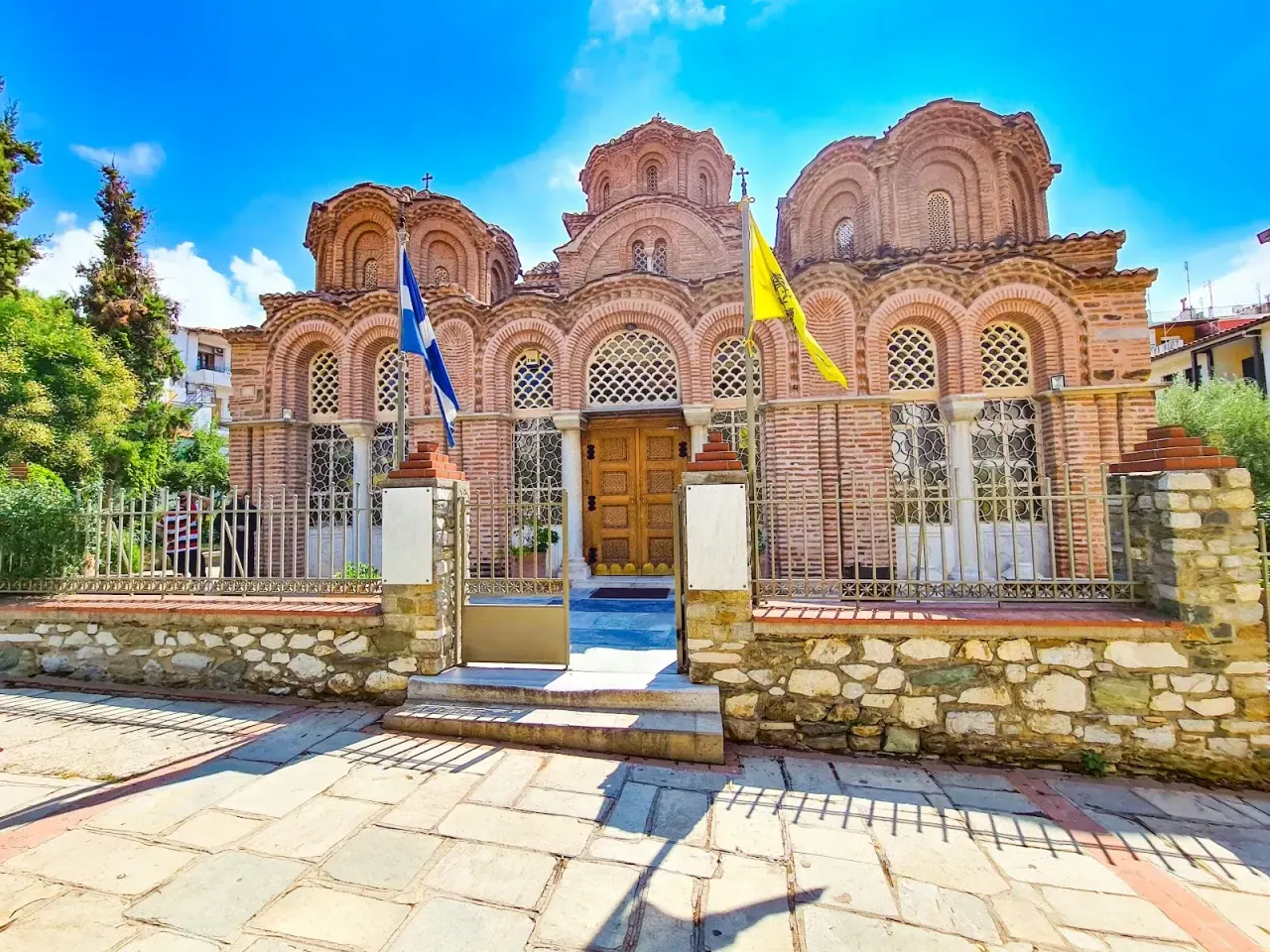
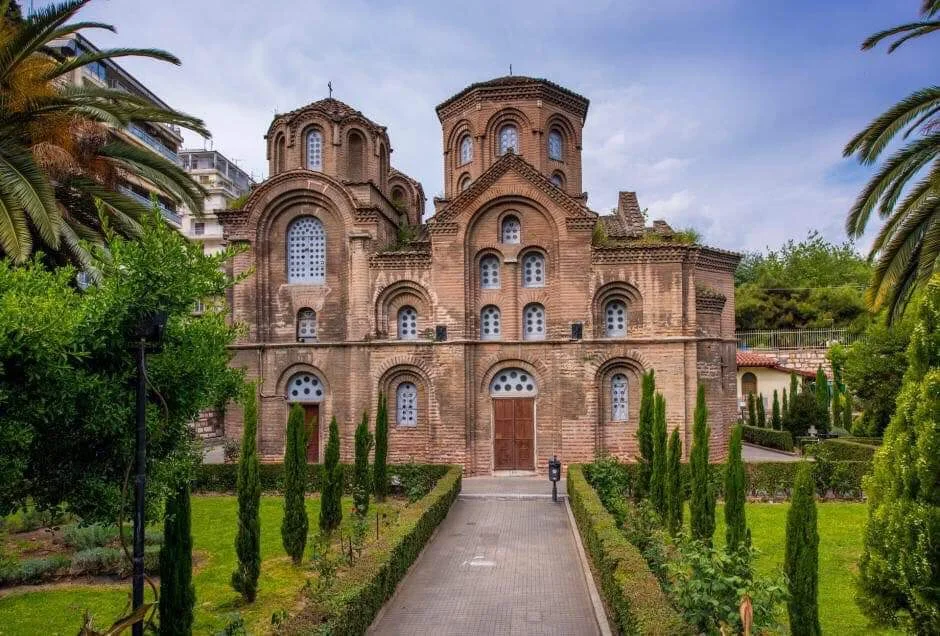
Panagia Chalkeon — "Our Lady of the Coppersmiths" — is an elegant cross-in-square church built entirely of brick in 1028, which gives its glowing red masonry the nickname the Red Church. It's a compact, beautifully proportioned building with three domes (a tall central one and two over the narthex) and blind-arch decoration, and its style shows clear Constantinopolitan influence — an early sign of the capital's architecture reaching Thessaloniki. Its defining feature is the two-storey, twin-domed narthex, which gives the church its unusual height and its distinctive two-tiered dome drum and steep gables — a dynamic, upward-reaching design with few exact parallels, and one of the landmark works of 11th-century Byzantine architecture. It's one of the fifteen Paleochristian and Byzantine monuments of the city on the UNESCO World Heritage list.
One quirk you'll notice: the church sits below the modern street level, in a sunken garden. That's because the great fire of 1917 led the city to raise its ground level in the rebuilding — leaving this survivor from 1028 a step down from the pavement, quietly holding its original grade while the city rose around it.
A church you can date to the year
Most Byzantine buildings are dated by guesswork; this one isn't. A dedicatory inscription over the west door survives, naming the founder and the year. It was raised in 1028 by Christophoros, an imperial protospatharios and katepano (governor) of Longobardia — the Byzantine province in southern Italy — together with his wife Maria and their children. His tomb is still here, set into a niche in the north wall. That precision makes the Red Church a fixed, reliable landmark in the story of Byzantine art, and a rare chance to stand in a building whose exact birthday is written above the door.
Inside — three centuries of frescoes
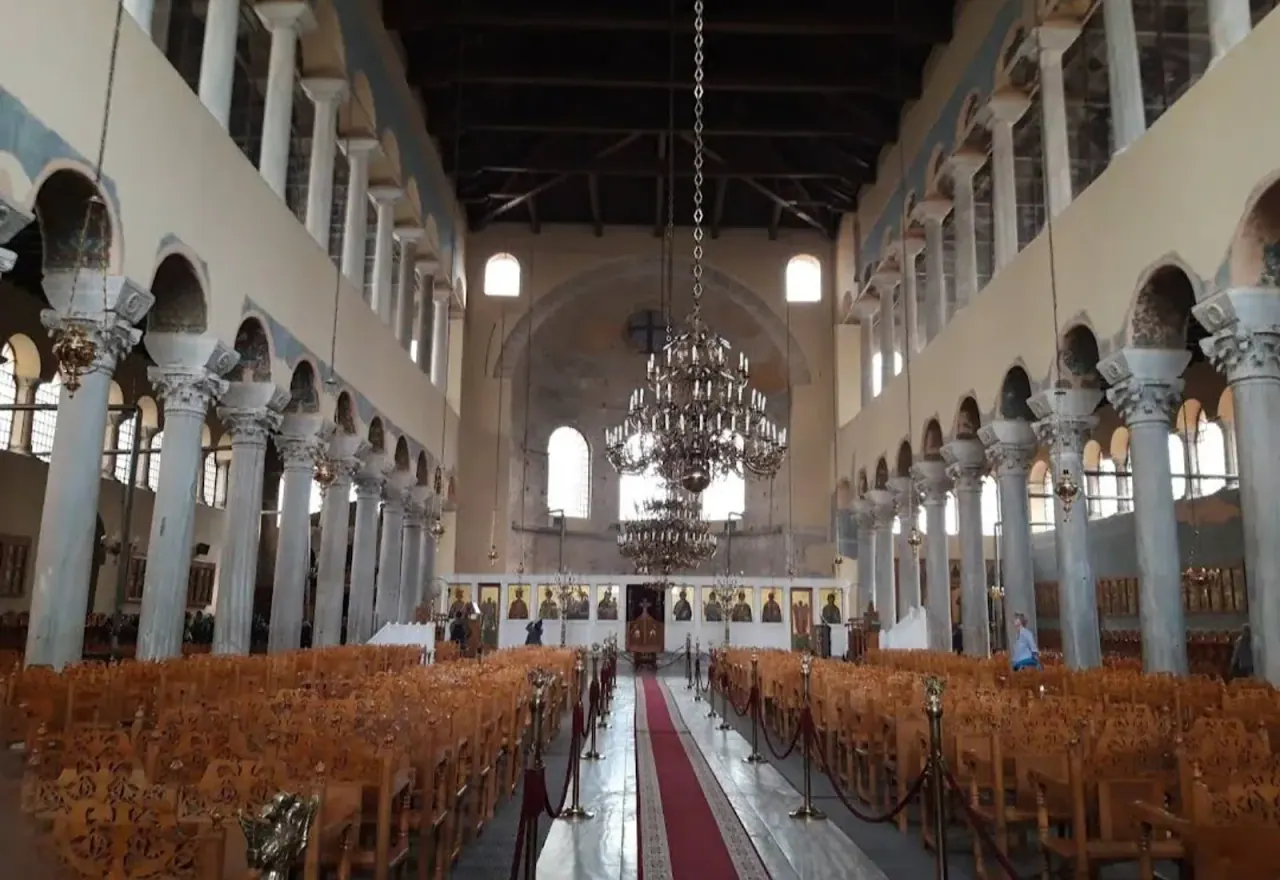
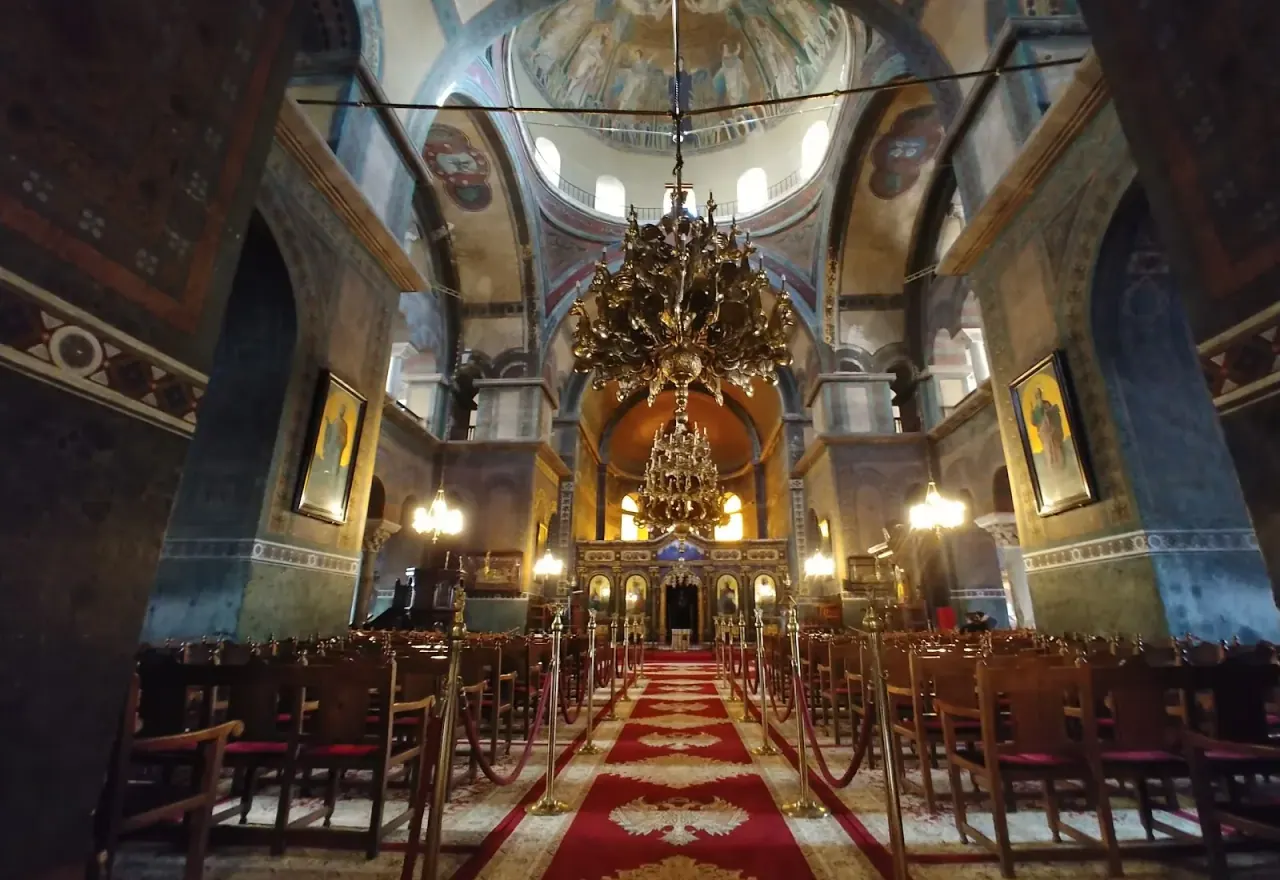
The Red Church isn't only a beautiful shell. Its interior was painted on three separate occasions — at its founding in the 11th century, and again in the 12th and 14th — so its walls layer several generations of Byzantine art. The best-preserved are the Ascension in the central dome and, in the narthex, a Last Judgment that is one of the earliest surviving depictions of the theme in Byzantine painting. In the curve of the apse stands the Virgin Orant, hands raised in prayer, flanked by two archangels, and below her a row of the anargyroi — the "unmercenary" saints, physician-healers who took no payment for their care. Even where the plaster is faded, it rewards a slow, quiet look up.
From coppersmiths to mosque and back
The name comes from the metalworkers' quarter the church stood in — the chalkeis, the coppersmiths, whose workshops surrounded it (the old copper bazaar is still nearby). Under Ottoman rule it was converted into a mosque, the Kazancılar (Coppersmiths') Mosque, and it was returned to Christian worship after the city's liberation in 1912 — the same arc from Byzantine church to mosque and back that so many of the city's Ottoman-era monuments trace.
How to visit
- Where: at Chalkeon 2, beside the Roman Forum, a block from Aristotelous Square and Egnatia in the heart of the centre.
- Cost: free — a working Orthodox church, open to visitors by day.
- When: morning or later afternoon; it often closes for a few hours around midday, and it's quiet during services.
- Dress: modestly, as at any working church, and be discreet inside.
Being so central, it's easy to fold into a walk: it sits right by the Roman Forum and the markets, and it's one of the essential stops on our Byzantine monuments guide — the Museum of Byzantine Culture puts its art in context. A small, free, unmissable pleasure on any list of free things to do.
Frequently Asked Questions
What is Panagia Chalkeon (the Red Church)?
Panagia Chalkeon is an all-brick Byzantine church built in 1028 in central Thessaloniki, nicknamed the "Red Church" for its warm terracotta masonry. A cross-in-square building with three domes and Constantinopolitan-influenced design, it's one of the city's fifteen UNESCO-listed Paleochristian and Byzantine monuments, standing in a garden beside the Roman Forum.
Why is it called the Red Church?
Because it's built entirely of red-orange brick, which glows against its garden setting — locals nickname it the "Red Church." Its formal name, Panagia ton Chalkeon ("Our Lady of the Coppersmiths"), comes instead from the metalworkers' quarter it was built in.
How old is Panagia Chalkeon, and who built it?
It was built in 1028 — a date known precisely from the dedicatory inscription that survives over its west door. The founder named there is Christophoros, an imperial protospatharios and katepano (governor) of Longobardia in Byzantine southern Italy, with his wife and children; his tomb is inside the church.
Can you visit the Red Church, and is it free?
Yes. It's a working Orthodox church with free entry, open to visitors during the day (it usually closes for a few hours around midday, and is quieter during services). Dress modestly and be discreet inside. It's very central, right by the Roman Forum, so it's easy to combine with the markets and the city's other Byzantine monuments.
Are there frescoes inside Panagia Chalkeon?
Yes — the interior was painted in three phases (11th, 12th and 14th centuries). The highlights are the Ascension in the central dome and a Last Judgment in the narthex that is among the earliest surviving depictions of the theme, plus the Virgin Orant with archangels in the apse and a row of the "unmercenary" healer-saints below.
Why does the Red Church sit below street level?
Because the great fire of 1917 led Thessaloniki to raise its ground level during reconstruction. The church, standing since 1028, kept its original grade, so today it sits a step down from the modern pavement in its sunken garden.