High in the northwestern corner of Ano Poli, on a quiet lane most visitors never climb to, stands one of the most graceful of Thessaloniki's Byzantine churches. The Church of Agia Aikaterini (Saint Catherine) is a five-domed jewel of the last great age of Byzantine building — and, being well off the tourist track, one you'll often have almost to yourself. Here's what it is and how to see it.
What it is
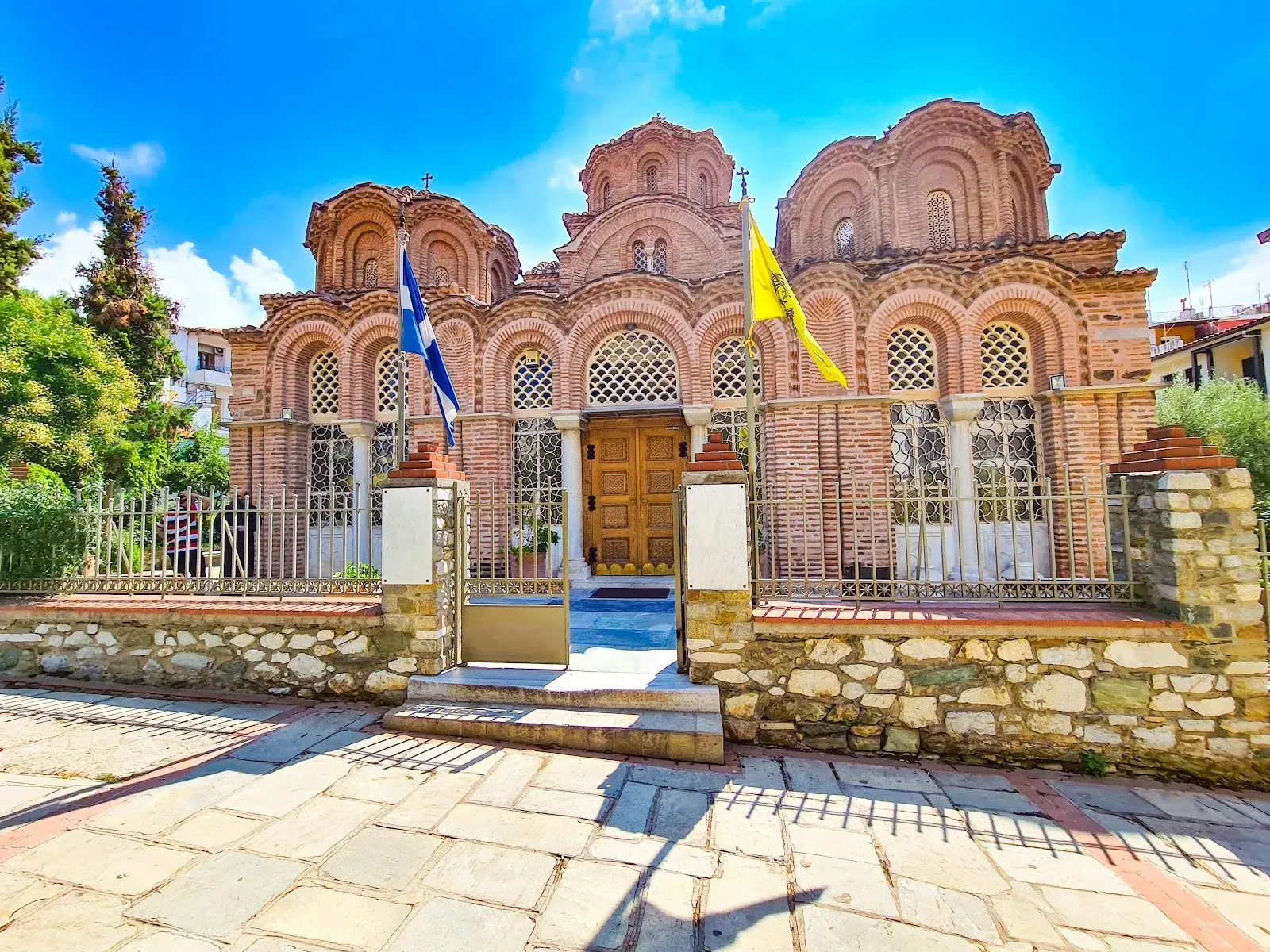
Agia Aikaterini is a five-domed cross-in-square church wrapped on three sides by an arcaded ambulatory — the refined, "Constantinopolitan" plan of the Palaiologan revival, the Byzantine Empire's final artistic flowering. It was built in the late 13th or early 14th century; its founder is unknown, but the elegance of its design places it firmly in that golden age. It shares its distinctive plan — an attenuated cross-in-square core enveloped by a pi-shaped ambulatory that ends in two little symmetrical chapels at the east — with the city's Church of the Holy Apostles and Agios Panteleimon, the three of them a closely related family of Constantinople-inspired churches. It is one of the fifteen Paleochristian and Byzantine Monuments of Thessaloniki inscribed on the UNESCO World Heritage list in 1988.
The Palaiologan golden age
Agia Aikaterini is a product of the Palaiologan Renaissance — the last great flowering of Byzantine art and architecture under the Palaiologos dynasty (1261–1453). In those final two centuries Thessaloniki, the empire's wealthy second city, became a leading centre of building and painting, and its master masons and fresco-painters were among the best in the Byzantine world. That's why the upper town is dotted with graceful late-Byzantine churches like this one — several of them, together, making up much of the city's UNESCO listing. Agia Aikaterini is one of the purest and least-altered survivors of that era.
The exterior — the reason to climb up
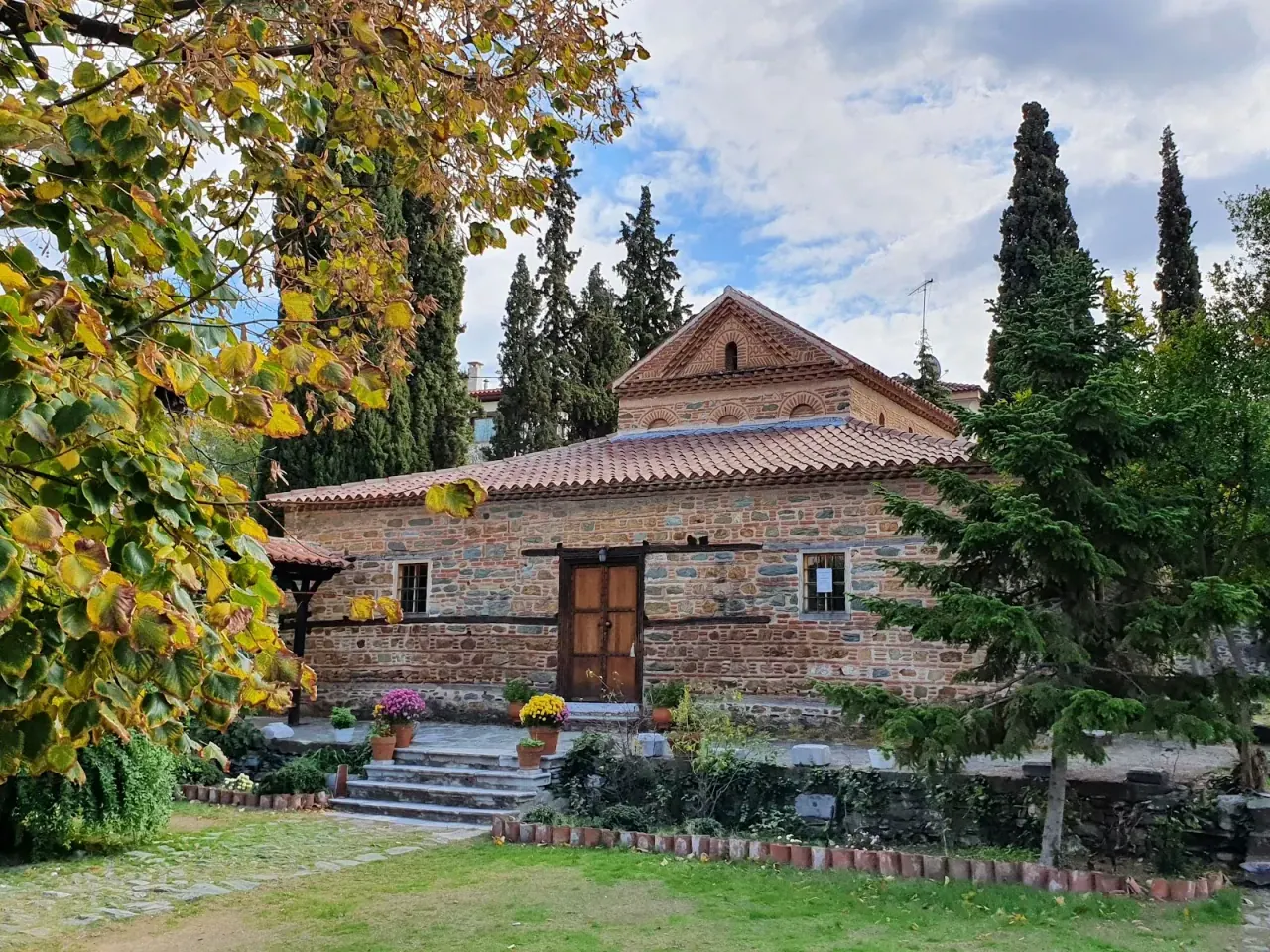
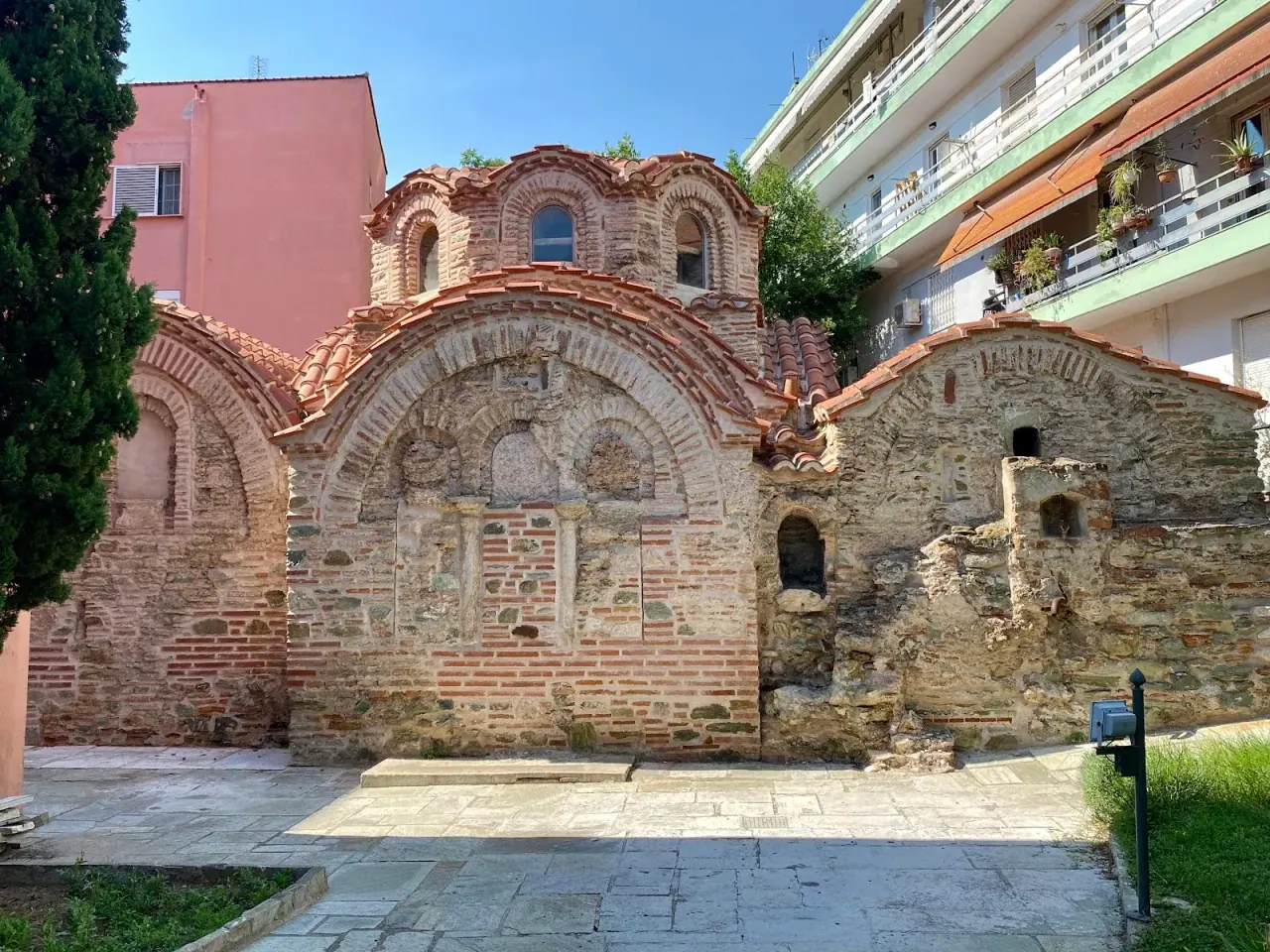
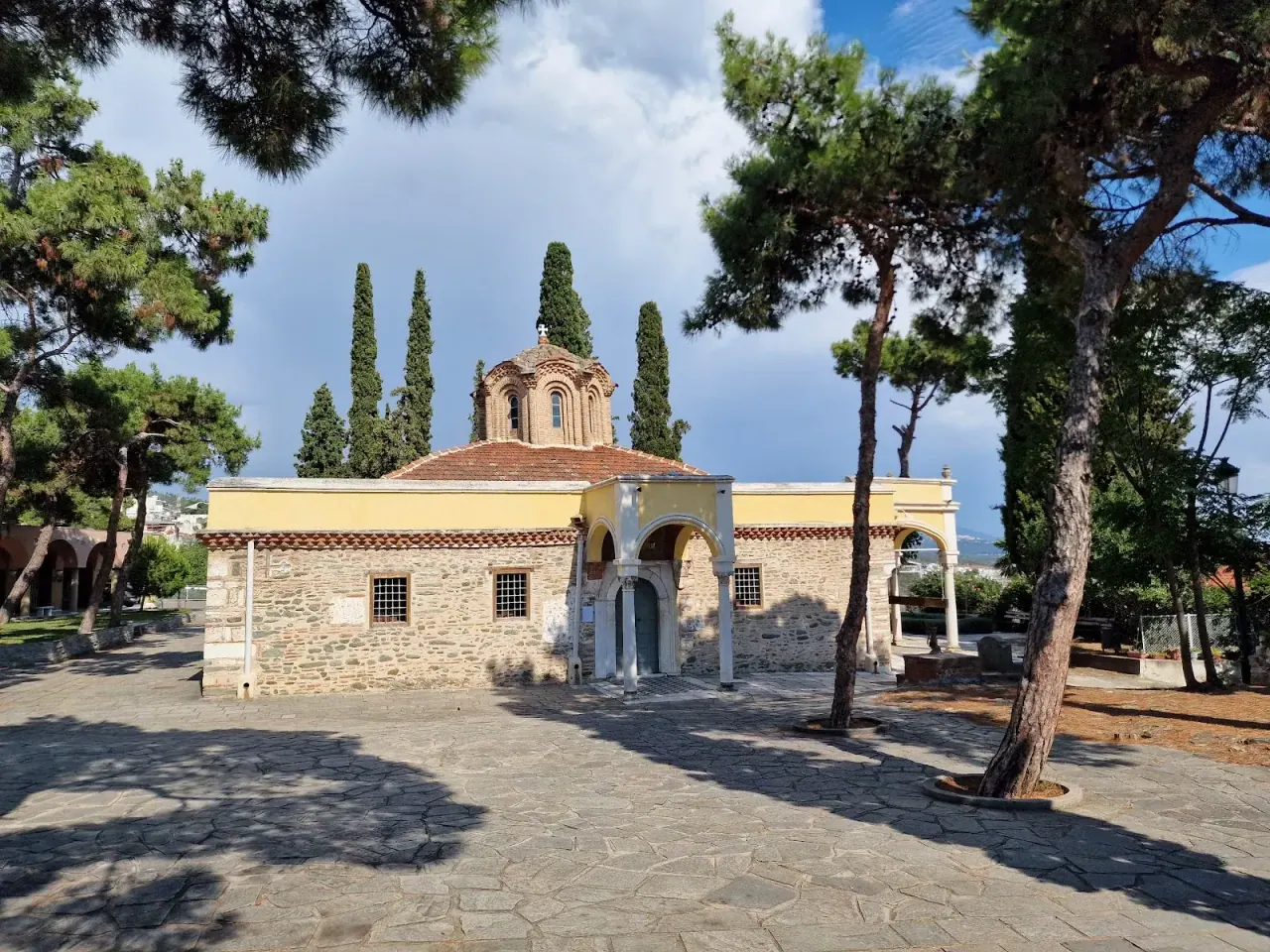
The pleasure of Agia Aikaterini is its outside. Five tiled domes rise over the cross-in-square core, and a graceful arcaded gallery runs around three sides, its arches framed in the bands of decorative brickwork that Thessaloniki's Byzantine masons did better than almost anyone — meanders, recessed arches and patterned courses laid across the warm red brick. Walk right around it; the apse at the back carries some of the finest patterning. Morning light, raking across the brick, is when it looks its best.
Inside — surviving frescoes
Under Ottoman rule the church was converted into a mosque by Yakup Pasha, in the reign of Sultan Bayezid II (around 1500), becoming known as the Yakub Pasha Mosque — and, as so often in Thessaloniki, the plaster applied then is exactly why its paintings survived. Fragments of accomplished early-14th-century frescoes remain beneath the central dome and in the ambulatory, giving a glimpse of the Palaiologan wall-painting that once covered the whole interior. It's a working Orthodox church again today, quiet and rarely busy.
How to visit
- Where: in the northwestern lanes of upper Ano Poli, near the Byzantine city walls — about a 15–20 minute climb up from the centre, or a city bus toward the upper town.
- Cost: free — a working church, open to visitors by day.
- When: as a working church its hours are limited and it's most reliably open in the mornings; it can close for a few hours around midday.
- Dress: modestly, and be discreet inside; even if the doors are locked, the brickwork alone rewards the walk up.
It's a natural addition to a tour of the city's Byzantine monuments, and pairs with the walk up to the Byzantine walls and the frescoes of Agios Nikolaos Orfanos nearby. The Museum of Byzantine Culture sets its art in context, and it's one of the quieter free things to do in the city.
Frequently Asked Questions
What is the Church of Agia Aikaterini in Thessaloniki?
It's a late-13th- or early-14th-century Byzantine church in the northwestern part of Ano Poli — a five-domed cross-in-square building of the Palaiologan era, one of the city's fifteen UNESCO-listed Paleochristian and Byzantine monuments. It's known for its elegant brickwork and arcaded gallery outside, and surviving fragments of early-14th-century frescoes within.
Why is Agia Aikaterini worth visiting?
For its architecture above all — a beautifully proportioned Palaiologan church of around 1300, with five domes, a columned ambulatory and intricate decorative brickwork. It is a UNESCO World Heritage monument, far quieter than the big central churches, and rewards the climb into upper Ano Poli with the light on its brick and its calm garden setting.
Is Agia Aikaterini free to visit?
Yes — it's a working Orthodox church with free entry, open to visitors during the day. Its hours are limited, so mornings are the most reliable time; it can close for a few hours around midday. Dress modestly, and even if it's locked, the exterior brickwork makes the walk worthwhile.
Was Agia Aikaterini ever a mosque?
Yes. Under Ottoman rule it was converted into a mosque by Yakup Pasha in the reign of Sultan Bayezid II, around 1500, and became known as the Yakub Pasha Mosque. The plaster applied during that period helped preserve fragments of its early-14th-century Byzantine frescoes, which survive inside the church today.
What is the Palaiologan Renaissance, and why does Thessaloniki have so many such churches?
It was the final flowering of Byzantine art and architecture under the Palaiologos dynasty (1261–1453). As the empire's wealthy second city, Thessaloniki was a leading centre of church-building and fresco-painting in that era, which is why its upper town holds a cluster of elegant late-Byzantine churches — several of them, including Agia Aikaterini, part of the city's UNESCO listing.
What other churches are like Agia Aikaterini?
Its plan — a cross-in-square core wrapped in a pi-shaped ambulatory ending in two eastern chapels — is closely shared with the Church of the Holy Apostles and Agios Panteleimon, a related family of Constantinople-inspired Palaiologan churches in the city. The Holy Apostles, with its own superb brickwork and mosaics, pairs especially well with a visit here.