Historia
Cómo surgió
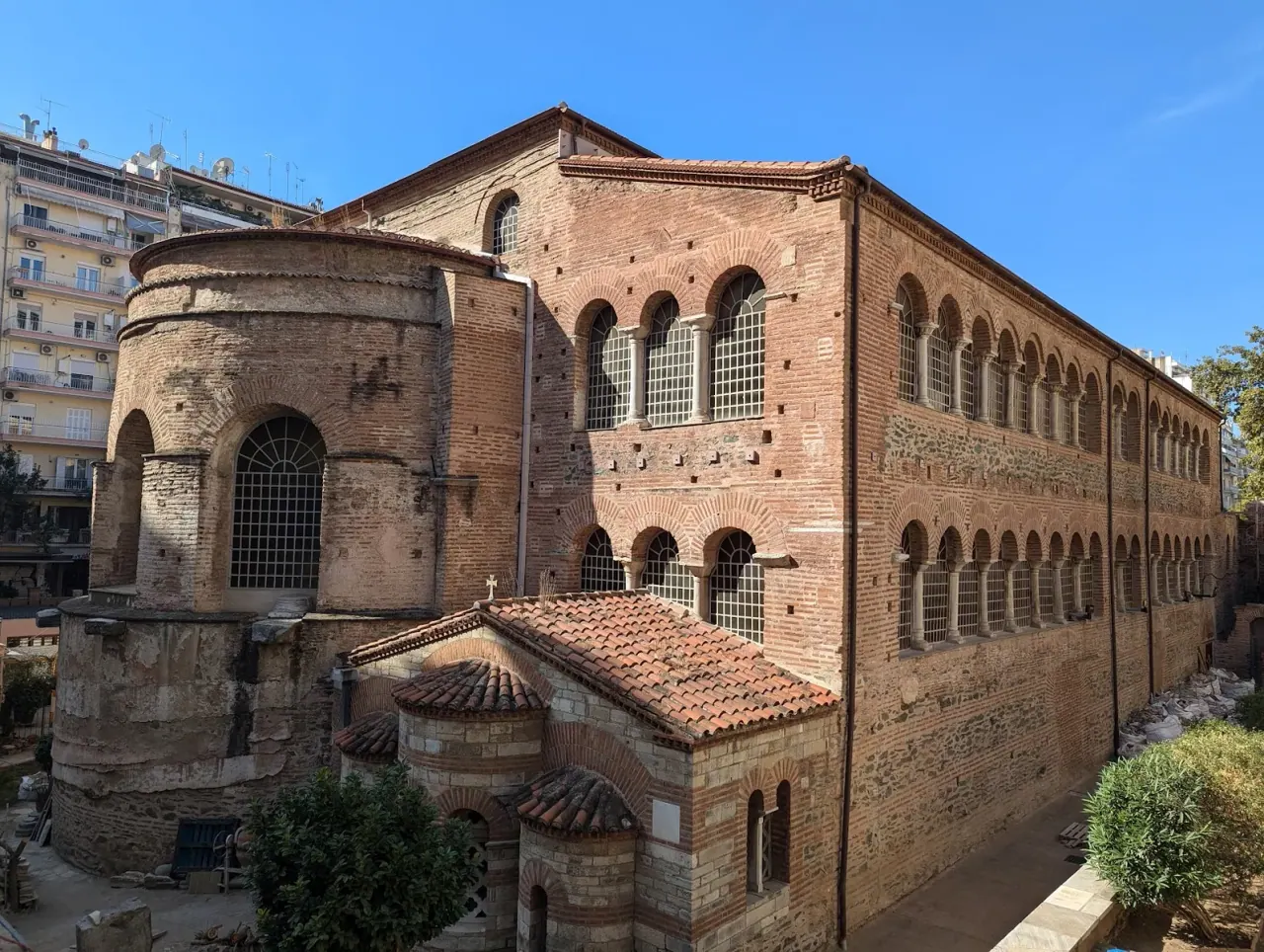
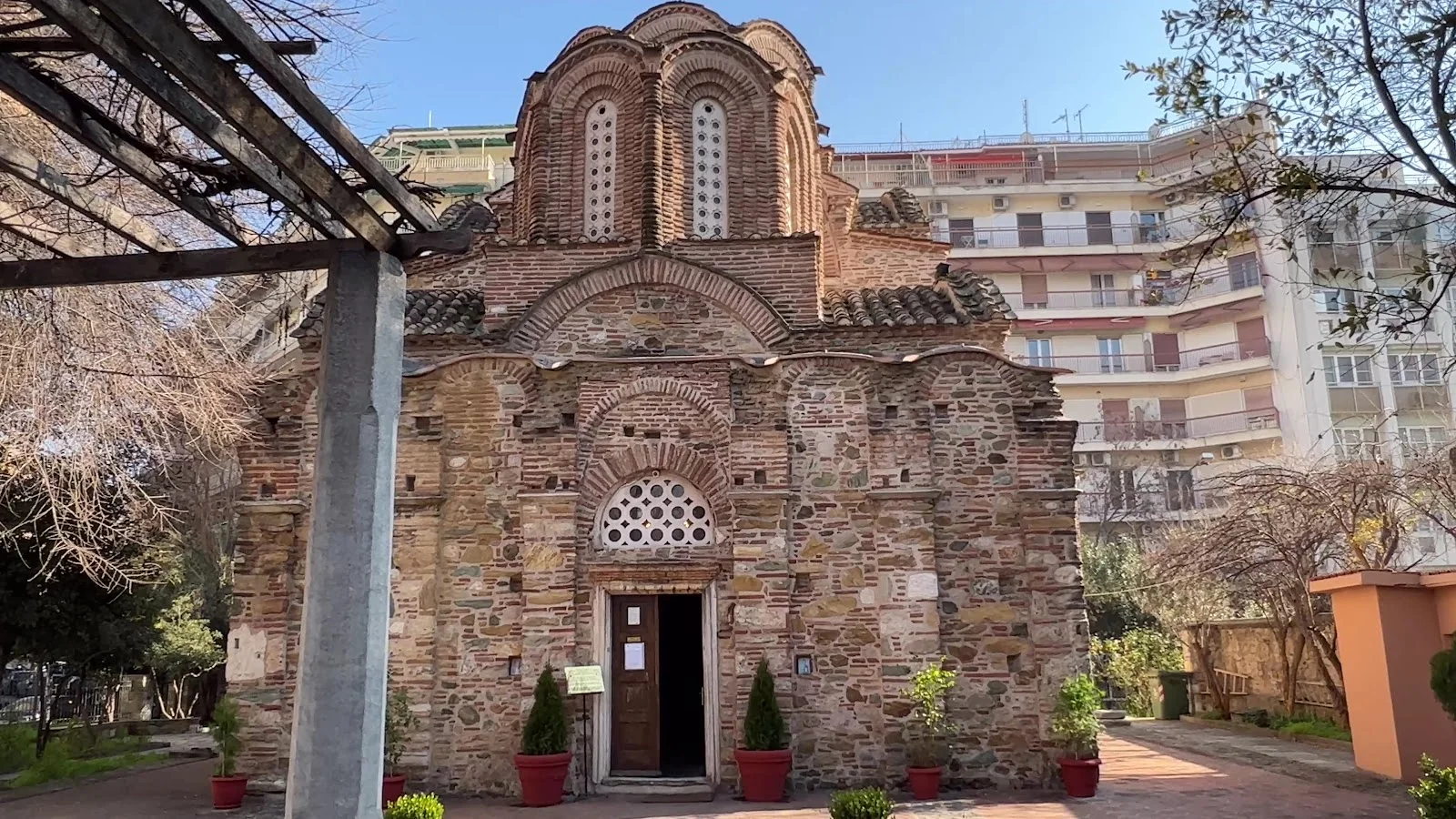
Built around the turn of the 14th century (roughly 1295–1314), in the Palaiologan period, as the katholikon of a monastery. Under Ottoman rule it was converted into the Isakiye Mosque; later damage stripped away much of its painted decoration, but fragments of fine early-14th-century frescoes survive. It is one of the fifteen Paleochristian and Byzantine Monuments of Thessaloniki inscribed on the UNESCO World Heritage list.
Lo Que Verás
En una visita
The harmonious exterior — a single central dome over a cross-in-square core wrapped by an ambulatory, in banded brick-and-stone masonry — the leafy courtyard around it, and surviving fragments of Palaiologan wall painting inside, all a couple of minutes from the Rotunda.
Cómo Visitar
Central and flat, just off Egnatia near the Arch of Galerius; the church sits in a planted courtyard. As a working church its hours can be limited, so mornings are the safest bet.
Mejor Momento
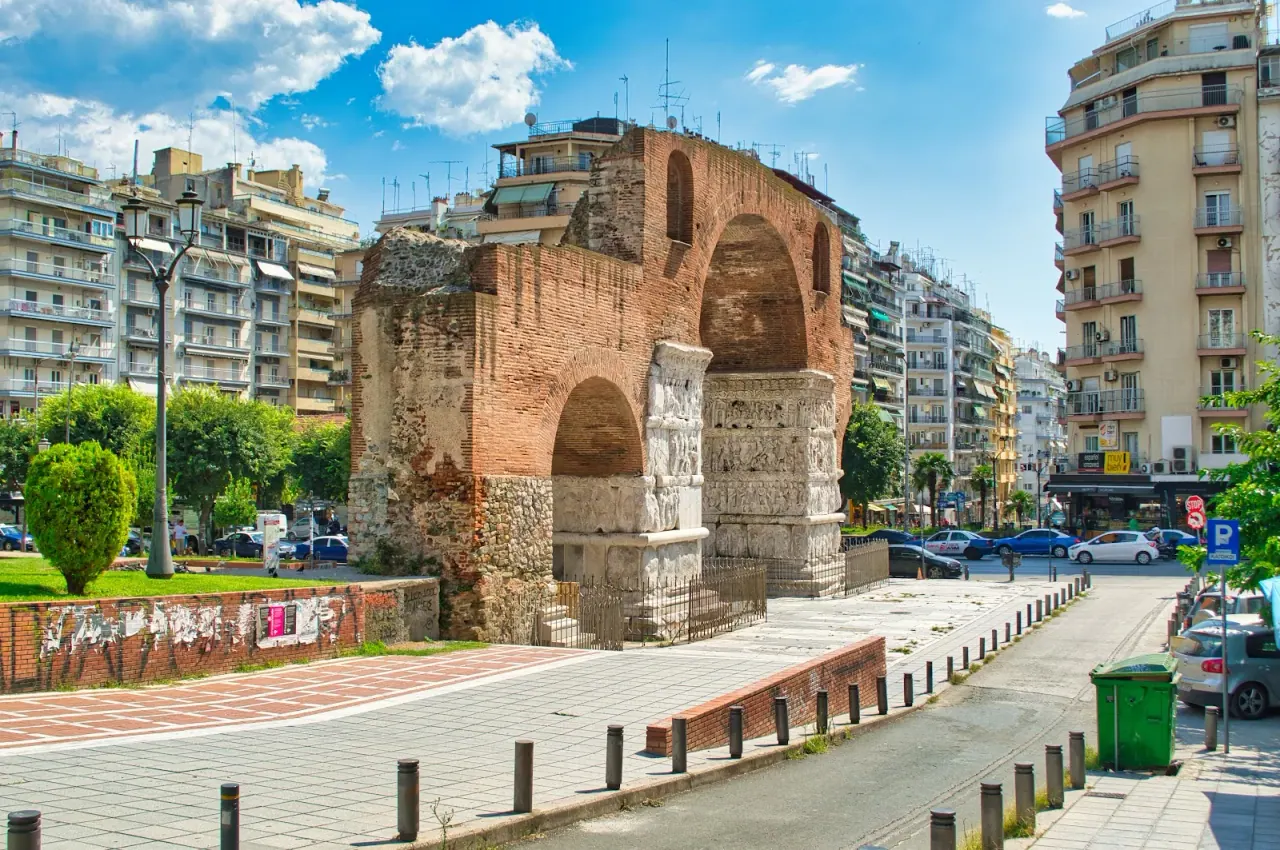
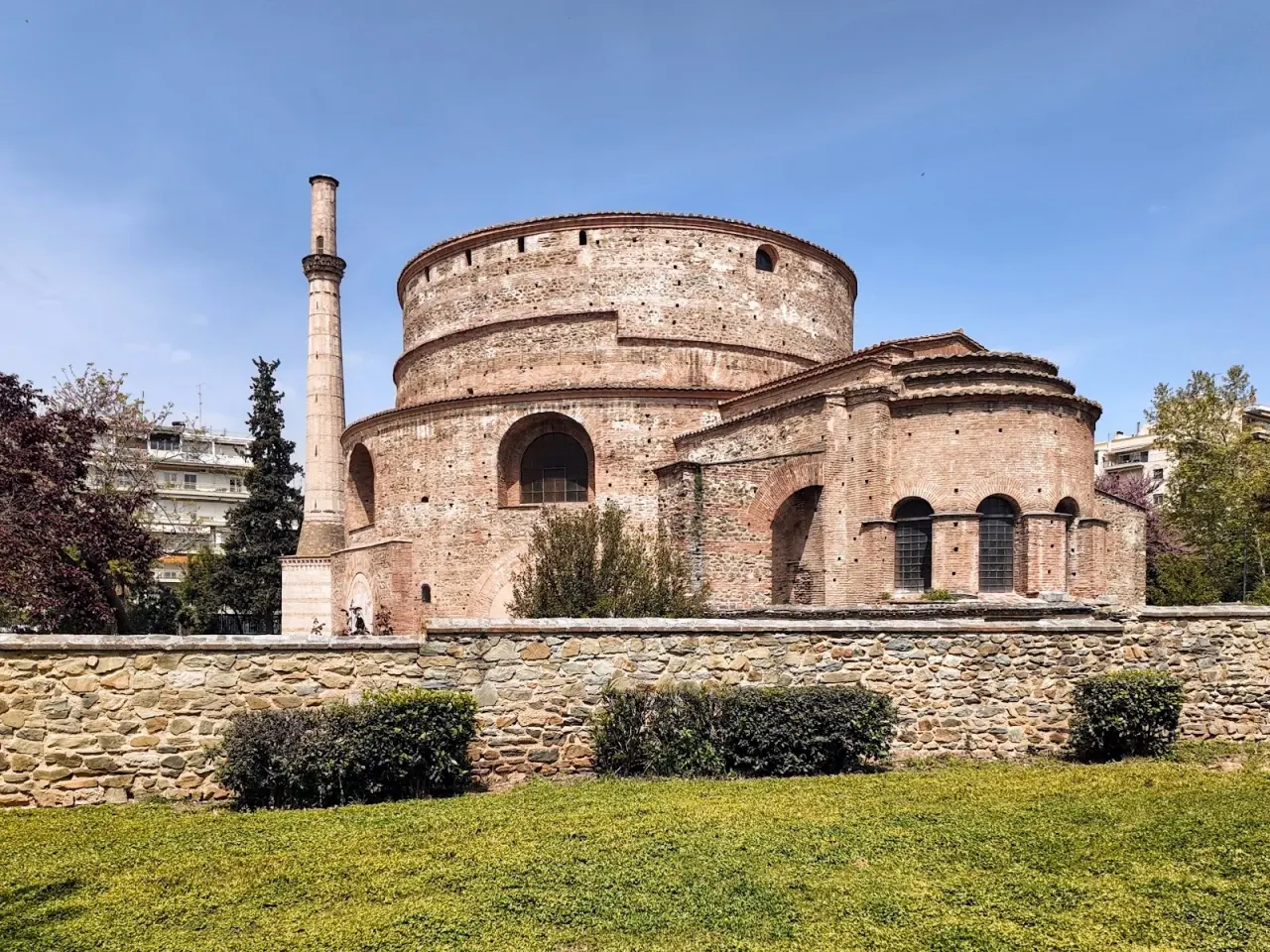
Combine with the Rotunda and Arch of Galerius next door
Galería
Cómo Llegar
Bueno Saber
It is a graceful Palaiologan church of around 1300, a UNESCO World Heritage monument, and it sits just a couple of minutes from the Rotunda and the Arch of Galerius — so it is the easiest of the Byzantine churches to add to a walk through the centre.
It was built around 1295–1314, in the Byzantine Palaiologan period. Under Ottoman rule it became the Isakiye Mosque before returning to Christian use, and it has been on the UNESCO World Heritage list since 1988.