Bijgewerkt 2026·Te voet gecontroleerd·Chalkeon 2, by the Roman Forum, city centre
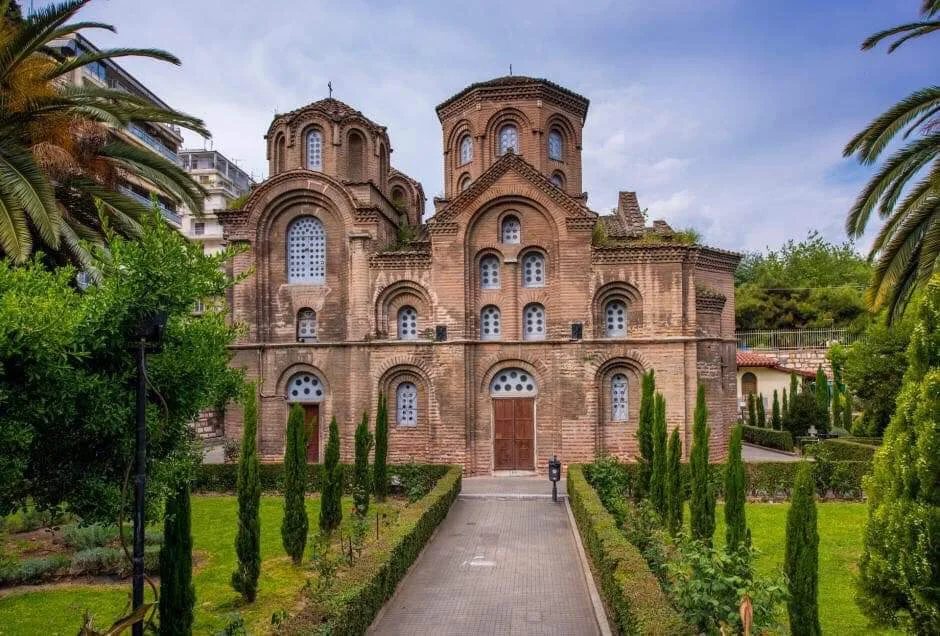
An elegant all-brick cross-in-square church of 1028, nicknamed the 'Red Church' for its warm terracotta masonry, sunk in a small garden beside the Roman Forum in the heart of the city.
Panagia Chalkeon · Byzantine (1028)
Periode
Byzantine (1028)
Locatie
City centre, a block from Aristotelous and Egnatia
Toegang
Free
Openingstijden
Limited hours, usually mornings; check locally
Benodigde Tijd
15–20 minutes
Beoordeling
4.7★ · 602 beoordelingen
Openingstijden en prijzen voor het laatst gecontroleerd in 2026 — ze veranderen, dus controleer ze op de dag zelf.
Geschiedenis
Hoe het ontstond
Built in 1028 — a dated dedicatory inscription survives over the entrance, naming its Byzantine-official founder. It stood in the metalworkers' quarter, which gave it the name 'of the Chalkeon' (the coppersmiths); under Ottoman rule it became the Kazancılar (coppersmiths') Mosque before being returned to Christian worship in 1912. It is one of the UNESCO-listed Paleochristian and Byzantine Monuments of Thessaloniki.
Wat Je Ziet
Bij een bezoek
The superb red-brick exterior — three tiled domes, recessed brick arches and dentil courses, a textbook of 11th-century Byzantine masonry — and inside, surviving wall paintings of the same era, all in a quiet sunken garden minutes from the markets.
Hoe te Bezoeken
Central and flat, on Chalkeon just off Egnatia near the Roman Forum; a few minutes' walk from Aristotelous Square. The church sits below street level in its garden.
Beste Tijd
Morning, when the low sun warms the brickwork
Galerij
Bereikbaarheid
Locatie
City centre, a block from Aristotelous and Egnatia · Chalkeon 2, by the Roman Forum, city centre
For its construction: it is built almost entirely of warm red brick, unusual and striking among the city's churches, so locals call it the Kokkini Ekklisia — the Red Church. The name 'Chalkeon' instead refers to the coppersmiths' quarter it was built in.
It dates to 1028 — a rare precisely dated Byzantine church, thanks to the founder's inscription above its door. It later served as a mosque under Ottoman rule and was returned to Christian worship in 1912. It's a UNESCO World Heritage monument.