Geschiedenis
Hoe het ontstond
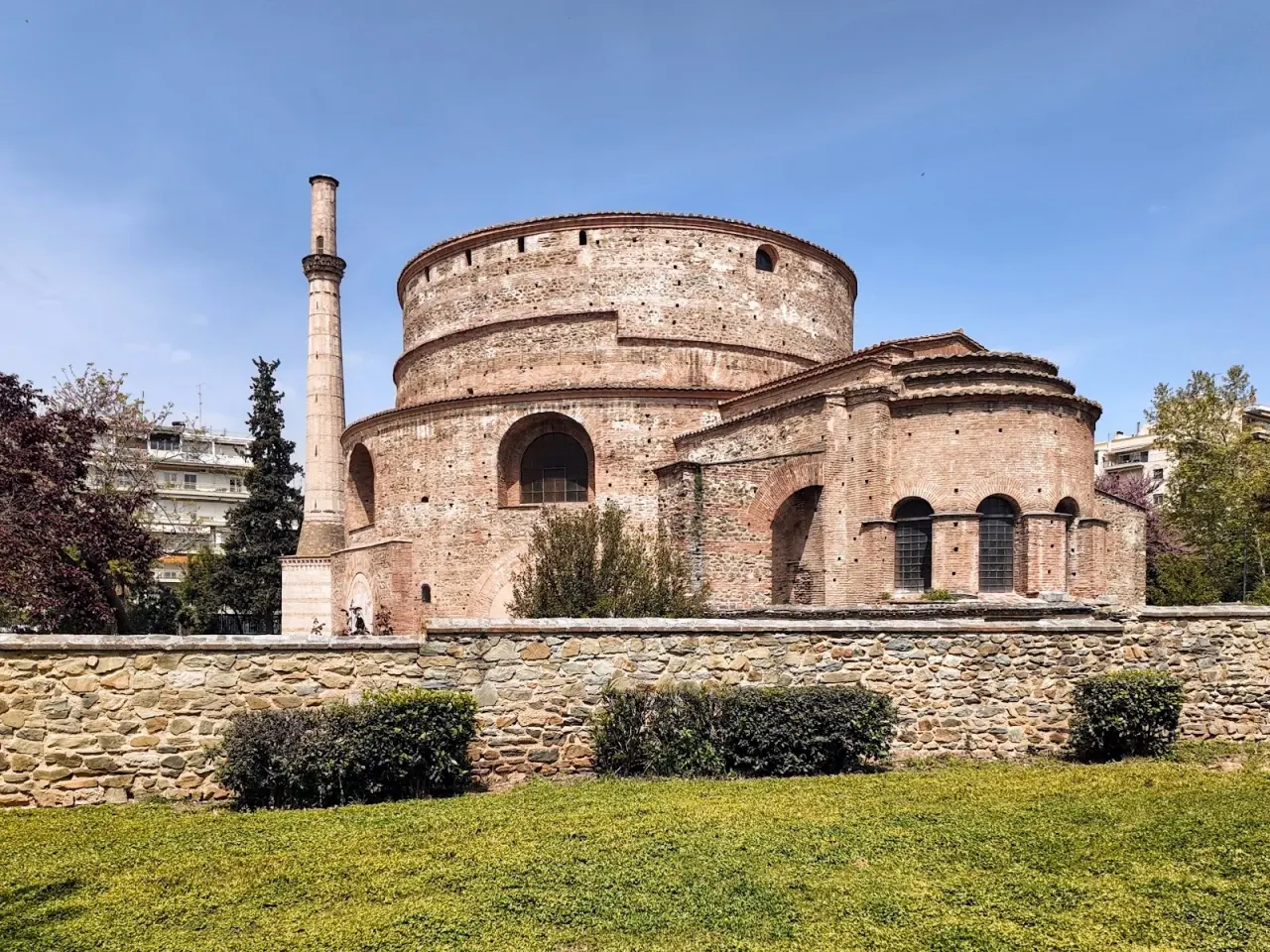
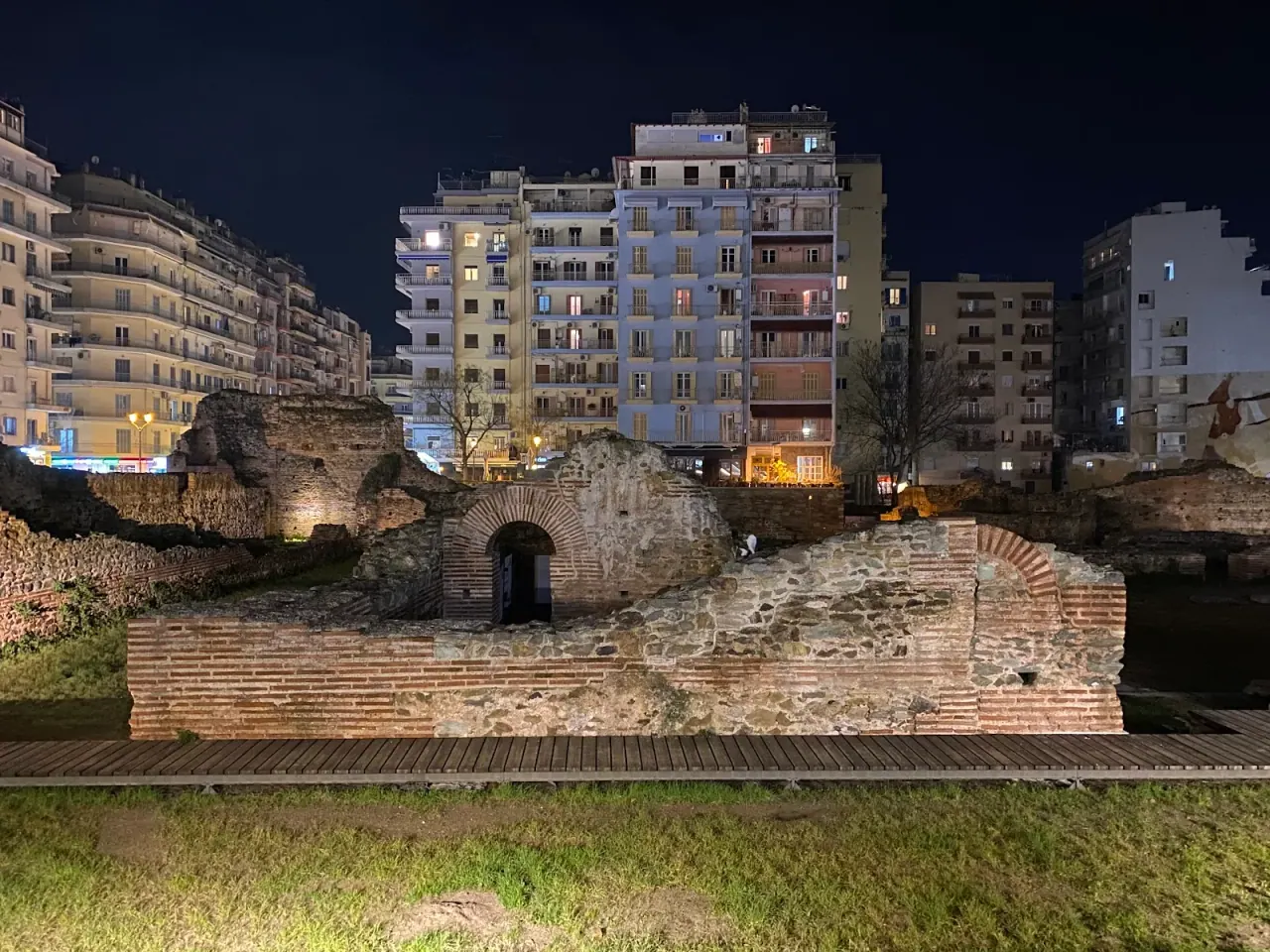
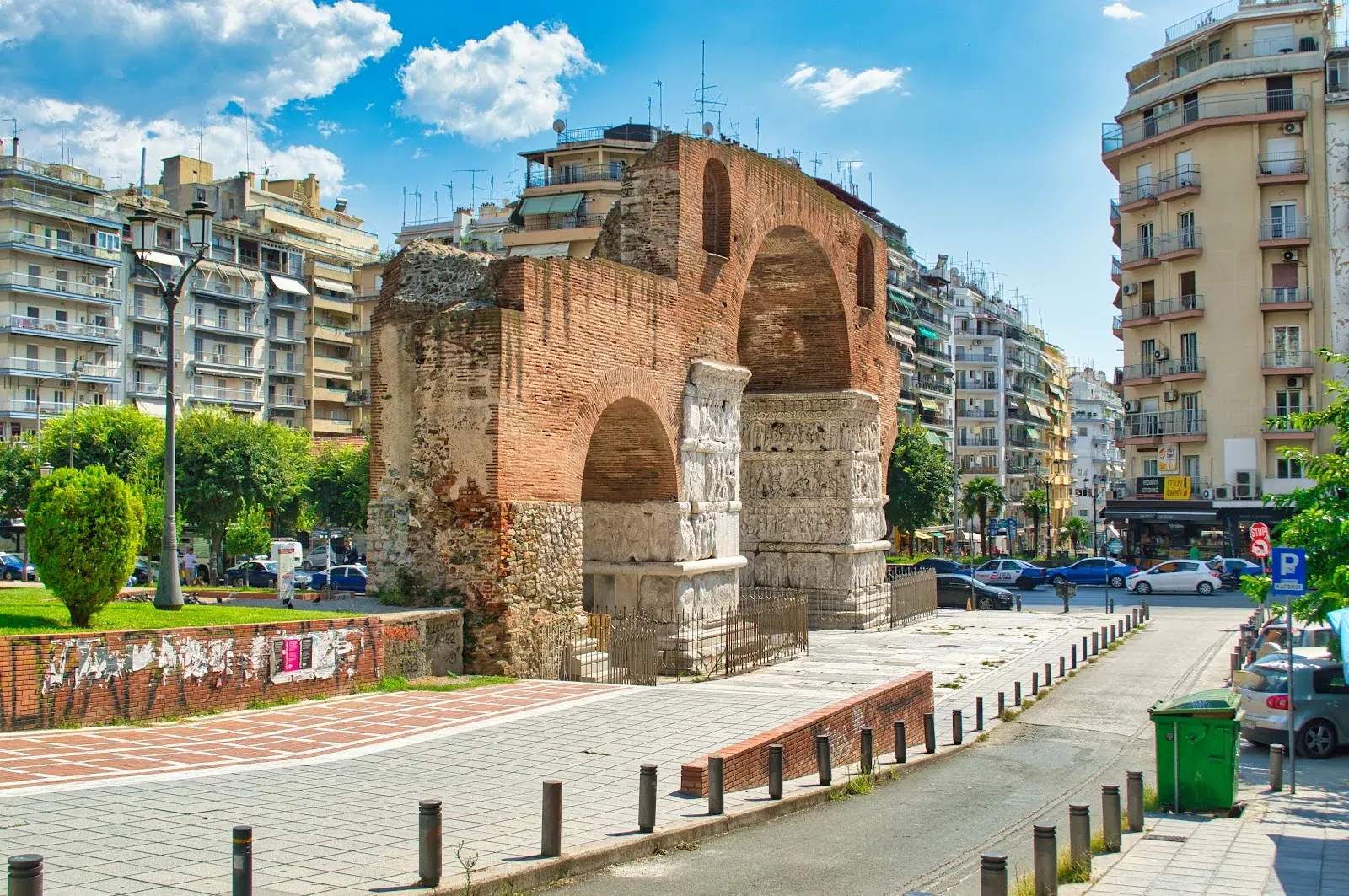
The emperor Galerius raised the arch to celebrate his campaign against the Sassanid Persians — the decisive Battle of Satala in 298, after which the Romans sacked the Persian capital Ctesiphon; it stood over the Via Egnatia and linked his palace to the Rotunda. One celebrated panel shows a mounted Galerius charging the Persian king Narseh with a lance, an eagle bearing a victory wreath overhead (an idealised scene — the two never actually met in battle). It originally rested on eight piers in two parallel rows of four, spanning the road with a wide central arch and two smaller side passages; three of those piers survive today, two of them densely carved with battle and ceremonial scenes.
Wat Je Ziet
Bij een bezoek
The detailed Roman relief sculpture on the surviving piers, best read panel by panel — and the constant life of the square around it.
Hoe te Bezoeken
Open air on Egnatia, right by the Kamara stop; fully step-free.
Beste Tijd
Anytime; evenings when the square is liveliest
Galerij
Bereikbaarheid
Goed om te Weten
Kamara ('arch') is the local nickname for the Arch of Galerius and the city's most popular meeting spot.
It celebrates the emperor Galerius's victory over the Sassanid Persians around 298 AD; its marble piers are carved with detailed relief scenes of that campaign. It was built around 298–303 AD as part of a grand imperial complex that also included the Rotunda and Galerius's palace.