One of the best things about Thessaloniki is how much of it costs nothing. The city wears its history in the open — Roman monuments on the street, Byzantine churches you walk straight into, a seafront made for strolling — so you can fill days here without buying a ticket. These are the best free things to do, and for even more ways to keep costs down see our Thessaloniki on a budget guide; many of them are also the city's hidden gems.
At a glance
| Free thing to do | Where |
|---|---|
| Walk the Nea Paralia to the Umbrellas | Seafront, east of the White Tower |
| Climb Ano Poli & the Byzantine walls | The upper town |
| Sunset from the Trigonion Tower | The ramparts, Ano Poli |
| Step inside the Byzantine churches | Agios Dimitrios, Hagia Sophia & more |
| Stand under the Arch of Galerius (Kamara) | On Egnatia, city centre |
| Look over the Roman Forum | North of Aristotelous |
| Wander the Modiano & Kapani markets | City centre |
| Photograph the White Tower & Aristotelous | The waterfront |
Walk the Nea Paralia waterfront
The redesigned seafront promenade east of the White Tower runs for kilometres past themed gardens to the Umbrellas sculpture — the city's favourite free evening out, when everyone comes to walk, cycle and watch the sun go down. Our waterfront walk guide maps the whole route. While you're on the front, the Black Pearl pirate-ship boat bar lets you board for free and sail a 30-minute loop of the gulf — you pay only for a drink (its sister ship Arabella charges a small ticket).
Climb Ano Poli and walk the walls
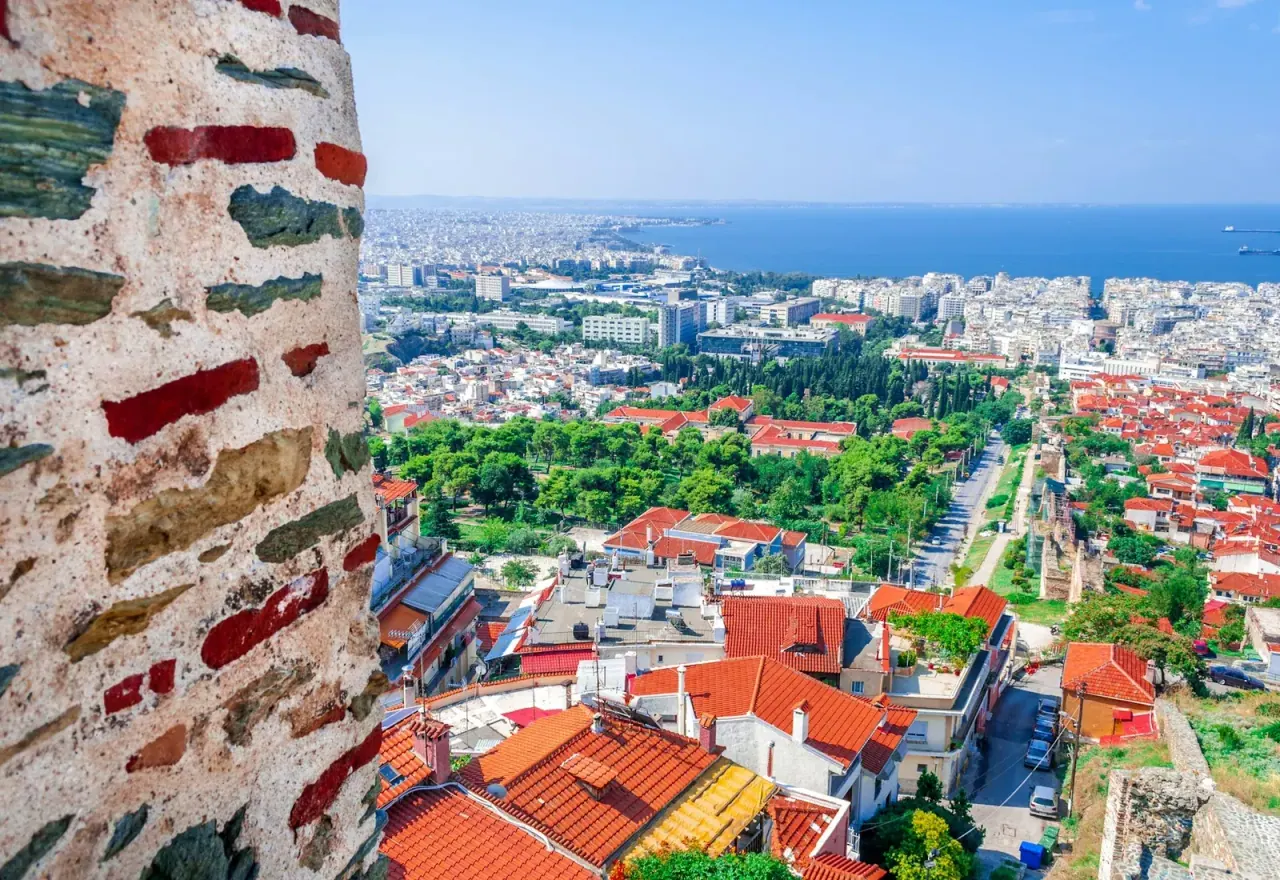
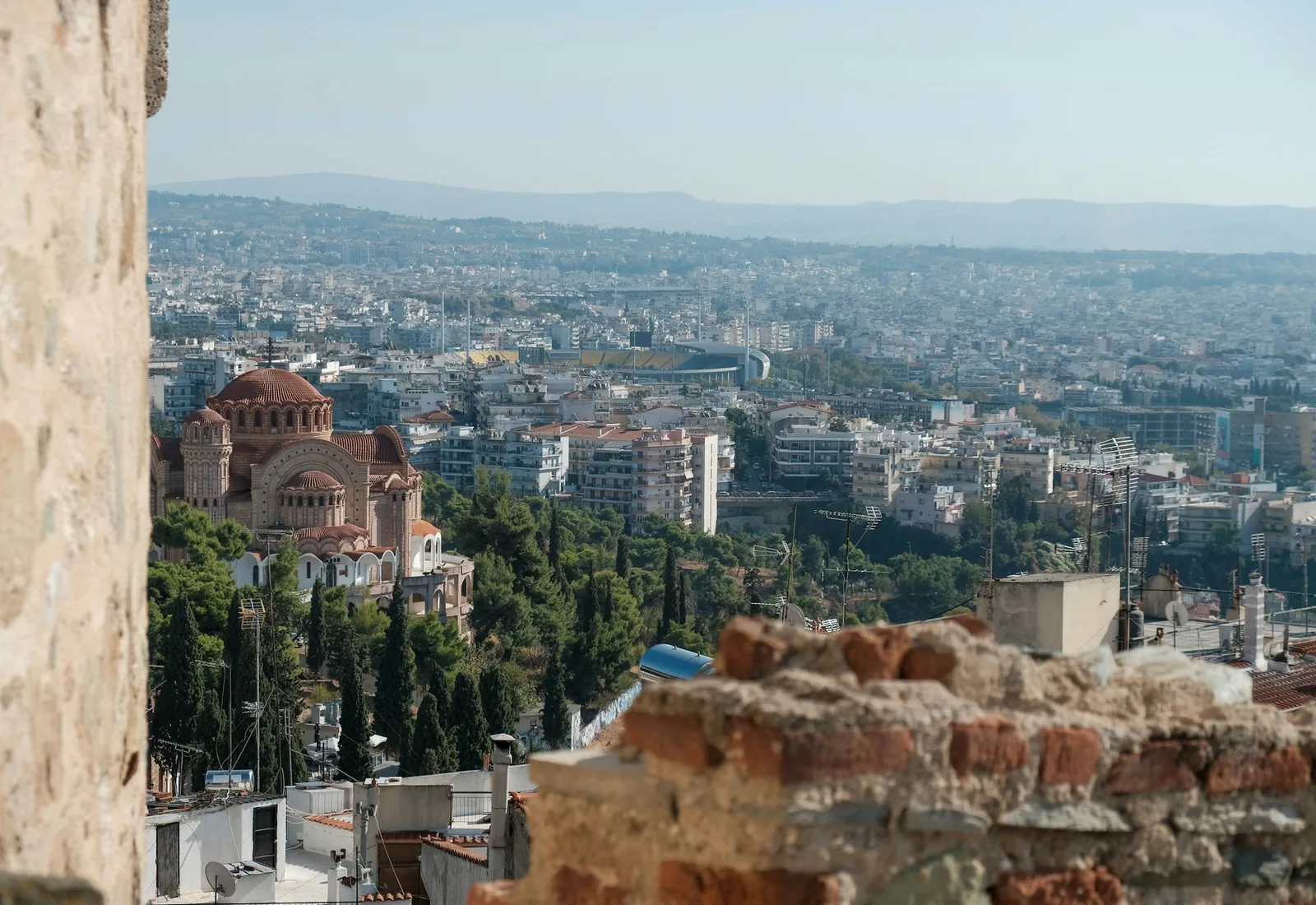
The old Upper Town and the surviving Byzantine city walls are free and always open. Wander the Ottoman lanes, then follow the ramparts to the Trigonion Tower terrace — free at any hour, and the single best viewpoint in the city.
Watch the sunset from the ramparts
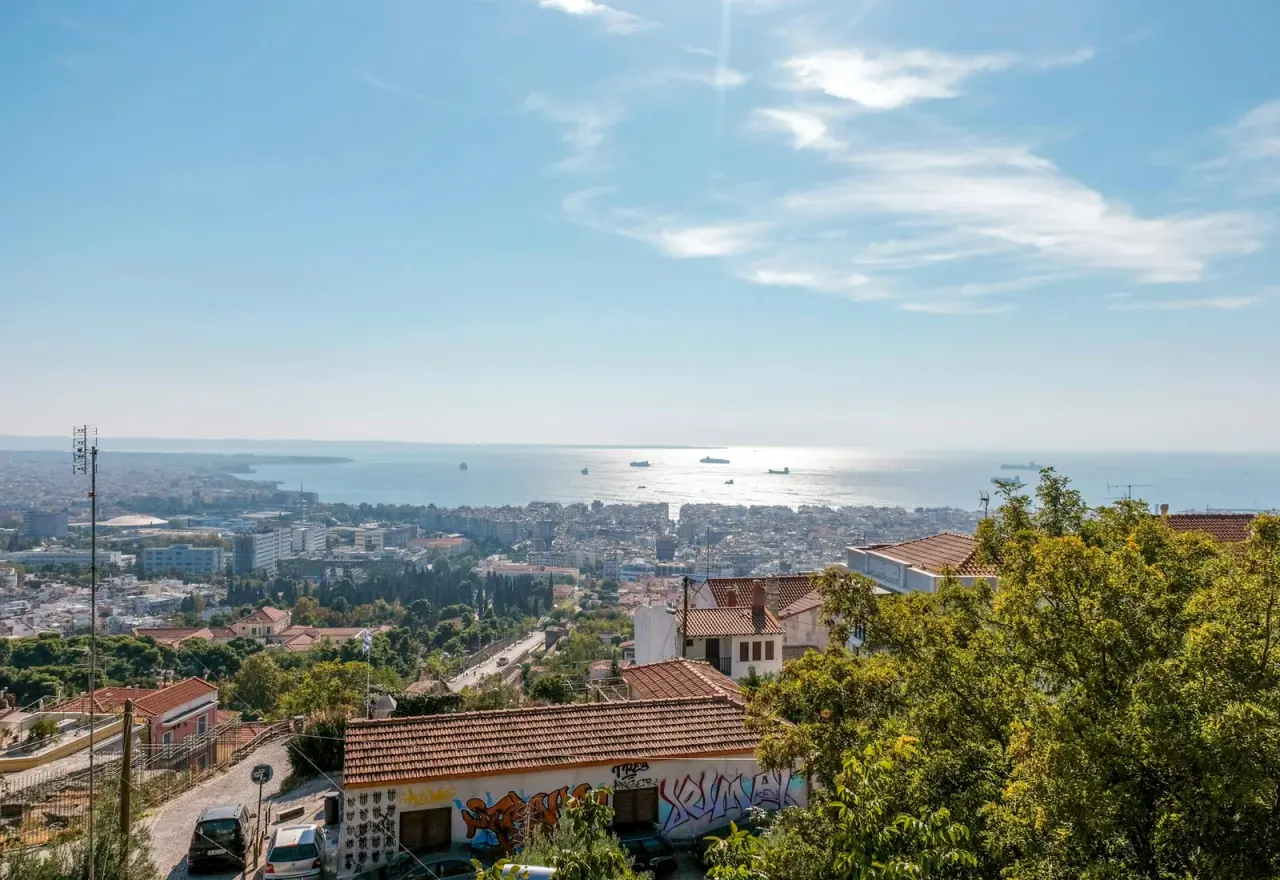
That same terrace by the walls is Thessaloniki's prime free sunset spot: the whole city falls away to the Thermaic Gulf, with Mount Olympus on the horizon on a clear evening. See our best sunset spots for timing and alternatives.
Step inside the Byzantine churches
Most of the city's great churches are free to enter, including Agios Dimitrios — the five-aisled basilica of the patron saint, whose crypt is also free — along with Hagia Sophia, Panagia Acheiropoietos and the red-brick Panagia Chalkeon. Together they make up much of the city's UNESCO-listed Byzantine heritage, and you can walk straight in.
Stand under the Arch of Galerius
The carved 4th-century triumphal arch known locally as the Kamara is an open monument on Egnatia, free to visit and one of the city's main meeting points. It's the anchor of the Roman core that runs through the centre — see the full trail on the landmarks page.
Look over the Roman Forum
The ancient forum sits open just north of Aristotelous, and its stepped square and colonnades are free to see from street level. (Only the small underground museum charges — it's included on the combined ticket.)
Wander the markets
The covered Modiano hall and the open-air Kapani market cost nothing to explore, and they're the most atmospheric corner of the centre — stalls of olives, cheese, spices and fish. Read what to look for in our what to eat guide.
Photograph the White Tower and Aristotelous Square
You don't need a ticket to enjoy the city's icons from outside: the White Tower on its waterfront lawn and the grand arcaded sweep of Aristotelous Square, opening straight onto the sea, are free to admire and among the most photographed spots in town. (Going inside the White Tower costs €8, or €4 in winter.)
What costs money — so you can plan
To keep expectations honest: entering the White Tower costs €8 (€4 in winter) and the Rotunda €10 (reduced €5; recently raised, so some older guides still quote €6 — a €15 combined three-day ticket also covers several sites), and the museums charge admission. Everything else above is free. One more way to see the paid sights for nothing: the state museums and monuments are free for everyone on the first and third Sunday of each month from November to March, and on 6 March, 18 April, 18 May, the last weekend of September and 28 October (Ohi Day) — time a visit for one of those and even the White Tower, Rotunda and museums cost nothing. For the full breakdown, the budget guide has the numbers.
Frequently Asked Questions
What can you do in Thessaloniki for free?
Plenty: walk the Nea Paralia seafront to the Umbrellas, climb Ano Poli and the Byzantine walls, watch the sunset from the Trigonion Tower terrace, step inside free churches like Agios Dimitrios and Hagia Sophia, stand under the Arch of Galerius, browse the Kapani and Modiano markets, and admire the White Tower and Aristotelous Square from outside.
Are the churches in Thessaloniki free to visit?
Most are, including Agios Dimitrios (and its crypt), Hagia Sophia, Panagia Acheiropoietos and Panagia Chalkeon. They're working churches, so dress modestly and be discreet during services. The Rotunda, a Roman monument that later served as a church, is the main exception — it charges €10 (reduced €5; recently raised, so some older guides still quote €6).
Is the White Tower free?
Admiring and photographing the White Tower from its waterfront lawn is free. Going inside to climb the museum costs €8, or €4 in winter (a €15 combined three-day ticket covers several monuments), though the rooftop view is worth it.
Is Thessaloniki an expensive city?
No — it's one of the better-value city breaks in Greece, noticeably cheaper than Athens or the islands, and a lot of its best experiences are free. See our budget guide for how to keep costs down.