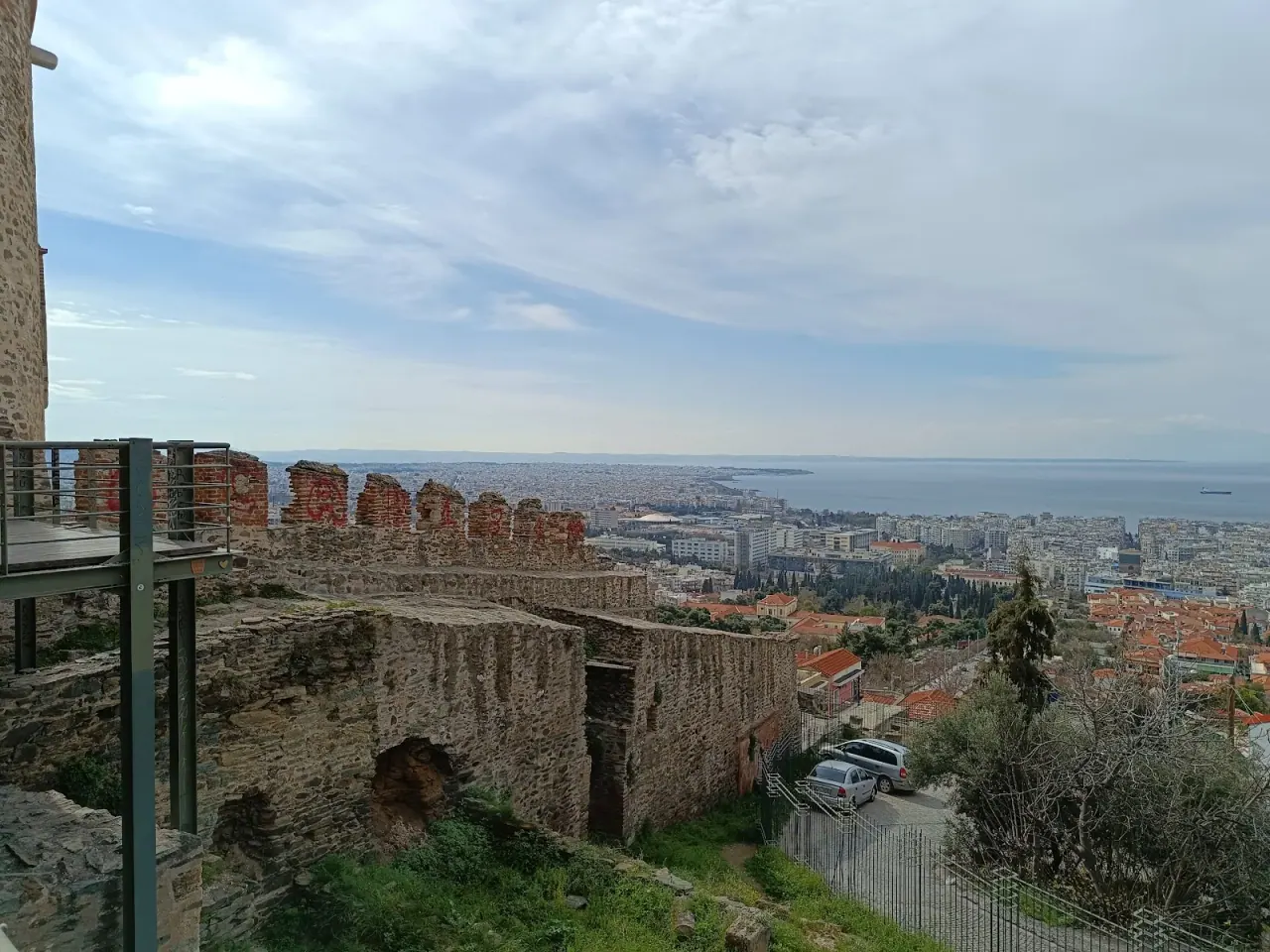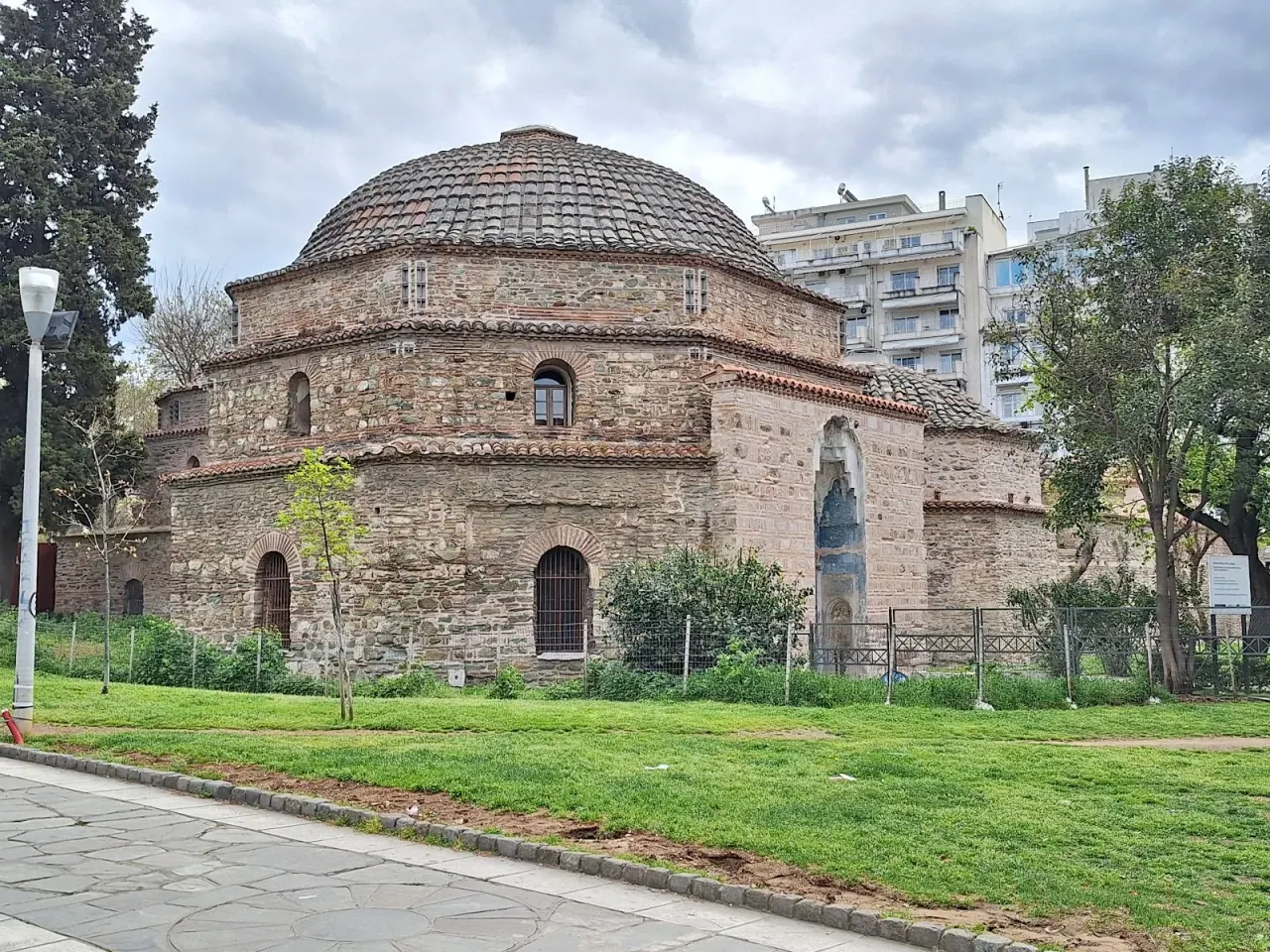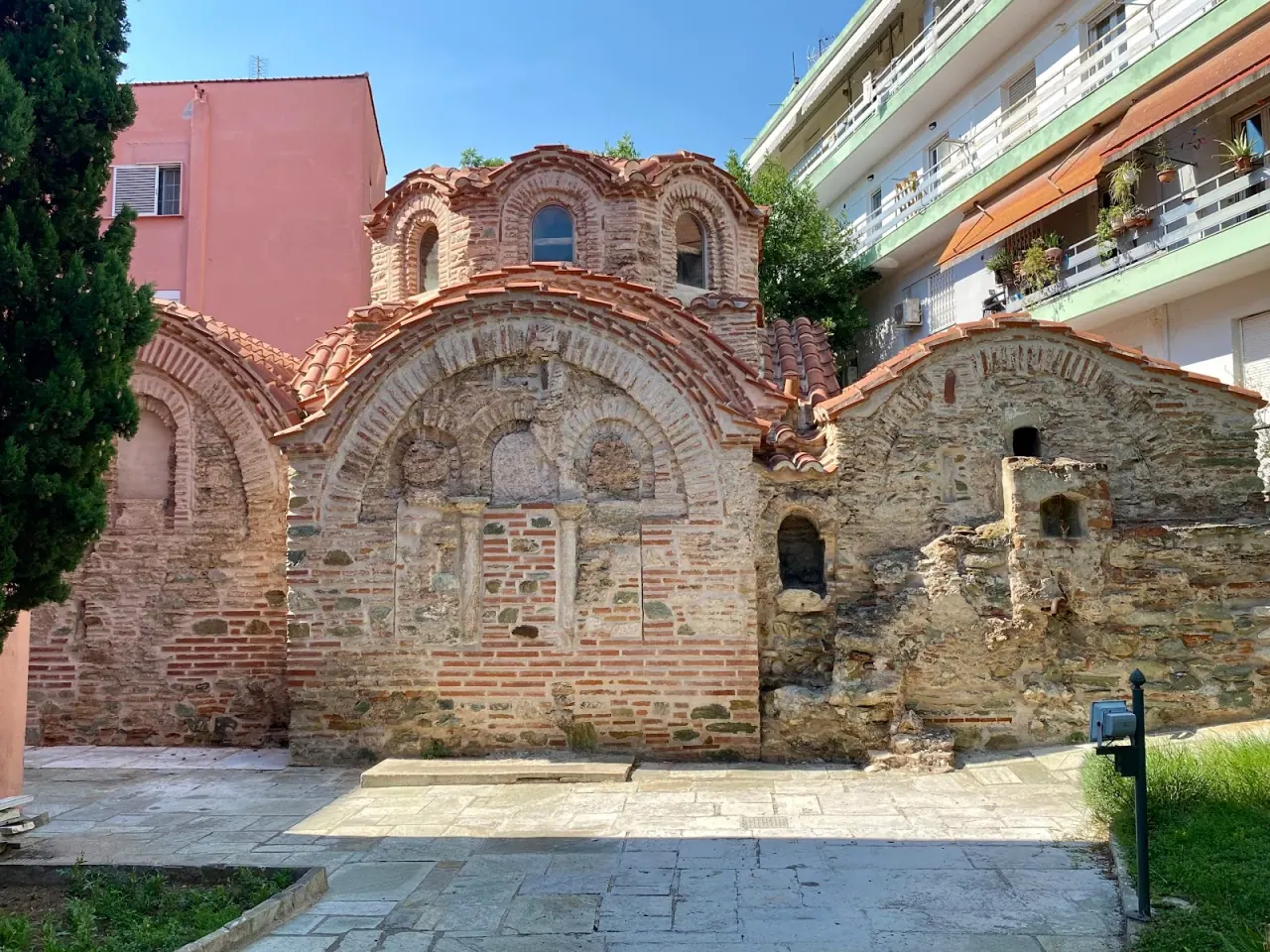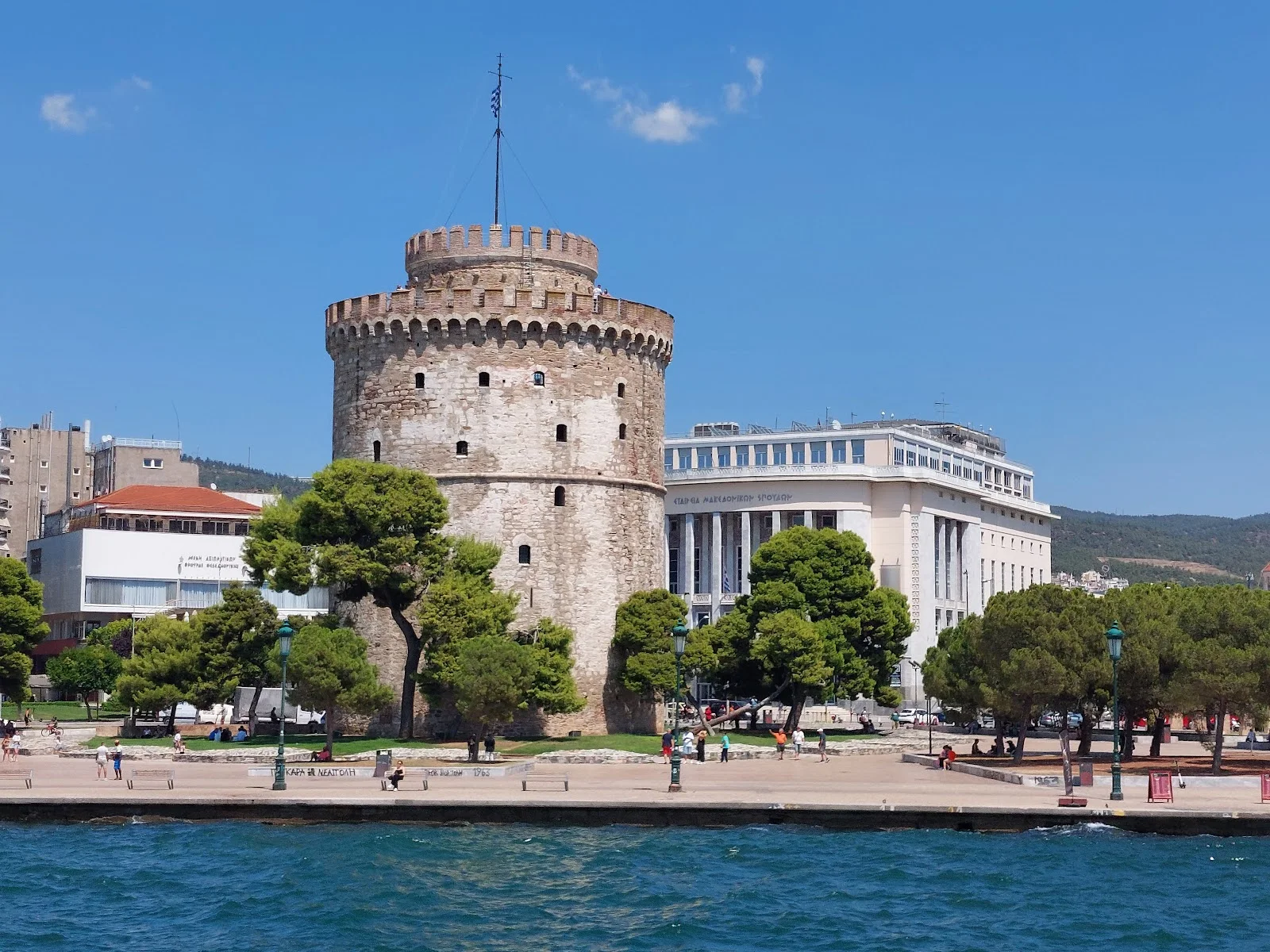
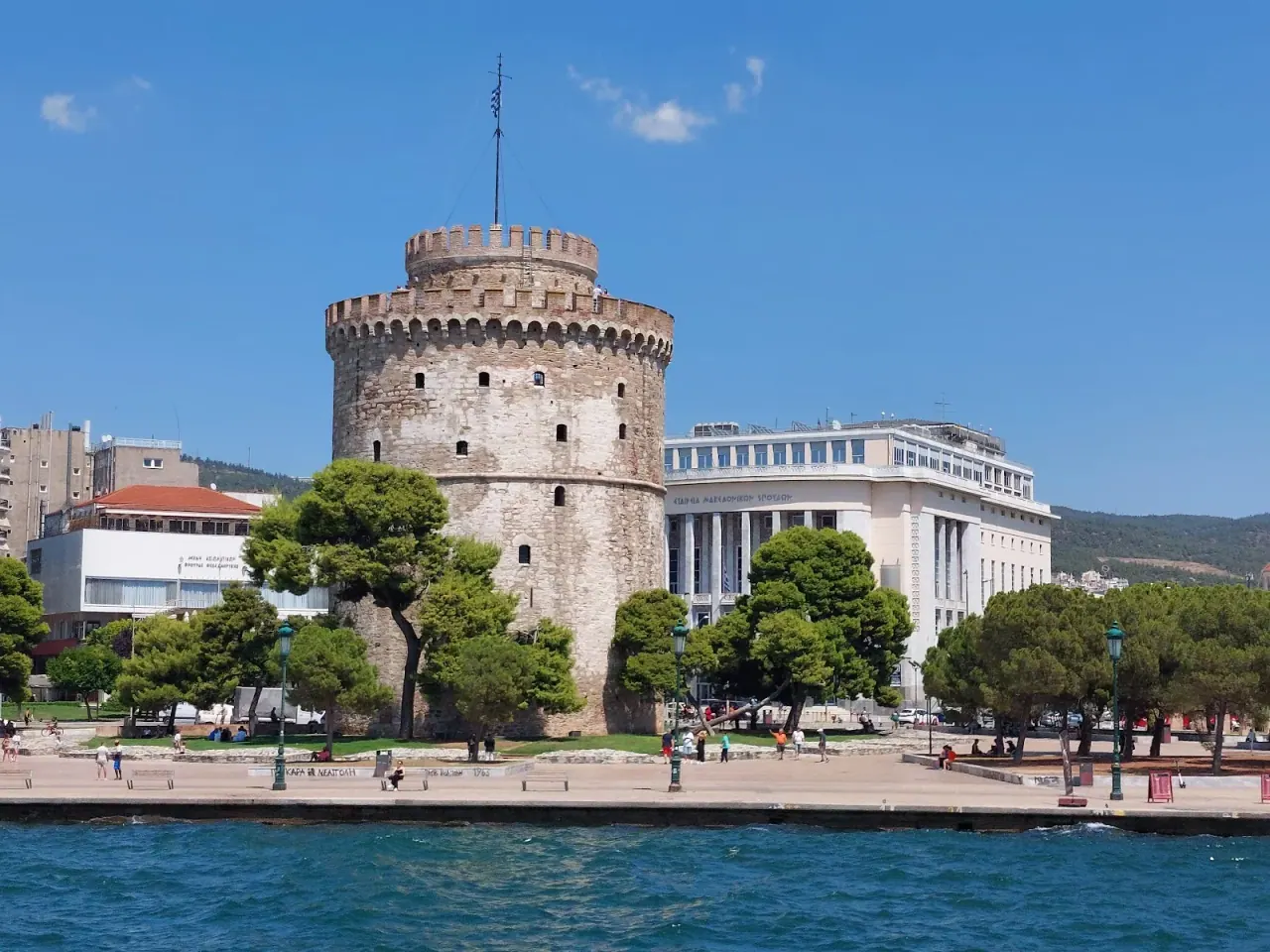
The White Tower of Thessaloniki on the seafront, the city's emblem

Landmarks

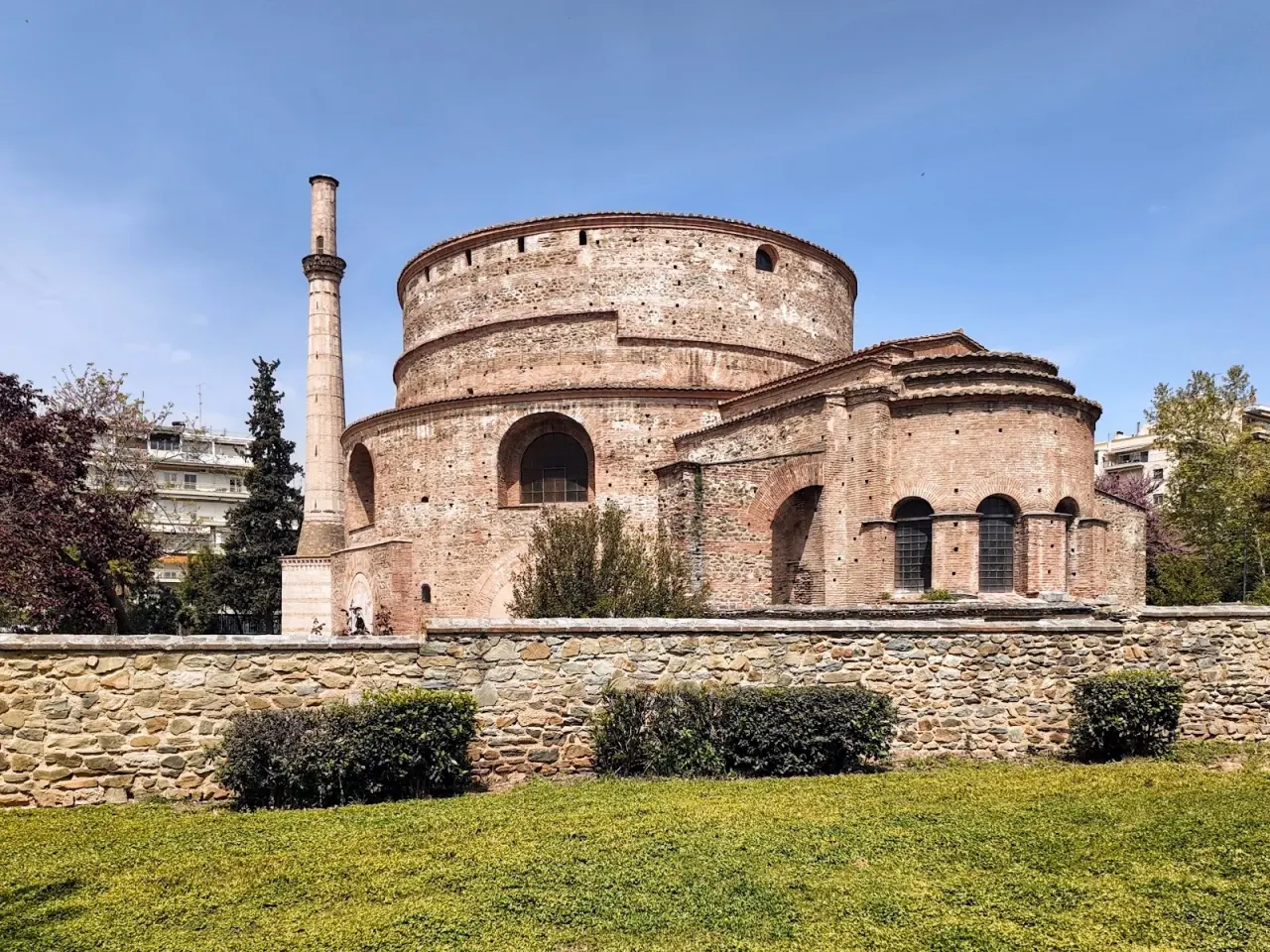
35 Roman monuments, Byzantine churches, towers, and museums across Thessaloniki — from the 4th-century Rotunda to the Ottoman upper town, almost all of it walkable.

Where to start

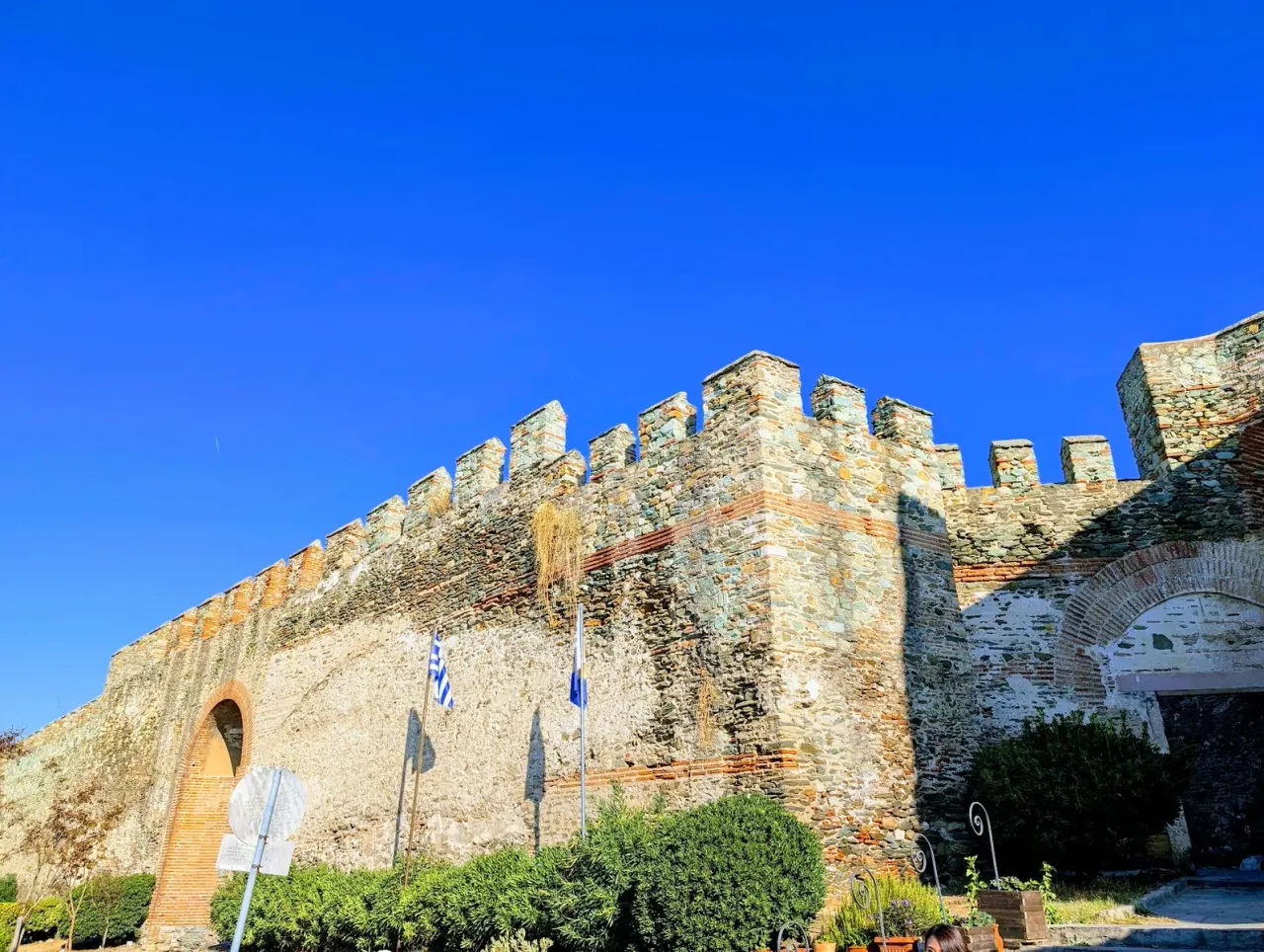
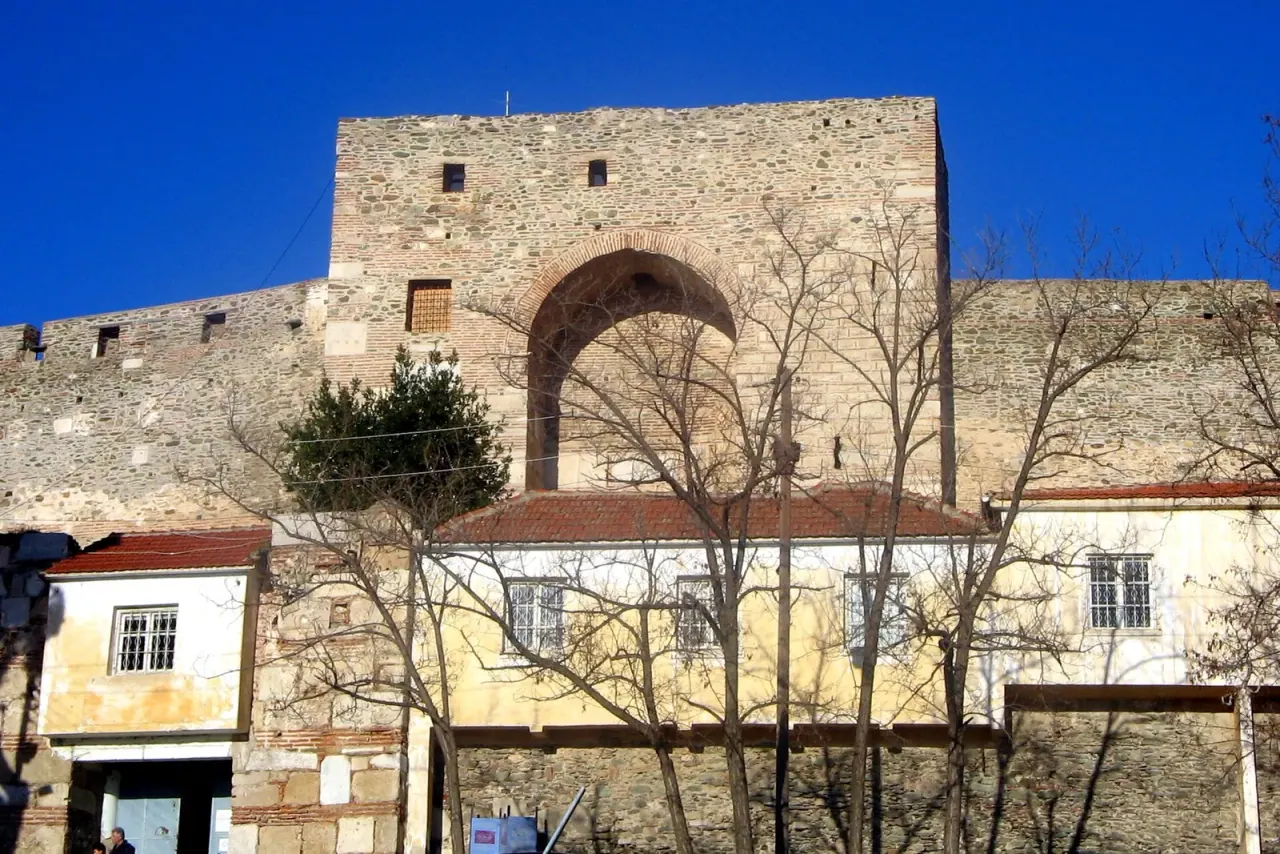
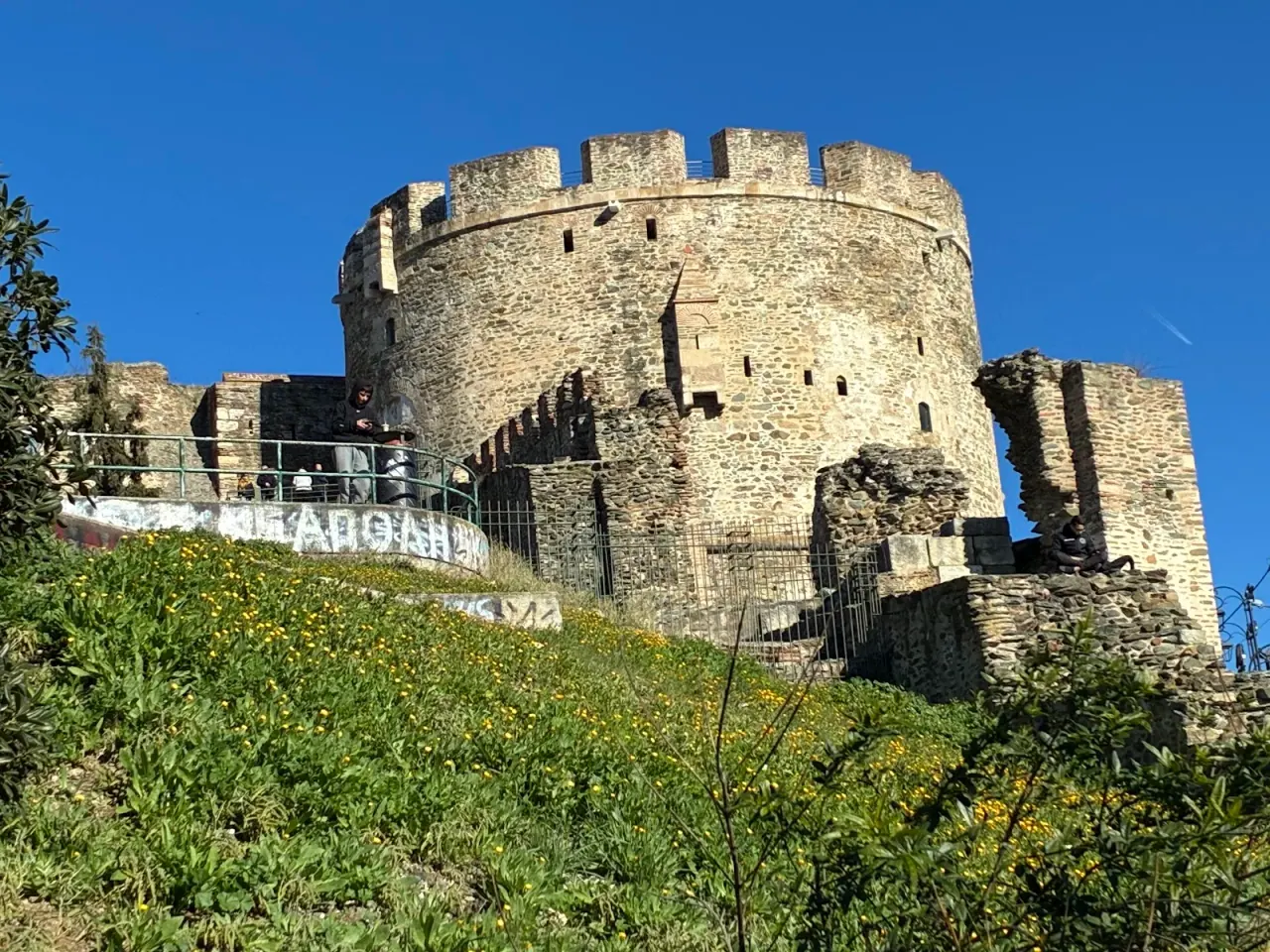
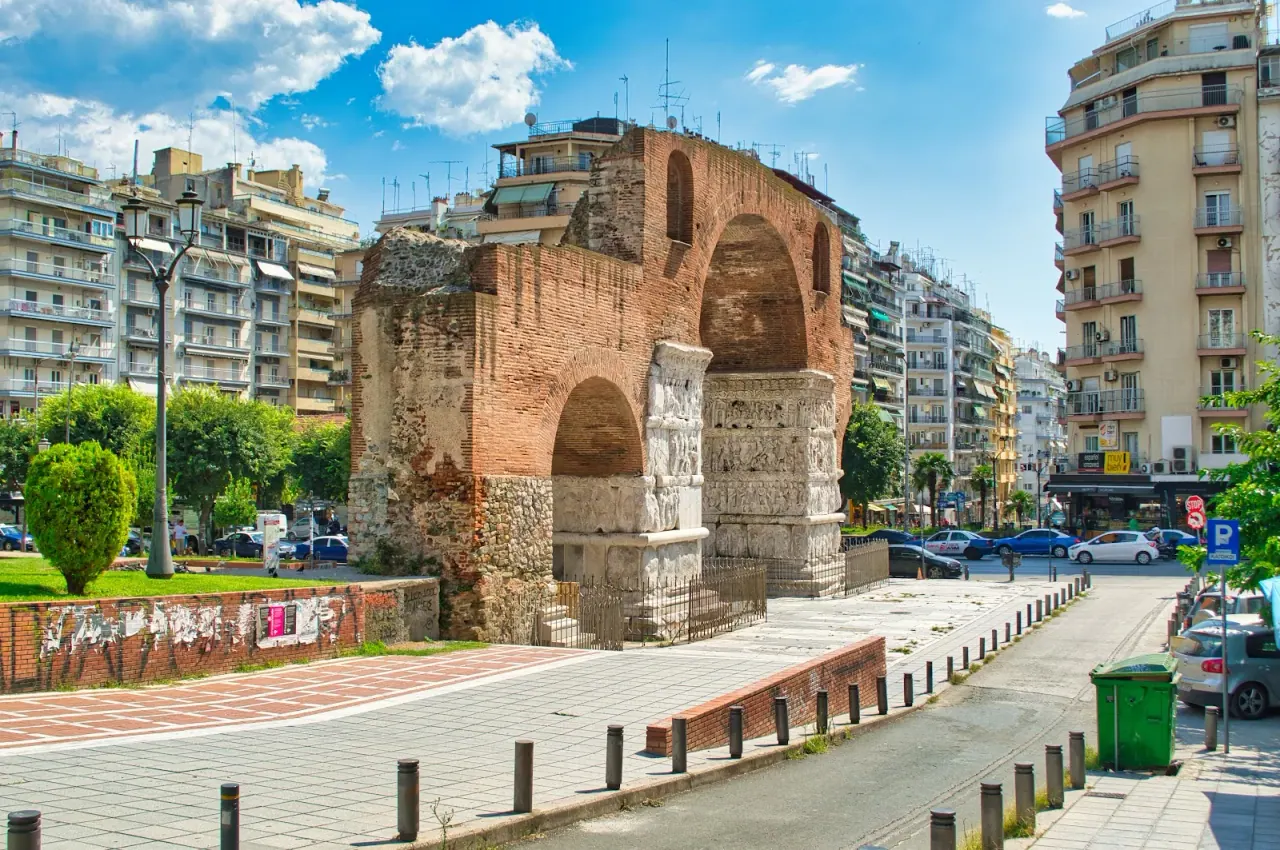
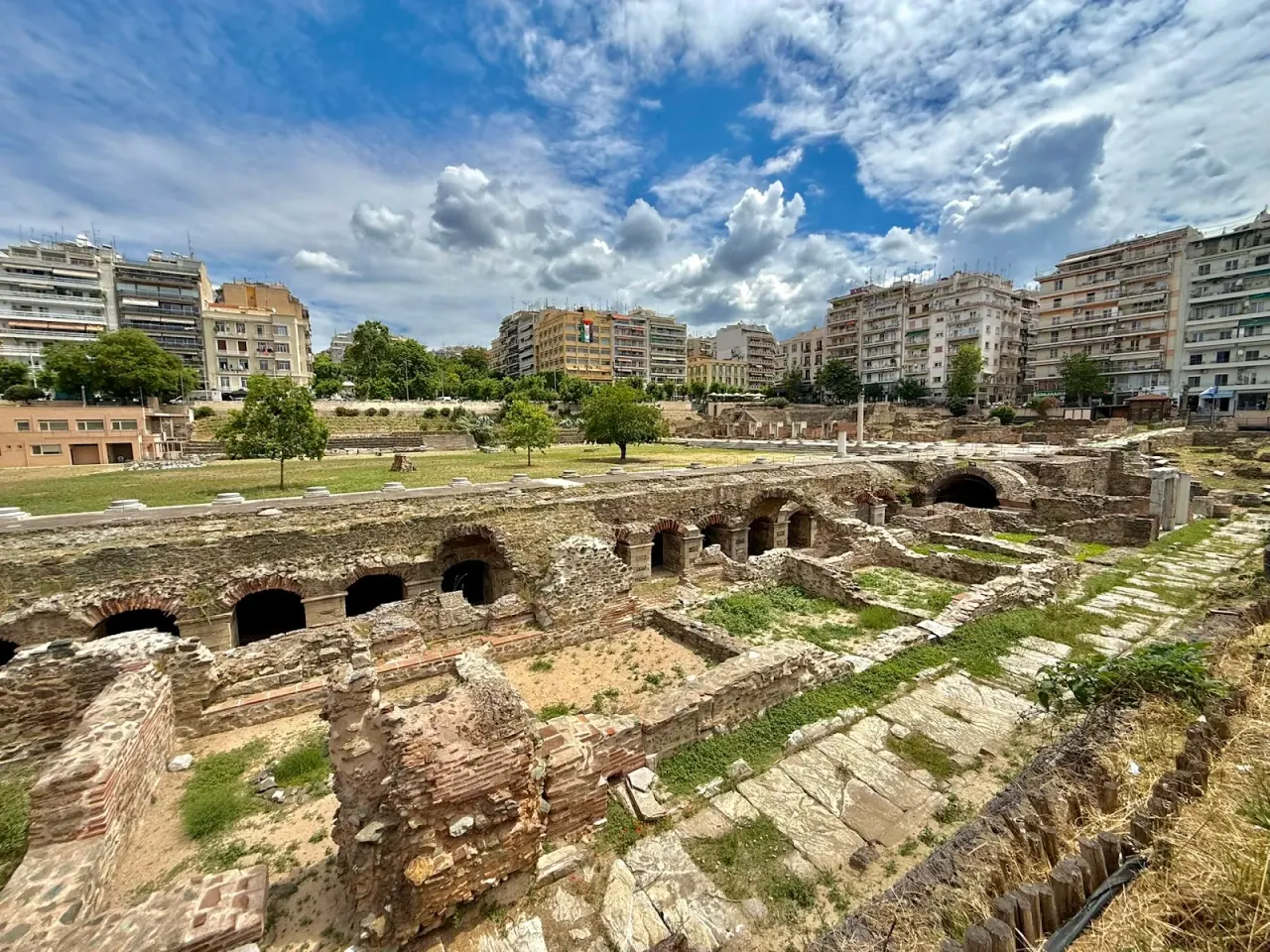
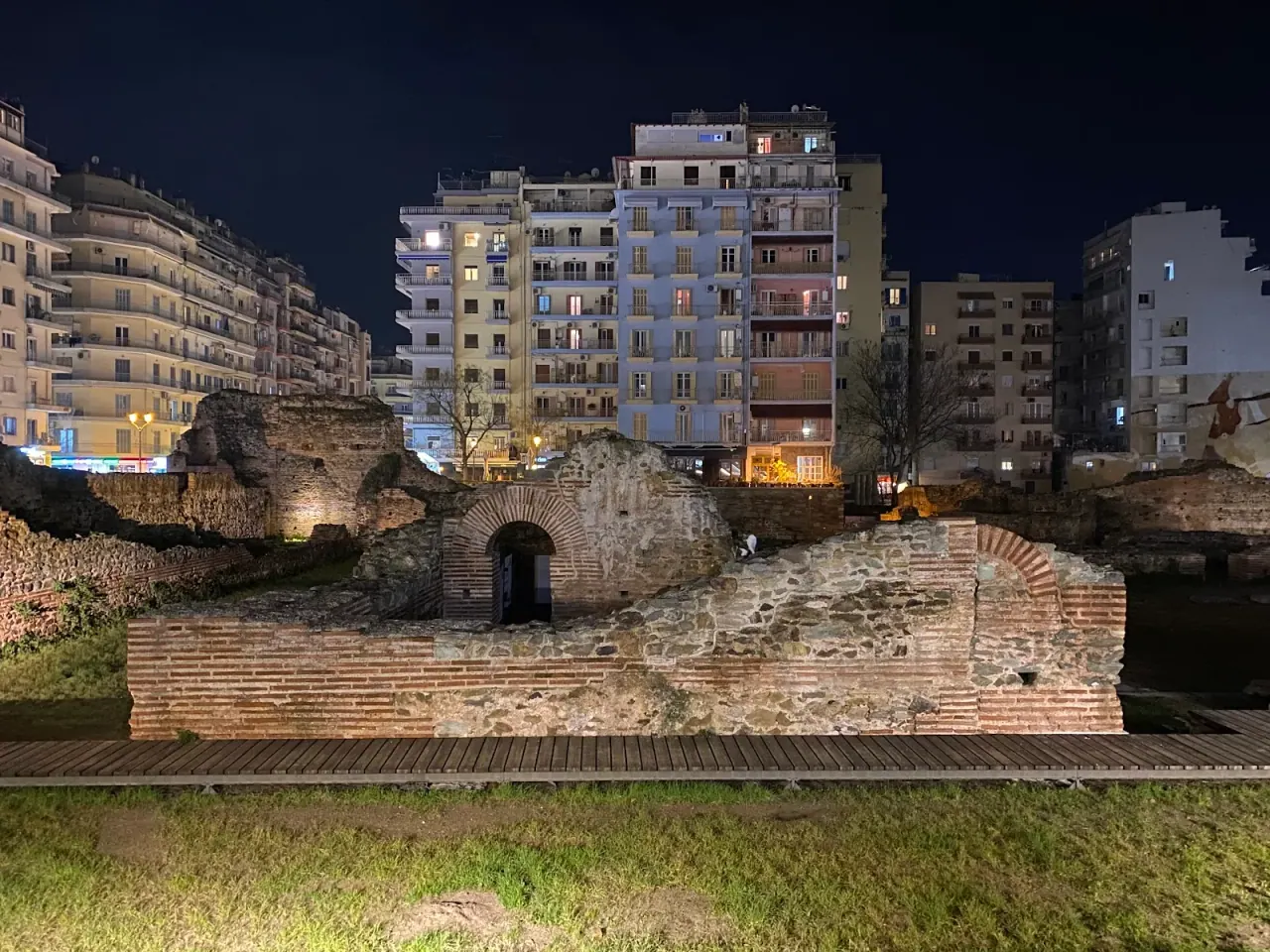
Thessaloniki wears 2,300 years in layers — Roman monuments, Byzantine churches and Ottoman remnants, almost all within a 20-minute walk of the centre. Fifteen of its Paleochristian and Byzantine monuments are jointly inscribed on the UNESCO World Heritage list (1988), the largest concentration of Byzantine World Heritage sites in any Greek city. First time here? Start with these three.

Tickets: a €15 combined ticket (valid 3 days) covers the White Tower, the Rotunda, the Archaeological Museum and the Museum of Byzantine Culture. State sites and museums are also free on a few days a year — every first Sunday from November to March, plus 6 March, 18 April, 18 May, and the last weekend of September.

Byzantine Churches

Thessaloniki's UNESCO-listed churches trace the whole arc of Byzantine architecture, their walls lined with gold-ground mosaics and frescoes.

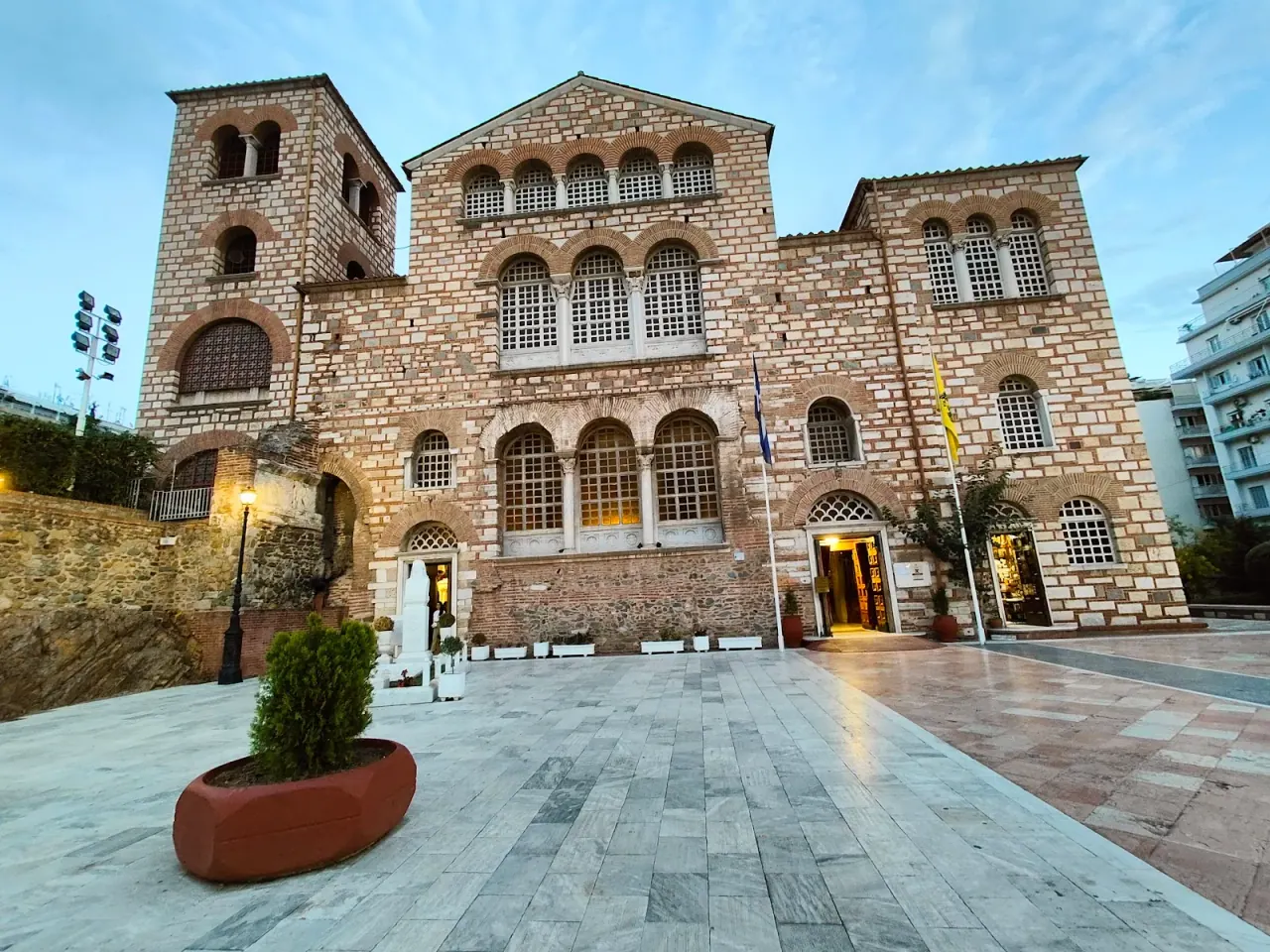
The basilica of Agios Dimitrios in Thessaloniki
Byzantine (7th c., rebuilt 1949)

Church of Agios Dimitrios

The five-aisled basilica of Saint Demetrius, patron of Thessaloniki, built over the Roman baths where he was martyred and home to rare 7th-century mosaics and an atmospheric crypt.

4.9 (11,459)·City centre·45 minutes with the crypt
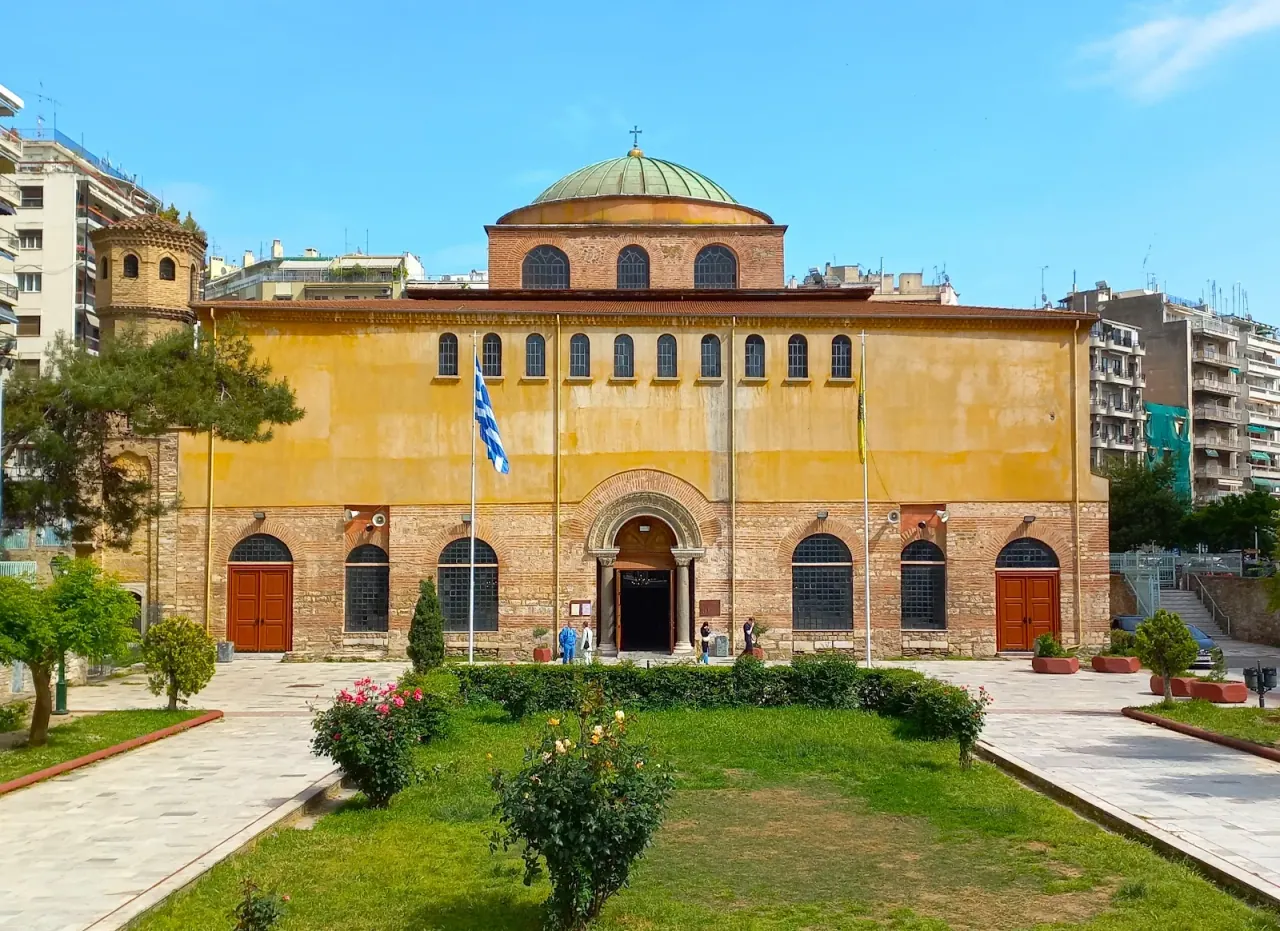
The Byzantine Hagia Sophia church in Thessaloniki
Byzantine (8th c.)

Hagia Sophia of Thessaloniki

A squat, powerful 8th-century domed church modelled on its namesake in Constantinople, with a luminous mosaic of the Ascension in the dome.

4.8 (8,244)·City centre·20–30 minutes
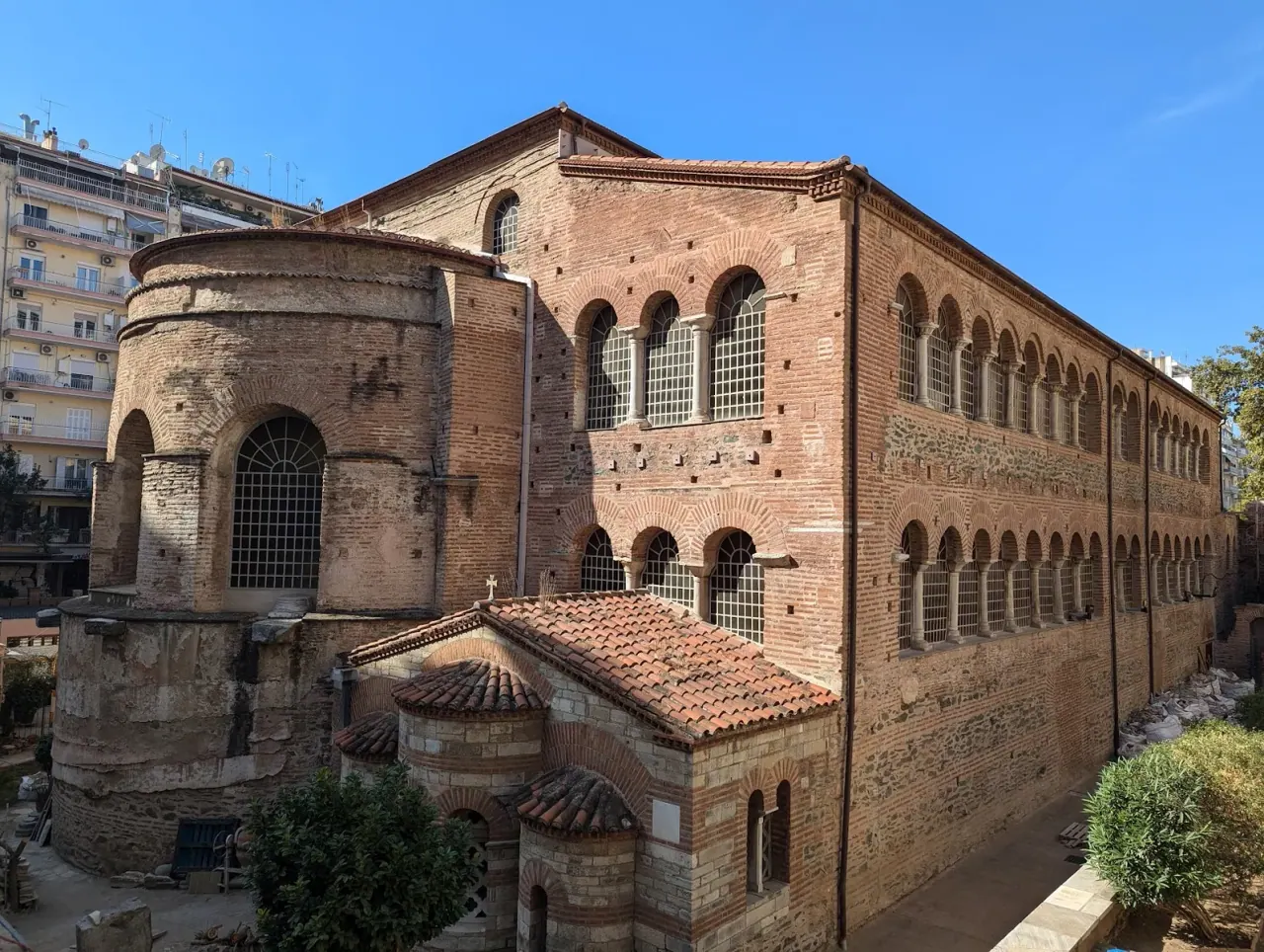
The brick exterior of the Byzantine Acheiropoietos basilica, Thessaloniki
Byzantine (5th c.)

Church of Panagia Acheiropoietos

One of the oldest churches in the city still in continuous use — a 5th-century early-Christian basilica with elegant columns and fine mosaic fragments.

4.8 (868)·City centre·15–20 minutes
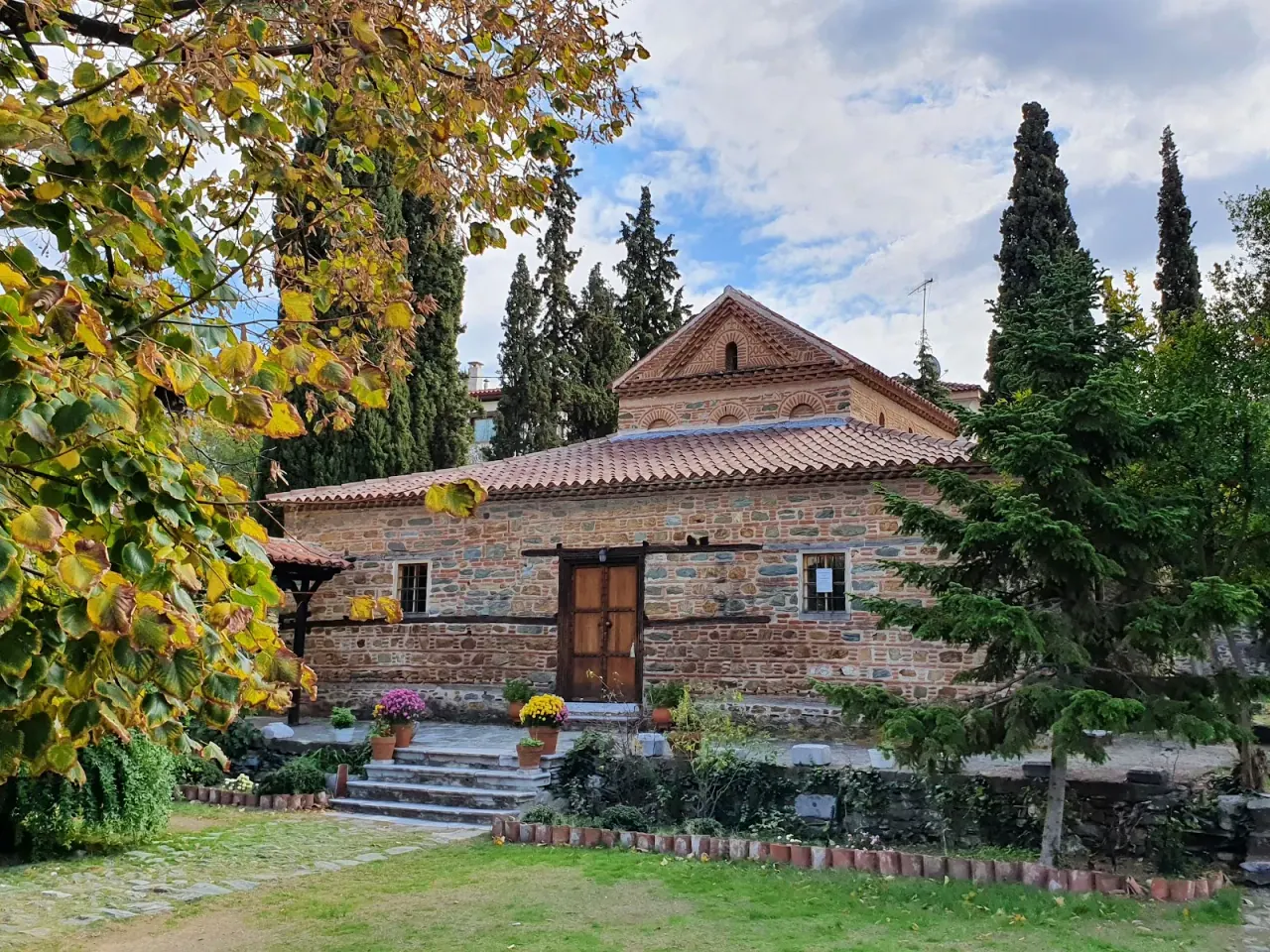
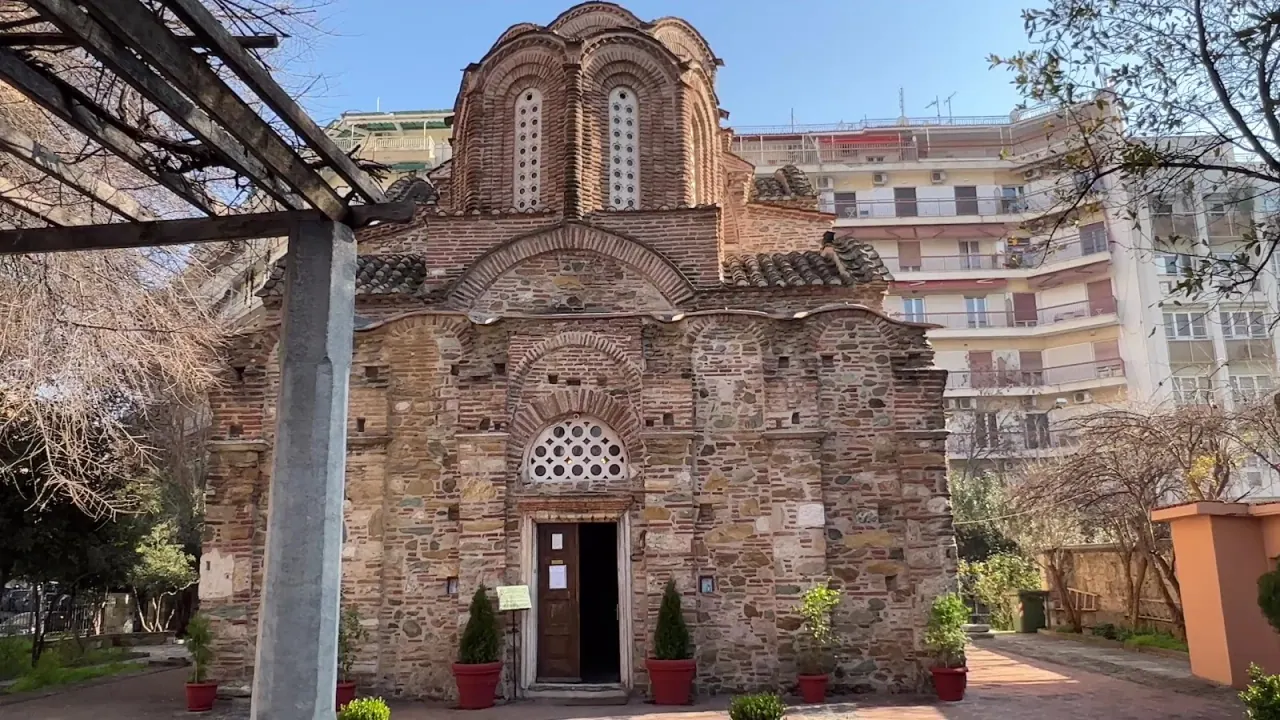
The small stone church of Agios Nikolaos Orfanos in its garden, Thessaloniki
Byzantine (early 14th c.)

Church of Agios Nikolaos Orfanos

A small 14th-century church in the upper town whose interior is covered, almost wall to wall, with exceptionally well-preserved Palaiologan frescoes.

4.8 (737)·Ano Poli, ~15 min uphill·20 minutes
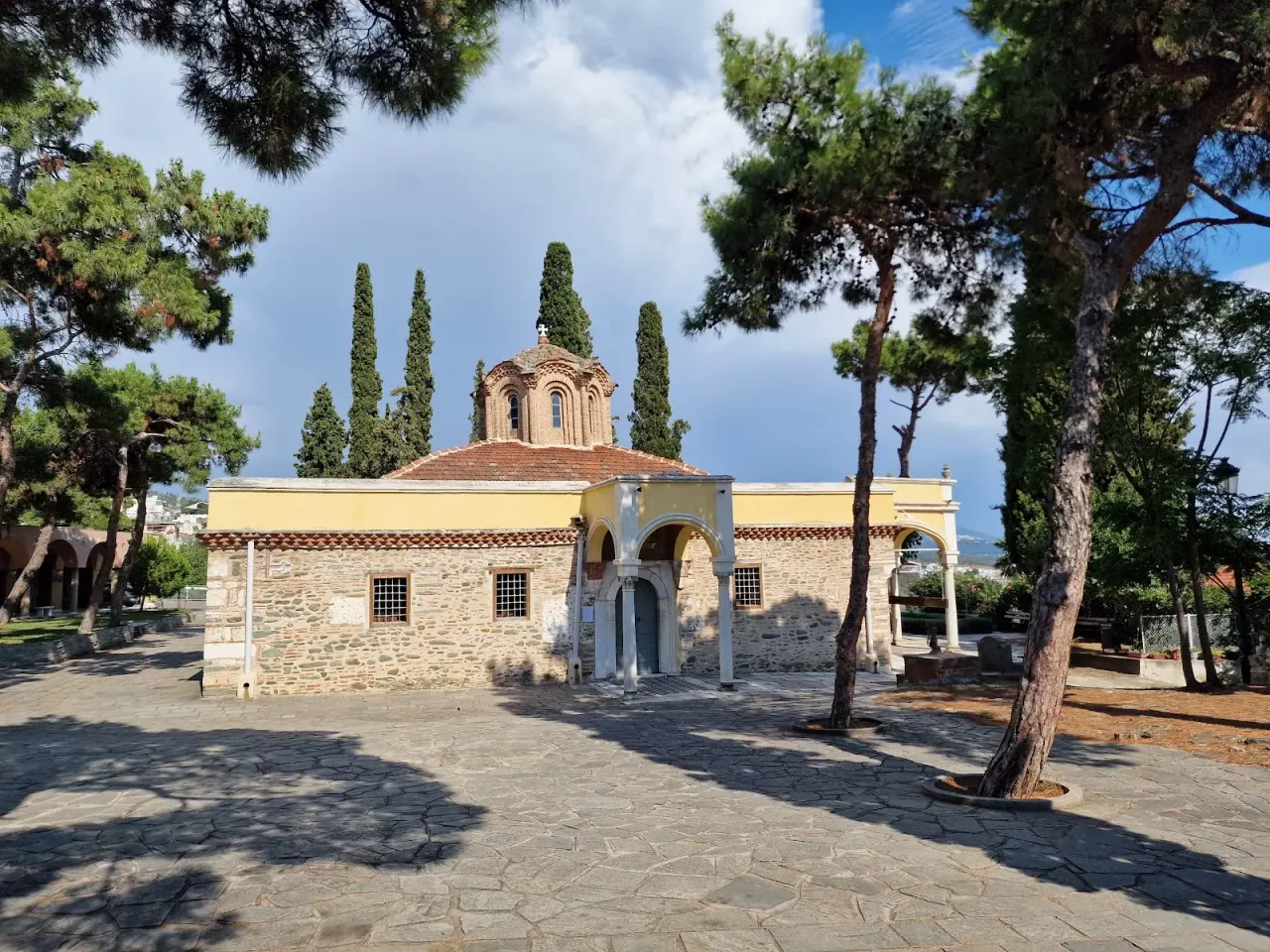
The church of Vlatadon Monastery in its courtyard above Thessaloniki
Byzantine (14th c.)

Vlatadon Monastery

The only Byzantine monastery in the city still active, set in gardens high in the upper town with a small church, peacocks, and a commanding view of the gulf.

4.7 (3,548)·Ano Poli, ~25 min uphill·30 minutes
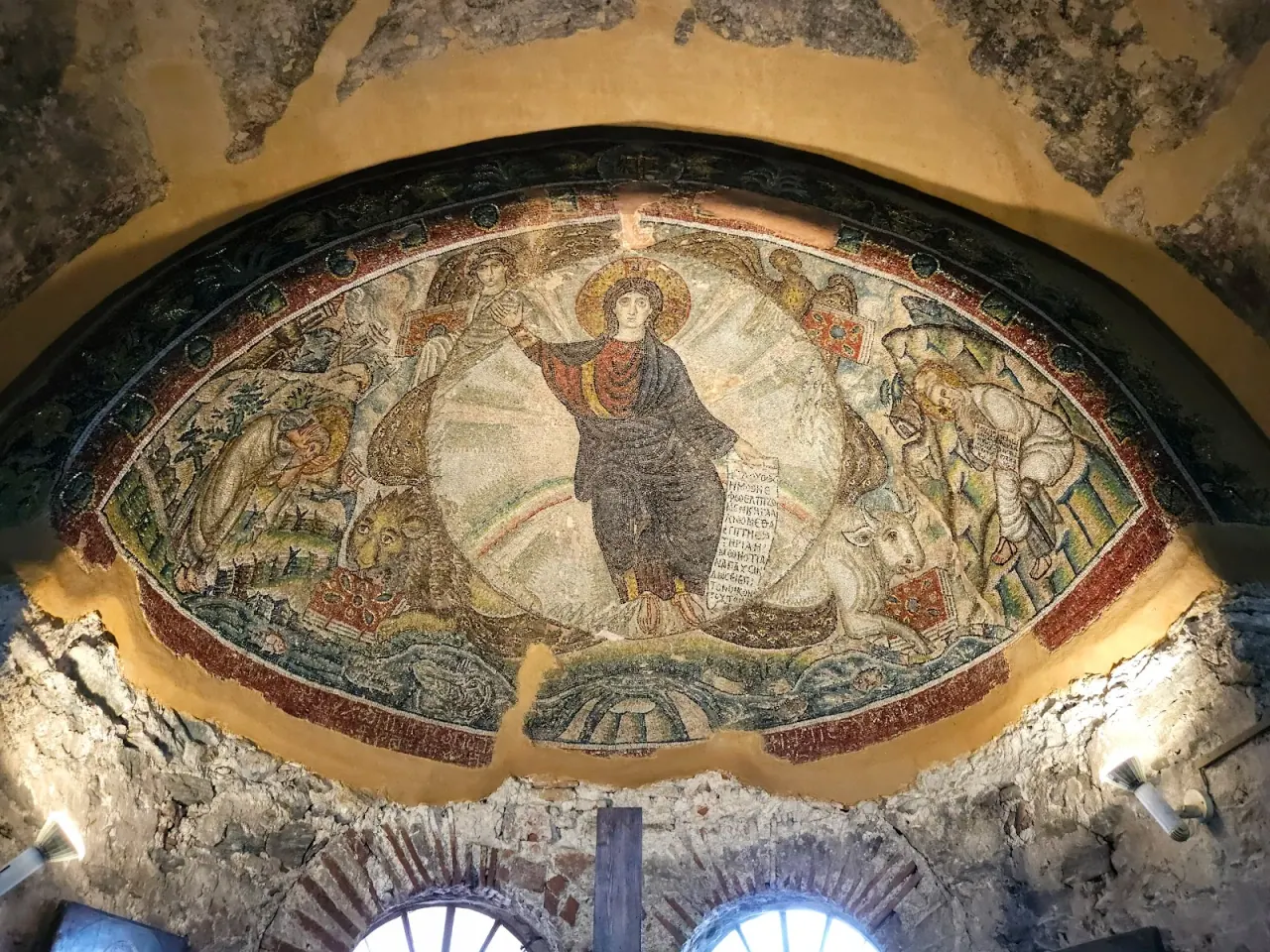
The late-5th-century apse mosaic of the Vision of Ezekiel — a youthful Christ in a mandorla — at Osios David (Latomou Monastery), Thessaloniki
Early Byzantine (late 5th c.)

Osios David (Latomou Monastery)

A tiny chapel in the lanes of Ano Poli that holds one of the most important early-Christian mosaics in the world — a UNESCO-listed treasure most visitors walk straight past.

4.8 (854)·Ano Poli, ~15–20 min uphill from the centre·20 minutes
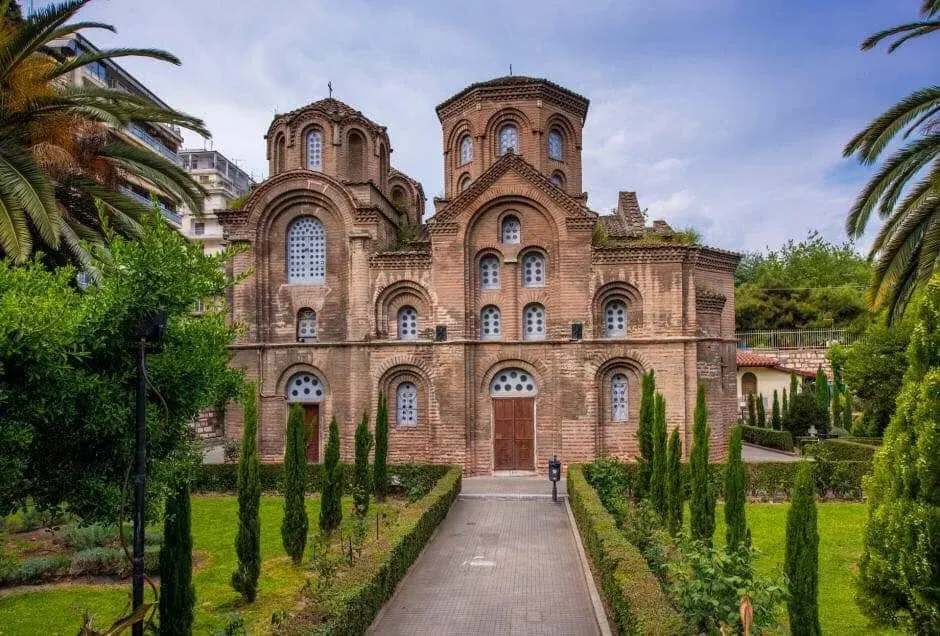
The red-brick Byzantine church of Panagia Chalkeon (1028), the 'Red Church', framed by a cypress garden in central Thessaloniki
Byzantine (1028)

Panagia Chalkeon

An elegant all-brick cross-in-square church of 1028, nicknamed the 'Red Church' for its warm terracotta masonry, sunk in a small garden beside the Roman Forum in the heart of the city.

4.7 (602)·City centre, a block from Aristotelous and Egnatia·15–20 minutes
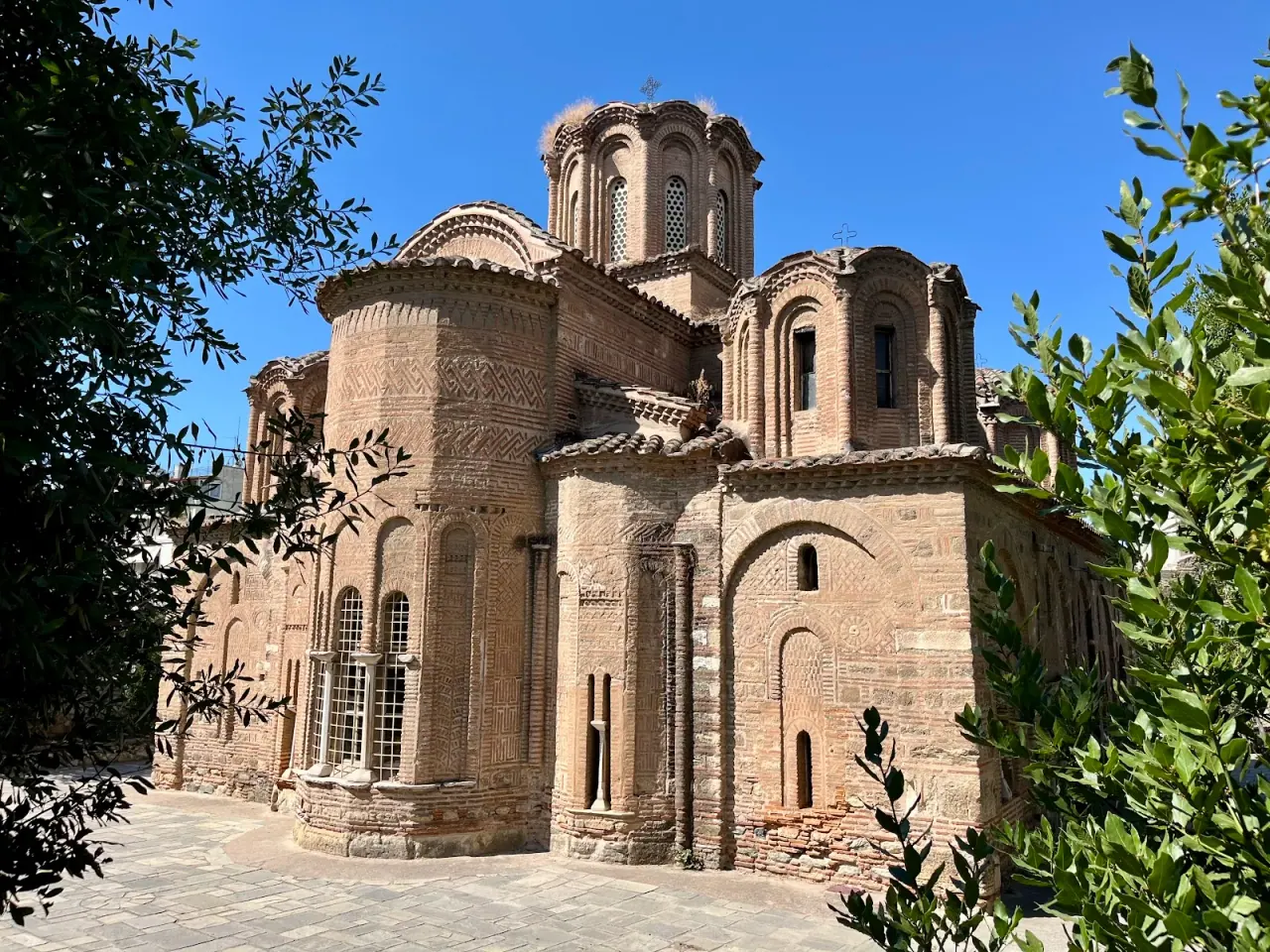
The five-domed Church of the Holy Apostles in Thessaloniki, its apses and domes covered in elaborate Byzantine decorative brickwork
Late Byzantine (c. 1310–1314)

Church of the Holy Apostles

A jewel-box five-domed church of the early 1300s, famous for some of the most dazzling decorative brickwork in the Byzantine world and for the Palaiologan mosaics and frescoes preserved inside — a UNESCO monument many visitors walk straight past.

4.7 (591)·Western old town, ~12–15 min walk W of Aristotelous·20–30 minutes
The five-domed brick exterior of the Byzantine church of Agia Aikaterini in Ano Poli, Thessaloniki, with its arcaded gallery
Late Byzantine (late 13th–early 14th c.)

Church of Agia Aikaterini

One of the most graceful of the city's Byzantine churches — a five-domed Palaiologan jewel wrapped in a columned portico and bands of fine brickwork, tucked into the northwestern lanes of Ano Poli. A UNESCO monument most visitors never reach.

4.8 (434)·Ano Poli, ~15–20 min uphill from the centre·15–20 minutes
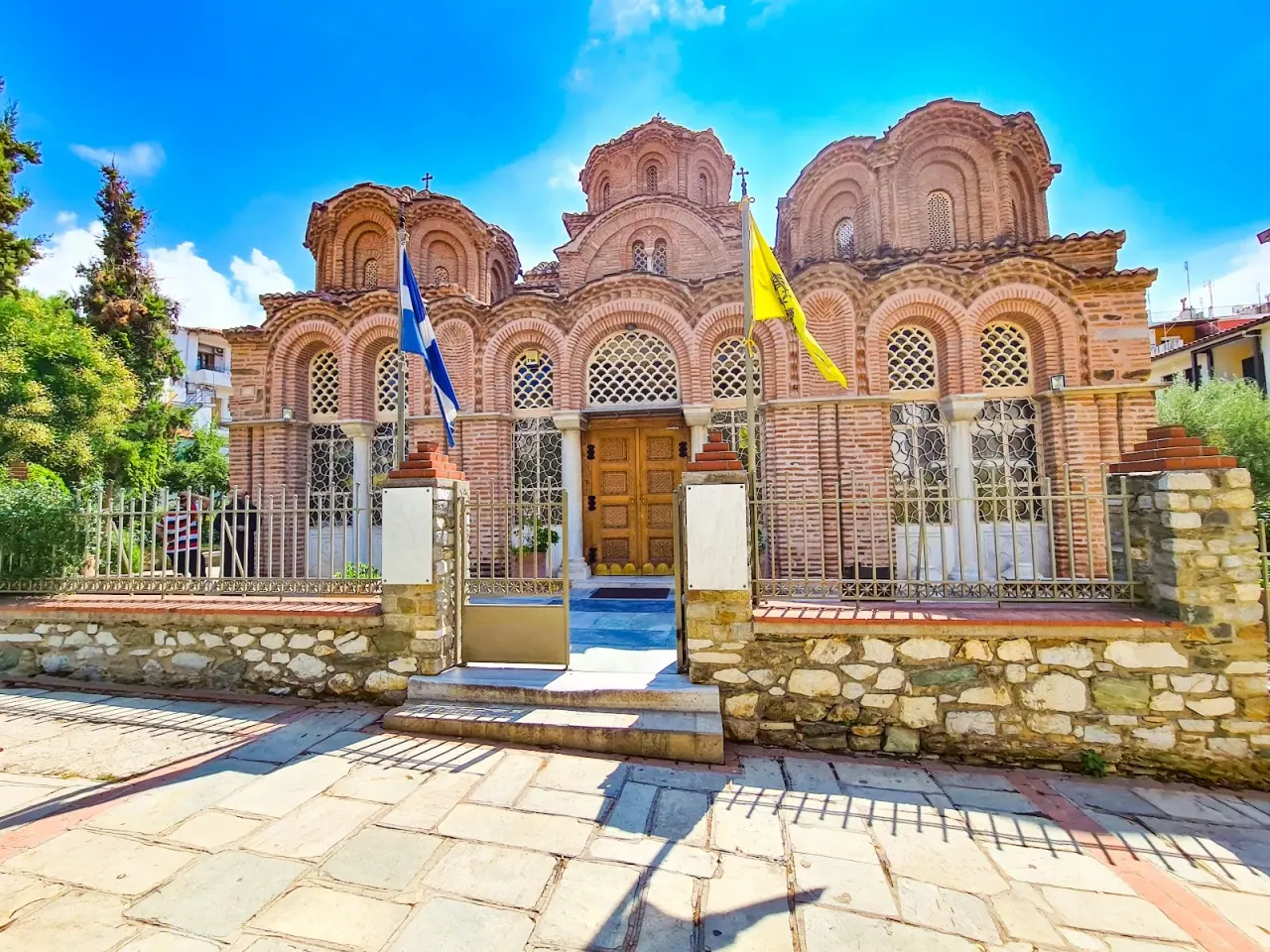
The brick-and-stone Byzantine church of Agios Panteleimon with its central dome, Thessaloniki
Late Byzantine (c. 1295–1314)

Church of Agios Panteleimon

A well-proportioned Palaiologan church with a central dome and a wraparound ambulatory, set in a planted courtyard just steps from the Rotunda and the Arch of Galerius — the easiest of the UNESCO Byzantine churches to fold into a city-centre walk.

4.7 (249)·City centre, by the Arch of Galerius and Rotunda·15–20 minutes
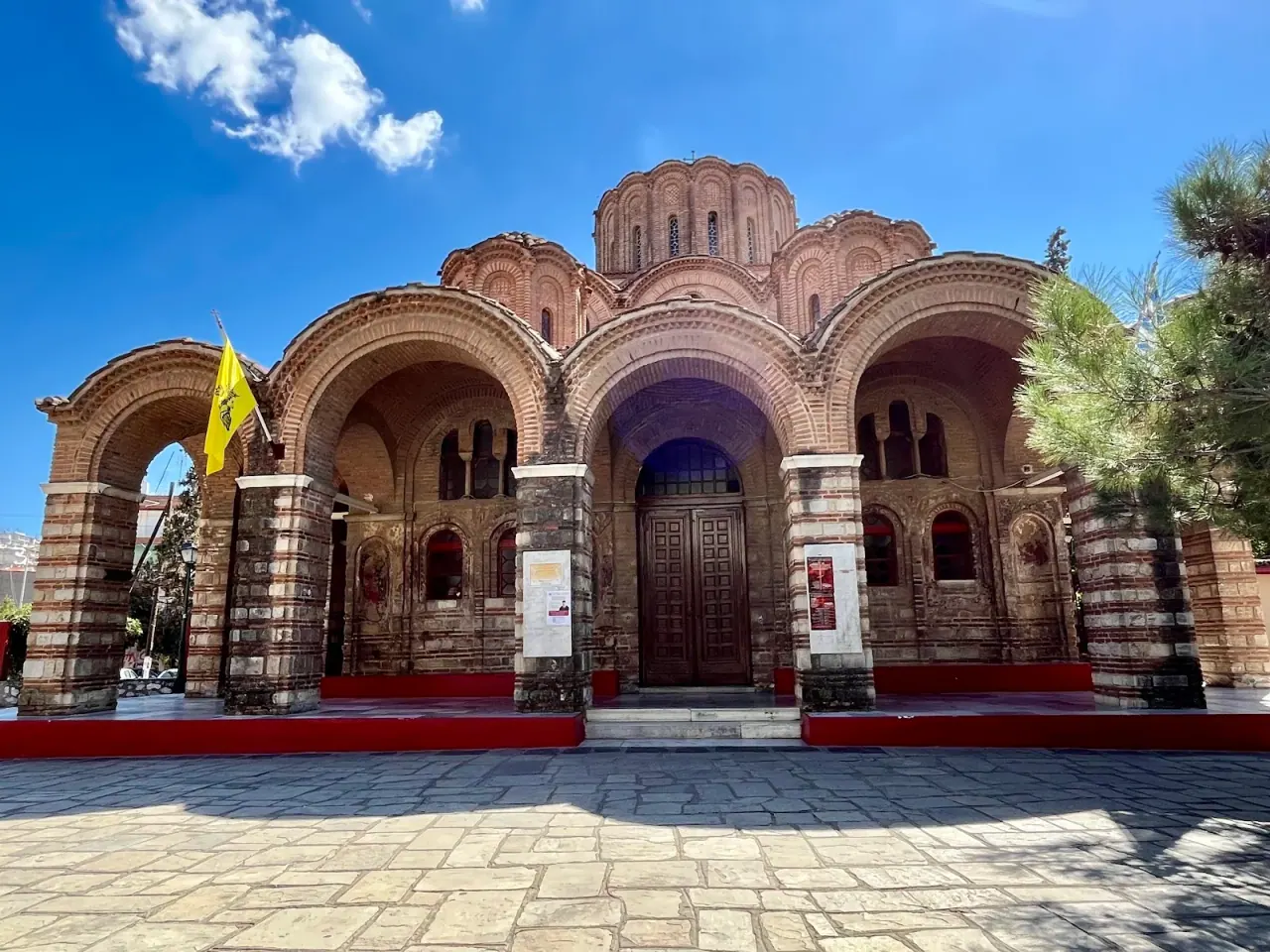
The arcaded portico and brick facade of the Byzantine church of Profitis Ilias (Prophet Elijah), Thessaloniki, with its central dome behind
Late Byzantine (mid-14th c.)

Church of Profitis Ilias

A grand mid-14th-century church and the only one in Thessaloniki built on the Athonite plan used by the monasteries of Mount Athos — a tall central dome over a sweeping arcaded portico. A UNESCO monument on the slope below Ano Poli.

4.7 (591)·~10–15 min walk N of the centre, below Ano Poli·15–20 minutes

Neighbourhoods & Squares

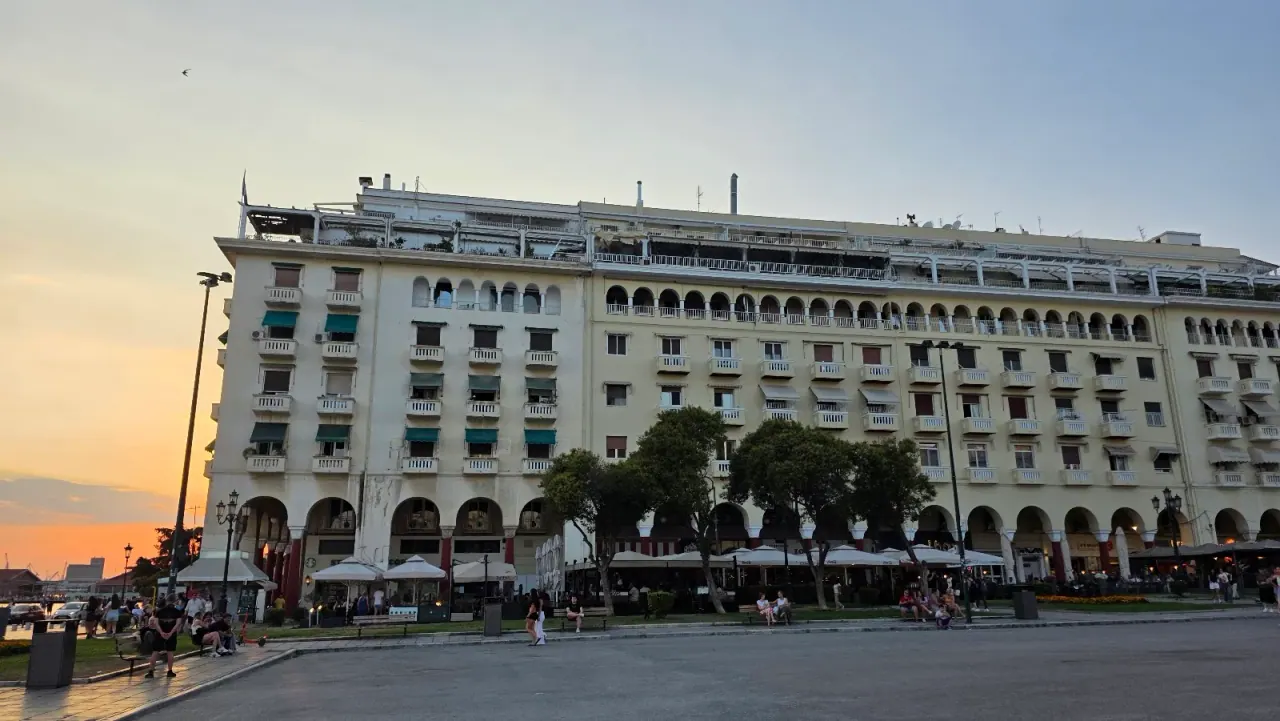
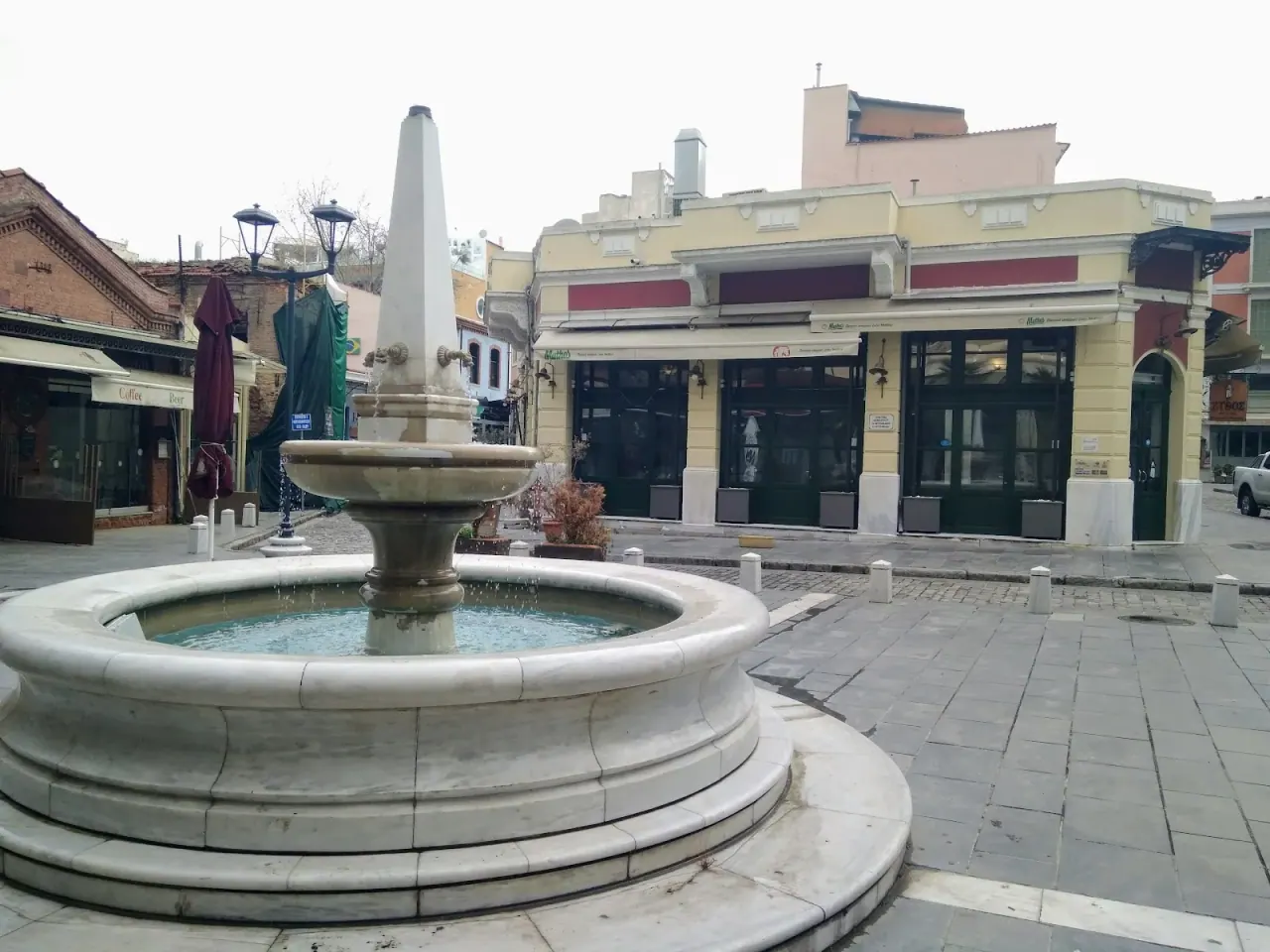
The lived-in heart of the city — the Ottoman upper town, the marble square on the sea, and the warehouse district turned nightlife quarter.

Planning Your Sightseeing Days?

Combine the landmarks with the city's food scene and a day trip or two — Meteora, Vergina, or the beaches of Halkidiki.