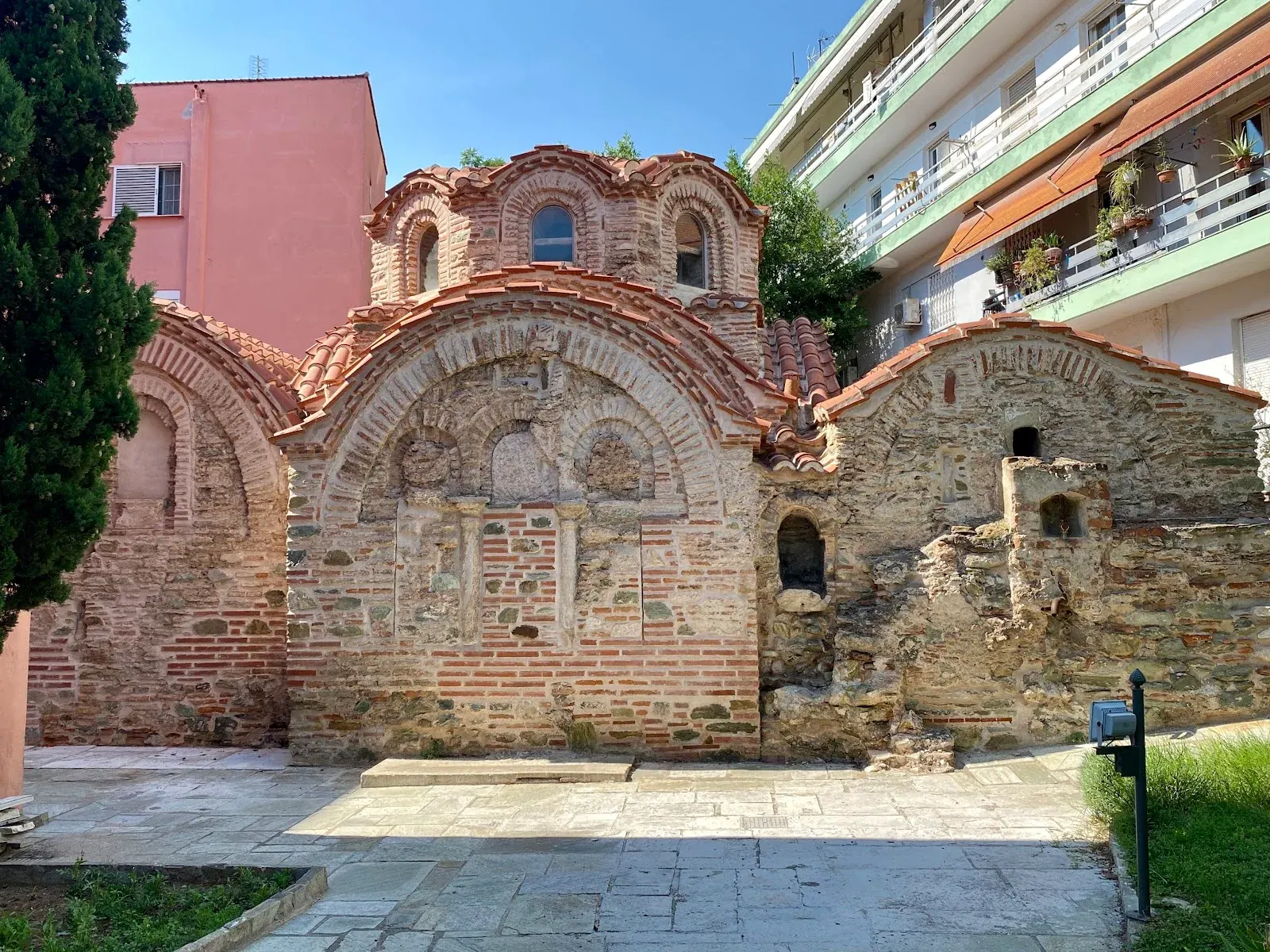
Most of Thessaloniki's UNESCO Byzantine monuments are churches. The Byzantine Bath in Ano Poli is the exception — and it's the rarest of the lot. It is the only surviving Byzantine bath in Thessaloniki, a small brick-and-stone building that kept working as a public bath for some seven centuries, from Byzantine times right through the Ottoman era, until 1940. It's a glimpse of everyday Byzantine life rather than its worship. Here's what it is and how to see it.
What it is
Built in the late Byzantine period — sources date it broadly to the late 13th or early 14th century — the bath is a compact structure of domed and vaulted brick chambers. What makes it extraordinary is simply that it survived: bathhouses were everyday buildings, endlessly rebuilt or demolished, and this is the largest and most complete Byzantine bath left in Greece — the few others survive only as ruins. It kept functioning right through the Ottoman centuries as a hammam — used by men and women on alternating days — and only closed in 1940. Restored over recent decades, it reopened to the public as a museum and cultural space in June 2015, and it's one of the fifteen Paleochristian and Byzantine Monuments of Thessaloniki on the UNESCO World Heritage list (1988).
What to see
Inside is the classic bath sequence that a Byzantine (and later Ottoman) bather moved through: a cold room, a warm room and a hot room, roofed with barrel vaults and small domes. Look up — the domes are pierced with star-shaped skylights that once let daylight fall through the steam. It's small, and you'll see it in twenty minutes or so, but nowhere else in Greece can you stand inside a Byzantine bath this complete — the country's other survivors are ruins.
How to visit
- Where: Theotokopoulou 3, in Ano Poli — a steep 15-minute walk up from the centre, right beside the frescoed church of Agios Nikolaos Orfanos.
- Cost: free — there's no admission charge (confirmed free entry as of 2025).
- When: opening hours are limited and can be erratic (daytime, with some sources reporting only certain days), so check locally before making the climb.
- Time needed: 20–30 minutes; easy to pair with Agios Nikolaos Orfanos a minute away.
It's a natural stop on a walk through Ano Poli and part of any tour of the city's Byzantine monuments. For its grander Ottoman successor down in the centre, see the Bey Hamam, the grandest Ottoman bathhouse in Greece — the two together tell the whole story of the city's bathing culture, part of the wider tale of Ottoman Thessaloniki. The Museum of Byzantine Culture sets it all in context.
Frequently Asked Questions
What is the Byzantine Bath in Thessaloniki?
It's a late-13th- to early-14th-century bathhouse in Ano Poli — the only surviving Byzantine bath in Thessaloniki. Built around 1300, it worked as a public bath from Byzantine times, through the Ottoman era as a hammam, until 1940. Restored and now open to visitors, it is one of the city's fifteen UNESCO-listed Paleochristian and Byzantine monuments.
Why is the Byzantine Bath worth visiting?
Because it's unique: nowhere else in Greece can you go inside a Byzantine bathhouse this complete — its few peers around the country survive only as ruins. It's a roughly 700-year-old building with the full cold–warm–hot room sequence, barrel vaults and domes with star-shaped skylights — a rare look at everyday Byzantine life. It's a UNESCO monument and sits right next to the frescoed church of Agios Nikolaos Orfanos.
How old is the Byzantine Bath, and how long was it in use?
It was built around 1300, in the late Byzantine period, and remained in use as a bath for about seven centuries — through the Ottoman era as a hammam — until it finally closed in 1940. It has been on the UNESCO World Heritage list since 1988.
Is there an entrance fee for the Byzantine Bath?
Entry is free — there's no admission charge (free entry confirmed as of 2025). Opening hours are limited and can be erratic (some sources report only certain mornings), so it's worth checking locally before the uphill walk.