Histoire
Comment c'est né
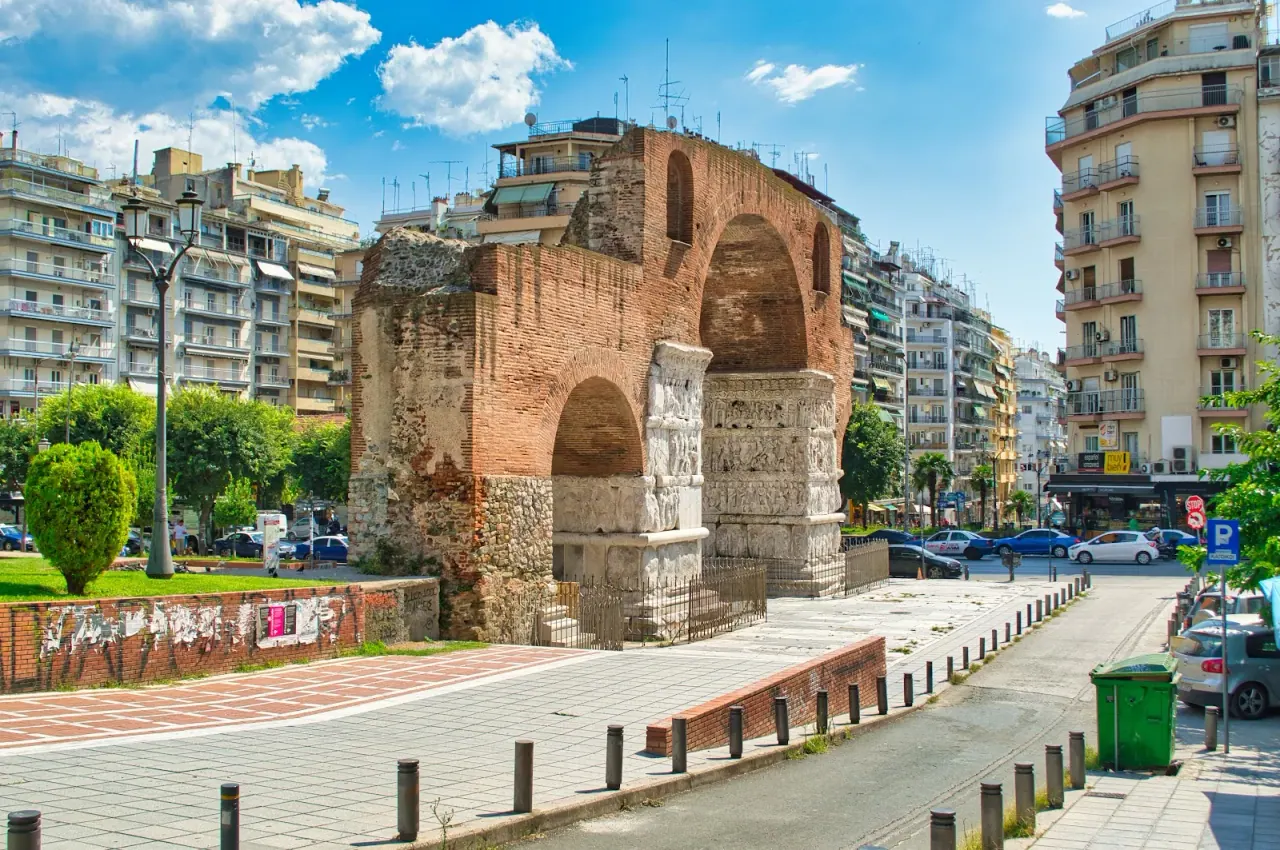
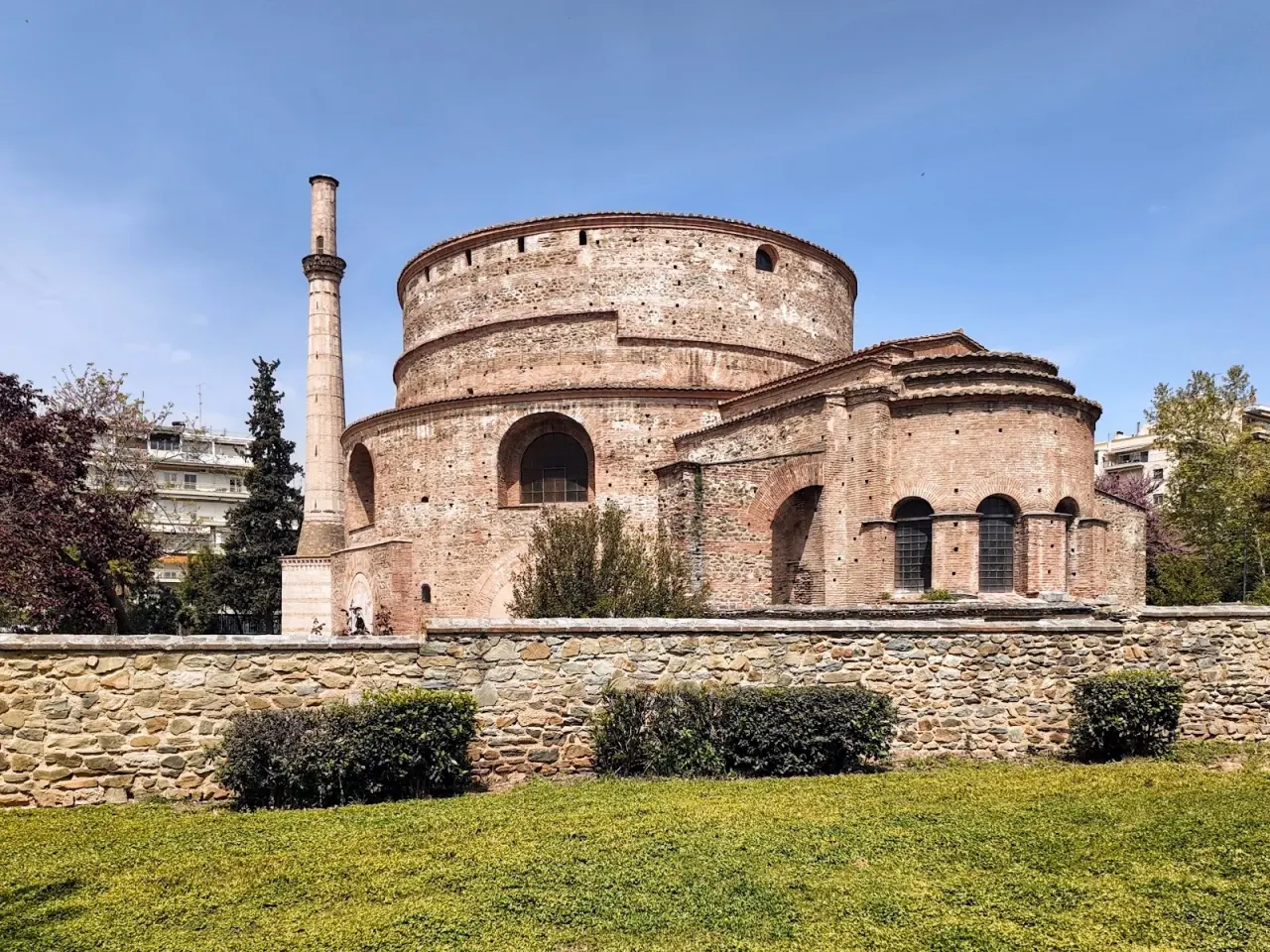
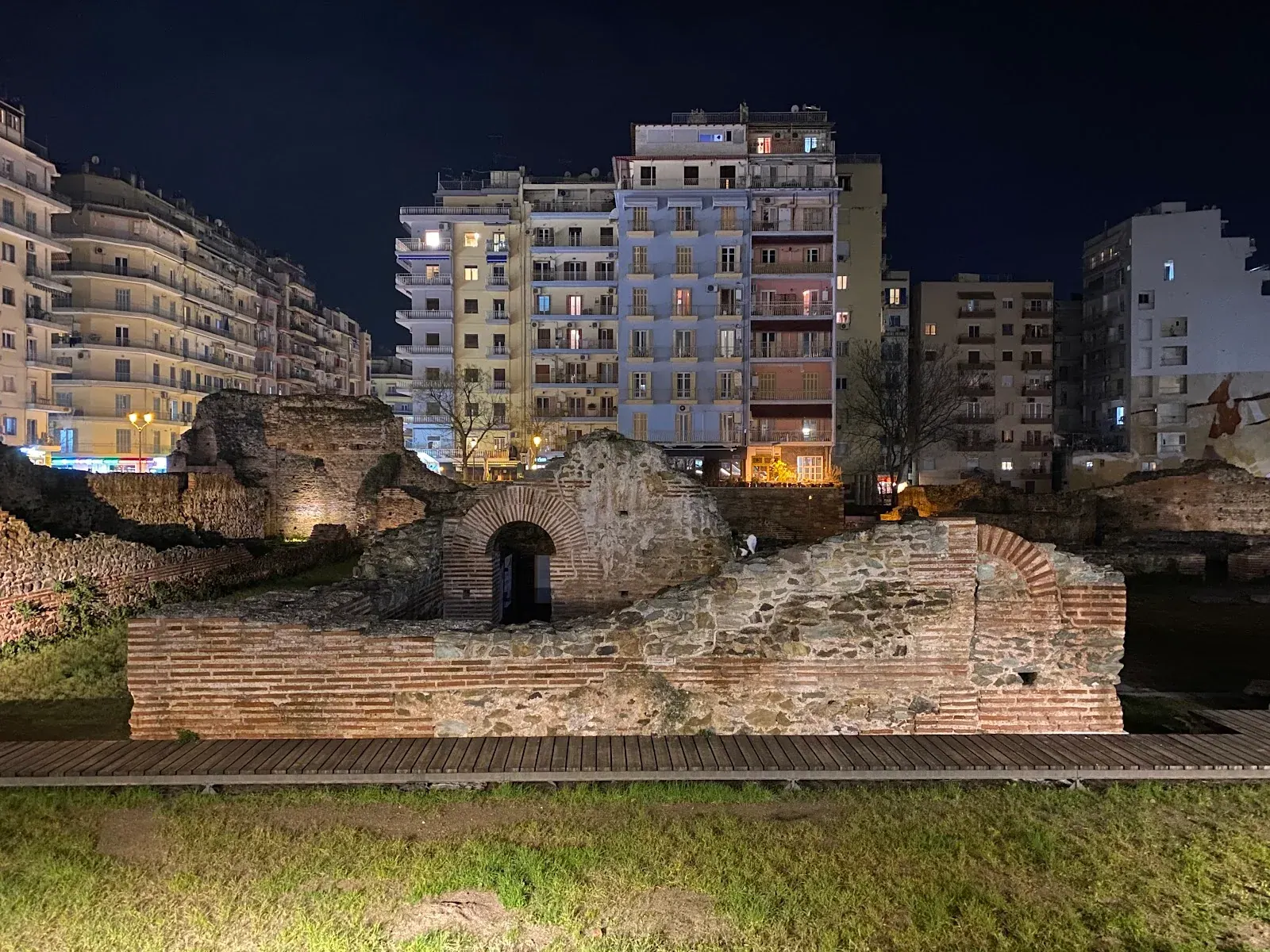
Galerius built a grand palace quarter in the early 4th century, linked by the arch to the Rotunda. Sections survive below the modern street level, surrounded today by cafés and student life.
Ce Que Vous Verrez
Lors d'une visite
The brick walls and apses of the octagon, fragments of mosaic and marble flooring, and the contrast of ancient ruins ringed by buzzing café tables.
Comment Visiter
Open-air site viewable from the square; fully step-free around the railings.
Meilleur Moment
Evening, with the square in full swing
Galerie
S'y Rendre
Bon à Savoir
You can view the excavations from the surrounding railings in Navarinou Square at any time, free of charge.
It was the sprawling early-4th-century imperial palace of the Roman emperor (and Tetrarch) Galerius — the seat of his power in Thessaloniki, once linked with the nearby Rotunda, the Arch (Kamara) and a hippodrome. What survives in Navarinou Square includes an octagonal throne hall and mosaic floors.