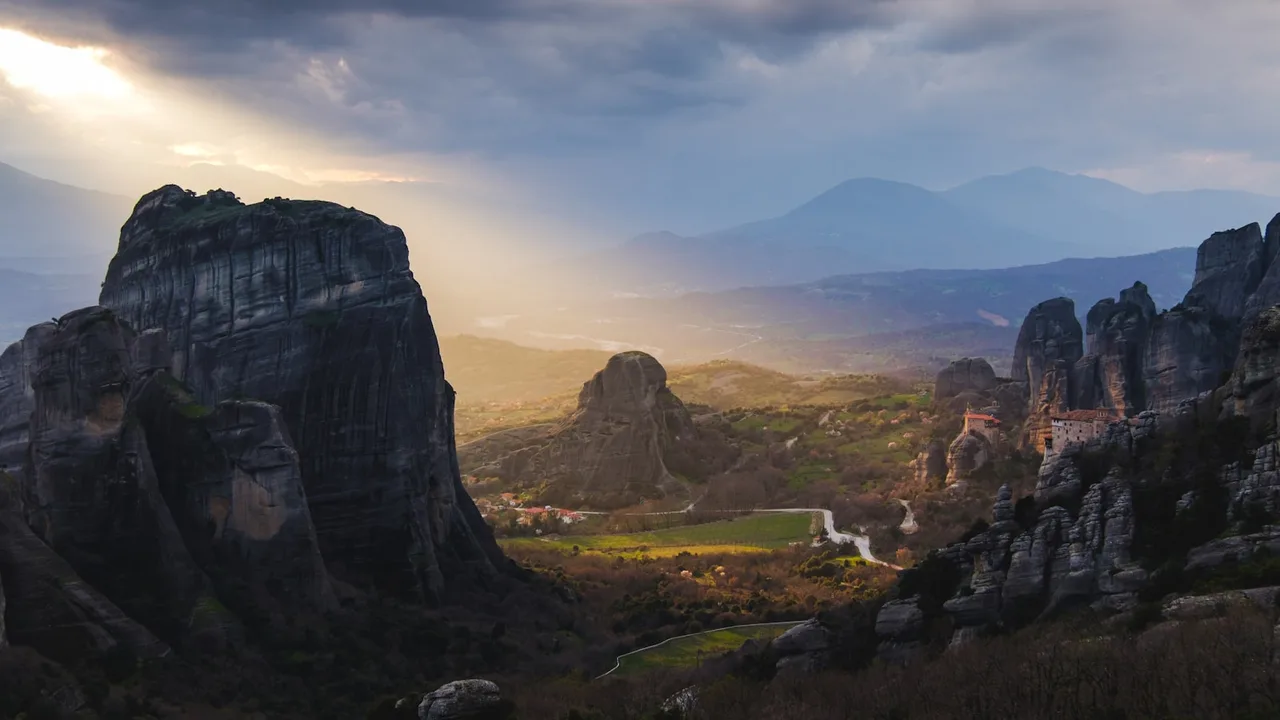
Meteora — monasteries balanced on sheer sandstone towers, a UNESCO site listed for both its culture and its nature — is the single most spectacular day trip from Thessaloniki. It's also a long one, and how you do it changes the day completely. Here's the honest breakdown of the three ways to go, what each costs, and the monastery rules that trip up unprepared visitors.
The three ways to do it
It's roughly 230 km from Thessaloniki, so this is a full day however you travel. Pick by how much you want to organise yourself:
| Option | Round-trip time | Cost (2026) | Best for |
|---|---|---|---|
| Guided tour | Full day, ~5 h on site | from ~€59 pp | First-timers — driving and monastery timing handled |
| Train + bus, DIY | ~3 h each way | fares + €5/monastery | Independent travellers on a budget |
| Car | ~2.5 h each way | fuel + parking + €5/monastery | Flexibility, early arrival, photo stops |
Whichever you choose, see our full Meteora day-trip guide for the monastery-by-monastery detail.
By guided tour (easiest)
Most visitors book a day tour, and for a first visit it's the sensible call: it removes the transfers and the closed-monastery roulette (more on that below). Tours run from around €59 per person, last about five hours on site, take in viewpoints over all six monasteries and go inside two or three of them, and usually fold in round-trip transport and an optional lunch. You can compare and book through the GetYourGuide Thessaloniki page or browse our day-trip activities. Private tours run nearer €210 if you want your own guide and pace.
By train (cheapest, independent)
The DIY route is genuinely doable, and the ride through the Thessaly plain is part of the appeal — but be clear on the current setup: the Paleofarsalos–Kalambaka railway has been closed since the 2023 Thessaly floods, and the full rail restoration has been repeatedly delayed — early projections of 2026 have slipped, with some estimates now pointing to 2028, so treat any reopening date as provisional. Until it reopens, you take the Athens–Thessaloniki mainline train as far as Paleofarsalos and change onto a Hellenic Train rail-replacement bus that runs via Karditsa and Trikala into Kalambaka — roughly three hours each way. Because the timetable keeps shifting with the works, check the current departures on the official Hellenic Train site before you plan around it; a morning-out, evening-back connection typically leaves you around six hours in Kalambaka, enough for two or three monasteries by local taxi or the seasonal shuttle.
By car
Driving is about 2.5 hours each way on the A2/E90 motorway to Kalambaka, the town right beneath the rocks. A car is the best option if you want to arrive for the soft morning light, chase photo stops along the monastery loop road, and decide on the day which monasteries to enter. Parking sits at each monastery; the road between them is narrow but short.
What you'll actually see — and the rules
Of the 24 monasteries that once crowned these rocks, six remain active and open to visitors. The catch: each keeps its own hours and closes on a different day of the week, so without planning you can arrive to a locked gate. The summer schedule (roughly April–October):
| Monastery | Summer hours | Usually closed |
|---|---|---|
| Great Meteoron (the largest) | 09:30–15:00 | Tuesday (also Wed & Thu in winter) |
| Varlaam | 09:00–16:00 | Friday (also Thu in winter) |
| Rousanou | 09:00–16:30 | Wednesday |
| Holy Trinity (Agia Triada) | 10:00–16:00 | Thursday |
| St. Stephen (nunnery) | 09:00–13:30, 15:30–17:30 | Monday |
| St. Nikolaos Anapafsas | 09:00–17:00 | Friday |
All six are open Saturday and Sunday. Avoid Tuesday (Great Meteoron shut) and Friday (both Varlaam and St. Nikolaos shut) if you want the big interiors; Wednesday or a weekend is safest. In winter (roughly November–March) hours shrink to about 09:00–15:00 and some monasteries add a second closing day (Great Meteoron also shuts Wednesday and Thursday, Varlaam also Thursday), and days can change at short notice, so confirm before you commit — it matters most on a DIY trip. Note too that Orthodox feast days (especially around Easter and each monastery's patron saint) can override the normal schedule.
- Entry is €5 per monastery, paid in cash at the gate. Children up to 12 are free; the monasteries don't run a student or senior discount, so budget the flat €5 for every monastery you enter. It's not a single site-wide pass.
- The visiting window is short. As the table shows, most open 09:00–09:30 and close between 15:00 and 17:30 — Great Meteoron, the must-see largest one, shuts earliest at 15:00. Combined with each one's weekly closing day, that's a tight window, so plan your route and don't leave the big interiors for late afternoon.
- Dress code is enforced. Women need a skirt below the knee and covered shoulders; men need long trousers; no sleeveless tops for anyone. Most gates keep wrap-around skirts for visitors who turn up in shorts — but don't rely on it.
- Go early. The light is best in the morning and the tour coaches thin out before lunch.
Many travellers pair Meteora with the royal Macedonian tombs at Vergina on a combined coach tour — see the Meteora & Vergina day trip if you'd rather knock out two headline sights in one go.
So, is it worth the long day?
Yes — with one caveat. If you only have two days in Thessaloniki, giving one entirely to a 5-hour round trip is a real trade-off against the city's food and Byzantine core. But if you have three days or more, Meteora is unforgettable and photographs genuinely don't prepare you for the scale. Build it into a longer trip and take the guided tour if you'd rather not gamble on train changes and monastery closures. Weighing it against the alternatives? See all our day trips from Thessaloniki — from the royal tombs at Vergina to the beaches of Halkidiki.
Frequently Asked Questions
Can you visit Meteora as a day trip from Thessaloniki?
Yes. Meteora is about 230 km away — roughly 2.5 hours by car, or about three hours by the train-and-bus route (you change to a Hellenic Train rail-replacement bus at Paleofarsalos, as the Kalambaka rail line has been closed since the 2023 floods with reopening repeatedly delayed), so it's a full but very doable day. Guided day tours from around €59 handle the transport and monastery timing; the DIY route gives you about six hours on site.
How much does a Meteora day trip from Thessaloniki cost?
Guided group tours start around €59 per person and usually include coach transport and monastery visits; private tours run about €210. Going independently, you pay the train fare plus €5 cash entry per monastery (children under 12 free), so a self-guided day can cost noticeably less.
How many Meteora monasteries can you visit in a day?
Six monasteries are active, and a typical day lets you go inside three of them — there isn't time for all six at a relaxed pace. Each closes on a different weekday (all open Saturday and Sunday), so check the day's closures, or take a tour that routes around them.
What should you wear to Meteora's monasteries?
The monasteries enforce a modest dress code: women need a skirt below the knee and covered shoulders, and men need long trousers — no shorts or sleeveless tops for anyone. Most gates keep wrap-around skirts to lend to visitors who turn up in shorts, but supplies run out at busy times, so it's safer to dress the part before you go.
How far is Meteora from Thessaloniki?
About 230 km. By car it's roughly 2.5 hours each way on the A2 motorway to Kalambaka, the town beneath the rocks; by train it's around 3 hours each way (currently a mainline train to Paleofarsalos, then a rail-replacement bus on to Kalambaka). Either way it's a full-day trip, so plan an early start and a late return.