There's a version of a Thessaloniki night out that has nothing to do with cocktails or clubs: a small taverna, a haze of tsipouro and grilled meze, and three musicians with a bouzouki, a baglamas and a guitar playing the aching, defiant songs of the Greek blues. This is rebetiko — music born from catastrophe and exile a century ago, now UNESCO-listed heritage, and still played live most nights in the back lanes of Ladadika. If you want to understand the soul of the city rather than just its bar scene, this is the night to seek out. Here's what it is and where to hear it.
What is rebetiko?
Rebetiko is often called the "Greek blues," and the comparison holds: it's urban, marginal music about hardship, love, exile, hashish dens and the underworld, carried by the plaintive twang of the bouzouki. Its defining moment was the 1922 Asia Minor Catastrophe, when over a million Greek refugees were expelled from Smyrna and Anatolia and poured into Greece — many into Thessaloniki, which their arrival transformed. They brought a musical culture that fused with the mainland's, and rebetiko was its raw, beautiful voice. In 2017 UNESCO added it to the list of Intangible Cultural Heritage — recognition of exactly how deep it runs.
Thessaloniki, as one of the great refugee-resettlement cities, has rebetiko in its bones — and a living scene of bands keeping it alive.
Rebetiko vs the bouzoukia — not the same thing
Don't confuse this with a bouzoukia night. The bouzoukia are the big, glitzy, expensive live-music clubs where pop-laïkó stars perform to flower-throwing crowds. Rebetiko is the opposite: small, acoustic, intimate and cheap, in a taverna where the band is a few feet away, the volume is human, and you're there for the songs and the meze, not the spectacle. One is a night at a concert-club; the other is a night in a living room with strangers who become friends by the third bottle.
Where to hear rebetiko live in Thessaloniki
The scene clusters in and around Ladadika, the old warehouse quarter — perfect, since you can pair it with dinner:
- Tombourlika — in Ano Ladadika (Lordou Vyronos), a dedicated rebetiko taverna since 2015, with guitar, bouzouki and baglamas on stage. Open evenings Tuesday to Saturday (and Sunday afternoons), closed Mondays — a reliable bet for the real thing.
- Palati — a much-loved live-music tavern on the cobbled Plateia Morichovou in Ladadika (4.4★), with a band playing old Greek songs, rembetiko and laïkó most evenings over shared meze, tsipouro and wine. The easiest place for a visitor to stumble into it.
- Hatzi Bahtse — a traditional tavern known for completely acoustic, unamplified live rebetiko: about as pure and old-fashioned as the experience gets.
- Cafe Balkan — near the centre, live rebetiko over ouzo and tsipouro, with an authentically local crowd.
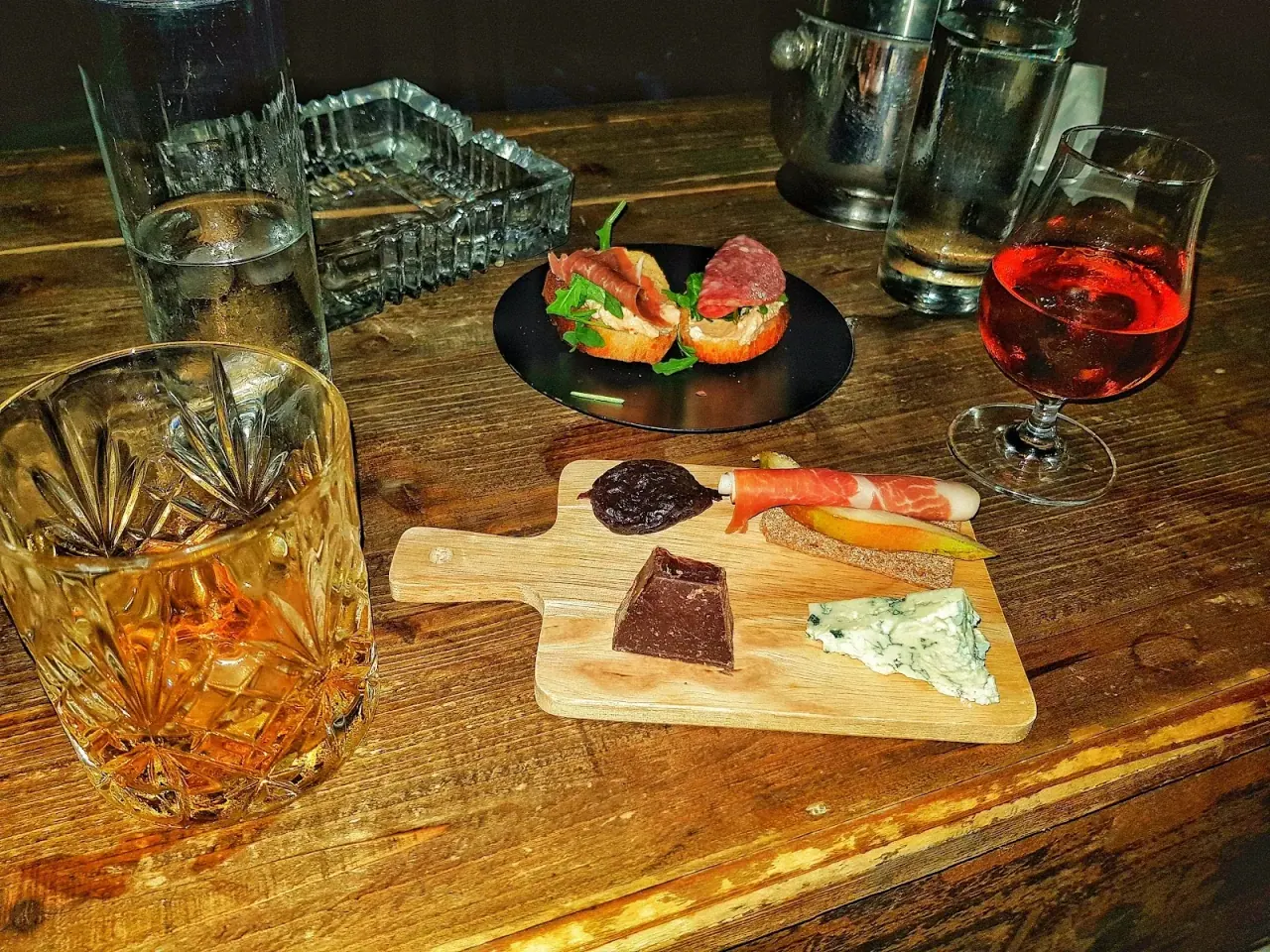
Because these are tavernas first, you eat and drink as you listen — order a spread of meze (see our ouzeri and meze guide), let the tsipouro flow, and settle in.
What to expect on the night
- It starts late and runs long — the music warms up mid-evening and the best hours are after 11pm; nobody's leaving early.
- You'll eat while you listen — this is meze-and-music, not a concert with a bar. Book a table at the busy spots, especially weekends.
- Sing along. By the second set the whole room knows the words; you're welcome to join, clap, and stay far too late.
- It's affordable — a night of live music, food and drink here costs a fraction of a bouzoukia table.
For where this sits in the bigger picture, see our nightlife guide — rebetiko is the soulful, sit-down end of a city that also does cocktail bars and dawn-hour clubs.
Frequently Asked Questions
What is rebetiko music?
Rebetiko is the "Greek blues" — urban folk music about hardship, love and the margins, driven by the bouzouki. It took shape after the 1922 Asia Minor Catastrophe, when Greek refugees from Smyrna and Anatolia flooded into cities like Thessaloniki. UNESCO listed it as Intangible Cultural Heritage in 2017.
Where can you hear rebetiko live in Thessaloniki?
Mostly in Ladadika tavernas: Tombourlika (a dedicated rebetiko taverna), Palati on Plateia Morichovou (live most evenings), the fully acoustic Hatzi Bahtse, and Cafe Balkan near the centre. You eat meze and drink tsipouro as the band plays — book a table at weekends.
What's the difference between rebetiko and the bouzoukia?
Rebetiko is small, acoustic, intimate and cheap — a few musicians in a taverna playing the old Greek blues. The bouzoukia are big, glitzy, expensive live-music clubs where pop-laïkó stars perform to flower-throwing crowds. Both feature the bouzouki, but the experience — and the price — could hardly be more different.
Is rebetiko worth seeking out in Thessaloniki?
Yes, if you want the soul of the city rather than just its bars. As a major refugee-resettlement city, Thessaloniki has deep rebetiko roots and a living scene, and an intimate taverna night of acoustic Greek blues over meze and tsipouro is one of the most authentic — and affordable — evenings you can have here.