Thessaloniki is one of the best-value city breaks in Europe — Greece's food capital, where you can eat brilliantly for a few euros, ride a brand-new metro for under a euro, and fill days with free Roman and Byzantine monuments. At the leanest end, our backpacker guide does the city on hostel money. You don't have to scrimp to do it cheaply. Here's what a day actually costs, where the money goes, and how to keep it low without missing the good stuff.
What a day costs
Realistic daily budgets per person, excluding the flight to get here:
| Style | Per day | What it covers |
|---|---|---|
| Budget | €40–60 | Hostel/cheap room, street food, walking, public transport |
| Mid-range | €80–140 | 3-star hotel, tavernas, a paid sight or two, some taxis |
| Luxury | €200+ | 4–5-star, fine dining, tours, rooftop bars |
The single biggest variable is your bed; food and transport are cheap whatever you do. A frugal traveller can have a genuinely good time here on €40–50 a day.
Cheap eats: the city's superpower
This is where Thessaloniki shines. You can eat superbly for very little:
- Koulouri (sesame bread ring) — under €1 from street carts.
- Bougatsa or a trigono — €2–4 from a traditional shop.
- Souvlaki / gyros — €2–4 for a loaded pita.
- Mezedes dinner at a taverna, with drinks — roughly €15–25 a head.
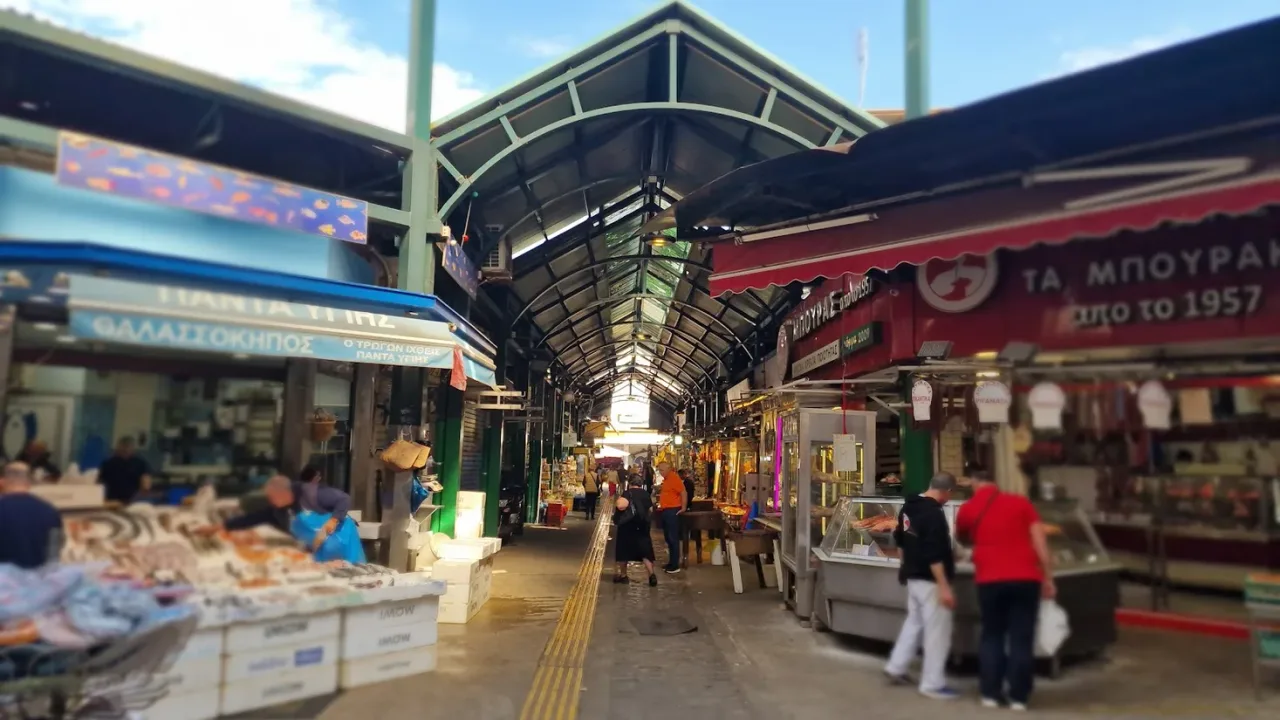
Graze the street food and the Modiano and Kapani markets and you'll eat like a local for a fraction of Western-European prices. A freddo espresso to nurse for an hour is €3–4.
Free (and nearly free) things to do
A huge amount of the best of Thessaloniki costs nothing — see the full rundown in our free things to do guide:
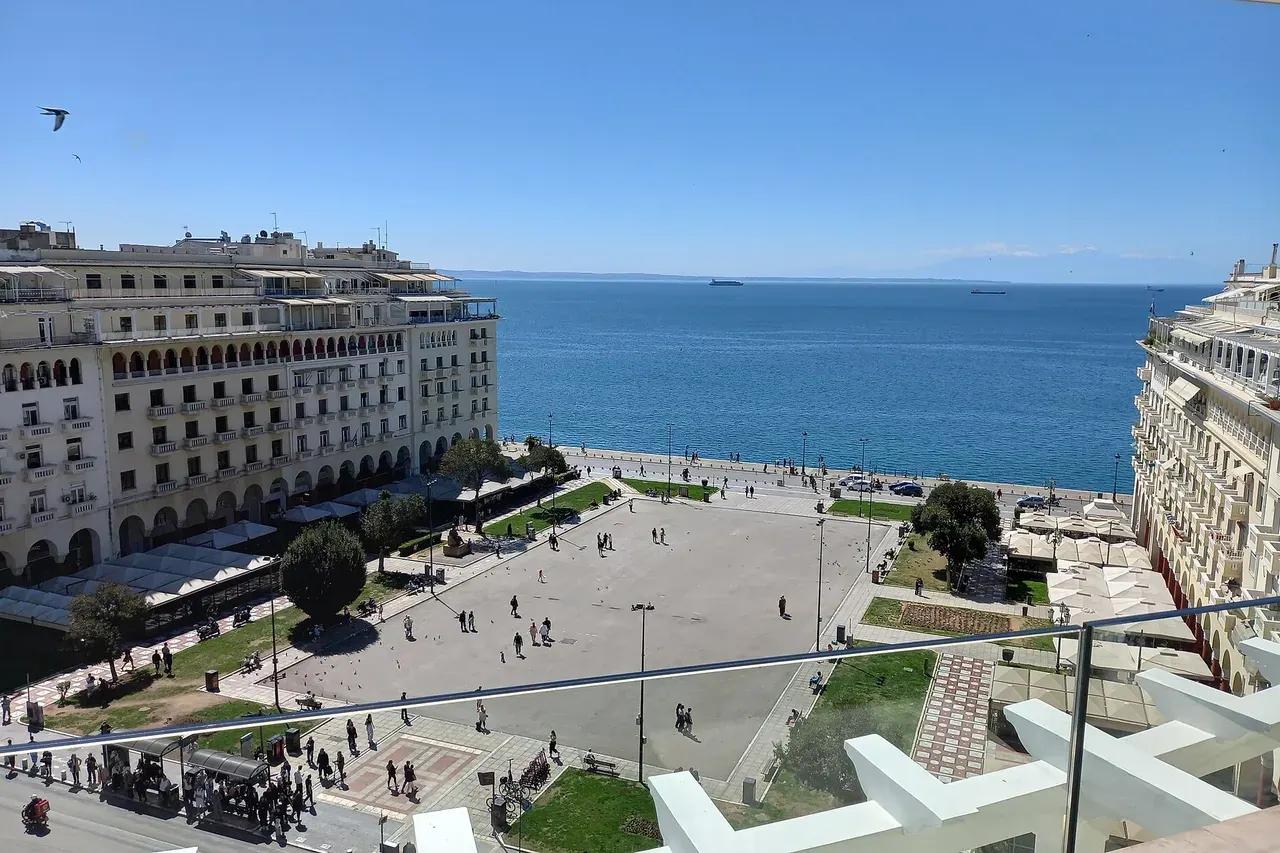
- The waterfront — the Nea Paralia walk, the Umbrellas and the sunset are all free.
- Ano Poli — the upper town's lanes, the Byzantine walls, the Trigonion Tower viewpoint and most of its churches are free.
- Byzantine churches — most of the UNESCO-listed churches have free entry.
- The markets — Modiano and Kapani are free to wander.
- The Arch of Galerius and Roman Forum — visible/walkable for free.
Paid sights are cheap too: museums run €4–10, and the €15 combined three-day ticket covers the Archaeological and Byzantine museums plus several monuments — see our best museums guide.
Transport on the cheap
Getting around barely dents the budget:
- Single ticket (metro or bus — ticketed separately) — €0.60, valid 70 minutes with free transfers within the same mode.
- 10+1 tickets — €5.80.
- Day pass — €2.50 (not valid on airport buses).
- Airport express bus — €2.00 into the city; far cheaper than a taxi. See our airport-to-city guide.
The compact centre is walkable end to end, so you may barely need transport at all.
Where to save on a bed
Accommodation is your biggest cost, so it's where to focus. Hostels and budget rooms start low, especially outside summer — our cheap places to stay guide rounds up the best hostels and budget guesthouses; Ano Poli and the eastern neighbourhoods are cheaper than the dead-centre. Visiting in winter (outside the Christmas peak) slashes room rates — see Thessaloniki in winter. For the full rundown of areas and properties, see where to stay. Staying for weeks, or working remotely? Our digital nomad guide covers longer-term rentals, monthly costs and where to base yourself.
Money-saving tips
- Eat street food and at markets for lunch; save the taverna for dinner.
- Walk — the centre is small and flat; the waterfront and Ano Poli are free.
- Get the combined museum ticket if you're doing two or more big sights.
- Time it for a free-entry day — state museums and monuments are free for everyone on the first and third Sunday of each month from November to March, plus 6 March, 18 April, 18 May, the last weekend of September and 28 October (Ohi Day).
- Refill, don't buy bottled — the tap water is potable, so a reusable bottle quietly removes a daily line from your spending.
- Drink freddo, not cocktails — café culture is the cheap local pleasure; rooftop cocktails are €10–14.
- Visit off-season — winter and shoulder months are far cheaper than summer.
- Skip roaming charges — EU visitors roam free on their home plans, but travellers from further afield can avoid pricey roaming with a cheap eSIM or local data plan.
Frequently Asked Questions
Is Thessaloniki expensive to visit?
No — it's one of the best-value cities in Europe. Budget travellers can manage on €40–60 a day, mid-range on €80–140. Food and transport are cheap (a gyro is €2–4, a single transit ticket €0.60), and many of the best sights — the waterfront, Ano Poli, Byzantine churches — are free.
How much money do you need per day in Thessaloniki?
Around €40–60 a day for a budget trip (hostel, street food, walking, public transport), €80–140 for mid-range (3-star hotel, tavernas, some paid sights), and €200+ for luxury. Accommodation is the biggest variable; food and transport stay cheap at any budget.
What can you do for free in Thessaloniki?
Plenty: walk the Nea Paralia waterfront and see the Umbrellas and sunset, explore Ano Poli's lanes, Byzantine walls and Trigonion Tower viewpoint, enter most of the UNESCO Byzantine churches, wander the Modiano and Kapani markets, and see the Arch of Galerius and Roman Forum — all free.
How much is public transport in Thessaloniki?
A single metro or bus ticket costs €0.60 (the metro and buses are ticketed separately, so a trip using both needs two), a pack of 10+1 is €5.80, and a day pass is €2.50 (one mode; not valid on airport buses). The airport express bus into the city is €2.00. The compact centre is also very walkable, so you may need little transport.
Can you drink the tap water in Thessaloniki?
Yes. Tap water in Thessaloniki and mainland Greece is safe to drink, so refill a bottle rather than buying it — a small daily saving that adds up. It's chlorinated and can taste faintly of it; a cheap filter jug or just letting it stand sorts that. (Tap water is best avoided on some Greek islands, but that's not a concern here in the city.)
Do you need cash, or can you pay by card in Thessaloniki?
Cards — including contactless and phones — are accepted almost everywhere: restaurants, shops, hotels, taxis and the airport bus. Keep some cash for the markets, small kiosks (periptera), a few old-school tavernas, church donation boxes and tips, which are best in cash. City buses are cashless (tap a card or buy a ticket beforehand), while metro-station machines still take cash.
What power adapter do I need for Thessaloniki?
Greece uses the standard European Type C and Type F plugs — the round two-pin sockets — running at 230V, 50Hz. Visitors from continental Europe need nothing; from the UK you'll want a simple plug adapter; from the US, Canada or Australia you'll need a plug adapter too, though most modern phones, laptops and camera chargers are dual-voltage (look for "100–240V" on the charger) and won't need a separate voltage converter.