Two blocks north of the shopping streets, the ground drops away into a sunken field of stone — colonnades, a curved theatre, and rows of brick arches, all sitting a full storey below the modern city. This is the Roman Forum, the civic heart of ancient Thessaloniki, and one of the easiest big sights to walk straight past. It's free, open to the sky, and hides a genuinely surprising story under the pavement. Here's what you're looking at and how to visit.
The quick version
An open archaeological park you can walk into for free, with a paid underground museum tucked beneath it. Come for the odeon and the atmosphere, not a long visit.
| Detail | |
|---|---|
| What | The Roman-era forum (over an earlier Greek agora) |
| Built | 2nd–3rd century AD |
| Entry | The open square is free to walk; the underground Museum of the Ancient Agora is €10 (the ticket also admits you to the enclosed excavation), closed Tuesdays |
| Hours | Museum and enclosed excavation 09:00–16:00 in summer (Apr–Oct), 08:30–15:30 in winter (Nov–Mar); closed Tuesdays |
| Rating | 4.6★ on Google (~5,980 reviews) |
| Time needed | About 45 minutes |
| Best time | Morning, before the sun fills the open square |
It sits just north of Aristotelous Square and a short walk from Agios Dimitrios; the 11th-century Panagia Chalkeon "Red Church" stands right beside it — all easy to fold into a morning of the Roman and Byzantine core. Full practical details are on the Roman Forum landmark page.
Found under the law courts
The forum's modern history is almost as good as its ancient one. In 1966, workmen digging the foundations for Thessaloniki's new law courts hit ancient stone — the buried civic centre of the Roman city, itself laid out over the older Greek agora. The courts were moved; the square above kept the name Dikastirion ("Courts Square"), and the dig turned into one of the city's most important archaeological parks.
In the 2nd century AD the Romans expanded the Greek agora onto two levels, dressing it with columns, arcades, statues and fountains. It stayed the administrative and commercial heart of the city for centuries before the ground slowly rose and swallowed it.
What to see
The site rewards a slow circuit of its edges:
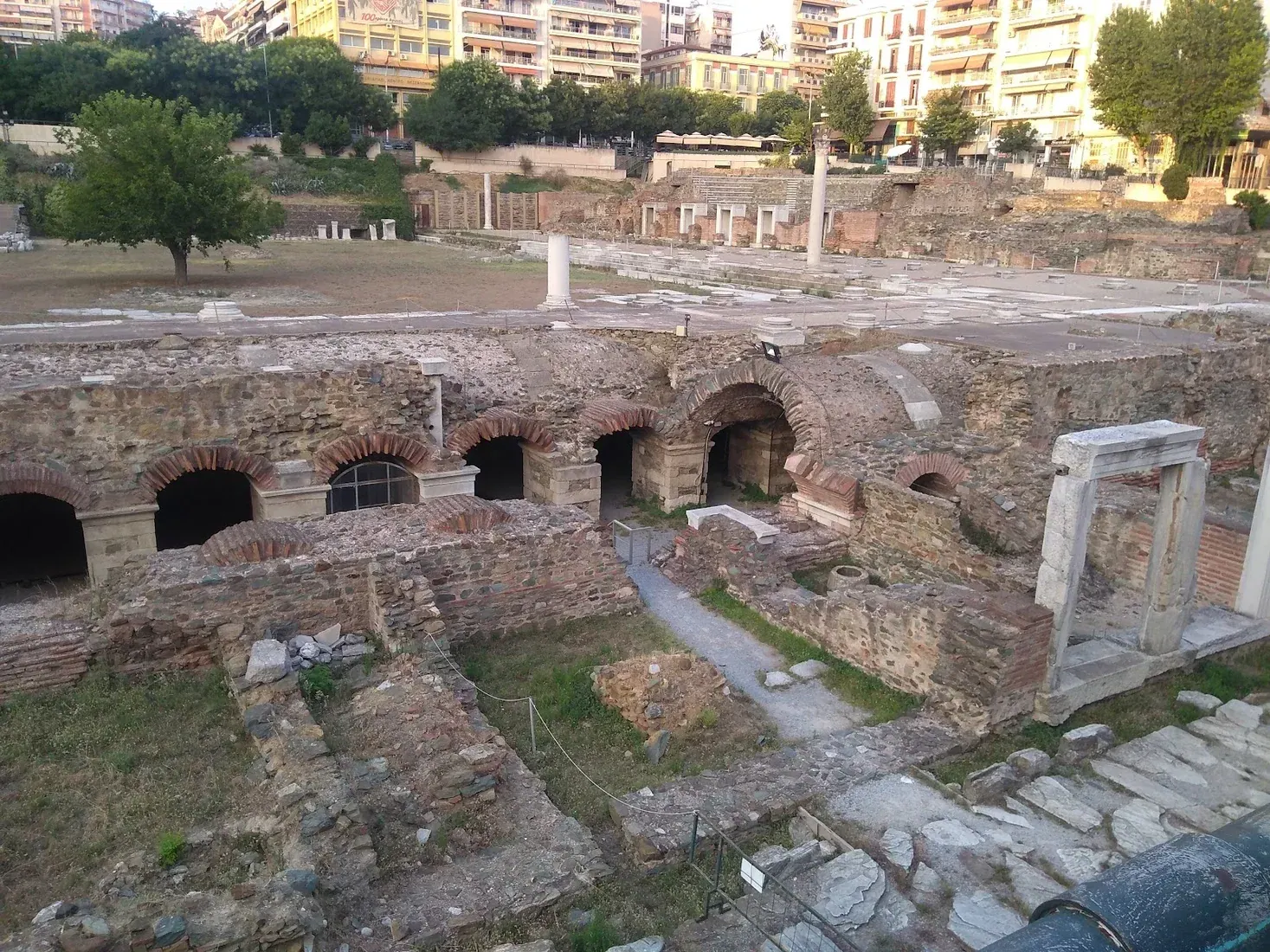
- The odeon — the restored semicircular theatre on the eastern side, entered through five marble doorways. After three ancient rebuildings it seated roughly 2,000–2,500 people for performances and council meetings; today it's the most photogenic corner and still used for summer events.
- The cryptoporticus — the row of brick arches along the south. This two-storey vaulted arcade was built to level the sloping ground, and it's the part that reads most vividly as "Roman" — cool, shadowed, and cavernous.
- The colonnaded square — the open plaza itself, with fragments of its porticoes, plus the remains of a mint and a bath complex.
- The museum — the underground Museum of the Ancient Agora, explaining daily life in the Roman city, reached from the site (€10, closed Tuesdays).
Part of a bigger plan
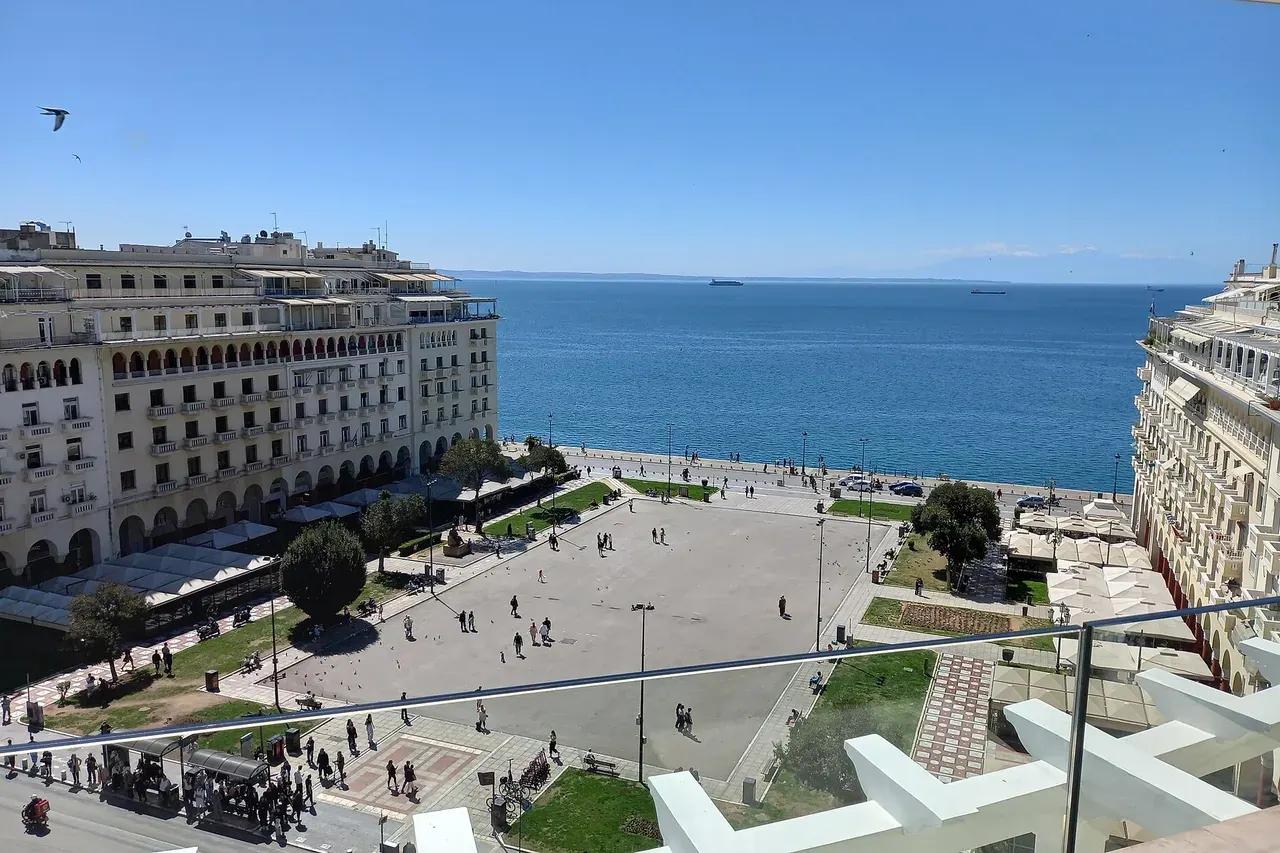
Stand at the forum and you're standing on a deliberate line. When Ernest Hébrard replanned Thessaloniki after the 1917 fire, he ran a monumental axis from the sea at Aristotelous Square straight up to here — tying the modern city's grand square to its ancient agora. Walking that axis, from the waterfront up to the forum, is one of the neatest short history walks in the centre.
Best time to visit
The site is open to the sky and unshaded, so come in the morning before the square bakes — the low light also picks out the arches of the cryptoporticus. It's a natural first stop on day one of our 2-day itinerary, paired with the nearby Rotunda and Arch of Galerius for a compact morning of Roman Thessaloniki. For the museums that fill in the story, see our best museums guide.
Frequently Asked Questions
Is the Roman Forum of Thessaloniki free to visit?
Yes — the open square is free to walk into during opening hours. The underground Museum of the Ancient Agora charges €10 (a ticket that also admits you to the enclosed excavation); it opens 09:00–16:00 in summer (April–October) and 08:30–15:30 in winter (November–March), and is closed Tuesdays. The usual Greek state free-admission days apply, including the first Sunday of each month from November to March. If you're visiting several paid monuments, the separate €15 combined three-day ticket for the White Tower, the Rotunda, the Archaeological Museum and the Museum of Byzantine Culture is worth having.
What is there to see at the Roman Forum?
The highlights are the restored odeon (a semicircular theatre entered through five marble doors, once seating 2,000–2,500), the two-storey brick cryptoporticus along the south side, the colonnaded square with remains of a mint and baths, and a small underground museum on daily life in Roman Thessaloniki. Allow about 45 minutes.
How was the Roman Forum discovered?
It was uncovered by accident in 1966, when workers digging the foundations for Thessaloniki's new law courts struck the buried ancient agora. The courts were relocated, the square above kept the name Dikastirion ("Courts Square"), and the ruins became an open archaeological park.
How old is the Roman Forum in Thessaloniki?
The Roman forum dates to the 2nd–3rd century AD, when the Romans expanded and rebuilt an earlier Greek agora on the same spot onto two levels. It served as the city's civic and commercial centre for several centuries.