Some of Greece's oldest human history isn't in an Athens museum — it's under a hillside less than an hour from Thessaloniki. Petralona Cave, on the neck of the Halkidiki peninsula, is where a shepherd stumbled onto a fossil skull in 1960 that pushed the story of humans in Europe back by hundreds of thousands of years, and it remains one of the country's most argued-over prehistoric sites. It's also the rare Thessaloniki day trip you can do in half a day and still be back for dinner. This is exactly how the visit works, what it costs, and who should bother.
Is Petralona Cave worth a day trip? Our honest take
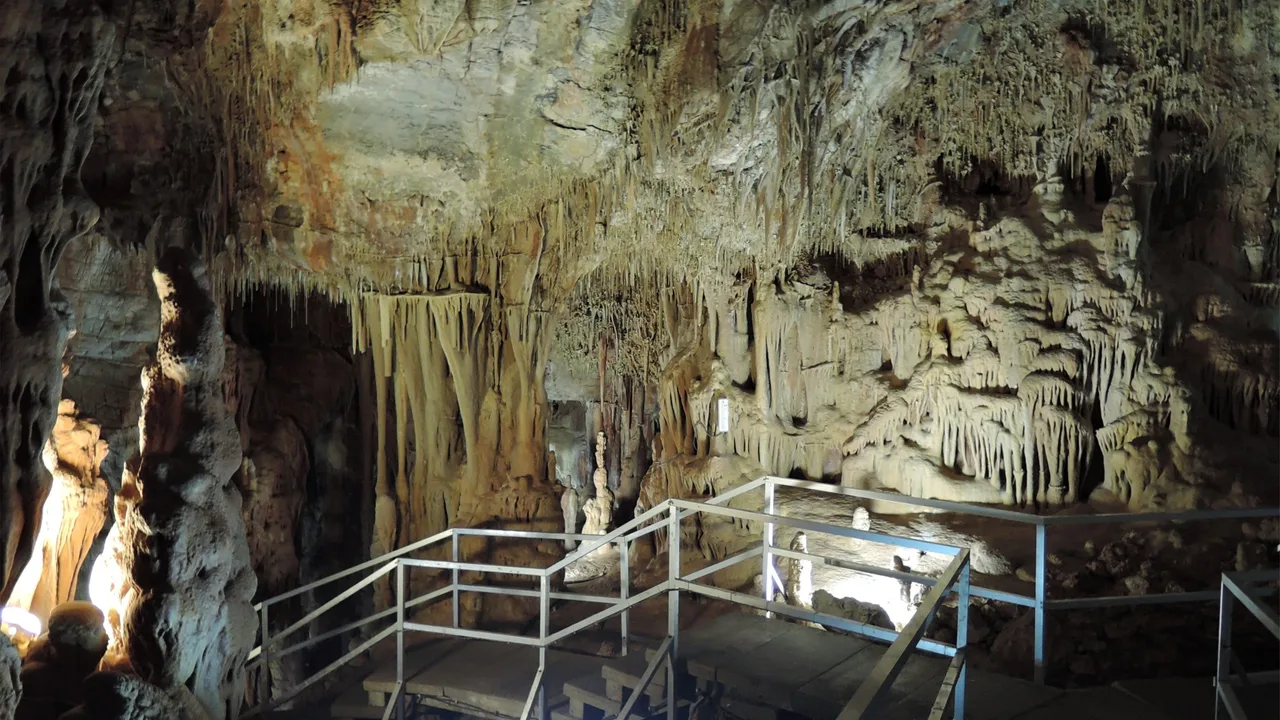
Short answer: yes, if you like caves or deep-time history, and you have a car. It's a compact, guided, roughly 20-minute walk through a genuinely spectacular chamber of stalactites and stalagmites, paired with a small archaeology museum that tells the skull's story. It is not a full-day epic like Meteora — plan a half-day and pair it with a Halkidiki beach or lunch, and you'll get far more out of the drive.
Here's the quick decision table for how it stacks up against Thessaloniki's other short trips:
| Trip | Drive each way | Time needed | Best for |
|---|---|---|---|
| Petralona Cave | ~50 min | Half day | Caves, prehistory, families |
| Vergina royal tombs | ~1 h | Half day | Ancient history, gold |
| Halkidiki beaches | 1–2 h | Full day | Swimming, coves |
| Meteora | 2.5–3 h | Full (long) day | Cliff monasteries |
We rate the cave a solid three-quarters of a day out: striking to walk through, quick to see, and easy to combine with a swim if you carry on into Halkidiki. If you're the kind of traveller who finds one cave much like another, the drive may feel long for 20 minutes underground — be honest with yourself before you go.
Where it is and how to get there
Petralona Cave sits on the western side of the Halkidiki peninsula, near the village of Petralona (also spelled Eleochoria on some maps), roughly 50 km southeast of central Thessaloniki — call it a 45- to 60-minute drive depending on traffic out of the city. Straight-line it's closer to 35 km, so distances you see online vary; budget an hour door to door and you won't be caught out.
By car is the only sensible way. Head out of Thessaloniki on the road toward Nea Moudania/Halkidiki, then follow signs inland toward Nea Kallikratia and the village of Petralona; the cave and museum are signposted, with free parking near the entrance. A rental is cheap and unlocks the whole peninsula — see our Thessaloniki car rental guide for pickup tips, and the getting around Thessaloniki guide if you're weighing car versus tour.
Public transport doesn't really reach the cave — KTEL buses serve Halkidiki towns, not this inland site, so without a car your realistic option is an organised excursion. Several run from the city; you can compare Petralona Cave tours that bundle transport and the guided entry, which is the stress-free choice if you'd rather not drive.
The skull that started the argument
In 1960, villagers exploring the cave found a human skull fused to the wall by centuries of dripping calcite — the "Archanthropus of Petralona." It's one of the oldest hominin fossils ever found in Europe, and its age has been fought over for decades.
The excavator Aris Poulianos famously claimed the skull was around 700,000 years old and even a separate human genus — a dramatic, headline-grabbing figure that most of the scientific community never accepted. Mainstream estimates have long placed it somewhere in the 200,000–400,000-year range, and a 2025 study dating the calcite crust landed at roughly 286,000 years old. Whatever the true number, this is an archaic human — usually linked to Homo heidelbergensis — from a time long before our own species reached Europe. That contested history is a big part of the fun: you're looking at a fossil that rewrote textbooks and started a fight that still isn't settled.
The on-site museum (reopened in August 2024 after a full re-exhibition) walks you through the excavations, the cave bears and other Ice Age animals found inside, and the skull's story. Don't come expecting to press your nose against the original fossil in a glass case — the cave visit is about the formations and the setting, and the museum tells the human story alongside.
Hours, tickets and what a visit looks like
Opening times shift with the season, so treat these as a guide and confirm before a long drive:
| Season | Typical hours | |
|---|---|---|
| Summer | 1 Apr – 31 Oct | ~08:00–20:00 |
| Winter | 1 Nov – 30 Mar | ~08:30–15:30 |
The site closes on Tuesdays in the winter season (Nov–Mar); in summer it opens daily, and hours can still change for holidays or staffing — a quick check of the official listing the day before is worth it.
On price, the guided cave visit is €10, with reduced rates for groups over 25 (€5) and school students (€4); the adjacent museum is a separate €5, so budget around €15 per adult to see both. Under-18s go in free, which takes a useful bite out of the cost for families. A little tourist train (€3) shuttles you from the car park up to the cave entrance. These figures move over time, so carry some cash and check the current rate.
The cave itself is guided — you go in with a guide who leads a group along a railed concrete walkway for about 20 minutes, pointing out the formations and the excavation spots. It's an easy, mostly level route, comfortable for kids and most mobility levels, though there are a few steps and the air is cool and damp year-round. Bring a light layer even in July; it's a welcome contrast to the Halkidiki heat outside.
Make a half-day of it
Twenty minutes underground doesn't justify an hour's drive on its own, so build the cave into a loop. A few pairings that work:
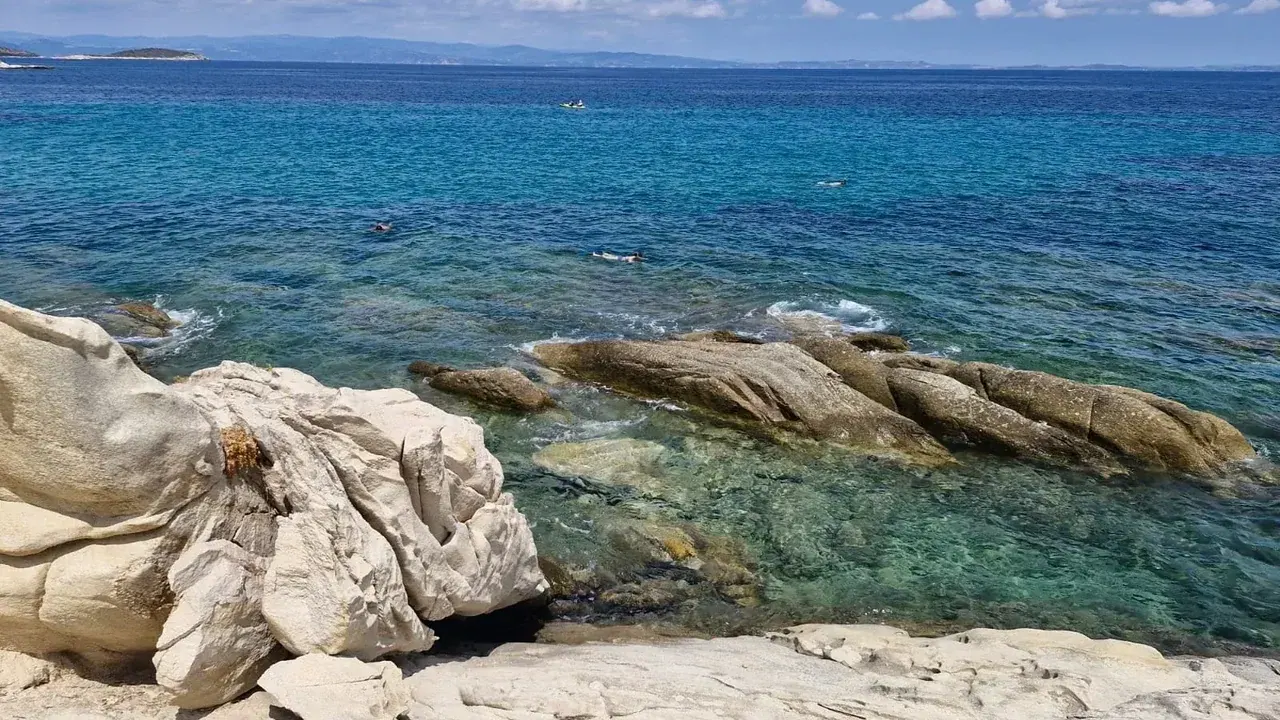
- Cave + a Halkidiki beach. Carry on toward the coast for an afternoon swim; the western Kassandra beaches are the closest. Our beaches near Thessaloniki guide has the nearest options, and for the prettier coves keep reading our Sithonia day trip guide.
- Cave + a long lunch. The villages around the peninsula's neck do honest, cheap taverna food — a far better feed than anything back on the tourist strip.
- Cave as a rainy-day plan. Being underground, it's one of the few Halkidiki outings that shrugs off bad weather, making it a smart card to keep for a grey morning.
If you'd rather not build the logistics yourself, this is one of the easier trips to hand to a guide — see our full roundup of day trips from Thessaloniki to see where it fits among the region's heavier hitters, and the /day-trips hub for the rest.
When to go and what to bring
The cave is a year-round outing — its temperature barely changes with the seasons — which makes it a smart pick in high summer, when the underground cool is a relief from Halkidiki's heat, and in winter, when a beach pairing is off the table. Spring and autumn are the sweet spot if you want to combine it with a swim: warm enough for the coast, quiet enough that you won't share the walkway with a dozen tour groups.
Whatever the month, bring a light layer — the chamber sits at a steady, cool, damp temperature and 20 minutes in shorts and a vest gets chilly. Wear shoes with grip; the walkway is solid but can be slick underfoot. Photography without flash is generally fine, though the low light means a steady hand helps. And because the cave visit is short, don't leave the house without a plan for the rest of the day — a beach, a lunch, or a second sight — so the drive earns its keep.
Frequently Asked Questions
How far is Petralona Cave from Thessaloniki?
Petralona Cave is about 50 km southeast of central Thessaloniki, near the neck of the Halkidiki peninsula — a drive of roughly 45 to 60 minutes each way. You'll need a car or an organised tour, as public buses don't reach the cave itself. Straight-line distance is nearer 35 km, so online figures vary.
How old is the Petralona skull really?
It depends who you ask. The original excavator claimed around 700,000 years, but that figure is widely disputed; mainstream science puts it in the 200,000–400,000-year range, and a 2025 calcite-dating study suggested about 286,000 years. Either way it's one of Europe's oldest archaic-human fossils.
How much does Petralona Cave cost to visit?
The guided cave entry is €10 (reduced for school students and groups over 25), and the adjacent museum is a separate €5 — about €15 per adult to see both, and under-18s enter free, plus a €3 tourist train from the car park. Prices change over time, so bring some cash and check the current rate before travelling.
How long do you need at Petralona Cave?
The guided cave walk itself takes about 20 minutes, and the museum another 30–45 minutes, so the site is a half-day trip at most. Most visitors pair it with a Halkidiki beach, a taverna lunch, or another nearby sight to make the hour-long drive from Thessaloniki worthwhile.
Is Petralona Cave open on Tuesdays?
In winter (Nov–Mar) the cave and museum close on Tuesdays; in summer they open daily. Opening hours shift by season — roughly 08:00–20:00 in summer and 08:30–15:30 in winter. Holidays and staffing can change this, so confirm the current schedule on the official listing before making the drive out from Thessaloniki.
Hero image: "Petralona cave tourist path" by Carlstaffanholmer, CC BY-SA 3.0, via Wikimedia Commons.