If you've seen "MOMus" on a museum sign or a map pin near the port and wondered whether it's one museum or five, you're not alone — it's genuinely confusing, even for people who live here. The name covers a scattered network of galleries with different collections, different buildings and, it turns out, different ticket prices, and picking the wrong one can burn an afternoon on the wrong art. Here's what MOMus actually is, which sites are worth the walk, and what to expect to pay in 2026.
What is MOMus, exactly?
MOMus stands for the Metropolitan Organization of Museums of Visual Arts of Thessaloniki, a state umbrella body created in 2018 that merged several previously separate collections under one brand. We walked between its port-side sites and the Stavroupoli campus on a July 2026 afternoon, and the split personality is obvious on the ground: two very different neighbourhoods, two very different kinds of art, and a fifth site that isn't even in this city.
| Museum | Location | Focus | Full ticket |
|---|---|---|---|
| Museum of Modern Art – Costakis Collection | Moni Lazariston, Stavroupoli | Russian avant-garde (Malevich, Kandinsky, Tatlin) | ~€8 |
| Museum of Contemporary Art | Moni Lazariston, Stavroupoli | Greek & international contemporary art | ~€8 |
| Thessaloniki Museum of Photography | Warehouse A, the port | Photography exhibitions | ~€4–6 |
| Experimental Center for the Arts | Warehouse B1, the port | Video, sound and experimental media | ~€5 |
| Museum Alex Mylona | Thiseion, Athens | Sculpture — not in Thessaloniki | ~€7 |
Reduced tickets (students, ages 12–25, over-65s) run around €4 across the venues, and children under 12 go free. Prices move between sources — MOMus doesn't always keep every venue's page current — so treat these as a solid estimate rather than gospel, and double-check on momus.gr before you go.
The port museums: Photography and Experimental Arts
Down at the harbour, in the row of early-20th-century port warehouses that once handled the city's tobacco and grain trade, two MOMus sites sit a few steps apart. The Thessaloniki Museum of Photography occupies Warehouse A, a handsome brick-and-iron shed turned exhibition space, with a permanent collection alongside rotating photography shows — we paid €4 at the desk on our visit, with no queue on a weekday afternoon. Next door in Warehouse B1, the Experimental Center for the Arts runs a rougher, more experimental programme — video installations, sound art, new-media work — aimed at a different, younger crowd than the photography museum's more classic exhibitions. Both are a five-minute walk from Ladadika and the old customs house, so they slot naturally into a wander around the port district. If you plan to see both, ask for the combined Photography-and-Experimental ticket (around €8, or €5 reduced) — cheaper than paying the two venues separately.
The Stavroupoli campus: Modern Art and Contemporary Art
The other two Thessaloniki sites are a genuine trek from the centre, out in Stavroupoli, west of downtown, inside the restored 19th-century Moni Lazariston monastery complex. This is where the collections get serious. The Museum of Modern Art – Costakis Collection holds one of the world's most important troves of Russian avant-garde art — some 1,275 paintings, drawings and constructions amassed by the collector George Costakis, including works by Kazimir Malevich, Wassily Kandinsky, Vladimir Tatlin and El Lissitzky. It's a genuinely world-class holding in a city most visitors don't associate with early Soviet modernism, and it's the single best reason to make the trip out. Sharing the same monastery grounds, the Museum of Contemporary Art shows Greek and international contemporary work in rotating exhibitions. Allow a taxi or bus ride each way — it's not walkable from the centre — and budget a couple of hours if you want to do the Costakis Collection justice.
Who was George Costakis?
The Modern Art museum's headline collection has a genuinely remarkable backstory. George Costakis (1913–1990) was a Greek-Russian collector born in Moscow to Greek parents, who spent most of his working life in unglamorous day jobs — a driver for the Greek and Finnish embassies, then an administrator at the Canadian embassy in Moscow from 1942 to 1977. His Greek passport gave him a kind of diplomatic protection that let him do something almost nobody else in the Soviet Union could: quietly buy up Constructivist and avant-garde paintings that the Soviet state had suppressed since the 1930s, works by artists like Malevich and Popova that official Soviet culture treated as ideologically dangerous. By the 1960s his Moscow apartment had become an unofficial museum in its own right, a meeting point for collectors and artists from around the world. When Costakis finally left the USSR for Greece in 1977, he was forced to leave half his collection behind in Moscow's Tretyakov Gallery as the price of exit. After his death in 1990, the Greek state bought the remaining 1,275 works for a new museum in Thessaloniki — the collection that now anchors MOMus's Stavroupoli campus. It's a genuinely improbable story for a mid-sized Greek city to be the custodian of, and it's part of what makes the trip out worth it.
Museum Alex Mylona: not actually here
One quirk worth flagging clearly: MOMus – Museum Alex Mylona is in Athens, not Thessaloniki — a sculpture museum in a restored building near Thiseion, close to Monastiraki. If you're planning a MOMus day specifically around this city, drop it from your list; it's a completely separate trip.
Hours and free days
Hours vary slightly site to site, but the general MOMus pattern is: closed Monday, open roughly 10:00–18:00 Tuesday, Wednesday, Friday to Sunday, with later hours on Thursday (until around 20:00). The Photography museum runs a marginally different schedule, closer to 11:00–19:00 with a later Thursday close — check the specific venue's page rather than assuming one timetable fits all. Like the city's other state museums, MOMus generally follows the shared free-admission calendar — the first Sunday of the month from November to March, plus days like 18 May (International Museum Day) — though it's worth confirming per-venue since not every free day applies identically across every collection. For the city's broader museum landscape and how MOMus stacks up against the big two, see our best museums in Thessaloniki ranking, where MOMus sits as a specialist pick rather than a first-timer's priority.
Who should bother — and who should skip it
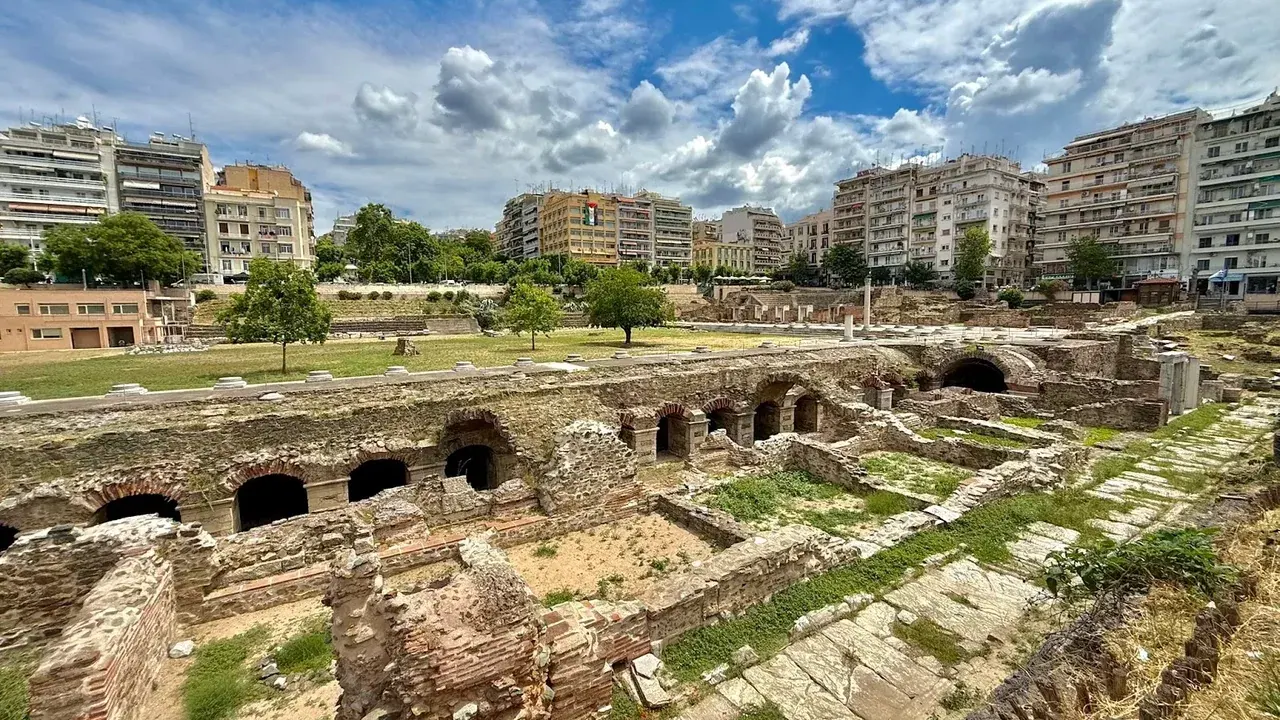
Be honest with yourself about this one. If you love Russian avant-garde art, modern painting or experimental video, the Costakis Collection alone justifies a special trip out to Stavroupoli — it's not a "while you're in the area" stop, it's a destination in its own right. If you're a first-time visitor with one day in the city, though, MOMus isn't where that day should go; the Archaeological Museum and Museum of Byzantine Culture explain the city itself far better, and MOMus rewards people who already know they like this kind of art. The port sites are the easy middle ground — close to the centre, quick to see, worth a detour if you're already down by Ladadika or the Roman Forum for the afternoon.
Getting there
The port museums (Photography, Experimental Arts) are an easy 10–15 minute walk from Aristotelous Square, right along the harbour road past the old customs buildings. The Stavroupoli campus is a different matter — it's roughly 5–6 km from the centre, best reached by taxi (around €10–12) or a city bus toward Stavroupoli; there's no quick walk. If you're combining both halves of MOMus in one day, do the port sites first and finish at Moni Lazariston, since the Stavroupoli museum grounds are pleasant enough to linger in with a coffee afterward. Neither cluster fits neatly into a single walking tour of the historic centre — treat MOMus as its own half-day rather than an add-on.
Frequently Asked Questions
What is MOMus in Thessaloniki?
MOMus (the Metropolitan Organization of Museums of Visual Arts of Thessaloniki) is a state umbrella body running five museums — four in Thessaloniki (Modern Art–Costakis Collection, Contemporary Art, Photography and Experimental Arts) and one, the Alex Mylona sculpture museum, in Athens. They're split across two Thessaloniki locations: the port warehouses and the Moni Lazariston complex in Stavroupoli.
How much does it cost to visit MOMus museums?
Expect roughly €8 for the Modern Art and Contemporary Art museums, €4–6 for the Photography museum, and €5 for the Experimental Center for the Arts, with reduced tickets around €4 for students and over-65s. Prices vary slightly by source, so confirm on momus.gr before a special trip, and check the free-admission calendar for state museums.
Which MOMus museum is the best one to visit?
The Museum of Modern Art – Costakis Collection in Stavroupoli, for its outstanding trove of Russian avant-garde art by Malevich, Kandinsky and Tatlin — genuinely one of the more surprising world-class collections in the city. If you only have time for the port cluster, the Thessaloniki Museum of Photography is the more polished of the two warehouse sites.
Is the Museum Alex Mylona part of the Thessaloniki museums?
It's part of the same MOMus organization, but it's physically located in Athens, near Thiseion — not in Thessaloniki at all. If you're planning a day around MOMus's Thessaloniki sites, leave it off your list; it only makes sense to visit if you're separately in Athens.
How do I get to the MOMus museums in Stavroupoli?
The Stavroupoli campus, inside the Moni Lazariston monastery complex, is about 5–6 km west of the centre and isn't realistically walkable. A taxi takes roughly 15–20 minutes and costs around €10–12; city buses also run out that way. It's a separate trip from the port museums, so budget for two legs if you want to see all four Thessaloniki sites in one day.