After decades of construction, Thessaloniki opened its first metro on 30 November 2024 — and it's a good one. This is Greece's first fully driverless system, with sleek automated trains, platform screen doors and, thanks to the antiquities the dig unearthed, a few stations that double as archaeological museums. For visitors it turns the longer hops across the city into a fast, cheap, air-conditioned ride. Here's how it works, what it costs, and which stops matter for sightseeing. For every mode at once, see our getting around Thessaloniki guide.
The line at a glance
| Opened | 30 November 2024 |
| Type | Fully driverless, platform screen doors |
| Line | One line, 13 stations, about 9.6 km |
| Western end | New Railway Station (train + KTEL bus hub) |
| Eastern end | Nea Elvetia |
| Single fare | €0.60, valid 70 minutes (same-mode transfers) |
| Hours | ~05:30–00:30 Sun–Thu; until ~02:30 Fri–Sat |
The single line runs along the city's central spine from the New Railway Station in the west to Nea Elvetia in the southeast, threading under the main avenues through the heart of town. Trains are frequent — every few minutes at peak — and driverless, so there's no timetable to plan around: turn up and go.
Fares and tickets
A single ride is €0.60, valid for 70 minutes with free transfers within the metro. The one catch to understand: the metro and the city buses are ticketed separately — a metro ticket isn't valid on a bus, so a trip using both needs two tickets (about €1.20). Other options:
- 10+1 ticket pack — €5.80 (one mode — a metro or a bus pack, not interchangeable).
- 24-hour pass — €2.50 (one mode; not valid on airport buses).
Buy tickets from the machines in every station, which take cash and cards. (City buses, by contrast, are cashless — you tap a contactless card on board.) For daily costs across a trip, see Thessaloniki on a budget.
The stations that are also museums
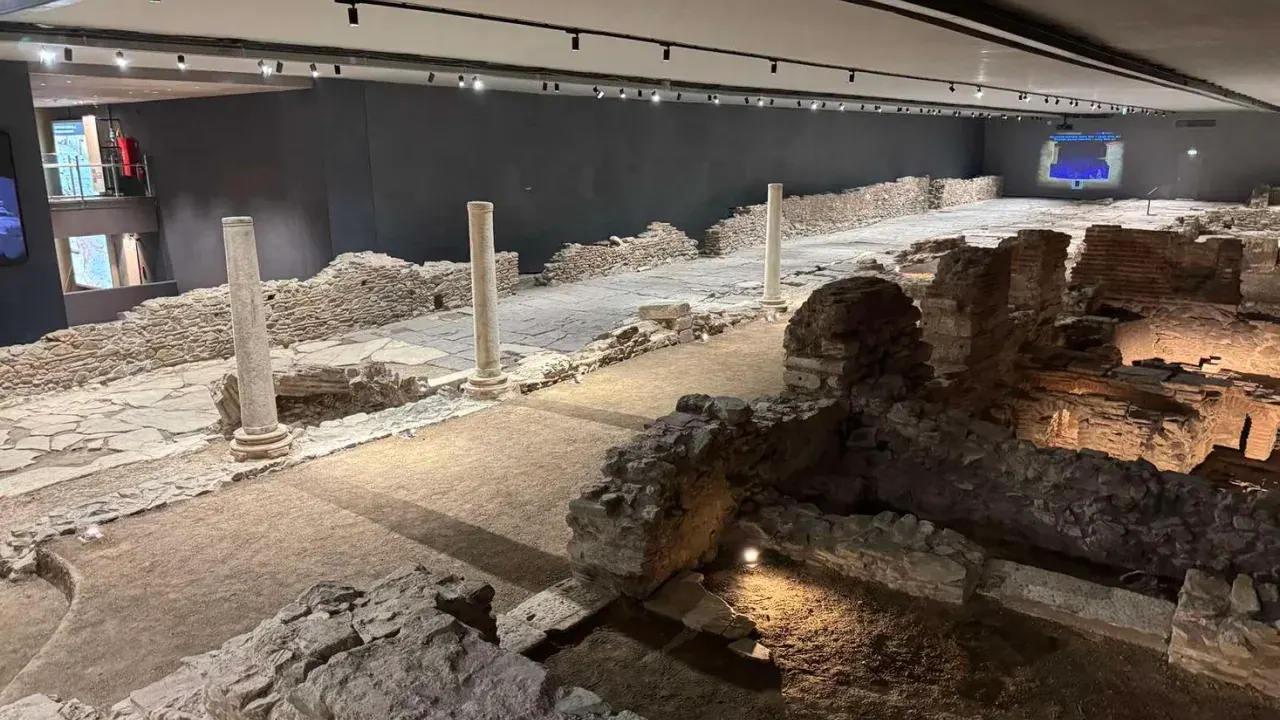
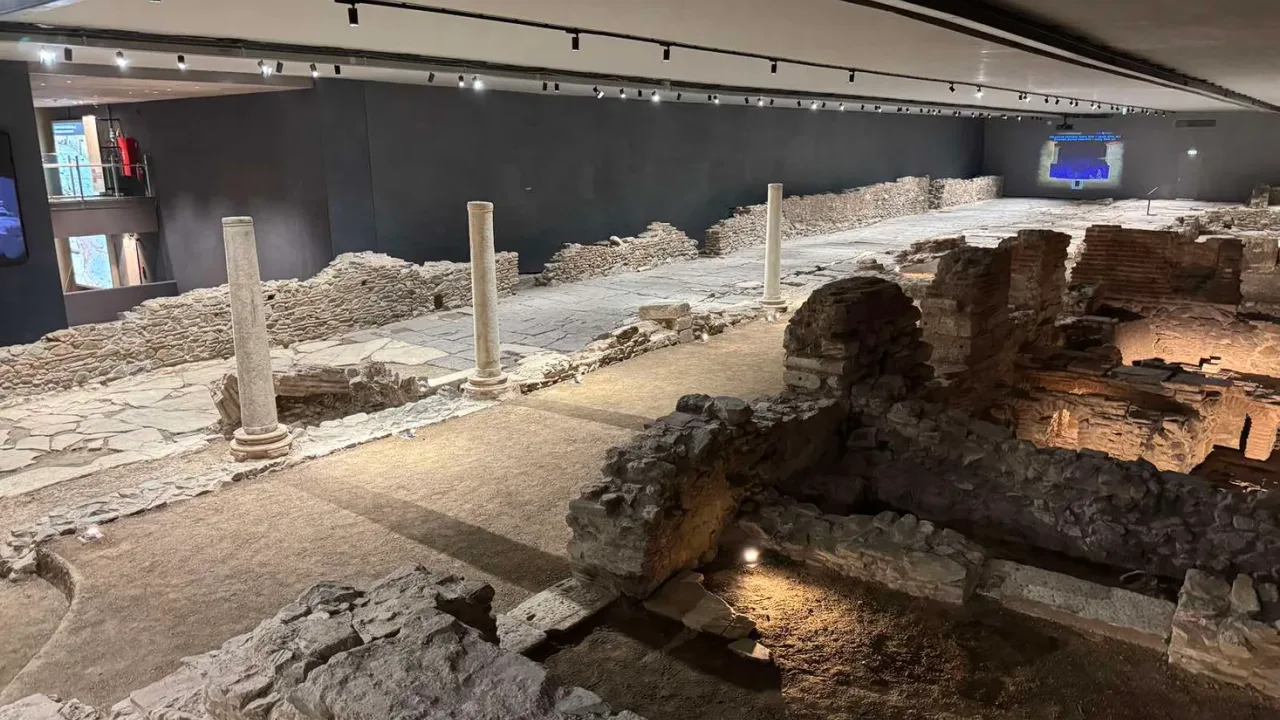
The metro's best-known quirk is underground history. Construction cut straight through the ancient city, and rather than remove everything, several stations display the finds in situ. The showpiece is Venizelou station, which preserves the marble-paved Roman Decumanus Maximus — the ancient main avenue, later a Byzantine market street — right where commuters walk. It's worth a look even if you're not catching a train.
Best stops for sightseeing
- New Railway Station — the western terminus and the city's train and KTEL long-distance bus hub; where most rail and intercity arrivals begin.
- Venizelou — steps from Aristotelous Square and the Modiano and Kapani markets, and itself a mini-museum.
- Agia Sofia — beside the Byzantine church of the same name.
- Nea Elvetia — the eastern terminus, where the 02X bus connects to the airport (about €2, ~15–20 min).
The full line, west to east
All 13 stations of the base line, in order from the western terminus:
- New Railway Station — western terminus; train + KTEL intercity-bus hub
- Dimokratias
- Venizelou — for Aristotelous Square and the Modiano/Kapani markets; the Roman avenue preserved in situ
- Agia Sofia — beside the Byzantine church
- Sintrivani — for the Archaeological Museum, the Museum of Byzantine Culture and the HELEXPO/TIF fairgrounds
- Panepistimio — Aristotle University campus
- Papafi
- Efkleidis
- Fleming
- Analipsi
- 25 Martiou
- Voulgari
- Nea Elvetia — eastern terminus; 02X bus to the airport
The forthcoming Kalamaria extension (below) branches southeast from here to add five more stations.
Does the metro go to the airport?
No — not directly. The line stops short of Thessaloniki Airport (SKG). To reach it by public transport you either take the 02X bus from Nea Elvetia metro station, or the 01X express bus (€2.00) that runs from the centre day and night in about 40 minutes. Full options are in our airport-to-city guide.
The Kalamaria extension
A five-station extension toward Kalamaria — Nomarchia, Kalamaria, Aretsou, Nea Krini and Mikra — is in final certification, with test trains already running. It adds 4.78 km toward the southeastern seaside suburbs and will bring the line to 18 stations; passenger service is expected around the end of July 2026, though opening dates have slipped before, so check thessmetro.gr before you count on it. It will still stop short of the airport.
Frequently Asked Questions
Does Thessaloniki have a metro?
Yes. Thessaloniki's first metro opened on 30 November 2024 — Greece's first fully driverless system — with one line of 13 stations running about 9.6 km along the city's central spine, from the New Railway Station in the west to Nea Elvetia in the southeast.
How much is a metro ticket in Thessaloniki?
A single ride is €0.60, valid 70 minutes with free transfers within the metro. The metro and city buses are ticketed separately, so a trip using both needs two tickets (about €1.20). A 10+1 pack is €5.80 and a 24-hour pass is €2.50 (one mode). Buy from station machines, which take cash and cards.
What are the Thessaloniki metro hours?
Trains run from about 05:30 to 00:30 (half past midnight) Sunday to Thursday, and later — until roughly 02:30 — on Friday and Saturday nights. Service is frequent and driverless, so there's no timetable to plan around; hours can shift slightly around the Kalamaria-extension testing, so check thessmetro.gr for the last train.
Does the Thessaloniki metro go to the airport?
No. The metro doesn't reach Thessaloniki Airport (SKG). Take the 02X bus from Nea Elvetia metro station, or the 01X express bus (€2.00) from the centre, which runs day and night and takes about 40 minutes.
Why are there ancient ruins in the metro stations?
Because the dig unearthed so many antiquities that several stations display them in situ. Venizelou station preserves the marble-paved Roman Decumanus Maximus — the ancient main avenue, later a Byzantine market street — right in the station where passengers pass.
Is the Thessaloniki metro wheelchair accessible?
Yes — fully. Being brand new, every station has lifts from street level to the platforms, the platforms and trains are at the same level for step-free boarding (helped by the platform screen doors), and there are designated wheelchair spaces in the first and last cars. Stations also have tactile paving, and the lifts carry Braille and audio cues for visually impaired passengers. It's the easiest way to cross the city with a wheelchair, pram or heavy luggage.