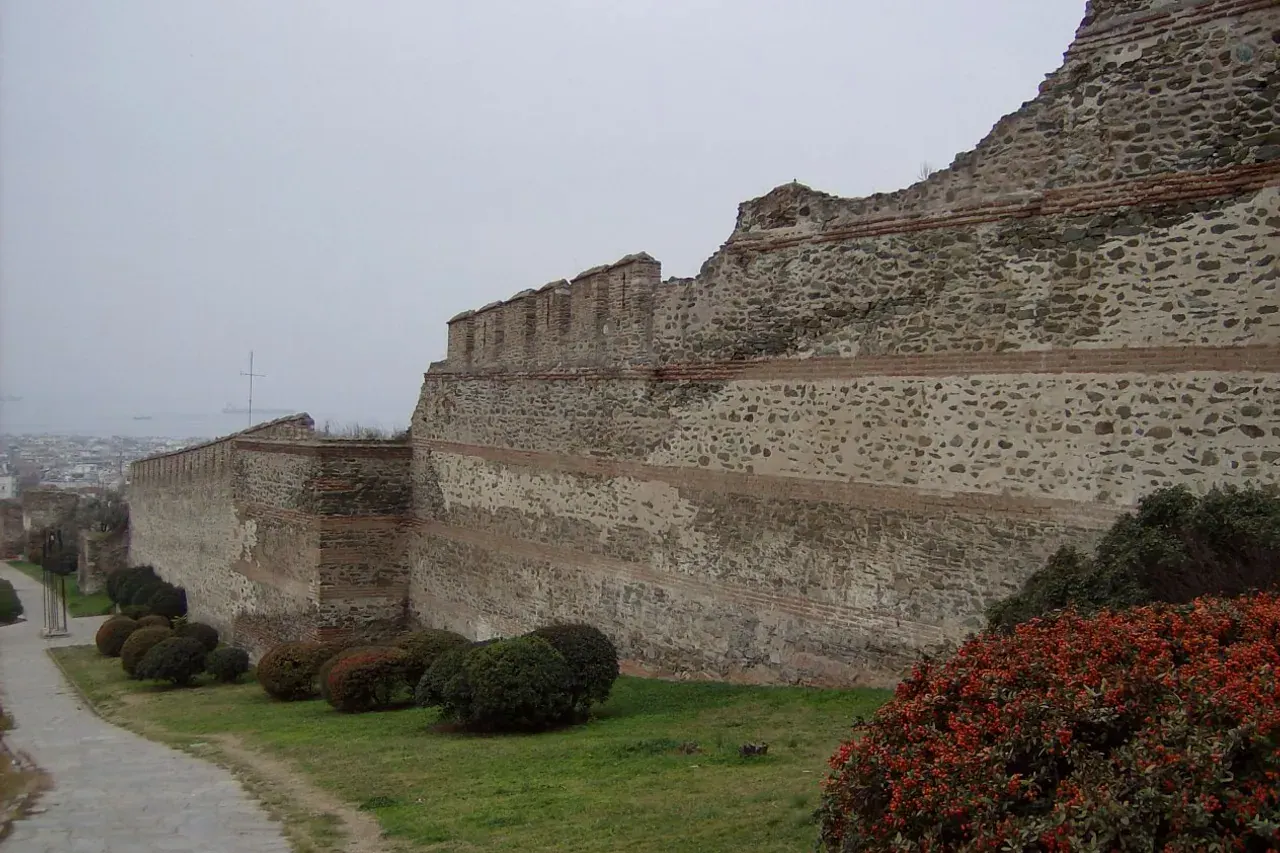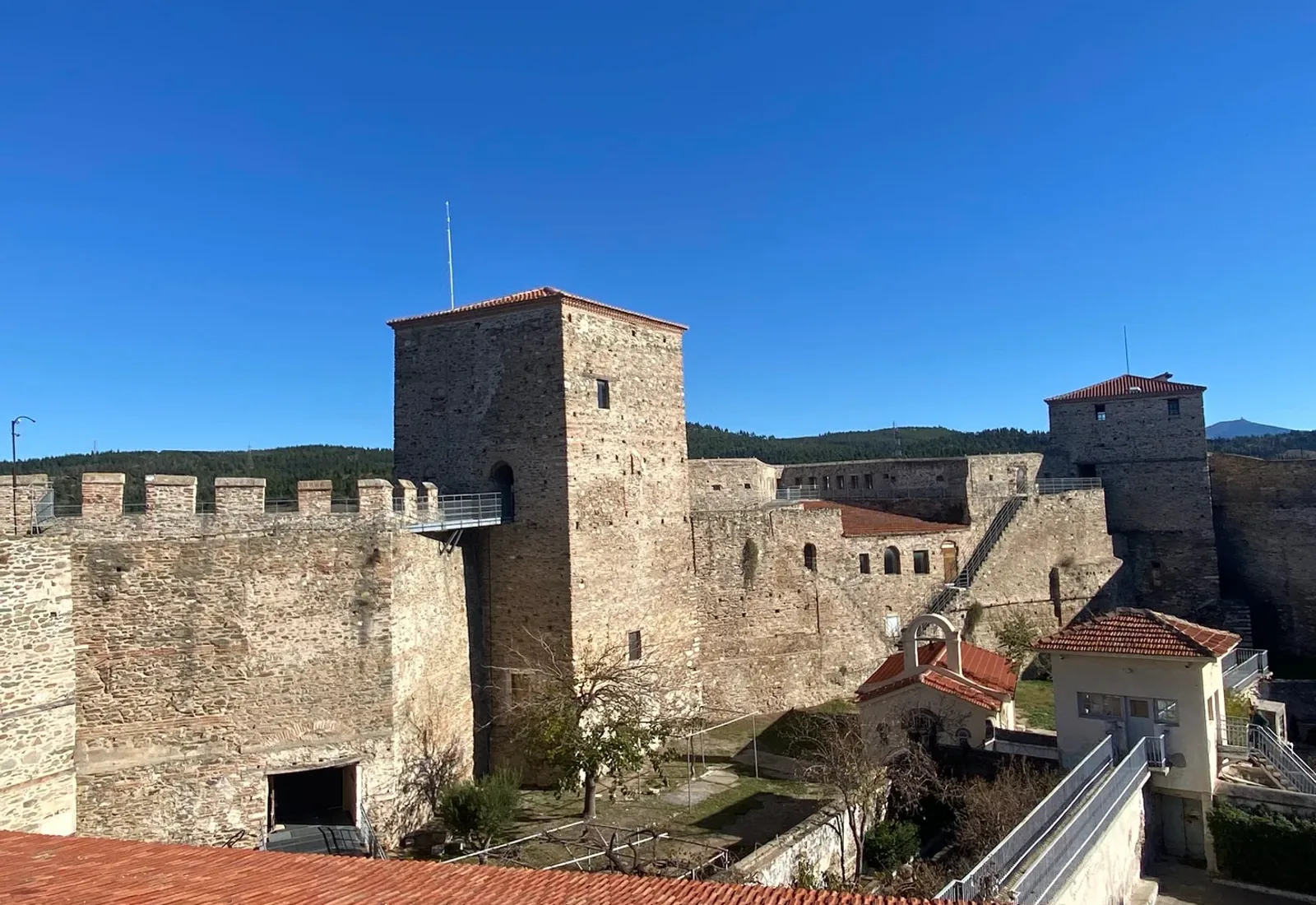
Crowning the very top of Ano Poli, above the Byzantine walls, sits the Heptapyrgion — the "Fortress of Seven Towers", and one of the most atmospheric corners of Thessaloniki. Most visitors climb up here for the walls and the view, but the citadel has a darker, more fascinating story: for a hundred years it was the city's most feared prison. Here's what it is, and how to visit.
What it is
The Heptapyrgion is a walled citadel guarding the highest ground of the old city, an inner keep at the northeast corner of the acropolis. Its name — Greek Heptapyrgion and Turkish Yedi Kule, both meaning "seven towers" — describes the cluster of towers that anchor its ramparts. The fortress is a genuinely layered thing, built in stages over more than a thousand years: its five northern towers and their curtain wall — the northern corner of the acropolis — are the oldest, dated either to the reign of the Roman emperor Theodosius I (379–395) or, by another theory, to the 9th century; the five southern towers and wall were added around the 12th century to close off an inner redoubt, and the whole was maintained and rebuilt in the late-Byzantine Palaiologan era. Despite the name, the citadel actually has ten towers, not seven — the "seven" is symbolic, echoing the Yedikule in Constantinople. An inscription over the main gate records that it was rebuilt in 1431 by Çavuş Bey, the city's first Ottoman governor, immediately after the 1430 conquest; under Ottoman rule it served as the residence of the military commander and a garrison of around 300 troops. Together with the rest of the city walls, it forms part of the UNESCO-listed Paleochristian and Byzantine Monuments of Thessaloniki.
The prison years
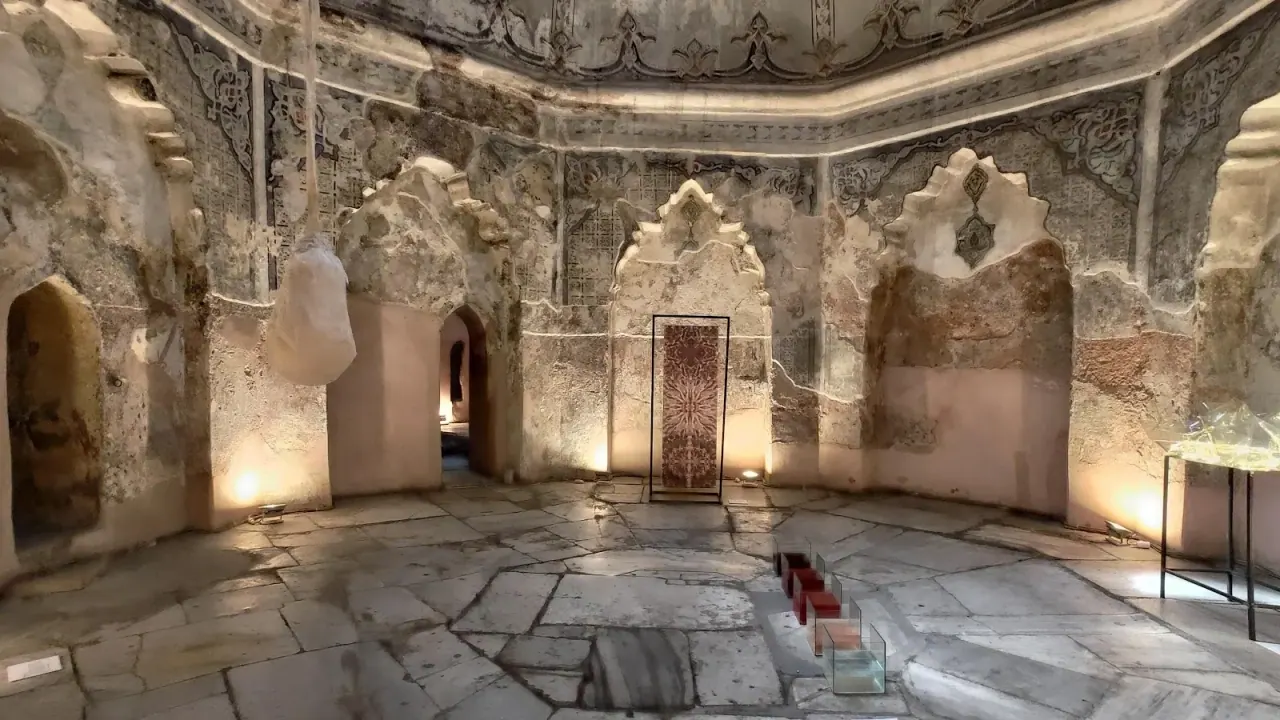
What gives the Heptapyrgion its weight is its more recent past. From the 1890s until 1989 it served as a prison — for nearly a century the city's most notorious jail, a chapter remembered in Greek rebetiko songs, the blues of the urban underworld. It was especially feared as a place of political imprisonment: through the Metaxas dictatorship, the wartime Axis occupation, the Greek Civil War and the Colonels' junta, dissidents and political prisoners were held behind its walls. Only after it closed in 1989 was the citadel restored and opened as a monument. Walking the courtyards now, you're moving through a place that was, within living memory, somewhere no one wanted to end up. The fortress is a cornerstone of Ottoman Thessaloniki.
Visiting
The Heptapyrgion sits at the top of the Upper Town, a steady climb above the centre but rewarding for the setting alone — the walls, the towers, and the view down over the rooftops to the Thermaic Gulf. Admission to the monument is €10 — Greek state-monument fees were raised recently, so ignore older guides quoting a couple of euros. It keeps daytime hours (roughly 08:00–17:00) and, like most Greek state sites, is generally closed on Tuesdays — check current times before you go. You can still walk right up to the walls and take in the view from outside for free.
To save the steep walk up, take bus 23 from Aristotelous Square (roughly every 20 minutes): it winds up through Ano Poli, passes through a gate in the Trigonion walls and stops right in front of the fortress — then it's an easy downhill wander back through the old town. Combine it with the Byzantine walls, the hidden mosaic of Osios David and the working Vlatadon Monastery nearby, and the rest of Ano Poli, and see the landmarks page for full visiting details.
Frequently Asked Questions
What is the Heptapyrgion in Thessaloniki?
The Heptapyrgion (Turkish: Yedi Kule, both meaning "seven towers") is a walled fortress-citadel crowning the acropolis at the top of Thessaloniki's Ano Poli. Built with Byzantine towers and later Ottoman additions, it guarded the city's highest ground — and from the 1890s until 1989 it served as the city's main prison, now restored as a monument.
Can you visit the Heptapyrgion, and is it free?
You can, though going inside is no longer free: admission to the monument is €10 (Greek state-monument fees were raised recently, so ignore older guides quoting a couple of euros). You can still walk up to the walls and enjoy the view from outside at no charge. It keeps daytime hours (roughly 08:00–17:00) and is generally closed on Tuesdays, so check before you go. It's at the top of Ano Poli, a climb above the centre, and pairs naturally with the Byzantine walls and the upper-town viewpoints.
Why is the Heptapyrgion called Yedi Kule?
Yedi Kule is the Ottoman Turkish name, and like the Greek "Heptapyrgion" it means "seven towers" — a reference to the towers that punctuate the citadel's walls. The prison era made the name Yedi Kule especially well known, and it recurs in rebetiko songs of the early 20th century.
How do you get to the Heptapyrgion?
It crowns the top of Ano Poli, a steep climb above the centre. To skip the walk up, take bus 23 from Aristotelous Square (about every 20 minutes), which winds through the Upper Town and stops right in front of the fortress; from there you can wander back downhill through Ano Poli's lanes.
How old is the Heptapyrgion?
Very — it was built in stages over more than a thousand years. The five northern towers are the oldest (dated to the Roman emperor Theodosius I in the late 4th century, or by another theory to the 9th), the southern five were added around the 12th century, and the Ottomans rebuilt it in 1431. It's part of the UNESCO-listed Paleochristian and Byzantine Monuments of Thessaloniki.
Does the Heptapyrgion really have seven towers?
Not exactly — despite the name meaning "seven towers," the citadel actually has ten. The "seven" is symbolic, echoing the Yedikule fortress in Constantinople (Istanbul). An inscription over the main gate records that the fortress was rebuilt in 1431 by Çavuş Bey, Thessaloniki's first Ottoman governor, just after the 1430 conquest.