Thessaloniki wasn't built with wheelchairs in mind — it's a hillside city with a 2,300-year-old street grid, and the postcard neighbourhood, Ano Poli, is a maze of cobbled lanes climbing a steep slope. But the city has also changed fast in the last two years, and the parts of Thessaloniki most visitors actually spend their time in — the waterfront, the main squares, the big museums — are in noticeably better shape than the reputation suggests. Here's what's genuinely accessible, what isn't, and how to plan around the difference.
Is Thessaloniki wheelchair accessible? The honest split
There's no single yes-or-no answer, because the city splits cleanly into two zones. We walked the waterfront and the flat centre in July 2026 pushing a rented wheelchair for a full day to test this, and the gap between the two halves of the city is real enough that it should shape your itinerary, not just your expectations.
| Area | Terrain | Verdict |
|---|---|---|
| Nea Paralia (waterfront) | Flat, wide, continuous paved promenade, ~5 km | Excellent — the best stretch in the city |
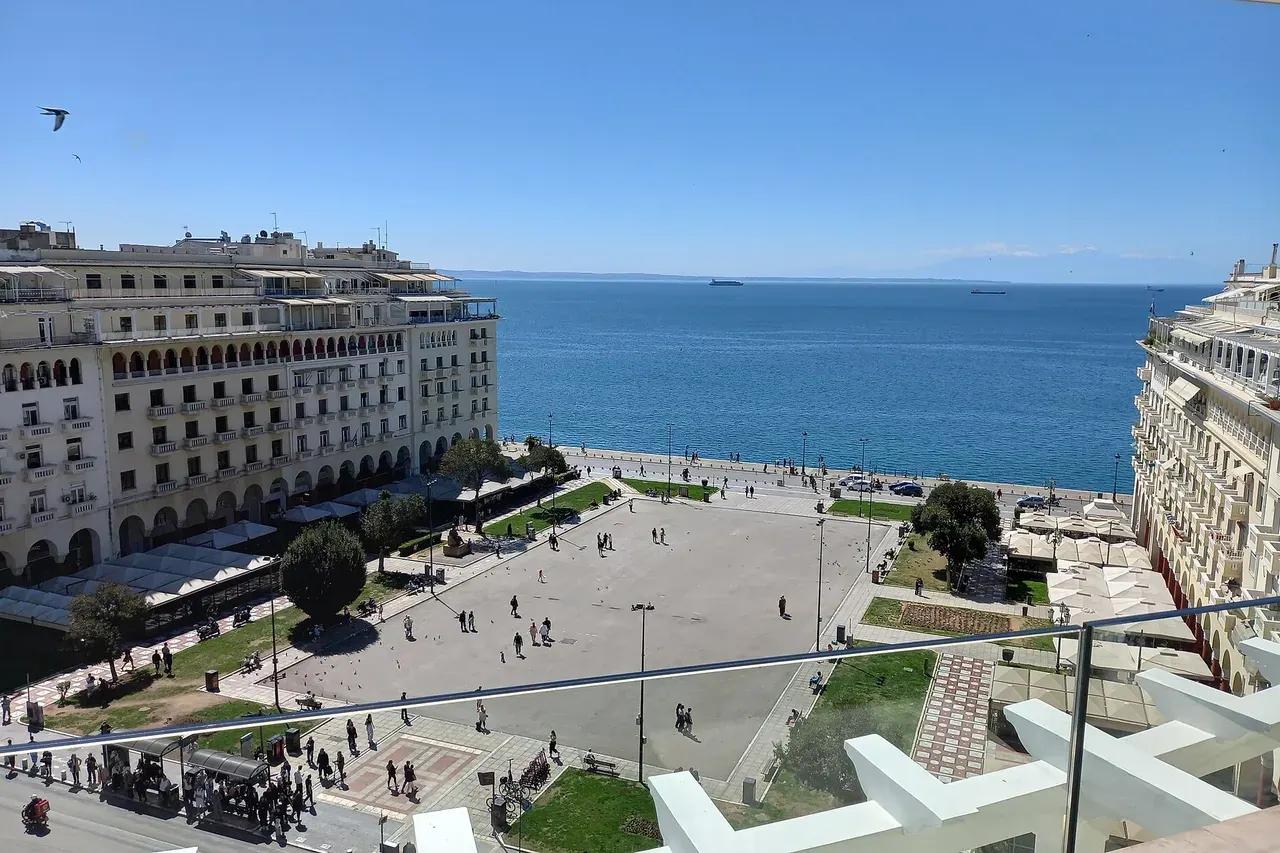
| Aristotelous Square & centre | Flat pavement, some pedestrianised streets | Good, with occasional narrow or crowded pinch points |
| Metro (Line 1) | Lifts and level boarding at all 13 stations | Fully step-free |
| Ano Poli (Upper Town) | Cobbled lanes, steep gradients, uneven stone | Difficult — plan a car or taxi, not a wheelchair route |
| Archaeological & Byzantine Museums | Purpose-built, ramped, single level or lifts | Fully accessible |
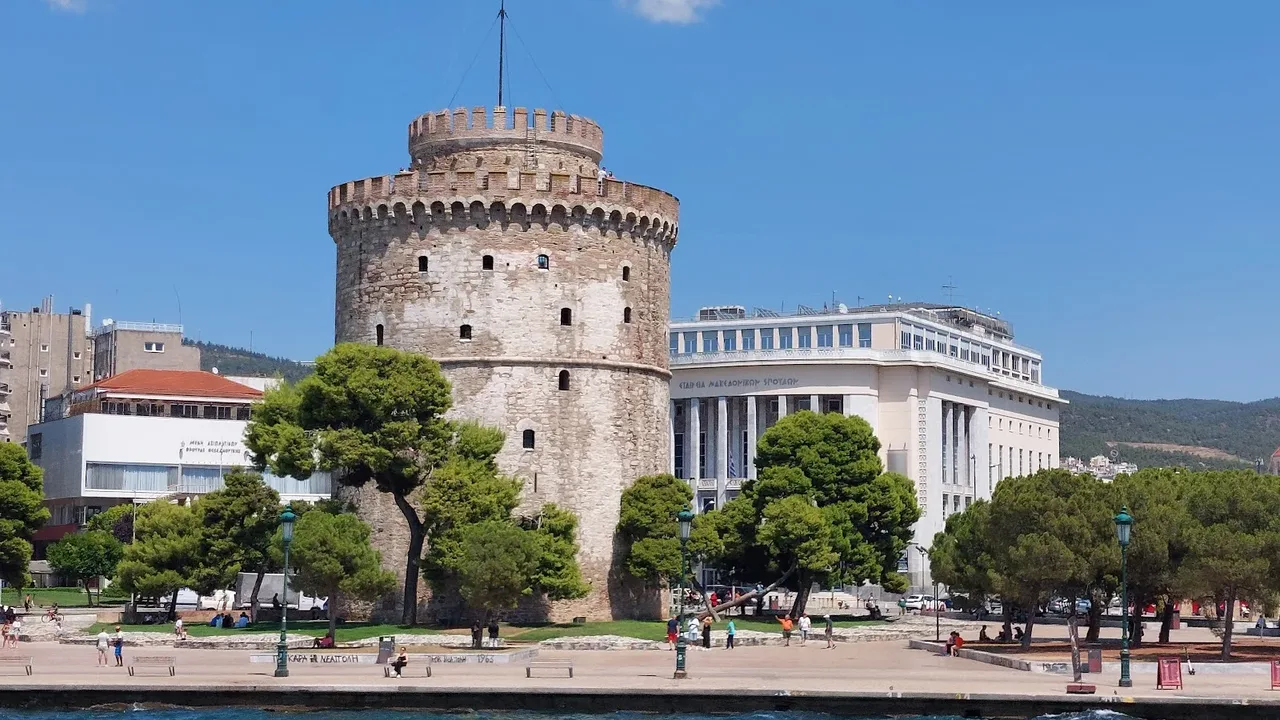
| White Tower | Flat at ground level; upper floors by internal ramp | Ground floor accessible; full climb is harder going |
Our pick if you only have one accessible day: the waterfront from the port to the Umbrellas sculpture, with a detour into the Archaeological Museum and the Museum of Byzantine Culture next door — both purpose-built, step-free, and a short flat walk from each other.
The metro changed the accessibility conversation
Thessaloniki's long-delayed metro finally opened its first line on 30 November 2024, and it's the single biggest accessibility upgrade the city has had in decades. All 13 stations on Line 1 — from the New Railway Station in the west to Nea Elvetia in the east — are built with lifts from street level to platform, and the trains use level, gap-free boarding, with priority space in the first and last carriages. Line 2, extending toward the port and Kalamaria, was expected to add roughly five more stations from mid-2026 — check thessmetro.gr for the current line map before you travel, since extension timelines shift. Our Thessaloniki metro guide covers the line, fares, hours and step-free access in full.
That matters because before the metro, getting across the city meant buses with inconsistent low-floor availability or an expensive accessible taxi. Now a step-free ride connects the University area, Sintrivani, Agia Sofia and Venizelou stations — all within a few blocks of the centre's main sights — to the western rail terminus. It won't replace walking the waterfront, but it solves the cross-town problem that used to make a wheelchair day in Thessaloniki genuinely hard to plan.
The waterfront: your best base
Nea Paralia, the curving seafront promenade that runs roughly 5 km from the port to the Concert Hall, is flat, wide, and paved the whole way — no kerbs to negotiate, no cobbles, just a smooth surface built for exactly this kind of walking (or rolling). It passes the White Tower, the Umbrellas sculpture, and a long stretch of cafés with step-free terraces, and it's the one part of Thessaloniki where "accessible" and "the best part of the city anyway" are the same recommendation. Budget a slow two to three hours to cover it properly with stops.
Aristotelous Square and the pedestrianised stretch of Tsimiski running off it are also flat and paved, though summer evenings get crowded enough that manoeuvring a wheelchair through the café tables and crowds takes patience. Early morning or after 22:00 is noticeably easier going.
Ano Poli: beautiful, but be realistic
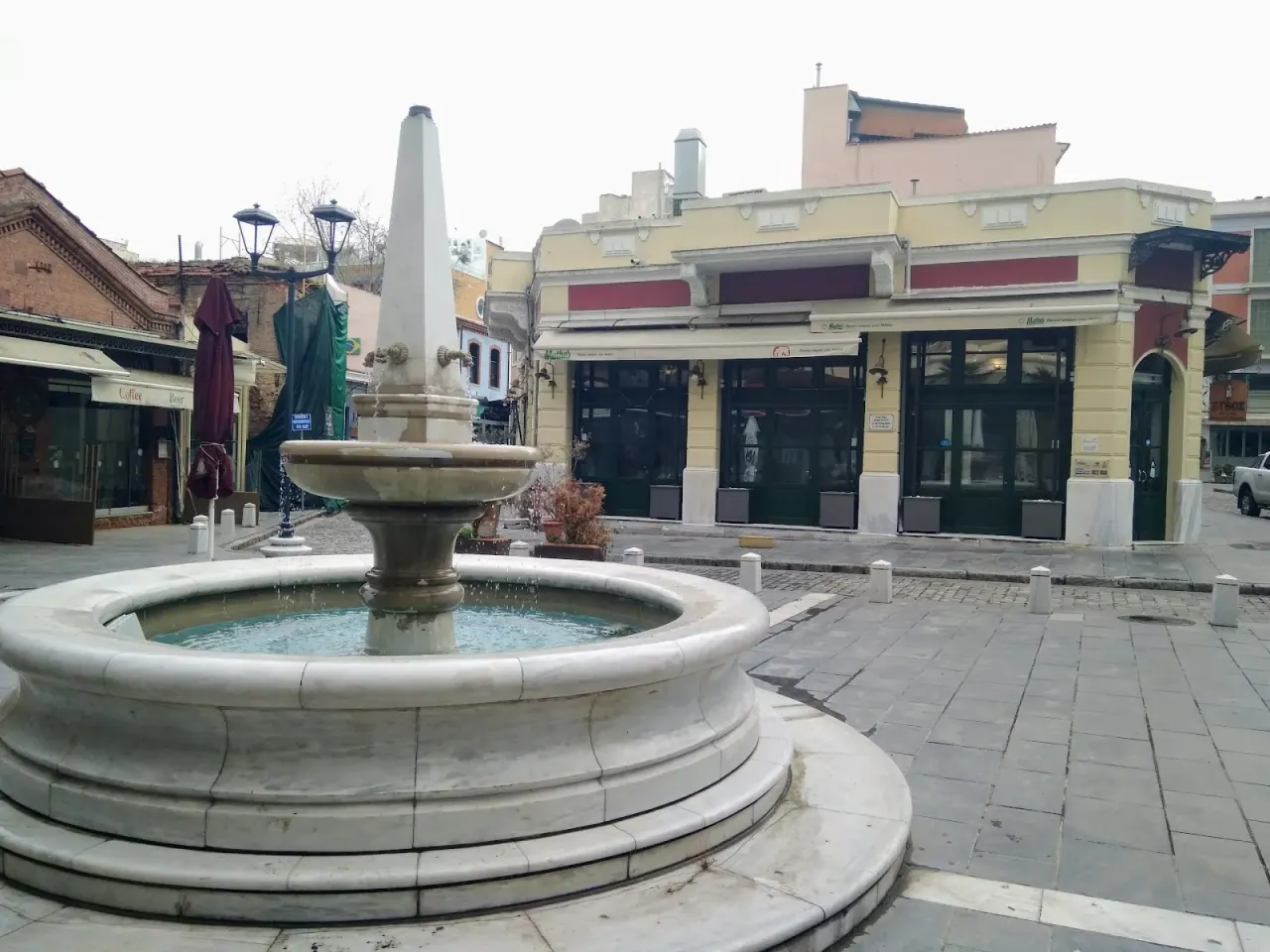
The Upper Town — Ano Poli — is Thessaloniki's most atmospheric neighbourhood, all timber Ottoman houses and hidden churches climbing toward the Byzantine walls, and it's also the part of the city we can't honestly recommend for wheelchair users on their own wheels. The lanes are cobbled, narrow, and steep, several with real gradient, and the pavements where they exist are uneven stone rather than smooth paving. Our Ano Poli guide covers the walk in detail for those who can manage stairs and slopes.
The workaround: a taxi (accessible taxis exist but are limited — book ahead through your hotel) or a private driver can take you up to the Trigonion Tower or the walls near the Byzantine Walls viewpoint, where the terrain flattens out along the ramparts and the view over the city and the gulf is the payoff, without the climb. It's not the full Ano Poli wander, but it's the highlight without the worst of the cobbles.
Museums and landmarks: the good news
This is where Thessaloniki quietly outperforms its reputation. Both of the city's headline museums are purpose-built and fully accessible:
- Archaeological Museum of Thessaloniki — step-free throughout, €10 (€5 reduced), home to the Derveni Krater and the gold of Macedonia.
- Museum of Byzantine Culture — step-free and fully accessible, €10 (€5 Nov–Mar and reduced), right next door to the Archaeological Museum, so the two pair naturally into one accessible museum afternoon.
- White Tower — flat and step-free at ground level, where the ground-floor exhibits and café are; the full climb to the rooftop viewpoint goes up an internal spiral ramp rather than stairs, which is more manageable than a stair climb but still a genuine ascent — pace it, or stop at a lower floor if the full six levels is too much.
- Hagia Sophia and the Church of Agios Dimitrios are both step-free at their main entrances, though Agios Dimitrios's atmospheric crypt is reached by stairs only.
- Roman Forum — the open square is flat and accessible; the underground site museum in the cryptoporticus is step-free via a lift.
For a guided option built specifically around this, GetYourGuide lists a wheelchair-accessible Thessaloniki tour that routes around the flat centre and waterfront rather than the hill neighbourhoods — worth it if you'd rather not plan the logistics yourself.
Accessible beaches near Thessaloniki
If a beach day is on the itinerary, the news is genuinely good, just not right in the city. Halkidiki, the three-fingered peninsula a couple of hours south, has around 17 beaches fitted with Seatrac — a free, solar-powered ramp-and-chair system that lets a wheelchair user transfer independently from the sand into the sea using a waterproof remote. It's part of a wider Greek government programme that has upgraded access at well over 100 beaches nationally, with more added each season. There's no equivalent system on Thessaloniki's own city beaches, so this is a day-trip consideration rather than something you'll use without leaving town — factor in transport, since there's no direct accessible public transit link and a specialist accessible taxi to Kassandra runs roughly €130–150 one way, so a private accessible transfer or rental adapted vehicle is the more practical option for most visitors.
Planning an accessible day
A realistic accessible day looks like this: start at the White Tower for the ground floor and café, walk (or roll) the flat waterfront promenade east toward the Umbrellas, cut inland to the Archaeological Museum and Byzantine Culture Museum for an accessible museum afternoon, then use the metro to reach Aristotelous Square or the University area for dinner. That covers most of what draws people to Thessaloniki without forcing a climb into Ano Poli. For the wider practical picture — transport, money, hours — see our practical info hub, and if you're building a full trip, our itinerary guides can be adapted around this route.
Frequently Asked Questions
Is the Thessaloniki metro wheelchair accessible?
Yes. All 13 stations on Line 1, which opened November 2024, have lifts from street level to the platform and level, gap-free boarding onto the trains, with priority wheelchair space in the first and last carriages. Line 2 is extending the network with more accessible stations through 2026 — check the current map before you travel.
Can you visit Ano Poli (the Old Town) in a wheelchair?
It's difficult. Ano Poli's lanes are cobbled, narrow and steep, with uneven stone paving rather than smooth pavement. A taxi or private driver can get you up to flatter viewpoints along the Byzantine walls or Trigonion Tower without the climb, but an independent wheelchair route through the full neighbourhood isn't realistic.
Which Thessaloniki museums are wheelchair accessible?
The Archaeological Museum and the Museum of Byzantine Culture are both purpose-built and fully accessible, step-free throughout. The White Tower is flat and accessible at ground level, with an internal ramp (not stairs) to the upper floors. Hagia Sophia and Agios Dimitrios are step-free at their main entrances.
Are there accessible beaches near Thessaloniki?
Not within the city itself, but Halkidiki, about two hours south, has roughly 17 beaches fitted with free Seatrac ramp-and-chair systems that let wheelchair users get into the water independently. You'll need a car, adapted transfer, or accessible taxi (roughly €130–150 one way to Kassandra) to reach them.
Is Thessaloniki's waterfront accessible?
Yes — Nea Paralia, the roughly 5 km seafront promenade, is flat, wide and continuously paved from the port past the White Tower to the Concert Hall. It's the single most accessible stretch in the city and covers most of the sights visitors come for.