An hour west of Thessaloniki, under a grassy mound that looks like nothing from the road, is one of the great archaeological finds of the 20th century: the undisturbed tomb of Philip II, father of Alexander the Great, with his gold burial casket still inside. Vergina — ancient Aigai, the first capital of Macedon — is the most rewarding day trip from the city for anyone who cares about history, and it's surprisingly easy to reach. Here's how to do it.
The trip at a glance
Everything important is indoors and climate-controlled, so this is a genuine year-round day trip — no weather to gamble on. Budget half a day; a full day if you pair it with Pella.
| Detail | |
|---|---|
| Distance | ≈80 km · ~1 hour by car from Thessaloniki |
| Entry | |
| Hours | Summer 08:00–20:00 (Tuesdays from 12:00); winter 09:00–17:00 and closed Tuesdays |
| Time needed | 2–3 hours at Vergina; a full day if adding Pella |
| Best for | UNESCO heritage, Macedonian gold, museum lovers |
| Rating | 4.8 from 11,000+ Google reviews |
It's a UNESCO World Heritage Site (inscribed in 1996), and unlike a beach or mountain trip it doesn't depend on the season. The star museum is built underground, inside the burial mound, so you walk among the actual tombs.
What you actually see
The unmissable part is the Royal Tombs Museum (the Great Tumulus) — a dim, atmospheric space built into the earth where the tombs were found. The headline is the Tomb of Philip II, discovered intact by archaeologist Manolis Andronikos in 1977. Inside was a solid-gold larnax (burial casket) stamped with the 16-rayed Vergina Sun, the emblem of the Macedonian royal house, alongside Philip's gold-and-silver armour, a gold wreath of oak leaves, and grave goods of staggering craftsmanship.
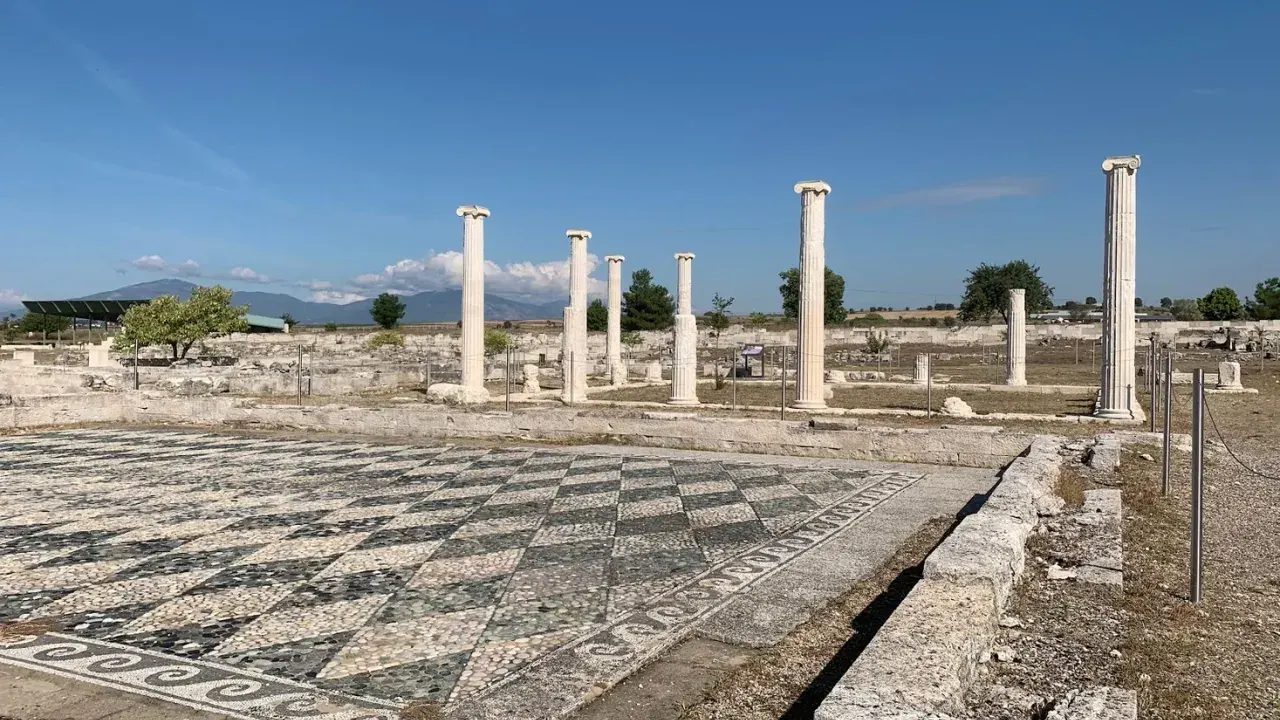
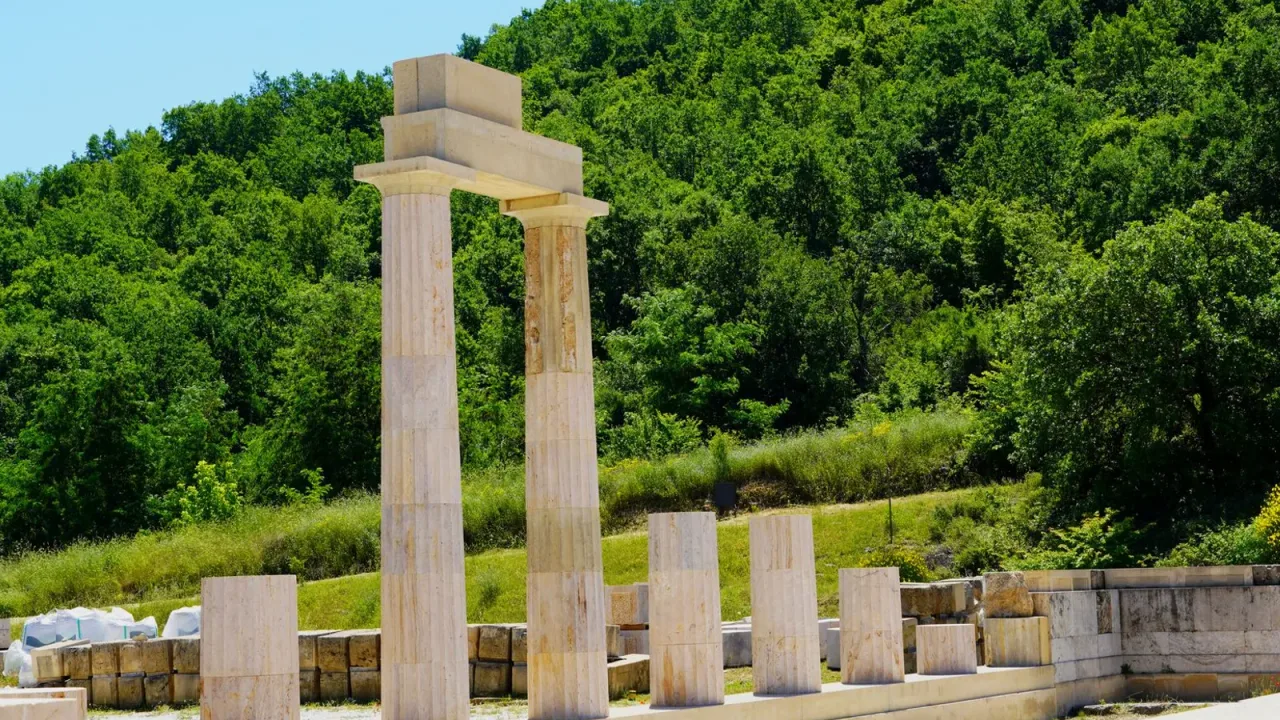
A short walk or drive away stands the vast Palace of Aigai — the largest building of classical Greece and the place where Alexander the Great was proclaimed king in 336 BC — which reopened in 2024 after a 16-year restoration; its mosaic floors and colonnades give a sense of the kingdom's wealth. Nearby is the theatre where Philip II was assassinated in 336 BC, the event that put 20-year-old Alexander on the throne. Standing there is the closest you'll get to the hinge moment of ancient history.
Getting there: car, bus, or tour
| Option | How | Best for |
|---|---|---|
| Car | ~1 h via the A1 motorway and Veria | Flexibility, pairing with Pella |
| Bus | KTEL to Veria, then a local bus to Vergina | Budget travelers without a car |
| Guided tour | Round-trip coach, usually with Pella | No driving, expert context |
By car it's the simplest — about an hour each way via the A1 and the Veria road, with easy parking at the site. Without a car, take a KTEL intercity bus to Veria and a connecting local bus, though times are sparse. The smoothest hands-off option is a guided day trip that pairs Vergina with Pella, the later Macedonian capital and Alexander's birthplace — you can book the Vergina & Pella day trip on GetYourGuide (around €58, free cancellation), which we list with our other day trips.
Vergina vs the other day trips
If you only have one day to give, where should it go? Quick honest take:
- Choose Vergina if you want history and don't want to gamble on weather — it's the richest archaeological experience near the city.
- Choose Meteora if you want the most dramatic scenery and don't mind a longer (3-hour) drive.
- Choose Mount Olympus if you'd rather hike than tour museums.
For the full ranking, see our day trips from Thessaloniki guide. Vergina pairs especially well with Pella — Alexander's birthplace — for a single deep "Macedonian kingdom" day.
Tips for the visit
Go in the morning to beat tour groups in the tomb museum, where space is tight — except on summer Tuesdays, when it doesn't open until 12:00 (and in winter it's closed on Tuesdays altogether, unlike the rest of the week). Winter hours are shorter too, so on a short-daylight day trip check the closing time on the official Aigai museum site before you set off. Photography rules vary inside the tombs — check signage. There's a café near the site but options are limited, so consider lunch in nearby Veria (a handsome old town in its own right, and an easy day trip of its own). And give the Palace its due — many visitors rush the tombs and skip it, but the reopened palace is half the reason to come now.
Frequently Asked Questions
What do you see at Vergina?
The Royal Tombs Museum built inside the Great Tumulus, where you walk among the actual tombs — including the intact tomb of Philip II with its solid-gold larnax and armour. Nearby are the restored Palace of Aigai (reopened 2024) and the theatre where Philip was assassinated in 336 BC.
How do you get to Vergina from Thessaloniki?
It's about 80 km, roughly an hour by car via the A1 motorway and Veria. Without a car, take a KTEL bus to Veria then a connecting local bus, or join a guided day tour that usually combines Vergina with Pella.
How much does Vergina cost to visit?
Admission to the Polycentric Museum of Aigai is around €20 (about €10 reduced), covering the Royal Tombs Museum and the wider site; you can buy tickets in advance online through the official Greek e-ticket portal (hhticket.gr), worth doing since space inside the tomb museum is tight. Like other Greek state museums, it's free on a handful of days — 6 March, 18 April, 18 May, the last weekend of September and 28 October, plus the first and third Sunday of each month from 1 November to 31 March. The reopened Palace of Aigai is a short walk or drive away and included in the experience. If you are also stopping in nearby Veria (12 km away), a €15 combined ticket — valid three days, roughly April to October — adds the Archaeological and Byzantine museums of Veria, good value if you are pairing the two.
Is Vergina worth visiting?
Yes — it holds the intact royal tombs of the Macedonian kings, including Philip II's gold burial casket, and is a UNESCO World Heritage Site. As an indoor, year-round trip an hour from Thessaloniki, it's the best history day trip from the city.