Right in the middle of Thessaloniki, a few blocks back from Aristotelous Square, three historic markets sit almost on top of each other — and together they're one of the most rewarding free walks in the city — and the start of any shopping day here. One is a gleaming restored food hall, one a loud working produce market, and one a 500-year-old Ottoman bazaar. Here's what each is, what to buy, and how to string them into a single stroll. For the dishes behind the ingredients, pair this with our what to eat and complete Thessaloniki food guide.
At a glance
| Market | What you'll find | Vibe |
|---|---|---|
| Modiano | Restored covered food hall — meze bars, tavernas, delis | Polished, sit-down |
| Kapani (Vlali) | Produce, fish, meat, olives, cheese, spices | Loud, local, working |
| Bezesteni | Fabric, trimmings, jewellery (Ottoman bazaar) | Historic, quiet |
Modiano Market
The Modiano is the city's historic covered food market, reborn in 2022 as a buzzing gourmet hall under a restored glass roof. The 1920s hall was designed by — and named after — the architect Eli Modiano, of one of Thessaloniki's prominent Sephardic-Jewish families, built over the site of a synagogue lost in the 1917 fire. Beneath the elegant arcade you'll find meze bars, tavernas, delis and grocers all under one roof — it's as much a place to sit down and eat as to shop, and the easiest introduction to the local food scene. Come hungry: this is where a market walk turns into lunch. See our full Modiano Market guide for its history and what's inside.
Kapani Market
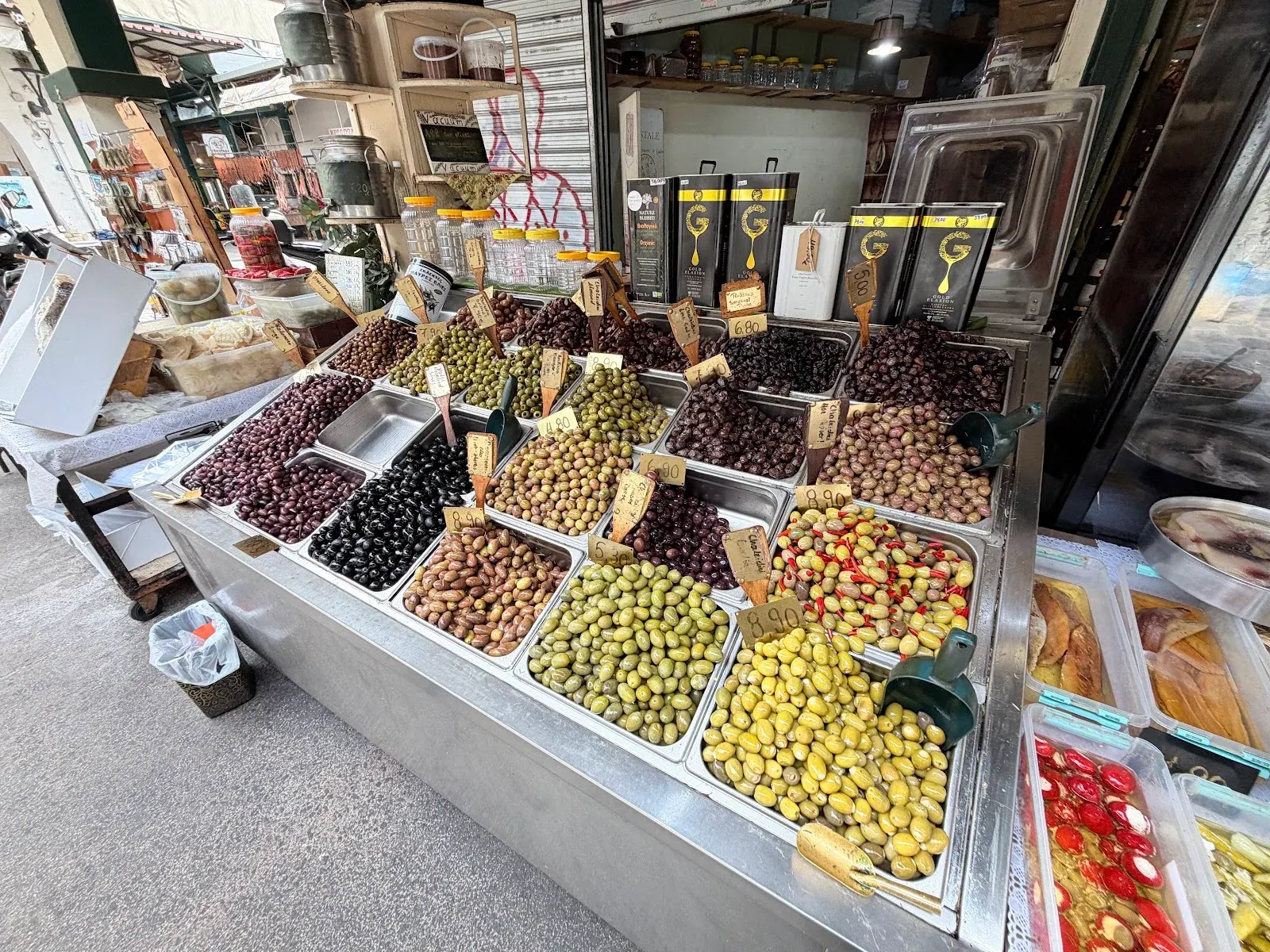
Next door, Kapani — officially Vlali — is the oldest market in Thessaloniki and its polar opposite in mood: a warren of covered lanes and open stalls heaped with produce, fish, meat, olives, cheese and spices. Loud, cheap and thoroughly local, it's the working food market the whole city shops at, and the best place to taste and buy the raw ingredients — olives by the scoop, saffron, herbs, Halkidiki olives and more. Don't be shy about pointing and asking.
Bezesteni
A short walk on brings you to the Bezesteni, a lead-domed Ottoman covered market from the late 1400s — six brick-vaulted bays that still trade today. Where Kapani sells food, the Bezesteni deals in fabric, trimmings and jewellery, its little shops tucked under the vaults. It's one of the few working Ottoman commercial buildings left in the city, so it's worth stepping inside as much for the architecture as the shopping.
How to walk the three
All three sit within a couple of blocks of each other in the commercial heart, between Aristotelous Square and Egnatia — you can see all three in under an hour, or linger over lunch in the Modiano and make a morning of it. Mornings are liveliest for Kapani, when the produce is freshest and the stalls are in full swing; the Modiano runs later into the evening with its bars and tavernas. Everything is free to wander, which makes it a favourite on our free things to do list. To go deeper on the food itself, join a food tour or a market-to-table cooking class.
Frequently Asked Questions
What are the main markets in Thessaloniki?
The three central markets are the Modiano (a restored 1920s covered food hall, now a gourmet market with meze bars and tavernas), Kapani or Vlali (the oldest and most local produce market, with stalls of fish, meat, olives, cheese and spices), and the Bezesteni (a late-1400s Ottoman covered bazaar selling fabric, trimmings and jewellery). They sit within a couple of blocks of each other near Aristotelous Square.
Is Kapani or Modiano better?
They complement each other. Kapani is the authentic, loud working market for produce and ingredients at local prices; the Modiano is the polished food hall for sitting down to eat and buying deli goods. Most visitors do both — they're next to each other — starting with Kapani in the morning and ending with lunch in the Modiano.
Are the markets free to visit?
Yes. All three markets are free to wander; you only pay for what you buy or eat. They're one of the best free things to do in the centre of Thessaloniki.
When are the Thessaloniki markets open?
Kapani is busiest and freshest in the mornings, roughly market hours through the day and quieter by late afternoon; the Modiano, with its bars and tavernas, stays lively into the evening. Hours vary by stall and season, and Sundays are quiet, so aim for a weekday morning for the fullest experience.