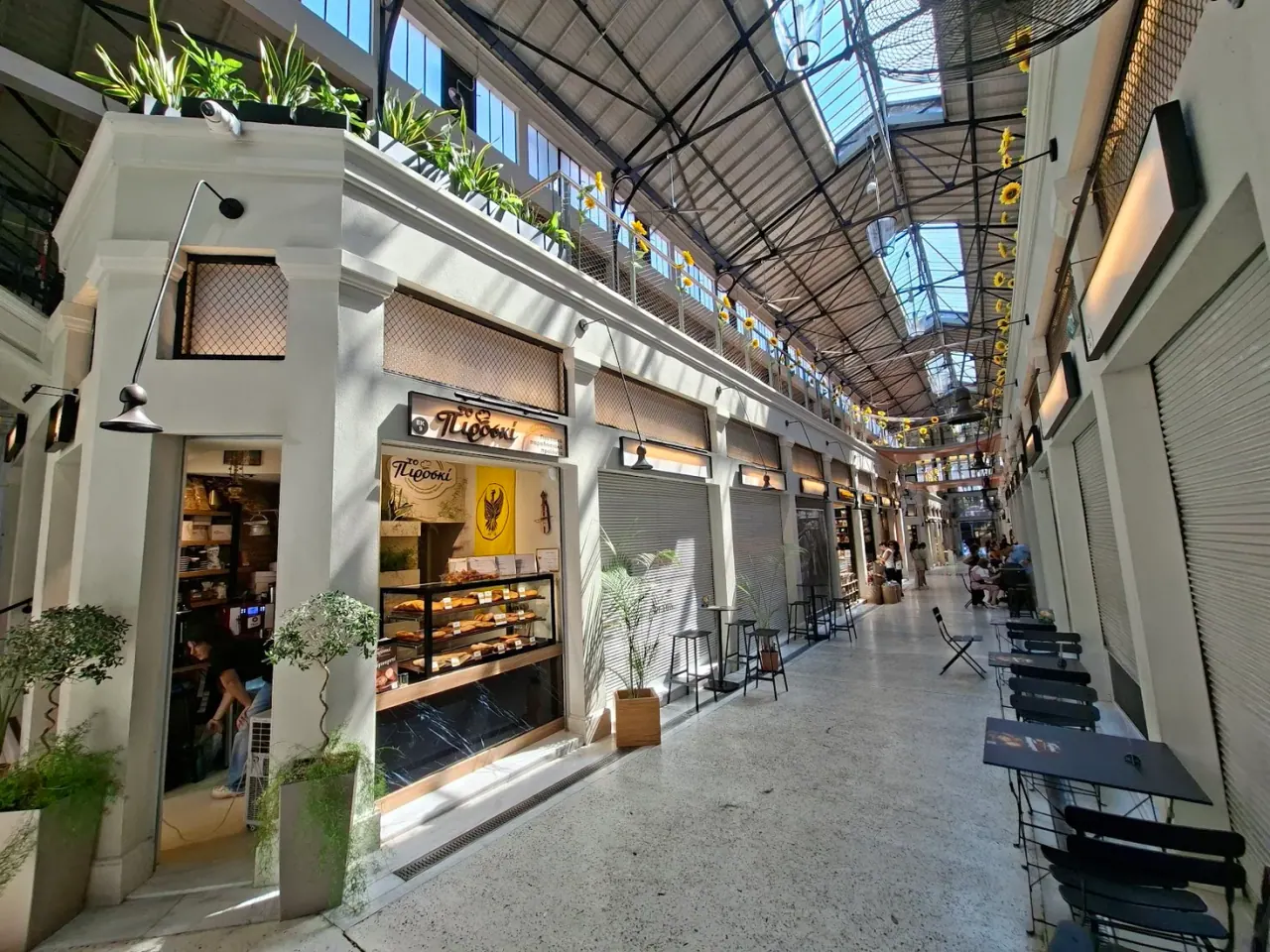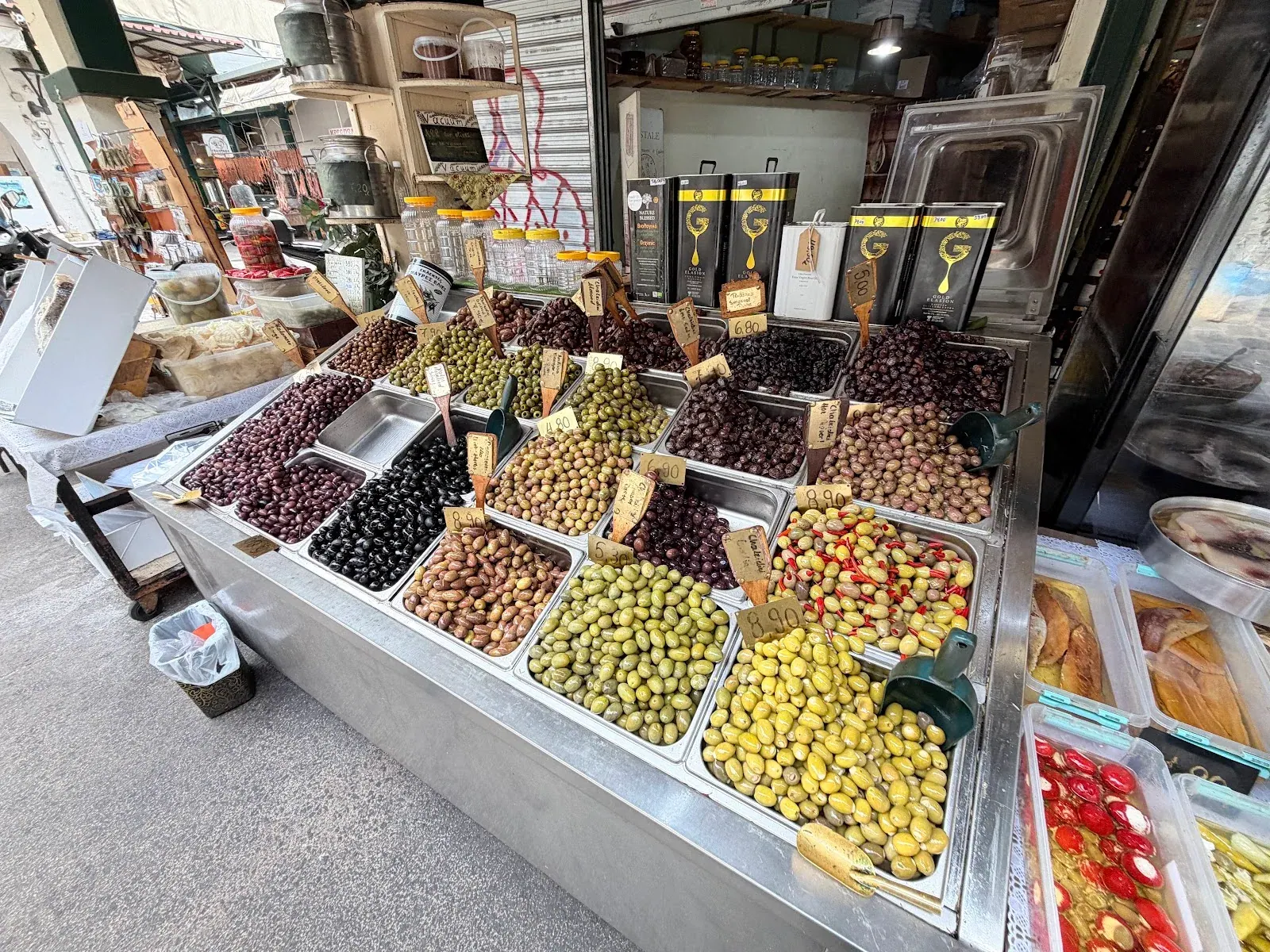
For the polished version of Thessaloniki's food scene, go to Modiano; for the real one, come here. Kapani — officially Vlali — is the oldest market in the city, a loud, cheap, thoroughly local warren of covered lanes and open stalls heaped with olives, fish, cheese and spices. It's the working provisions market that has fed the city for centuries, a block from Aristotelous and right beside the restored Modiano hall. Here's what it is and how to dive in.
What it is
Kapani grew up in the Ottoman period as Thessaloniki's main provisions market — the name comes from the Turkish un kapanı, the flour weigh-house that once stood here (its other name, Vlali, is the one locals still use). It survived the great fire of 1917 and has traded continuously ever since, keeping the rough, unpolished character that the gentrified Modiano next door has left behind. Under its narrow iron-roofed arcades you'll find butchers' stalls hung with meat, fishmongers on ice, and grocers' counters piled with olives in a dozen cures, cheeses, dried fish, honey, nuts, pickles and spices — all at local prices, all shouted over.
Kapani vs Modiano
The two central markets sit a block apart and complement each other perfectly:
- Kapani (Vlali) — the authentic, loud produce market: raw ingredients, working stalls, rock-bottom prices, no concessions to tourists.
- Modiano — the restored, sit-down food hall: meze bars, delis and tavernas under a glass roof.
Most visitors do both: graze and shop the atmosphere in Kapani, then sit down to eat in Modiano. Our markets guide walks all three central markets (with the Ottoman Bezesteni bazaar), and a food tour is the easiest way to taste through them with a guide.
What to buy — and where to eat
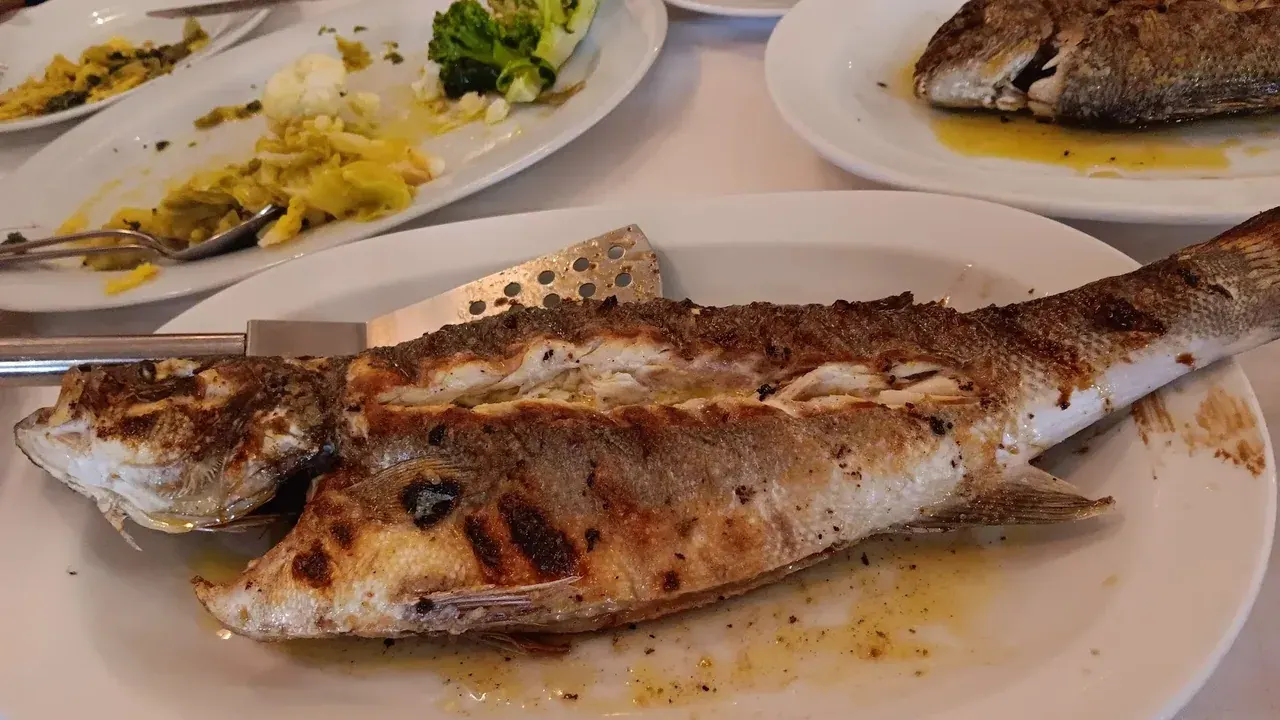
Come for the olives above all — trays of green, black, purple and stuffed olives sold by the scoop — plus feta and graviera, wild herbs and spices, dried figs and nuts, and bakaliaros (salt cod). Bring a bag; vacuum-packed cheese and olives travel home well (our what to buy guide has more). And don't just shop: the lanes hide some of the city's best cheap, old-school ouzeri and mezedopoleia, where you sit among the stalls over grilled octopus, small plates and tsipouro — see our best ouzeri and street food guides for where to graze.
How to visit
- Where: in the Vlali quarter between Egnatia and Ermou, a block from Aristotelous Square and right beside Modiano.
- Cost: free to wander; you pay only for what you buy.
- When: open Monday–Saturday and closed Sundays. Mornings are liveliest and freshest, when the stalls are in full swing; most wind down through the afternoon, though some trade into the evening on Tuesday, Thursday and Friday. Hours vary by stall, so go early and check before a special trip.
It's one of the most atmospheric free things to do in the centre — a highlight of our free things to do list and a natural start to any morning in the food capital.
Frequently Asked Questions
What is Kapani Market in Thessaloniki?
Kapani (officially Vlali) is the oldest food market in Thessaloniki — an Ottoman-era warren of covered lanes and open stalls selling olives, fish, meat, cheese, spices and produce at local prices. Its name comes from the Turkish un kapanı, the flour weigh-house that once stood on the site. It's the loud, authentic working market beside the restored Modiano hall.
What is the difference between Kapani and Modiano?
Kapani is the raw, authentic produce market — working stalls, low prices and no frills — while the neighbouring Modiano is the restored, polished food hall of meze bars, delis and tavernas under a glass roof. They're a block apart, so most visitors do both: shop and soak up the atmosphere in Kapani, then sit down to eat in Modiano.
What can you buy at Kapani Market?
Above all olives, sold by the scoop in a dozen cures, plus feta and graviera cheese, dried fish (salt cod), herbs, spices, nuts, honey and fresh produce, meat and fish. Vacuum-packed olives and cheese travel home well. The market's lanes also hide cheap, old-school ouzeri where you can sit down for meze and tsipouro.
When is the best time to visit Kapani Market?
Weekday mornings, when the produce is freshest and the stalls are in full swing. The market is open Monday–Saturday and closed on Sundays; most stalls wind down through the afternoon, though some stay open into the evening on Tuesday, Thursday and Friday. Go early for the fullest, liveliest experience.