For three weeks each late winter, Greece throws off its coat and misbehaves. Apokries — the Greek Carnival — fills the streets with costumes, fills the air with charcoal smoke, and ends in a day of kites and fasting food. Thessaloniki does it two ways at once: a young but growing city parade downtown, and, an hour out in the villages, some of the strangest and most ancient Carnival rituals in Europe. If you're in the city in February (or early March in some years), here's what's happening, when, and where the real magic is.
When is Carnival in Thessaloniki?
Apokries runs for the three weeks before Lent, so the dates move each year with the Orthodox Easter calendar. It always ends on Clean Monday (Kathara Deftera), the first day of Lent.
| Year | Carnival season | Tsiknopempti | Clean Monday |
|---|---|---|---|
| 2026 | ~1–23 February | Thursday 12 Feb | Monday 23 Feb |
| 2027 | ~21 Feb – 14 March | Thursday 4 March | Monday 15 March |
The word itself tells the story: Apokries comes from "apo kreas" — "away from meat" — the last blowout of feasting and mischief before forty days of fasting.
Tsiknopempti — the day the city grills
The single most fun day for a visitor is Tsiknopempti ("Smoky/Charred Thursday"), the Thursday eleven days before Clean Monday. The name comes from tsikna, the smell of grilling meat — and that's exactly what happens: the whole city grills. Tavernas, balconies, backyards and even pavements turn into barbecues, souvlaki and sausages sizzle everywhere, and everyone eats meat before Lent bans it. Book a taverna table ahead, or just follow your nose to Ladadika — it's a gloriously smoky, boozy, communal night out.
The Thessaloniki city parade
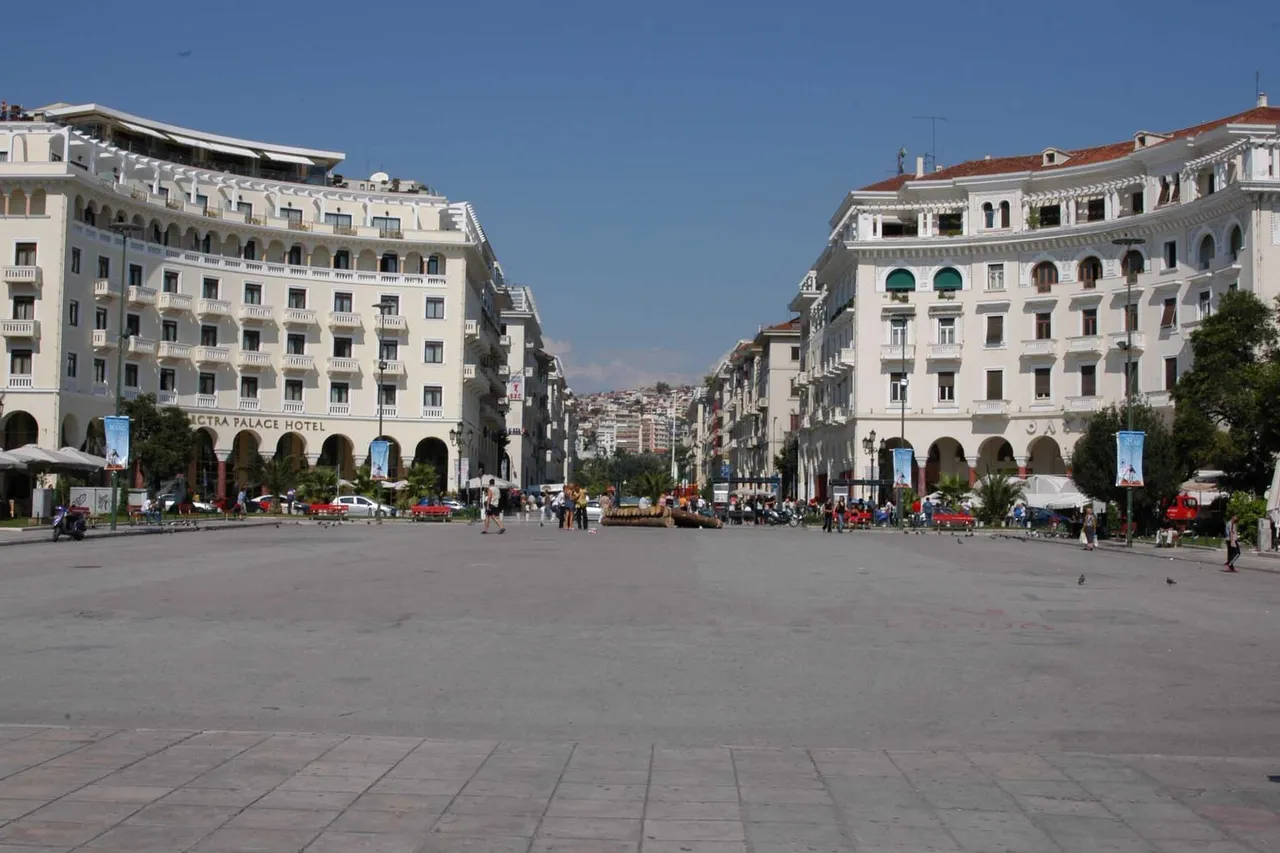
Thessaloniki has, in recent years, begun building its own Carnival parade — a downtown procession of dozens of costumed groups that marches from around Ethnikis Amynis to Aristotelous Square, usually on the Sunday before Clean Monday, capped by a big open-air concert-party on the square. It's younger and smaller than Patras's famous mega-carnival in the south, but it's growing fast, it's free, and it turns the centre into a party. Check local listings for the exact date and route in the year you visit.
The real spectacle: the Sohos bell-bearers
The unmissable thing, though, is out of town. In the village of Sohos (Sochos), about 60 km (roughly an hour) northeast, Carnival takes an ancient, pagan turn. The Koudounoforoi — "bell-bearers" — are men dressed in black goat skins hung with dozens of heavy bells (koudounia) — the largest sets weigh around 20 kg — their faces hidden behind a towering masked headpiece called a kalpaki, trailing horsehair. They emerge in groups and move through the village leaping and shaking their bells in thunderous unison — a Dionysian rite rooted in winter-solstice rituals meant to drive off evil and summon spring's fertility. It peaks around Clean Monday, and it is genuinely unlike anything else you'll see in Greece: less a tourist show than a village possessing itself. If you have a car (see our car rental guide) and the timing lines up, go.
Clean Monday — kites, lagana and the great outdoors
Carnival ends and Lent begins on Clean Monday (Kathara Deftera), a public holiday and one of the loveliest days in the Greek calendar. Families head outdoors for a picnic — the custom called Koulouma — eat nistisima (Lenten fasting food: shellfish, olives, taramosalata, pulses) with fresh lagana, the flat sesame bread baked only on this day, and, above all, fly kites. The waterfront and the hills above the city fill with them — kite-flying symbolises reaching toward the divine. It's a gentle, family, open-air day; join in on the Nea Paralia or up in Ano Poli.
Is it worth timing a trip around?
If you love a spectacle and don't mind cool weather, yes — especially for Tsiknopempti (peak city fun) and the Sohos bell-bearers (peak strangeness). Thessaloniki's own parade is a bonus rather than a Patras-sized draw. February is low season, so you'll pair Carnival with cheap rooms and quiet sights — see our Thessaloniki in winter and full events guides to build the trip.
Frequently Asked Questions
When is Carnival in Thessaloniki in 2026?
The Apokries Carnival season runs roughly 1–23 February 2026. The two key days are Tsiknopempti (the citywide grilling day) on Thursday 12 February, and Clean Monday, which ends Carnival and begins Lent, on Monday 23 February. In 2027 it shifts later, ending on Clean Monday, 15 March.
What is Tsiknopempti?
Tsiknopempti ("Smoky Thursday") is the Carnival Thursday when the whole city grills meat before Lent — the name comes from tsikna, the smell of roasting meat. Tavernas, balconies and pavements turn into barbecues. It's the most fun single night of Carnival for a visitor; book a taverna table ahead.
What are the Sohos bell-bearers?
The Koudounoforoi of Sohos village, about an hour from Thessaloniki, are Carnival figures in black goat skins hung with heavy bells and tall masked headpieces (kalpaki). They move through the village leaping and clanging in an ancient Dionysian rite to drive off evil and welcome spring — a spectacle unlike any other in Greece, peaking around Clean Monday.
What happens on Clean Monday in Thessaloniki?
Clean Monday (Kathara Deftera) is a public holiday that ends Carnival and begins Lent. Families picnic outdoors (Koulouma), eat Lenten food — shellfish, pulses and fresh lagana bread — and fly kites from the waterfront and the hills. It's a gentle, family, open-air day rather than a party.