For more than four centuries Thessaloniki was one of the only cities on earth where Jews were the largest community — a Sephardic metropolis so dominant that the port reportedly fell quiet on the Sabbath. Most visitors walk straight past this history, because the Holocaust and a single fire erased almost all of its physical traces. But the story is still legible if you know where to look, and it reframes the whole city. Here's what happened, and what remains to visit.
A timeline of Jewish Thessaloniki
The arc runs from a refuge to a catastrophe to a small, resilient present. The dates are the fastest way to grasp the scale of what was here.
| Era | What happened |
|---|---|
| 1492–1500s | Sephardic Jews expelled from Spain resettle here in huge numbers, invited by the Ottomans |
| 16th–19th c. | Jews are the city's largest community — at times a majority; Ladino is a street language |
| 1912 | Thessaloniki joins Greece; the community is ~50% of the population |
| 1917 | The Great Fire guts the central Jewish quarter; tens of thousands are left homeless |
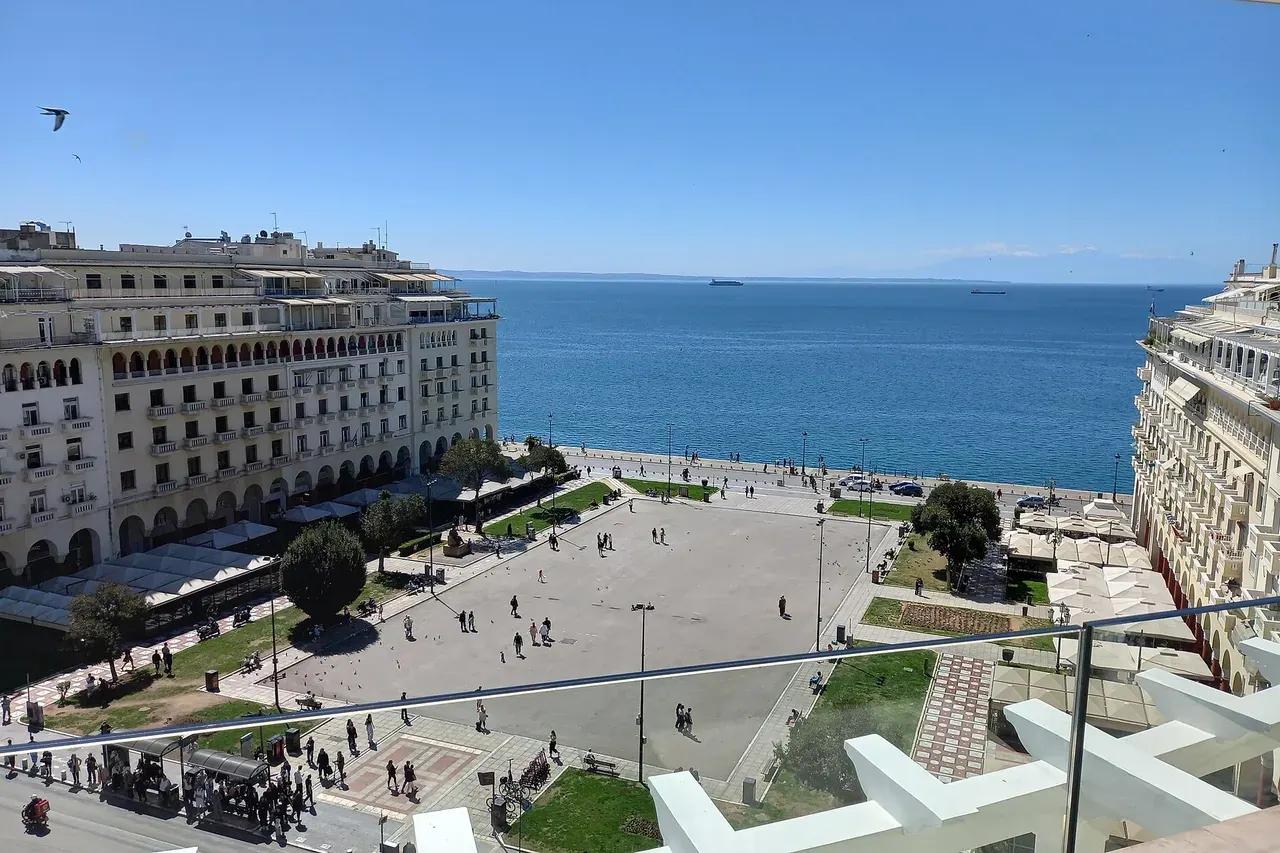
| 11 July 1942 | The "Black Sabbath": ~9,000 Jewish men are herded into Eleftherias Square and publicly humiliated — the first mass anti-Jewish measure |
| 1942 | The vast Jewish cemetery — one of Europe's largest — is destroyed under occupation |
| March–Aug 1943 | The Nazis deport ~48,000 Thessaloniki Jews to Auschwitz-Birkenau |
| Today | A community of around 1,000 maintains synagogues, a museum and a memorial |
By 1943 roughly 96% of the city's ~50,000 Jews had been murdered; fewer than 2,000 survived. It was, proportionally, one of the most complete destructions of any Jewish community in Europe.
Why "Jerusalem of the Balkans"?
After the 1492 expulsion from Spain, the Ottoman Empire offered the Sephardim refuge, and they came to Thessaloniki in such numbers that within decades they were the city's largest group. They brought the printing press, dominated trade and the port, and made Ladino (Judeo-Spanish) an everyday language of the streets. For centuries the city was known as the "Madre de Israel" — the Mother of Israel — and the "Jerusalem of the Balkans," a rare place where Jewish life set the civic rhythm rather than surviving at its margins.
Two twentieth-century blows ended that world. The Great Fire of 1917 destroyed the dense Jewish quarter in the lower town, scattering the community and prompting waves of emigration. Then came the occupation.
What the Holocaust destroyed
The open persecution began on Saturday 11 July 1942 — remembered as the "Black Sabbath" — when around 9,000 Jewish men aged 18–45 were summoned to Eleftherias (Liberty) Square and forced to perform humiliating exercises for hours under the summer sun while soldiers photographed them; some 2,000 were then sent to forced labour, where many soon died. Later that year the occupying forces demolished the city's enormous Jewish cemetery — with an estimated several hundred thousand graves, one of the largest in the world — and its stone was reused across the city; the Aristotle University campus now stands partly on the site. Between 15 March and August 1943, around 48,000 of the city's Jews were rounded up from a ghetto near the railway and deported to Auschwitz-Birkenau. The community that had defined Thessaloniki for 450 years was effectively annihilated in five months.
This is why the city feels, at first, to have so little visible Jewish heritage: most of it was deliberately erased within living memory. What's left is precious, and worth seeking out.
What you can still visit
A focused half-day covers the core sites, all in or near the centre.
- Jewish Museum of Thessaloniki — the essential first stop, on Agiou Mina in a 1904 building that survived the fire. Its ground floor displays marble tombstones rescued from the destroyed cemetery; upper floors tell the community's story and its end. Entry is €8 (€3 reduced). It keeps limited, mostly-morning hours — roughly 09:00–14:00 on weekdays (with a Wednesday evening opening, 17:00–20:00) and 10:00–14:00 on Sunday — and is closed Saturdays and on holidays, so plan to visit before early afternoon.
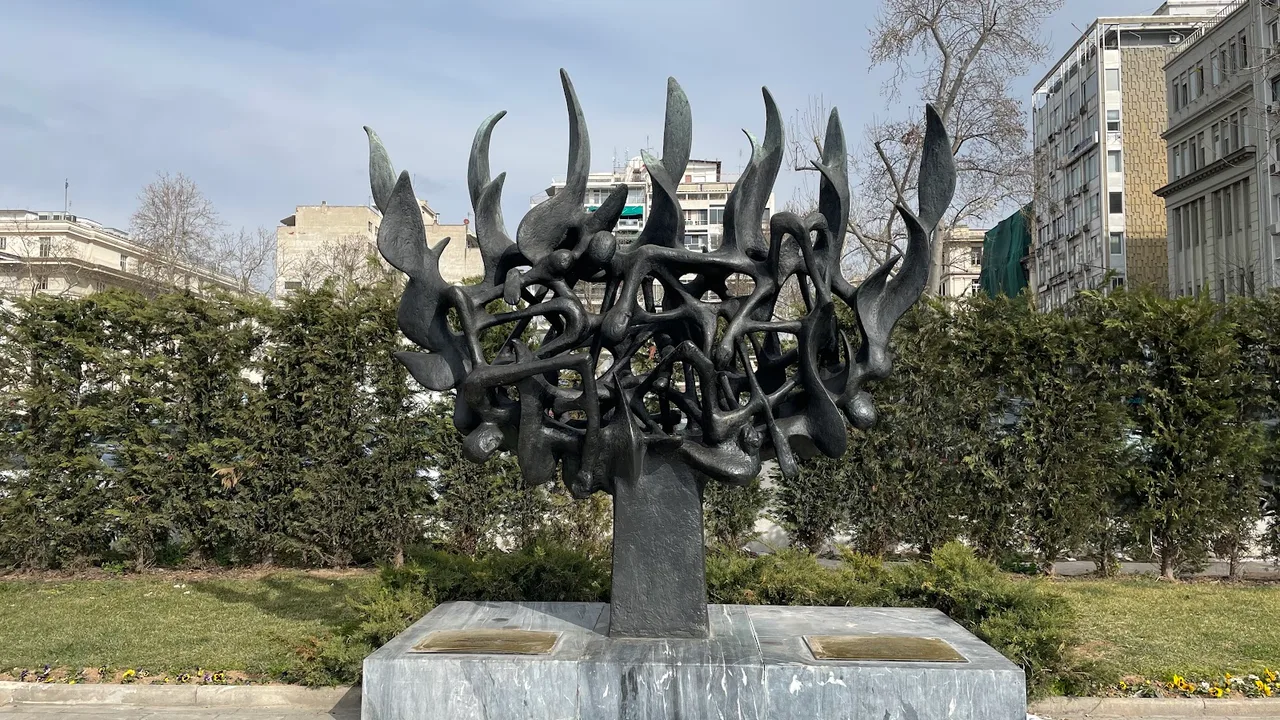
- The Holocaust Memorial on Eleftherias (Liberty) Square — the plaza where, on the "Black Sabbath" of 11 July 1942, some 9,000 Jewish men were herded together and humiliated in the first mass persecution. A sculpture marks the spot.
- Modiano Market — the grand 1922 food hall was designed by the Jewish architect Eli Modiano and built on the site of a destroyed Jewish school; it's now a restored gourmet market you can walk through. See the Modiano Market guide.
- Monastirioton Synagogue — the main surviving synagogue (completed 1927), which escaped destruction because it was requisitioned by the Red Cross. Visits are usually by arrangement.
Pair these with the broader city story on our about Thessaloniki page and the layered exhibits inside the White Tower, which devotes a floor to the Jewish city.
Fitting it into a trip
This heritage trail slots neatly into a city day — the museum and Eleftherias Square are a few minutes' walk from Aristotelous Square and the markets. If you're building a longer stay, our 2-day and 3-day itineraries show where it fits between the Roman and Byzantine sights. It's a sober counterweight to the food and nightlife — and, we'd argue, the single most important thing to understand about Thessaloniki.
Frequently Asked Questions
Why was Thessaloniki called the "Jerusalem of the Balkans"?
After the 1492 expulsion from Spain, Sephardic Jews settled here under Ottoman rule in such numbers that they became the city's largest community for centuries — running its trade, port and printing presses, and speaking Ladino. This dominance was almost unique in Europe, earning the city the names "Jerusalem of the Balkans" and "Madre de Israel."
What happened to the Jews of Thessaloniki in WWII?
Between March and August 1943, the Nazi occupation deported around 48,000 of the city's roughly 50,000 Jews to Auschwitz-Birkenau. About 96% were murdered and fewer than 2,000 survived — one of the most complete destructions of any European Jewish community.
Can you visit Jewish sites in Thessaloniki today?
Yes. The Jewish Museum on Agiou Mina, the Holocaust Memorial on Eleftherias Square, the Modiano Market (designed by a Jewish architect on a former Jewish school site), and the surviving Monastirioton Synagogue are all in or near the centre and can be seen in a half-day.
How big is the Jewish community in Thessaloniki now?
Around 1,000 people, down from roughly 50,000 before the war. The community still maintains synagogues, the Jewish Museum, a community centre and the Holocaust memorial, keeping a 500-year history visible in a city that lost almost all of it.