Of all Thessaloniki's UNESCO-listed Byzantine churches, the Church of Agios Panteleimon (Saint Panteleimon) is the easiest to fold into a day's sightseeing — it sits in a planted courtyard just a couple of minutes' walk from the Rotunda and the Arch of Galerius, yet most visitors walk straight past it. A graceful, small church of the last great age of Byzantine art, it's worth the short detour. Here's what it is and how to see it.
What it is
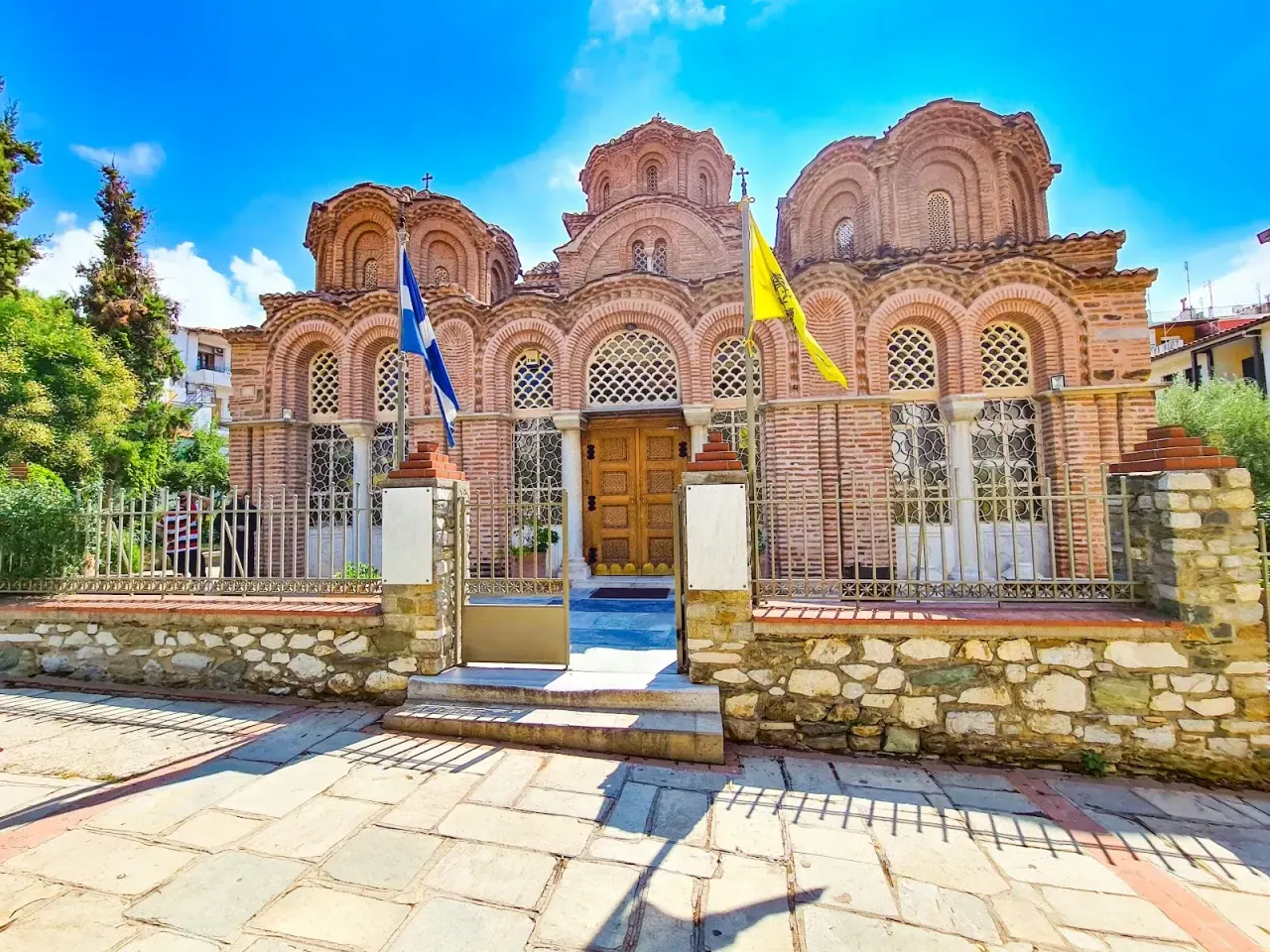
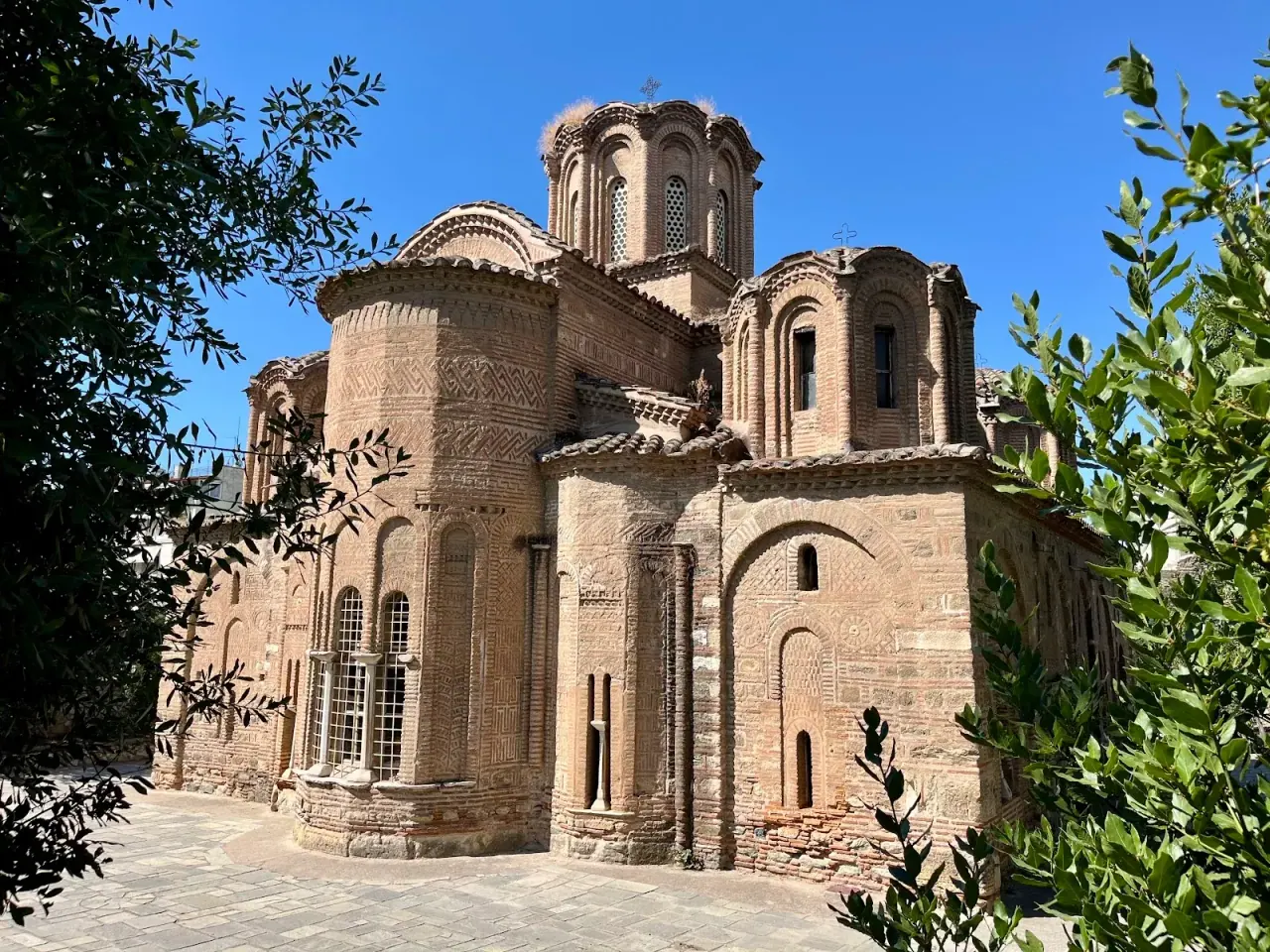
Agios Panteleimon is a compact cross-in-square church with a single central dome, wrapped by an ambulatory on three sides — the refined, "Constantinopolitan" plan of the Palaiologan revival, the Byzantine Empire's final artistic flowering. It was built around the turn of the 14th century (roughly 1295–1314) as the katholikon — the main church — of the Monastery of the Virgin Peribleptos, also known as the Monastery of Kyr Isaak after its founder: the monk Isaac, who served as Metropolitan of Thessaloniki (under the name Iakovos) in those very years. It is one of the fifteen Paleochristian and Byzantine Monuments of Thessaloniki inscribed on the UNESCO World Heritage list in 1988.
The exterior — banded brick and stone
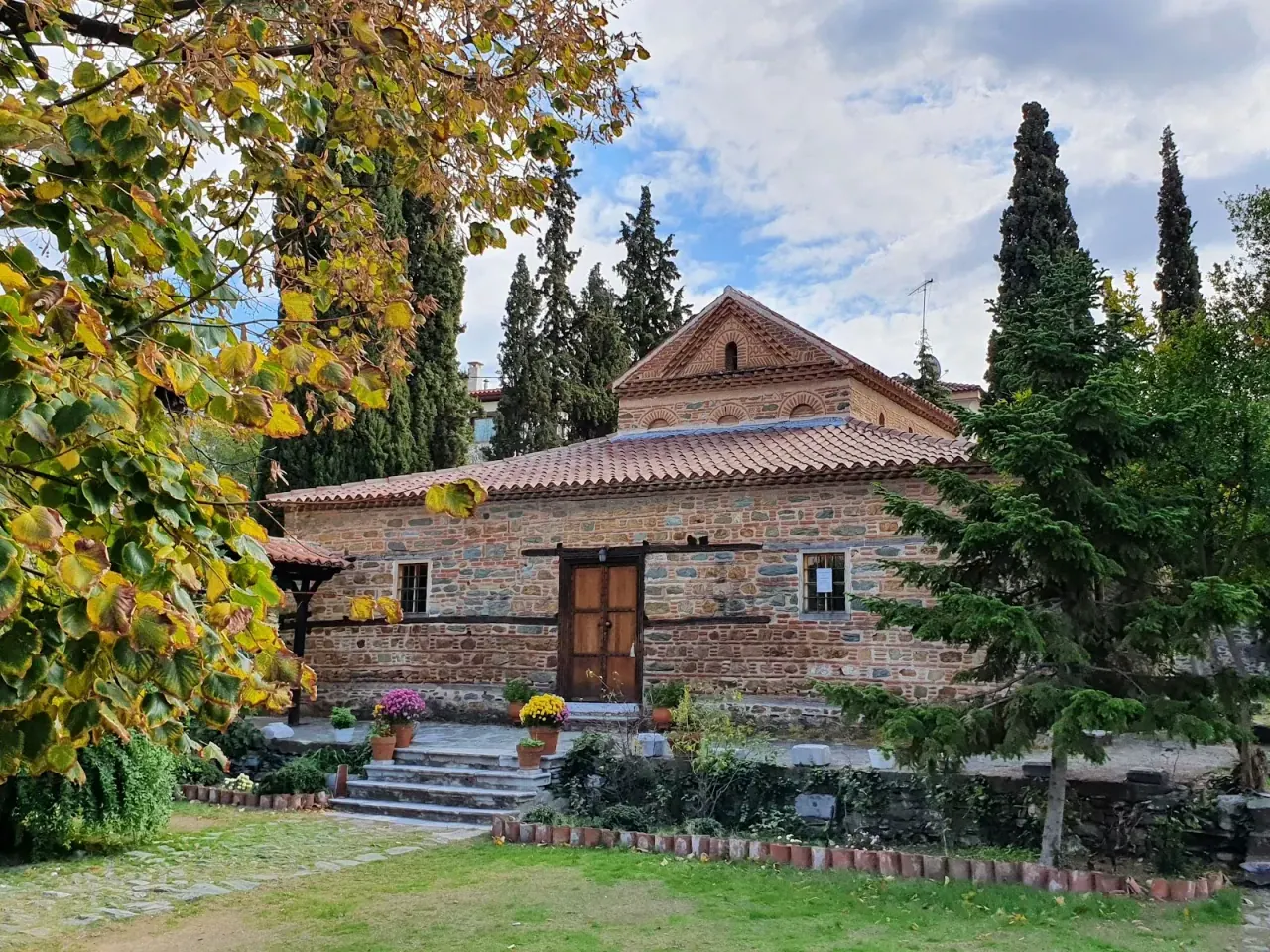
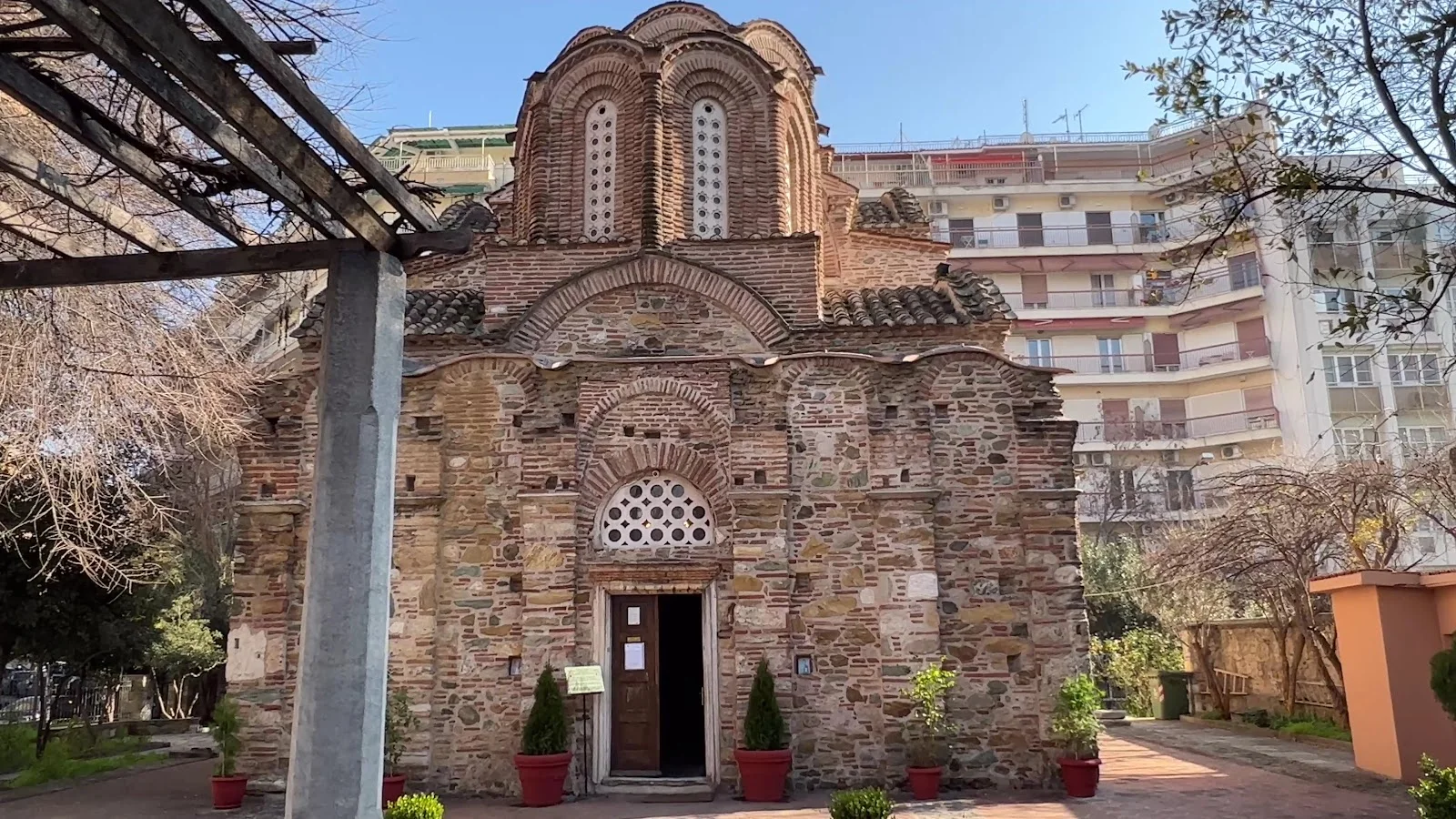
The church's charm is its masonry: banded brick-and-stone walls, a cluster of tiled roofs stepping up to the central dome, and the recessed arches and patterned brickwork that Thessaloniki's Byzantine builders handled so well. Set in a small leafy courtyard off busy Egnatia, it's a pocket of calm in the middle of the city — an easy place to pause between the bigger Roman and Byzantine sights around it.
Inside — surviving frescoes
Under Ottoman rule the church was converted into a mosque — the Isakiye Camii, a name generally thought to preserve that of its Byzantine founder, Isaac. Later damage stripped away much of its painted decoration, but fragments of fine early-14th-century frescoes survive inside — a glimpse of the Palaiologan wall-painting that once covered the church. Only after Ottoman rule ended in 1912 was it rededicated to Saint Panteleimon, the name it carries today; in Byzantine times it was dedicated to the Virgin. It's a working Orthodox church now, quiet and rarely crowded.
How to visit
- Where: just off Egnatia by the Arch of Galerius, in the city centre — flat and central, a couple of minutes from the Rotunda.
- Cost: free — a working church, open to visitors by day.
- When: as a working church its hours can be limited; mornings are the safest bet, and it may close for a few hours around midday.
- Dress: modestly, and be discreet inside; even if the doors are locked, the exterior and its courtyard reward the short stop.
Because it sits right beside the Rotunda and the Arch of Galerius, the natural move is to see all three together — see the Roman Thessaloniki guide for that Galerian corner of the city. It's also a stop on any tour of the city's Byzantine monuments; the Museum of Byzantine Culture sets its art in context, and it's one of the quieter free things to do in the centre.
Frequently Asked Questions
What is the Church of Agios Panteleimon in Thessaloniki?
It's a late-Byzantine church of around 1295–1314 in the city centre, near the Arch of Galerius — a compact cross-in-square building with a central dome and a wraparound ambulatory, one of the city's fifteen UNESCO-listed Paleochristian and Byzantine monuments. It's known for its banded brick-and-stone masonry and surviving fragments of early-14th-century frescoes.
Why is Agios Panteleimon worth visiting?
It is a graceful Palaiologan church and a UNESCO World Heritage monument, and it sits just a couple of minutes from the Rotunda and the Arch of Galerius — making it the easiest of the Byzantine churches to add to a walk through the centre. Its leafy courtyard is a quiet pause between the bigger sights.
Is Agios Panteleimon free to visit?
Yes — it's a working Orthodox church with free entry, open to visitors during the day. Its hours can be limited, so mornings are the most reliable time; it may close for a few hours around midday. Dress modestly inside.
Was Agios Panteleimon ever a mosque?
Yes. Under Ottoman rule it was converted into a mosque — the Isakiye Camii, a name generally thought to preserve that of its Byzantine founder, Isaac — before being rededicated to Saint Panteleimon after Ottoman rule ended in 1912 (in Byzantine times it was dedicated to the Virgin). Although much of its painted decoration was later lost, fragments of its early-14th-century Byzantine frescoes survive inside today.