If the White Tower is the emblem of old Thessaloniki, the Umbrellas are the emblem of the new one. A cluster of open steel umbrellas striding up out of the seafront boardwalk into the sky, they are the city's single most photographed modern landmark — and, come evening, the place the whole city seems to gather to watch the sun drop into the gulf. Here's what they are and how to see them at their best.
What they are
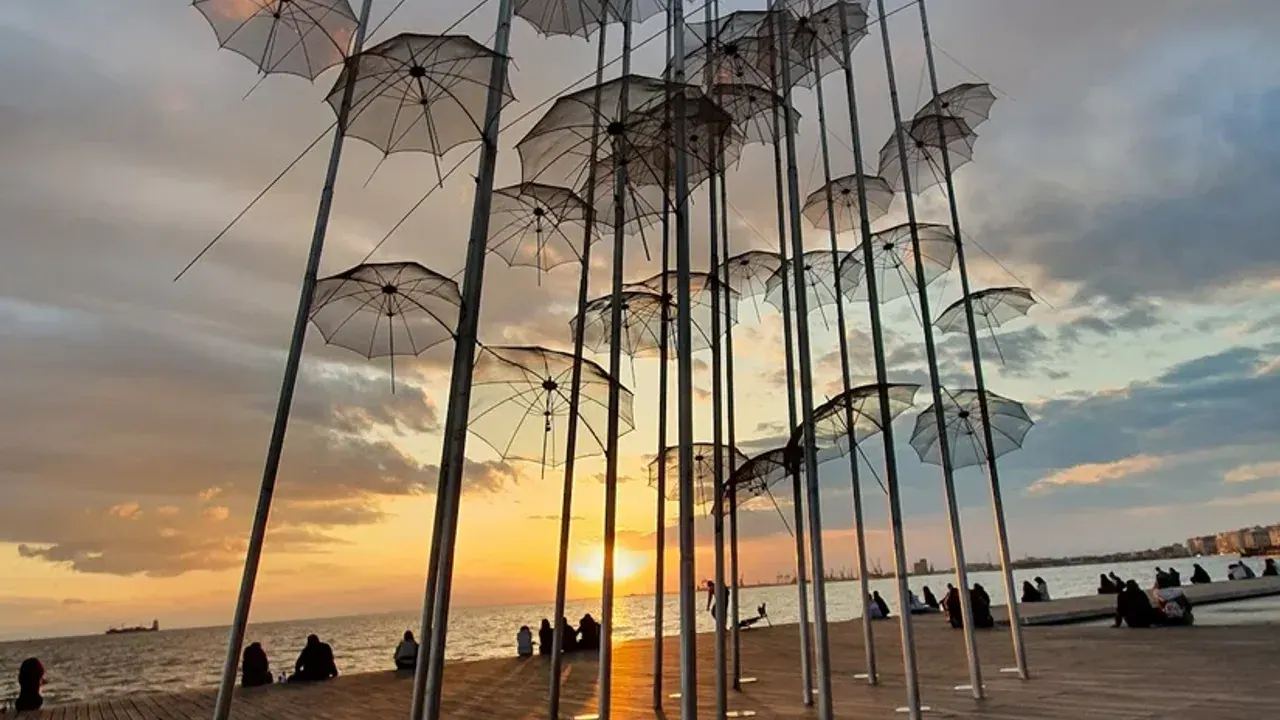
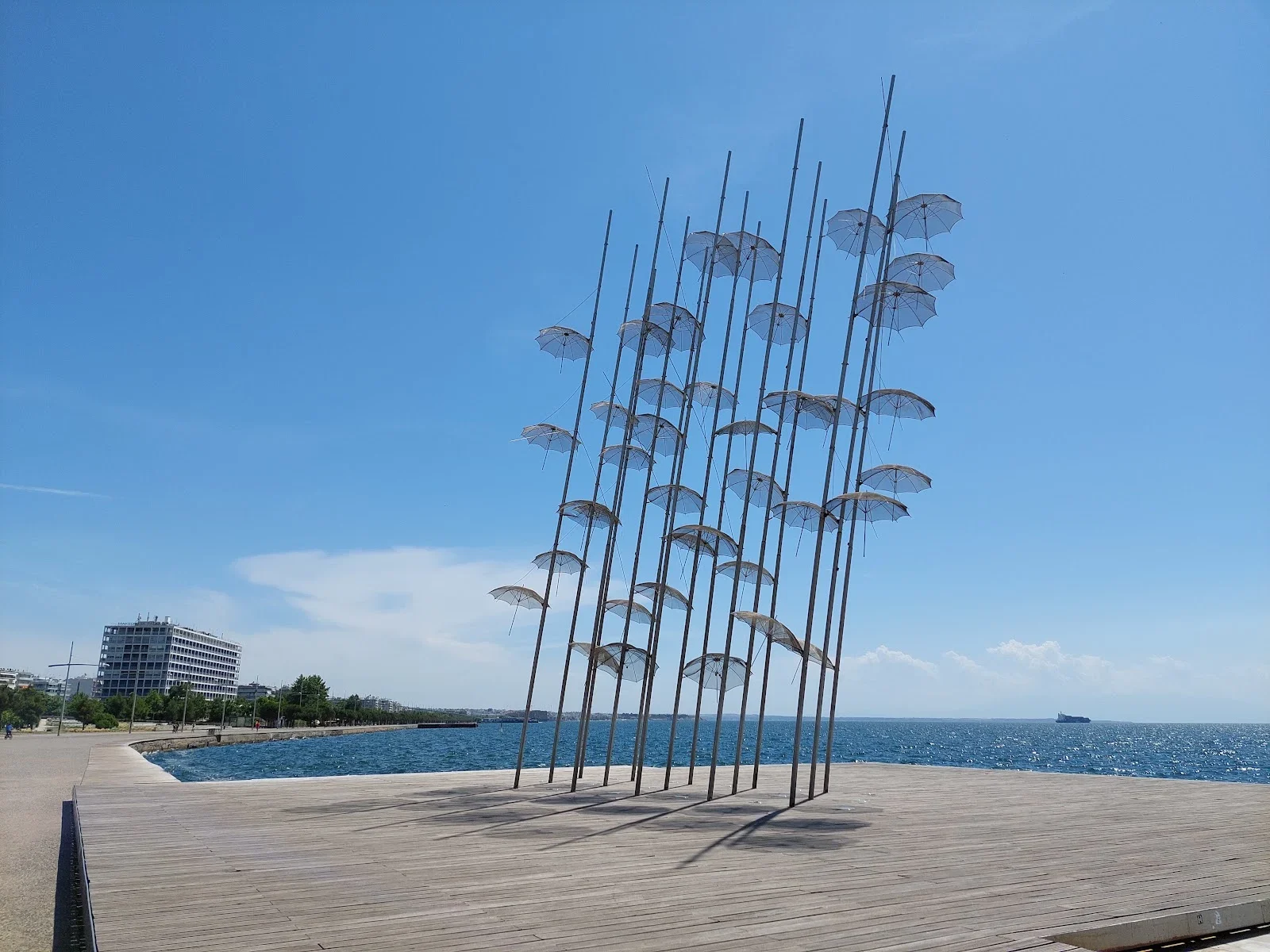
The Umbrellas (Greek Οι Ομπρέλες, sometimes Oi Omvrelles) are a stainless-steel sculpture by George Zongolopoulos — a cluster of 40 open umbrellas rising more than 13 metres off the boardwalk. Zongolopoulos (1903–2004), one of Greece's foremost modern artists and a sculptor, painter and architect nicknamed the "eternal teenager", first introduced the umbrella motif in 1988 and returned to it for the rest of his life; he showed a version at the 1995 Venice Biennale. Remarkably, he was around 96 years old when this permanent installation was raised on Thessaloniki's Nea Paralia — the New Waterfront — in 1997, the year the city was European Capital of Culture and its seafront was reborn as a cultural showcase. Bare metal umbrellas of different heights lean and reach at angles, deliberately open to the sky and the sea rather than sheltering from them; the effect changes completely with the light, from stark silhouettes at dusk to bright silver against a blue summer sky.
The umbrellas that travelled
Thessaloniki's isn't the only one. Zongolopoulos's umbrella motif became internationally recognised, and — under sculpture-copyright rules allowing up to seven originals of a work — versions of it stand well beyond the Thermaic Gulf: one adorns the European Union quarter in Brussels (after winning a pan-European competition), and another rises from a beach at Alexandria in Egypt, with further examples in Greek collections. Some versions are even hydrokinetic, incorporating jets of water. So the Thessaloniki Umbrellas are the best-loved of a small, celebrated family — which is part of why they became the city's modern emblem.
The waterfront that frames them
The Umbrellas became the signature image of the award-winning redesign of the Nea Paralia in the 2000s, which turned the seafront from the White Tower down to the Concert Hall into a chain of themed gardens and open boardwalk — one of the best urban waterfronts in Greece. They sit near the southeastern end of that promenade, by the Thessaloniki Concert Hall (Megaro Mousikis), so reaching them is half the pleasure: a flat, car-free stroll or cycle along the sea. Our waterfront walk guide maps the whole route past the gardens.
Why everyone comes at sunset
The Umbrellas face west across the Thermaic Gulf, which makes the wide boardwalk around them the prime sunset spot in the city. In the hour before dusk the crowd builds — couples, families, students, photographers — and the sky behind the gulf turns gold and pink behind the steel frames, with Mount Olympus sometimes floating on the horizon. It's free, it's open around the clock, and it's the easiest bit of everyday magic in Thessaloniki. For the best times and other vantage points, see our sunset guide — and the Umbrellas headline our best photo spots roundup.
How to visit
- Where: the Nea Paralia, by the Concert Hall, about a 25-minute walk southeast of the White Tower along the seafront.
- Cost: free — it's an open public sculpture, always accessible.
- Access: the promenade is flat and step-free, easy on foot, by bike or with a stroller.
- When: any time works, but come in the hour before sunset for the light and the atmosphere.
Pair the Umbrellas with a walk back along the waterfront to the White Tower at golden hour, and you've got one of the best free evenings in the city — it's a highlight of our free things to do and a fixture on any list of things to do in Thessaloniki.
Frequently Asked Questions
What are the Umbrellas in Thessaloniki?
They are a steel sculpture called The Umbrellas (Οι Ομπρέλες) by the Greek artist George Zongolopoulos — a cluster of open metal umbrellas rising from the Nea Paralia seafront boardwalk. Installed in 1997, they are the city's most photographed modern landmark and its favourite sunset-watching spot.
Who made the Umbrellas sculpture?
The Greek sculptor George Zongolopoulos (1903–2004), one of the country's leading modern artists, who introduced his signature umbrella motif in 1988 and showed a version at the 1995 Venice Biennale. He was around 96 years old when the permanent steel installation — some 40 umbrellas over 13 m tall — was raised on Thessaloniki's New Waterfront in 1997.
Are there other Zongolopoulos umbrella sculptures?
Yes — the umbrella motif exists in several originals. Versions stand in the European Union quarter in Brussels (after a pan-European competition) and on a beach at Alexandria, Egypt, with further examples in Greek collections; some are hydrokinetic, using jets of water. Thessaloniki's is the best-known and the city's modern emblem.
Where are the Umbrellas and how do you get there?
They stand on the Nea Paralia (New Waterfront), near the Thessaloniki Concert Hall, about a 25-minute walk southeast of the White Tower along the seafront promenade. The walk is flat and step-free, and the sculpture is free and always open.
What is the best time to see the Umbrellas?
The hour before sunset. The sculpture faces west over the Thermaic Gulf, so the boardwalk around it is the top sunset spot in Thessaloniki, with the sky turning gold behind the steel frames. It's photogenic by day too, but dusk is when the city gathers there.