Most day trips from Thessaloniki head west, toward Vergina and the waterfalls. This one goes the other way — east, into eastern Macedonia — and pairs two very different sights into one long, rewarding day: Philippi, a UNESCO-listed ancient city where the Apostle Paul preached the first Christian sermon on European soil, and Kavala, a tiered port town wrapped around a harbour, crowned by an Ottoman aqueduct and a Byzantine fortress. It's about two hours each way, so it's a full day — but between Roman ruins, an old town and a swim in the Aegean, it earns the drive.
The day trip at a glance
Philippi sits 16 km inland from Kavala, so the two go together naturally. The essentials:
| Detail | |
|---|---|
| Distance | ≈160 km · ~2 h east of Thessaloniki |
| Philippi | UNESCO site (2016) · Roman theatre, forum, basilicas |
| Kavala | Kamares aqueduct · Panagia old town · fortress · beaches |
| Getting there | Car (A2/Egnatia) · frequent KTEL buses · guided tour |
| Best season | Spring to autumn for the open-air ruins and the sea |
It's the best day out in the eastern direction, and one of the few that combines a major archaeological site with a proper seaside town.
Philippi — where Christianity reached Europe
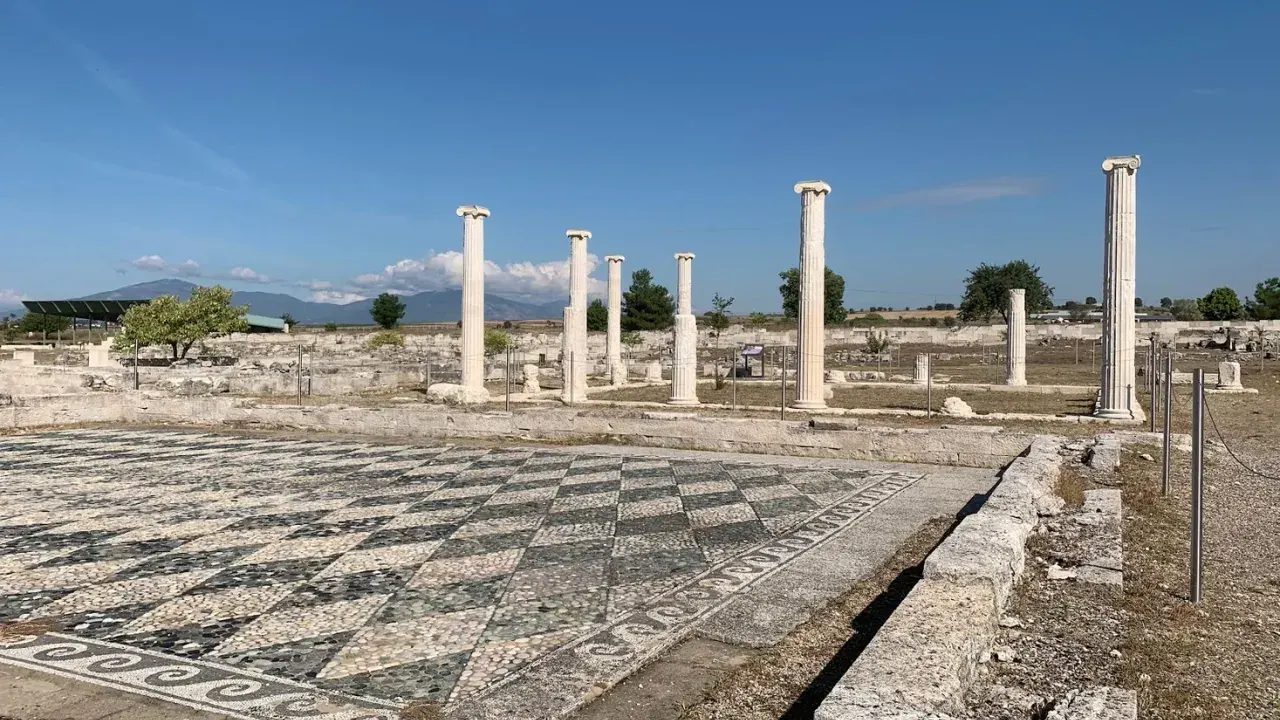
The archaeological site of Philippi was inscribed as a UNESCO World Heritage Site in 2016, recognised as a "small Rome" — a Roman colony laid out in the image of the capital — on the Via Egnatia, the great road that linked Europe to Asia. Founded by Philip II of Macedon (Alexander's father) and rebuilt as a Roman colony, it became, in 49–50 AD, the first place in Europe where the Apostle Paul preached. Here he baptised Lydia, remembered as the first documented Christian convert on the continent.
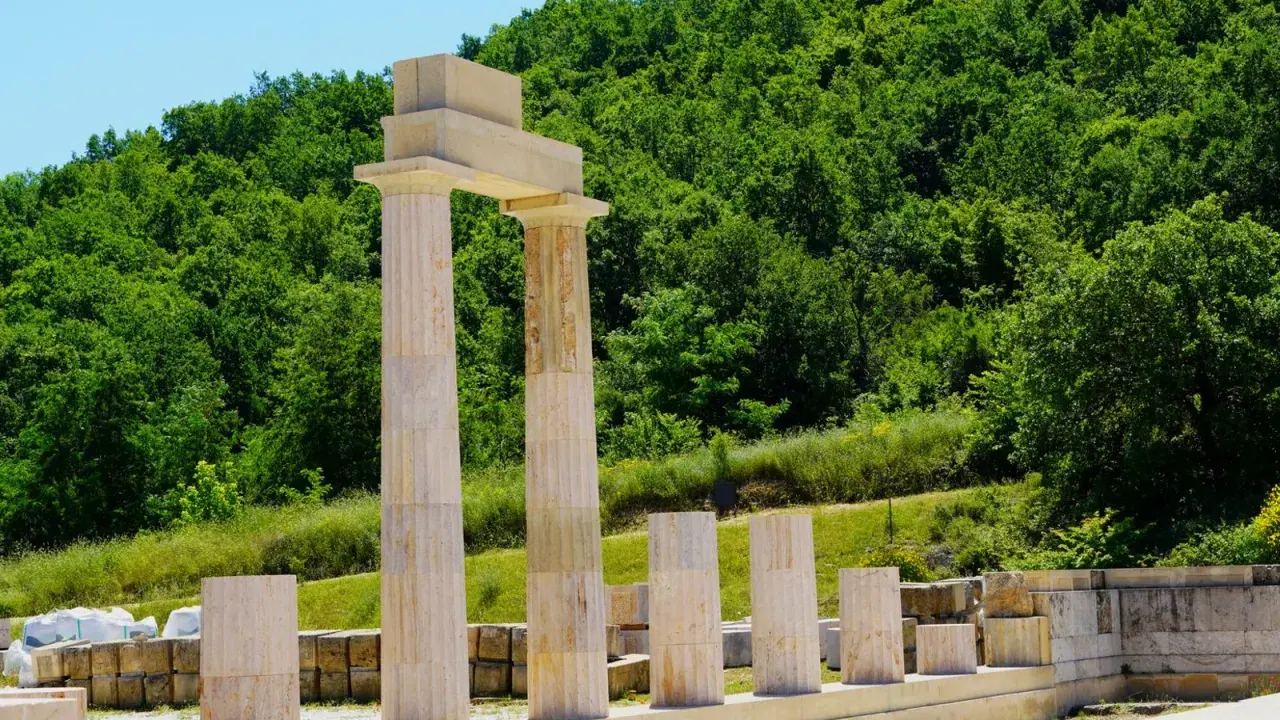
You walk among a well-preserved Roman theatre cut into the acropolis slope, the forum, the monumental early-Christian basilicas with their towering brick piers, and the cell traditionally shown as Paul's prison. The riverside Baptistery of St Lydia, where the baptism is commemorated, lies a short drive away. Entry to the site is €10 (half-price reduced; free for under-18s and EU under-25s, and a reduced ticket applies to everyone in winter, 1 November–31 March). The excellent Archaeological Museum of Philippi is a separate €10 ticket — there's no combined site-and-museum ticket, so budget for each if you want both. Both are free on Greece's national free-admission days (including 6 March, 18 May and 28 October, and the first and third Sunday of each month from November to March). Allow a good hour or two on site; it's open-air, so wear a hat and bring water in summer.
Kavala — aqueduct, old town and sea
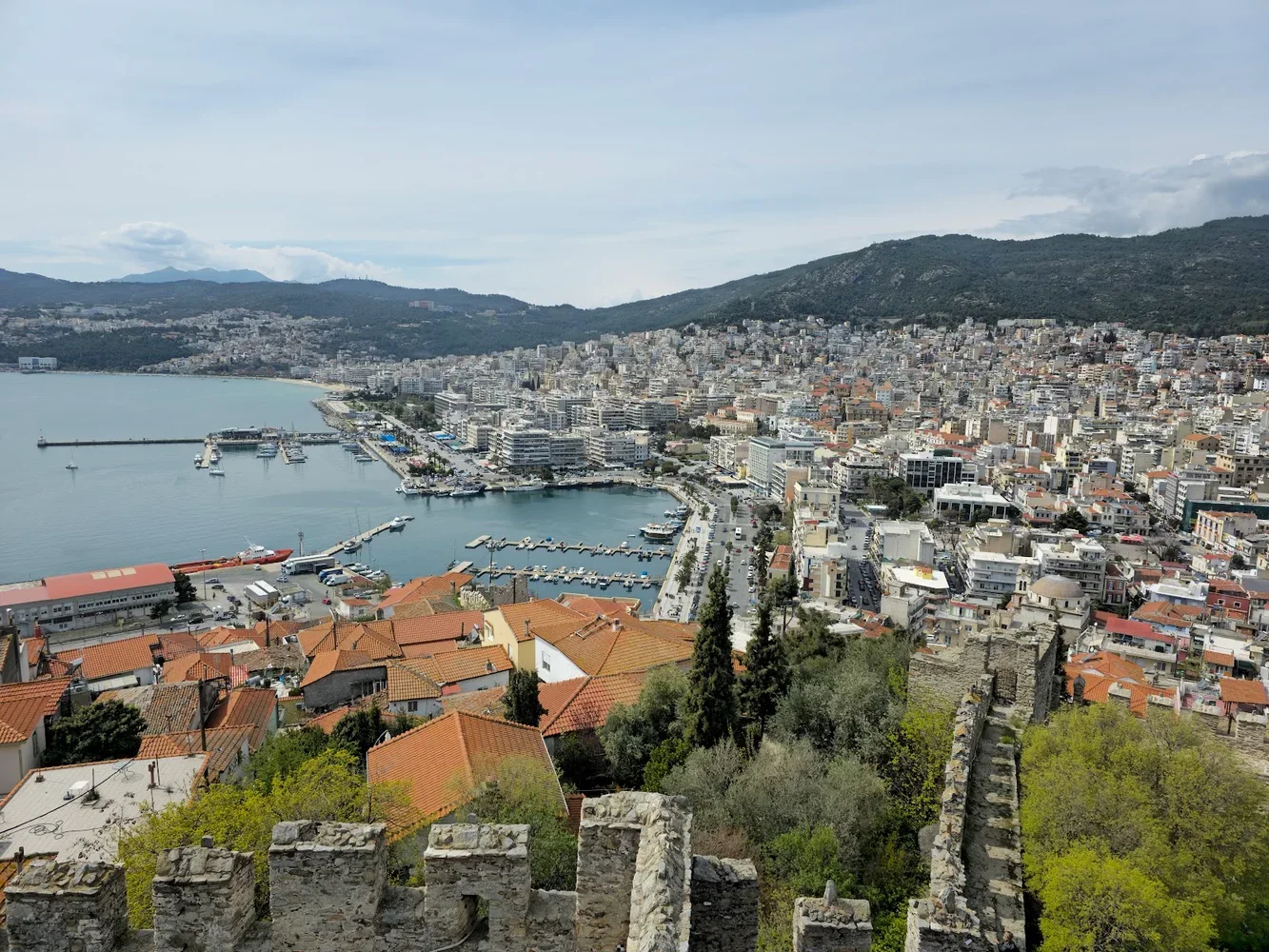
Kavala — ancient Neapolis, where Paul first stepped ashore in Europe — is among the loveliest ports in northern Greece. Its emblem is the Kamares, a 270-metre Ottoman aqueduct built in the 1520s under Ibrahim Pasha, vizier of Suleiman the Magnificent, as part of rebuilding the city — it strides right through the centre on two tiers of arches.
Above it climbs Panagia, the old town: steep cobbled lanes, wooden-balconied houses and a Byzantine fortress with sweeping views over the harbour and the gulf toward the island of Thassos — the view in the photo above. Panagia is also the birthplace of Mehmet Ali, founder of Egypt's last royal dynasty, whose grand mansion still stands as a museum. Down at sea level there's a working fishing harbour, cafés along the quay, and beaches within easy reach for a swim to end the day.
Getting there from Thessaloniki
Kavala is about 160 km east, roughly 2 hours on the A2/Egnatia motorway.
| Option | How | Best for |
|---|---|---|
| Car | ~2 h east on the A2/Egnatia | Combining Philippi, the old town & a beach |
| KTEL bus | Frequent buses to Kavala, ~2–2.5 h | Car-free travel (Philippi needs a local taxi/bus) |
| Guided tour | Round-trip from Thessaloniki | The ruins, old town and a swim, no driving |
Because it's a long round trip and Philippi is only 16 km inland from Kavala, most visitors take a guided day tour (around €45, rated 4.7) that bundles the ancient site, the old town and a beach stop — the easiest way to see both without a car. See how it compares in our ranked day trips from Thessaloniki, and the Kavala & Philippi page for the practical details.
When to go, and is it worth it
Spring to autumn is best: the open-air ruins are exposed, and the coast is at its most inviting in the warmer months — pleasant for a swim from late spring through September. Because it's a long day, it suits travellers who want early-Christian and Roman history with a seaside reward, and it pairs thematically with Veria, the other great St-Paul site near Thessaloniki, and the city's own Byzantine and early-Christian monuments. For the wider seasonal picture, see our best time to visit guide.
Frequently Asked Questions
Why is Philippi important?
Philippi is a UNESCO World Heritage Site (inscribed 2016) and one of the most significant early-Christian places in Europe. Founded by Philip II of Macedon and later a major Roman colony on the Via Egnatia, it's where the Apostle Paul preached in 49–50 AD and baptised Lydia — the first documented Christian convert in Europe. The site preserves a Roman theatre, forum, grand basilicas and the spot traditionally linked to Paul's imprisonment, with the Baptistery of St Lydia nearby.
What is there to see in Kavala?
Kavala is one of northern Greece's prettiest ports. Its emblem is the Kamares — a 270 m Ottoman aqueduct built in the 1520s — striding across the town. Above it climbs Panagia, the old town of cobbled lanes, wooden-balconied houses and a Byzantine fortress with sweeping views over the harbour and bay. It's also the birthplace of Mehmet Ali, founder of Egypt's last dynasty, whose mansion still stands as a museum, and it has beaches for a swim.
How do you get to Kavala and Philippi from Thessaloniki?
Kavala is about 160 km east — roughly 2 hours by car on the A2/Egnatia motorway, with frequent KTEL buses taking around 2 to 2.5 hours. Philippi lies 16 km inland from Kavala, so the two are easily combined; because it's a long round trip, most visitors take a guided day tour that pairs the ancient site with the old town and a beach stop.
Is Kavala and Philippi worth a day trip?
Yes, if you're interested in history and don't mind a longer drive. Few day trips combine a UNESCO archaeological site of Paul's first European sermon with a handsome seaside old town and a swim. It's about two hours each way, so it's a full day best done by car or guided tour rather than rushed by bus.