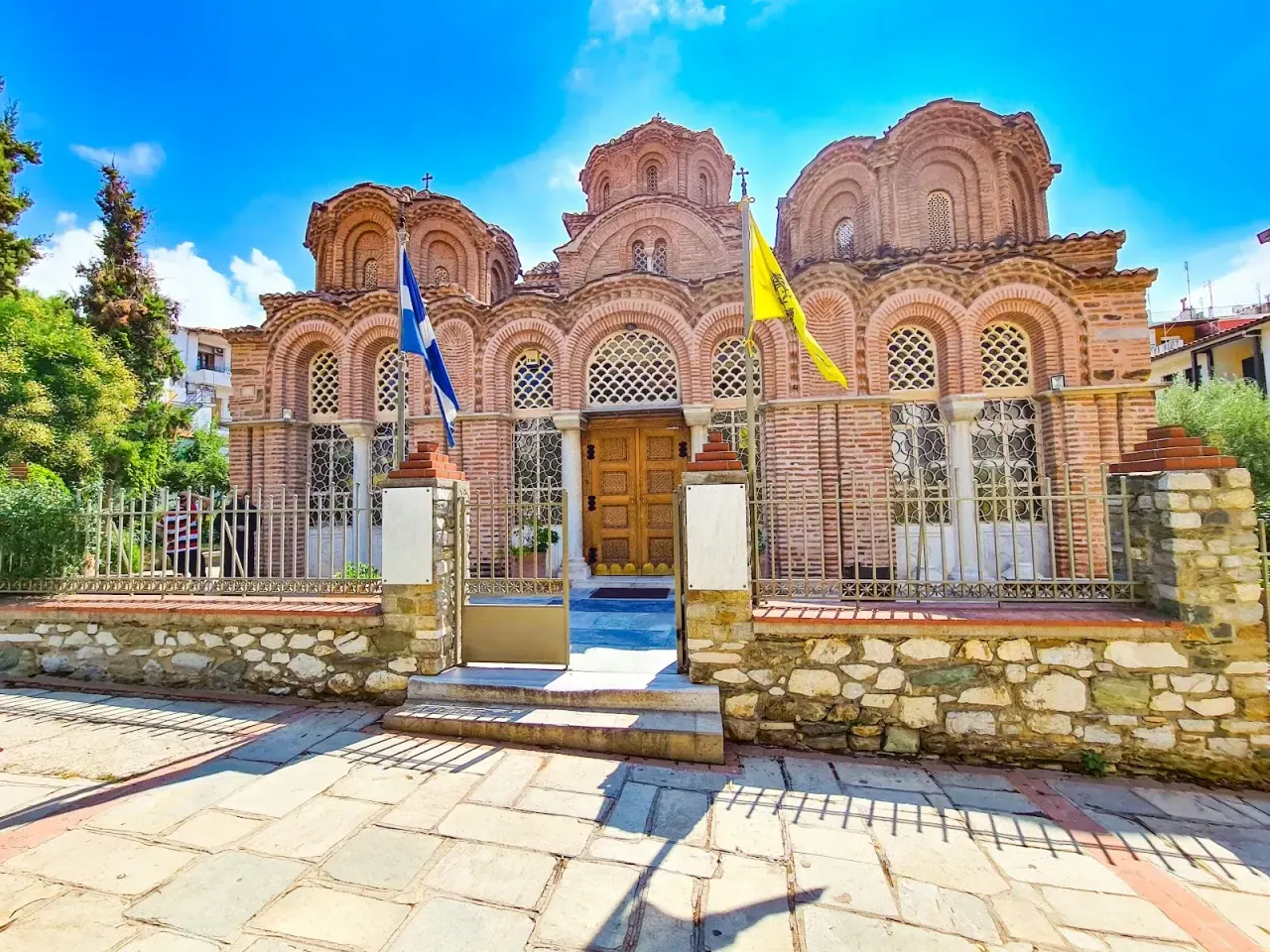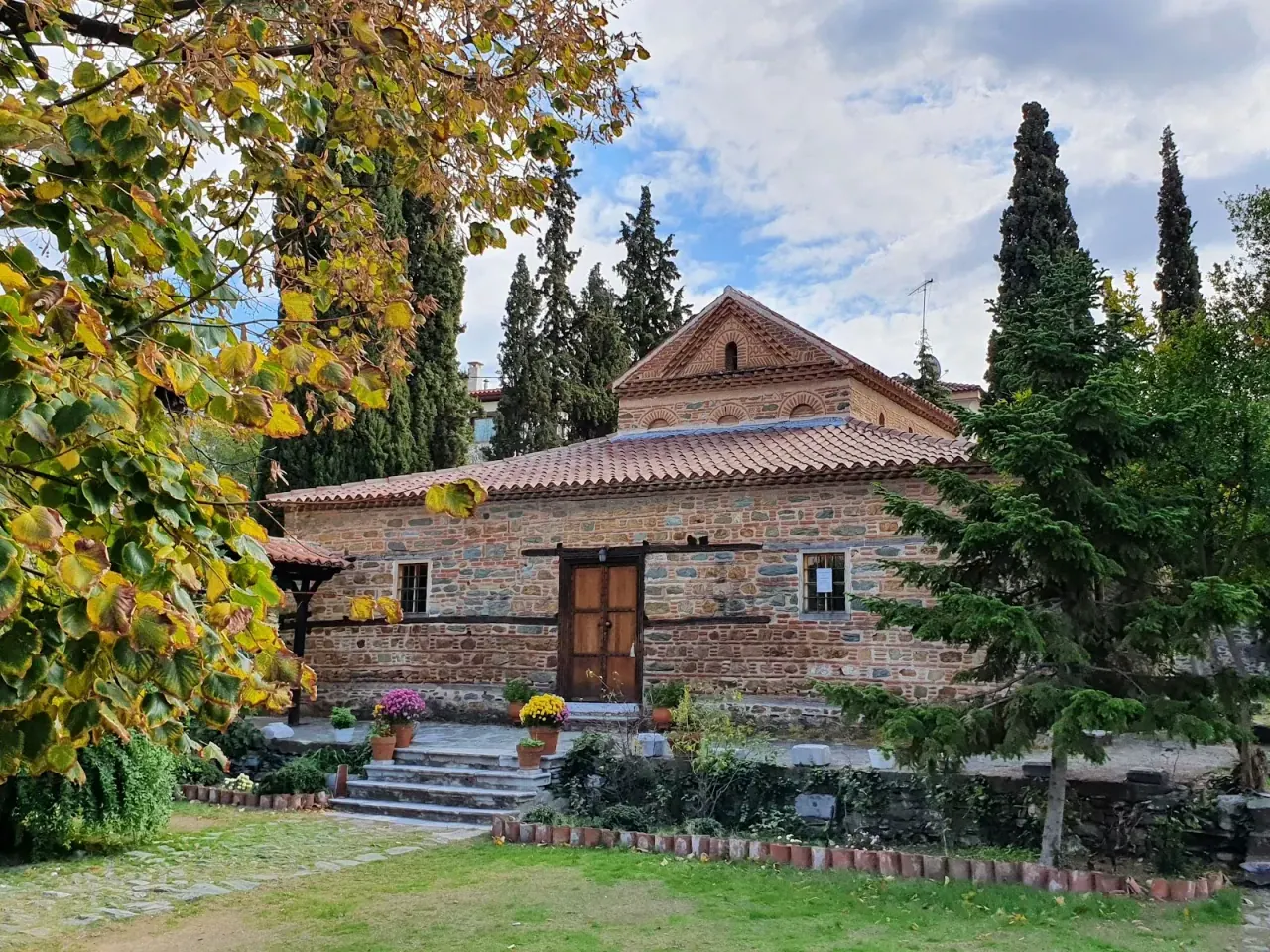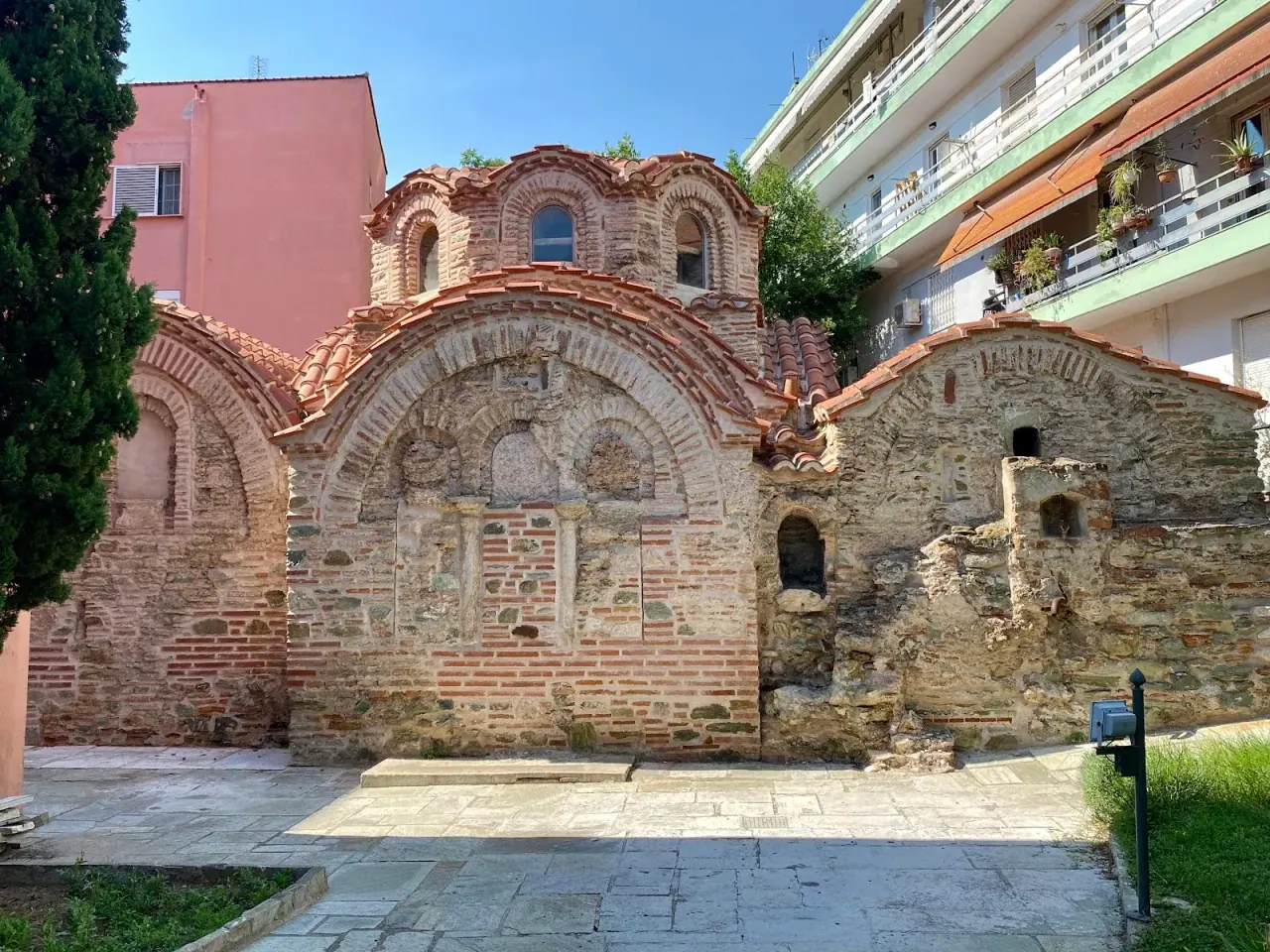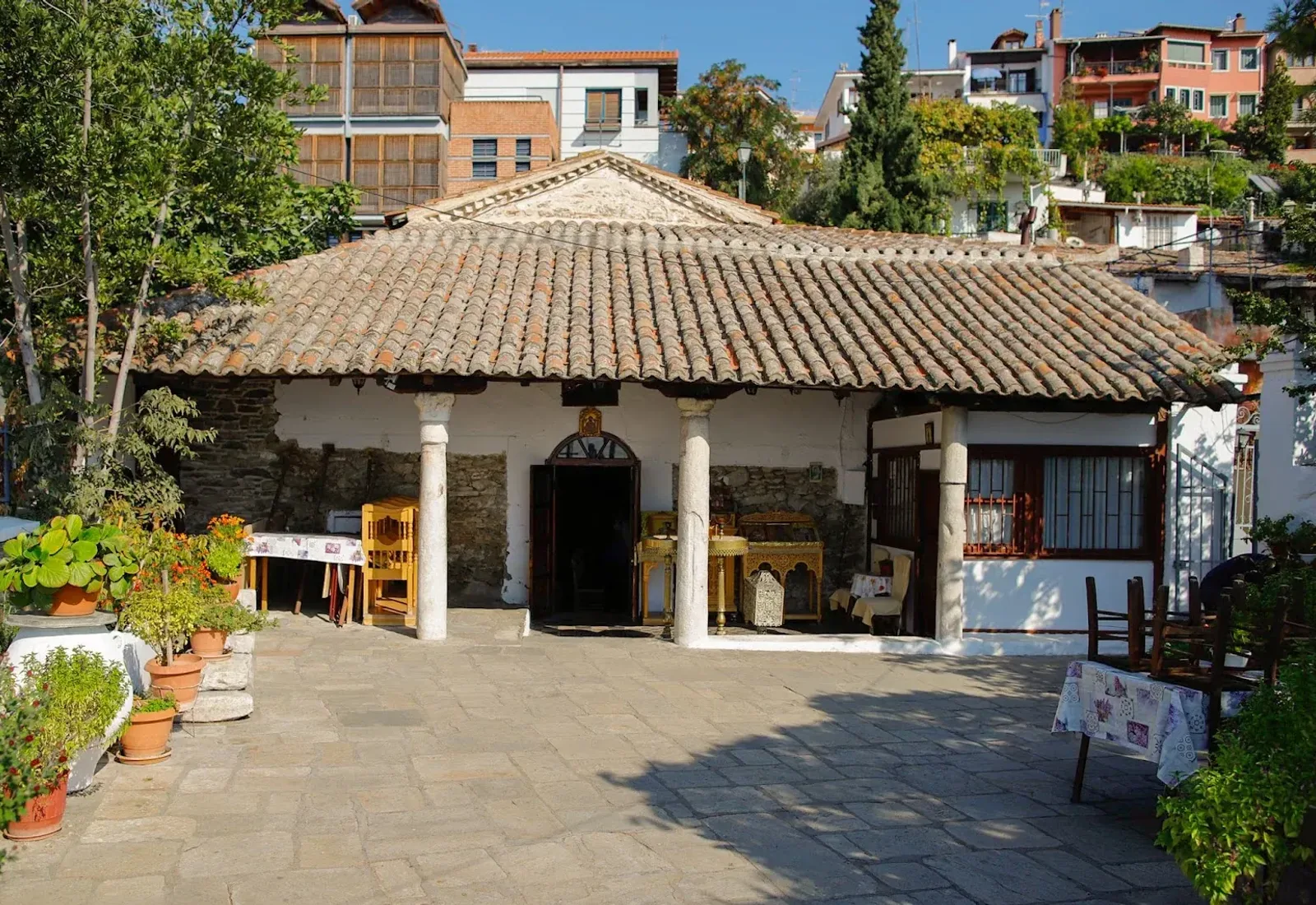
Most visitors to Ano Poli walk straight past it: a tiny, tile-roofed chapel tucked into a courtyard in the upper-town lanes. But Osios David — the church of the Latomou Monastery — hides one of the most important early-Christian mosaics in the world, and it's one of Thessaloniki's fifteen UNESCO-listed Byzantine monuments. Here's what it is and why it's worth the climb.
What it is
Osios David (also spelt Hosios David; Greek Όσιος Δαβίδ, Μονή Λατόμου) is the surviving katholikon — the main church — of the late-5th-century Latomou Monastery. The name Latomou comes from the latomeío, the stone quarry that once worked this slope of the upper town. It's small and unassuming from the outside, a modest building in a garden courtyard, which is exactly why so many people miss it. Inside, though, it holds a masterpiece.
The mosaic — and how it survived
The apse is filled by a shimmering mosaic of the Vision of the Prophet Ezekiel, dated to the last quarter of the 5th century. At its centre a youthful, beardless Christ sits on the arc of a rainbow inside an almond of light (a mandorla), one hand raised, the other holding a scroll — a rare early image of Christ before Byzantine art settled on the familiar bearded type. The glory is ringed by the four living creatures — an angel, an eagle, a lion and a calf, the symbols of the evangelists Matthew, John, Mark and Luke — while two prophets flank the scene: Ezekiel at the left, recoiling in awe, and Habakkuk seated at the right, deep in thought. Below, the rivers of paradise flow with fish and a classical personification of the river. It is one of the earliest and finest works of its kind anywhere.
Its survival is a story in itself — and it comes wrapped in legend. According to a 9th-century account by the monk Ignatius, the building began as a bathhouse built by Theodora, the daughter of the Christian-persecuting emperor Maximian. Secretly a Christian herself, she had the mosaic made and then hidden — covered, the tale says, with an ox-hide and mortar — so her father would never discover her faith; the medieval "Miracle of Latomos" held that it stayed concealed until it was miraculously revealed. History echoes the legend: when the church was converted into a mosque (probably in the 16th century) under Ottoman rule, the mosaic was again hidden under plaster, which quietly protected it for centuries until it was rediscovered and the church reconsecrated in 1921.
That double concealment is why it matters so much. Most Christian images from this era were destroyed during the Iconoclasm of the 8th–9th centuries, when religious pictures were banned and smashed across the Byzantine world — so an untouched, plaster-sealed 5th-century mosaic is a genuine rarity, a survivor from before that great erasure. Alongside it, faded 12th–14th-century Byzantine wall frescoes survive inside too; the finest is a 12th-century "Bathing of the Christ Child", a tender Nativity scene showing the midwife Salome washing the newborn.
Visiting
Osios David sits in the lanes of Ano Poli, a climb above the centre but an easy add-on to any walk through the upper town and its walls. Entry is free, but the hours are limited and a little unpredictable: it's mainly a morning visit (it tends to close around lunchtime, so aim for mid-morning), and the days and times vary by season, so it's worth checking before you make the climb rather than after. As with the city's working churches, dress modestly and be discreet, especially during services. It's one of the quiet highlights of free things to do in the city, and pairs naturally with the other Ano Poli sights — the walls, the viewpoints and the Heptapyrgion fortress at the top; see the landmarks page for full details.
Frequently Asked Questions
What is Osios David in Thessaloniki?
Osios David (or Hosios David) is the small surviving church of the late-5th-century Latomou Monastery, in the Ano Poli upper town. It's one of Thessaloniki's fifteen UNESCO-listed Paleochristian and Byzantine Monuments, famous for a rare early-Christian apse mosaic and surviving wall frescoes.
Why is the Osios David mosaic important?
Its apse mosaic — a youthful, beardless Christ in a burst of heavenly light — is one of the earliest and finest images of its kind to survive anywhere. It was hidden under plaster when the church served as a mosque, which preserved it until its rediscovery in 1921.
What does the Osios David mosaic show?
It depicts the Vision of the Prophet Ezekiel: a youthful, beardless Christ seated on a rainbow within a mandorla of light, surrounded by the four evangelist symbols (angel, eagle, lion and calf) and flanked by the prophets Ezekiel and Habakkuk, with the rivers of paradise flowing below. It dates to the last quarter of the 5th century.
Is Osios David free to visit?
Yes. Entry is free. It's a working church in a courtyard in Ano Poli, so dress modestly and be quiet inside, particularly during services. It's an easy, rewarding stop on any walk through the upper town.
What is the legend of the Osios David mosaic?
A 9th-century account tells that the church began as a bathhouse built by Theodora, daughter of the persecuting emperor Maximian. A secret Christian, she had the mosaic made and hidden — covered with an ox-hide and mortar — so her father wouldn't discover her faith; the "Miracle of Latomos" held it was concealed and then miraculously revealed. History rhymes with the tale: it was hidden again under plaster when the church became a mosque, which preserved it until 1921.
Why did the mosaic survive when so many didn't?
Because it was hidden. Most Christian images from the 5th century were destroyed during the Iconoclasm of the 8th–9th centuries, when religious pictures were banned and smashed. The Osios David mosaic, sealed away behind plaster, escaped both that purge and the later mosque conversion — which is why an intact work of this age is so rare and precious.