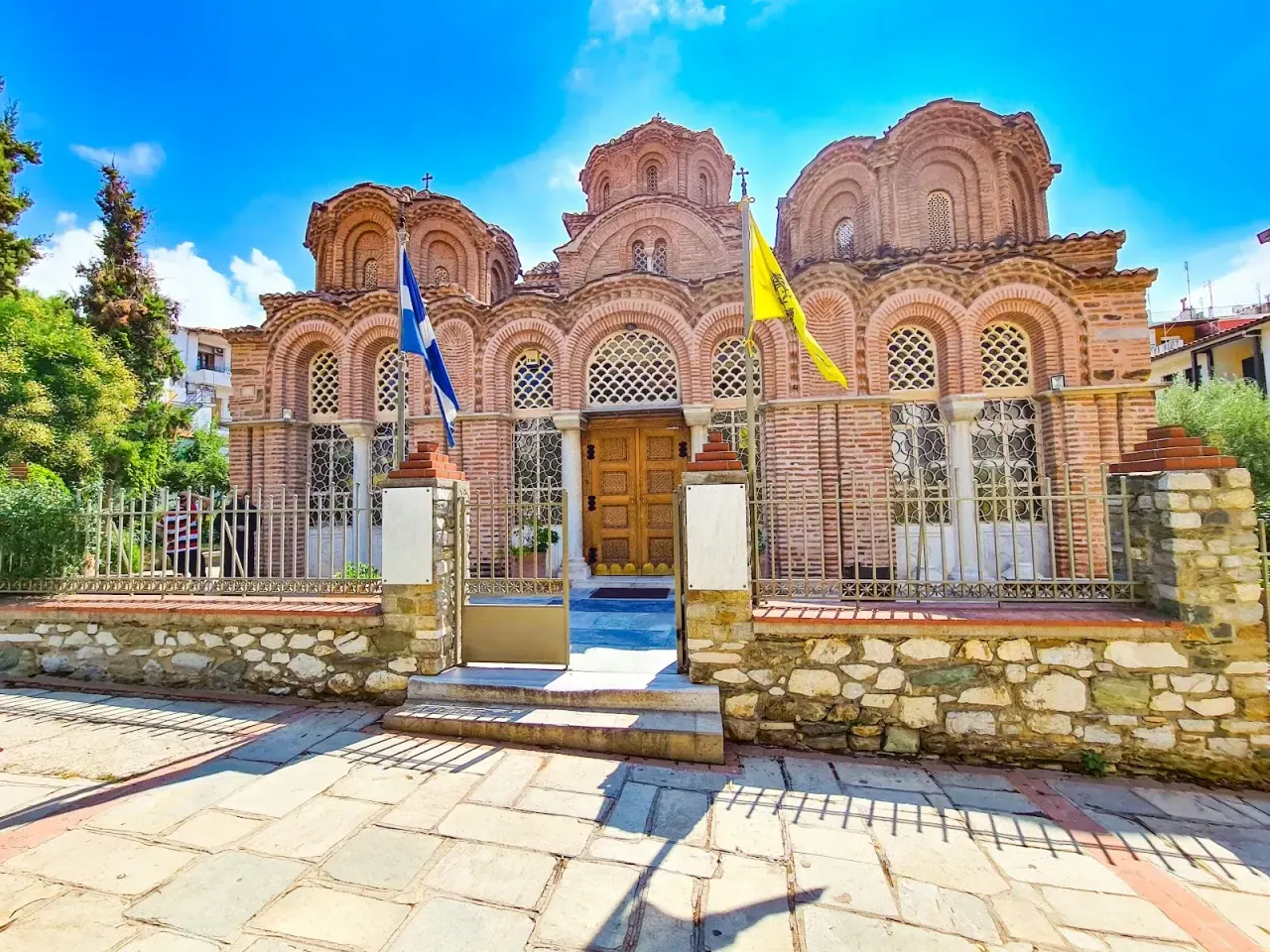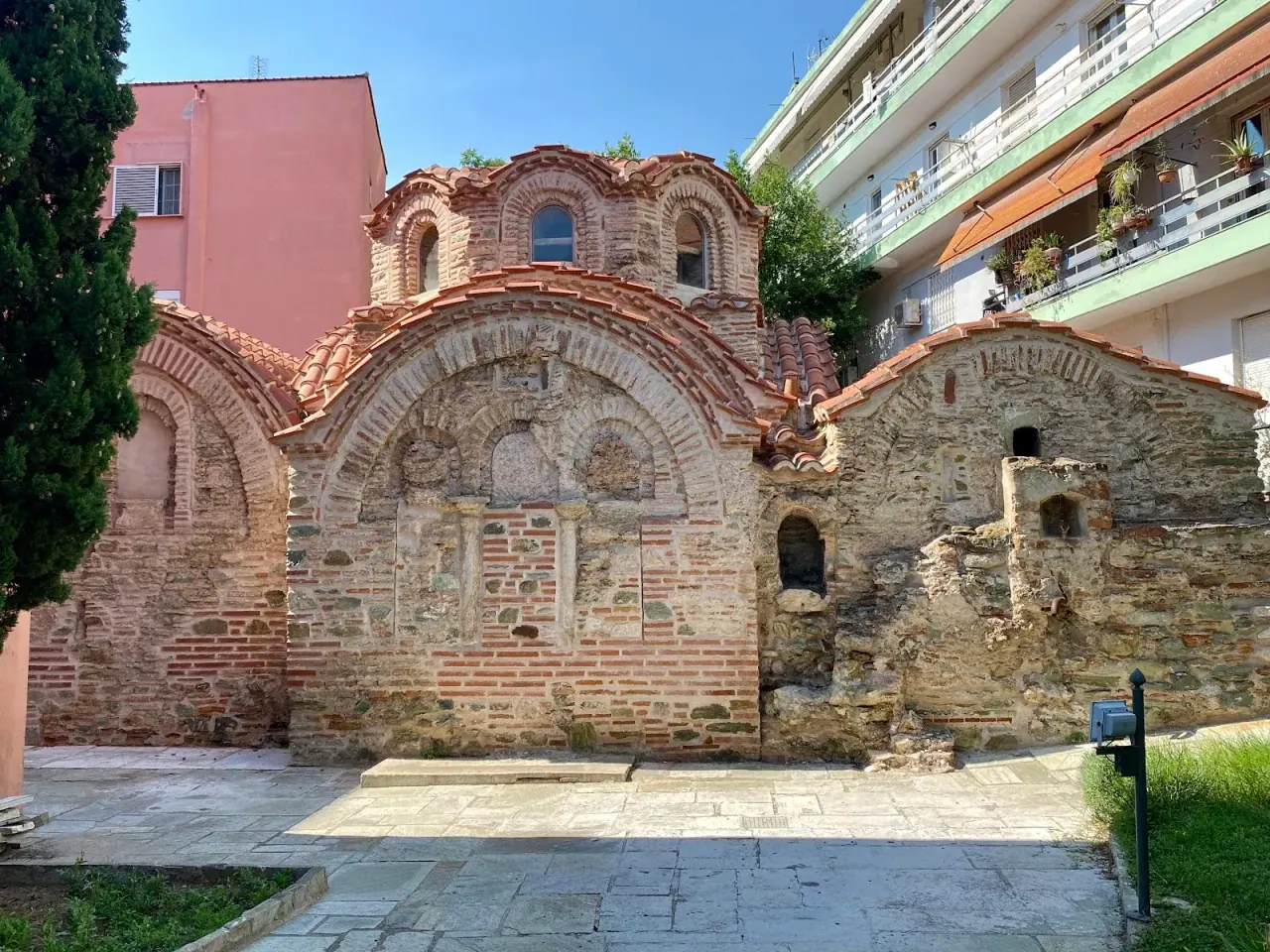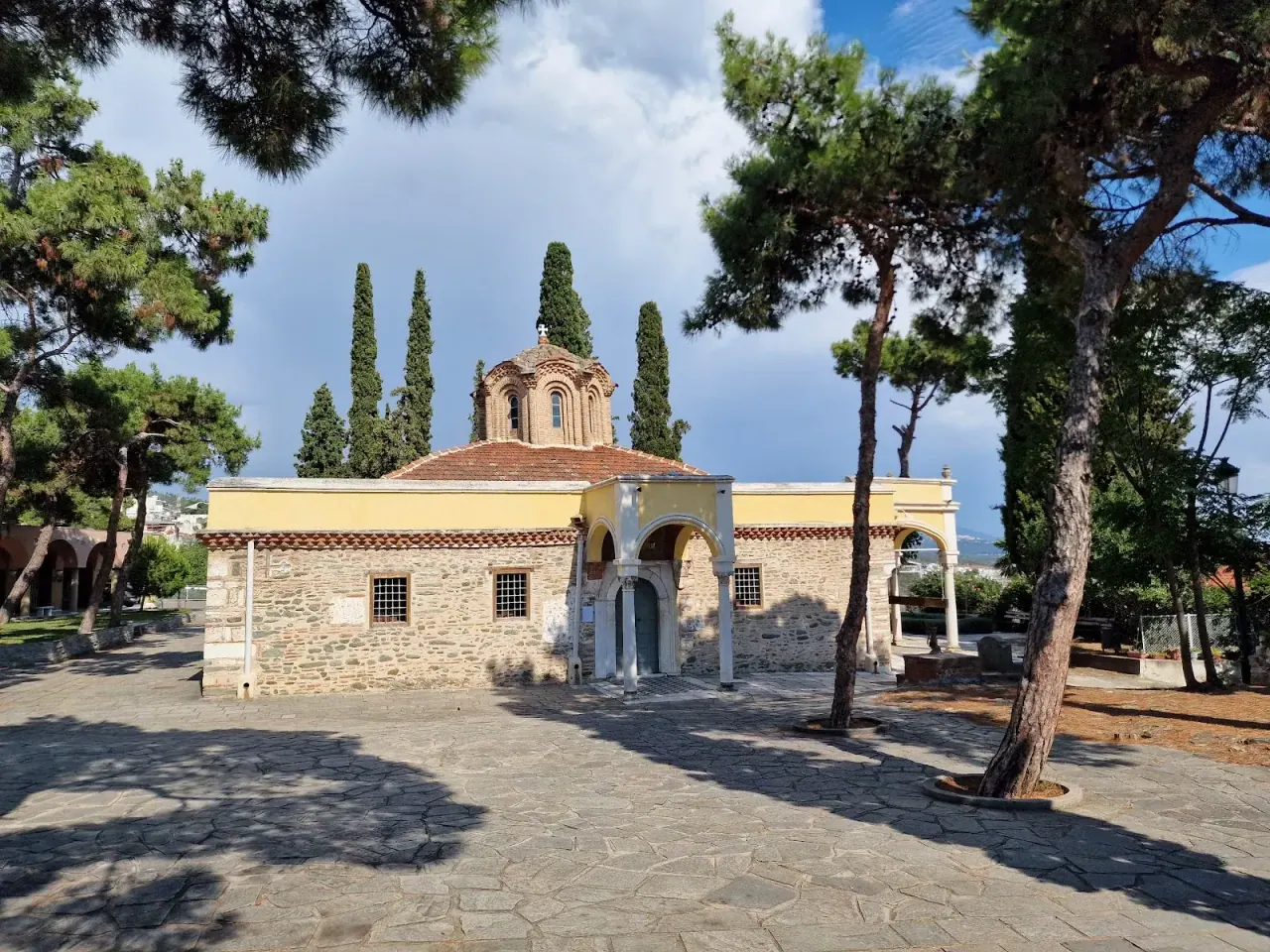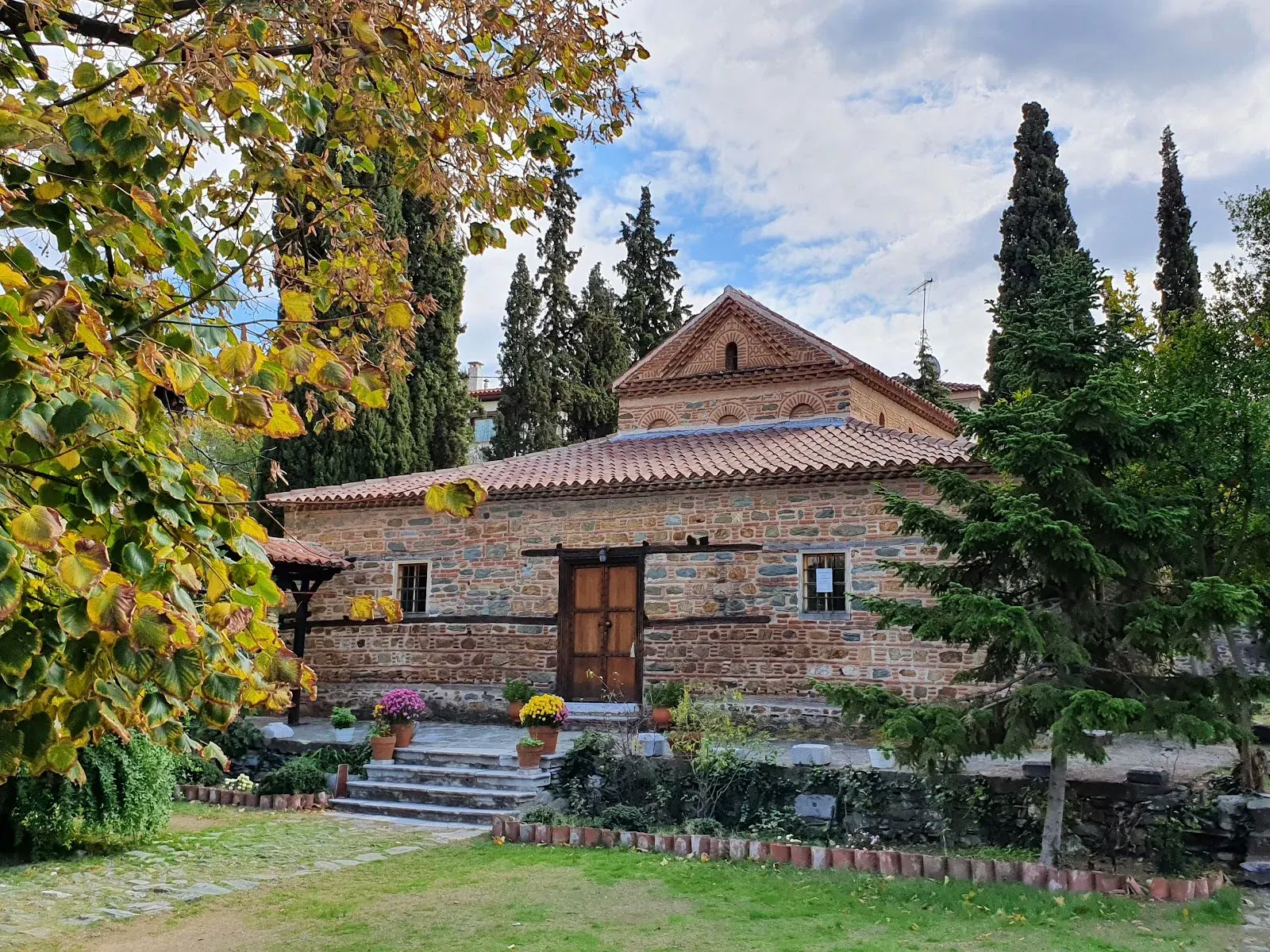
From the outside it's easy to walk past: a small, plain stone church in a quiet garden in Ano Poli. Step inside, though, and Agios Nikolaos Orfanos turns out to hold the best-preserved Byzantine frescoes in Thessaloniki — a complete early-14th-century painted interior that survived where almost everything else was lost. If you see one set of Byzantine wall paintings in the city, make it this. Here's what it is and how to visit.
What it is
Agios Nikolaos Orfanos (Saint Nicholas the Orphan) is a modest single-aisle church built in the early 14th century, in the last brilliant flowering of Byzantine art known as the Palaiologan Renaissance. It sits inside the old walls of the upper town and is one of the fifteen Paleochristian and Byzantine monuments of Thessaloniki on the UNESCO World Heritage list. The unassuming stone shell is the whole surprise: nothing outside prepares you for what covers the walls within.
The frescoes — the reason to come
The interior is painted almost wall to wall with a complete fresco cycle dated to about 1310–1320 — one of the most important early-14th-century painted ensembles anywhere in Thessaloniki, Macedonia and the wider Byzantine-Serbian world. Because the church kept its paintings intact through the Ottoman centuries, they survive exceptionally well: brilliant colour, fine detail, and a full programme of scenes from the life of Christ, the Virgin and Saint Nicholas. The quality is first-rate — the artist may also have worked on the great Hilandar Monastery on Mount Athos around 1314 — which makes this the single best place in the city to understand what late-Byzantine painting actually looked like.
The name, and a Serbian king
The epithet Orfanos — "the Orphan" — is a small mystery: it may recall the church's unknown founder, or Saint Nicholas in his role as the protector of orphans, or an orphanage that once stood nearby. The church is also linked to the Serbian king Milutin (Stephen Uroš II), a great patron who endowed churches — and orphanages and public kitchens — in Thessaloniki, where he had close ties through his marriage into the Byzantine imperial family. Much later, in the 17th century, it became a dependency of the Vlatadon Monastery up the hill.
How to visit
- Where: in Ano Poli, inside the old walls, about a 15-minute walk uphill from the centre.
- Cost: free — it's a working monument in a garden enclosure.
- Hours: very limited and hard to predict — typically only a few mornings a week, and it can close without notice, so it's worth checking locally or calling ahead before the climb.
- Dress: modestly, as at any church, and photography is often restricted to protect the paintings — look for the signs.
Weave it into a walk through the upper town with our Ano Poli guide; it pairs with the Byzantine city walls, the Vlatadon Monastery and the rest of the city's Byzantine monuments, and for the wider story the Museum of Byzantine Culture explains the art in context. It's one of the great free rewards on any list of free things to do.
Frequently Asked Questions
What is Agios Nikolaos Orfanos?
It's a small early-14th-century Byzantine church in the Ano Poli upper town of Thessaloniki, one of the city's fifteen UNESCO-listed Paleochristian and Byzantine monuments. Plain on the outside, its interior is covered almost wall to wall with exceptionally well-preserved Palaiologan-era frescoes — the finest surviving fresco cycle in the city.
Why is Agios Nikolaos Orfanos famous?
For its frescoes. Painted around 1310–1320 and preserved intact through the Ottoman period, they form one of the most important early-14th-century painted interiors in Thessaloniki and the wider Byzantine world, with brilliant, finely detailed scenes from the lives of Christ, the Virgin and Saint Nicholas. It's the best place in the city to see late-Byzantine painting.
Is Agios Nikolaos Orfanos free, and when is it open?
Entry is free. Opening hours are very limited and unpredictable — often only a few mornings a week — and it can close without notice, so check locally or call ahead before making the uphill walk. Dress modestly, and note that photography inside is often restricted to protect the fragile wall paintings.
Why is it called "Orphanos"?
The epithet means "the Orphan," and its origin is uncertain: it may refer to the church's unknown founder, to Saint Nicholas as the traditional protector of orphaned children, or to an orphanage that once stood nearby. The church has also been linked to the Serbian king Milutin, a noted patron of churches and charities in the city.