Ιστορία
Πώς δημιουργήθηκε
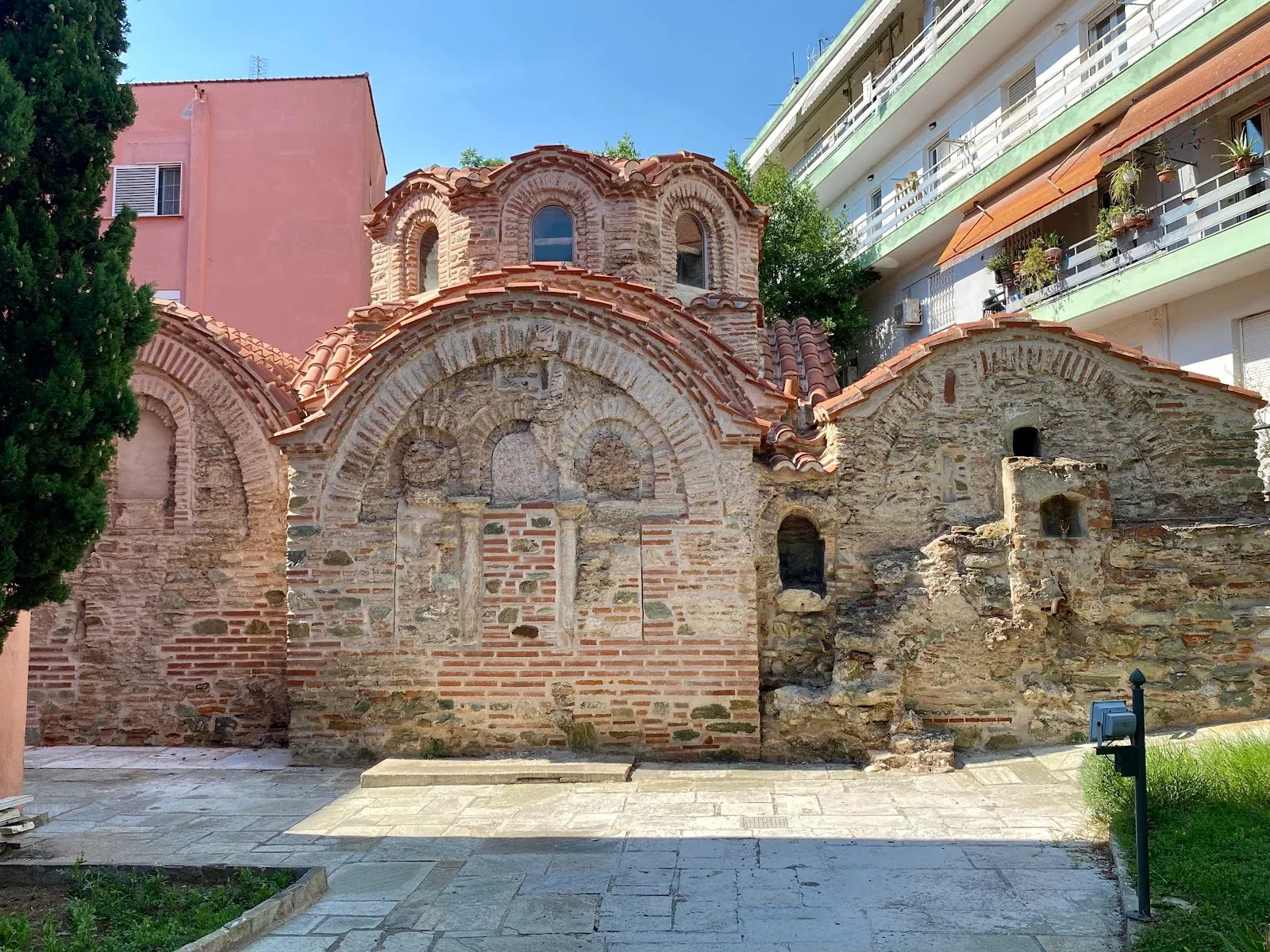
Built around 1300, in the late Byzantine period, it is the only surviving Byzantine bath in Thessaloniki, and the largest and most complete of the few that survive anywhere in Greece — the others are ruins. It kept working right through the Ottoman centuries as a hammam — used by men and women on alternating days — and stayed open until 1940. Restored in recent decades, it is now a monument open to visitors, and one of the fifteen Paleochristian and Byzantine Monuments of Thessaloniki on the UNESCO World Heritage list.
Τι Θα Δείτε
Σε μια επίσκεψη
The compact brick exterior with its domed and vaulted chambers, and inside the sequence of cold, warm and hot rooms — barrel vaults and small domes pierced with star-shaped skylights — that shows how a Byzantine bath actually worked.
Πώς να Επισκεφθείτε
In Ano Poli on Theotokopoulou, near the church of Agios Nikolaos Orfanos; a steep walk up from the centre. Opening hours are limited, so check before climbing.
Καλύτερη Ώρα
Pair it with Agios Nikolaos Orfanos a minute away
Γκαλερί
Πώς να Πάτε
Καλό να Ξέρετε
Because it is the only surviving Byzantine bathhouse in Thessaloniki, and the most complete in all of Greece — a roughly 700-year-old building that worked as a public bath from Byzantine times, through the Ottoman era as a hammam, until 1940. It is small but unique, a UNESCO World Heritage monument, and easy to combine with the frescoed church of Agios Nikolaos Orfanos next door.
It was built around 1300, in the late Byzantine period, and remained in use as a bath for about seven centuries until 1940. It has been on the UNESCO World Heritage list since 1988.
Διαβάστε Περισσότερα