Ιστορία
Πώς δημιουργήθηκε
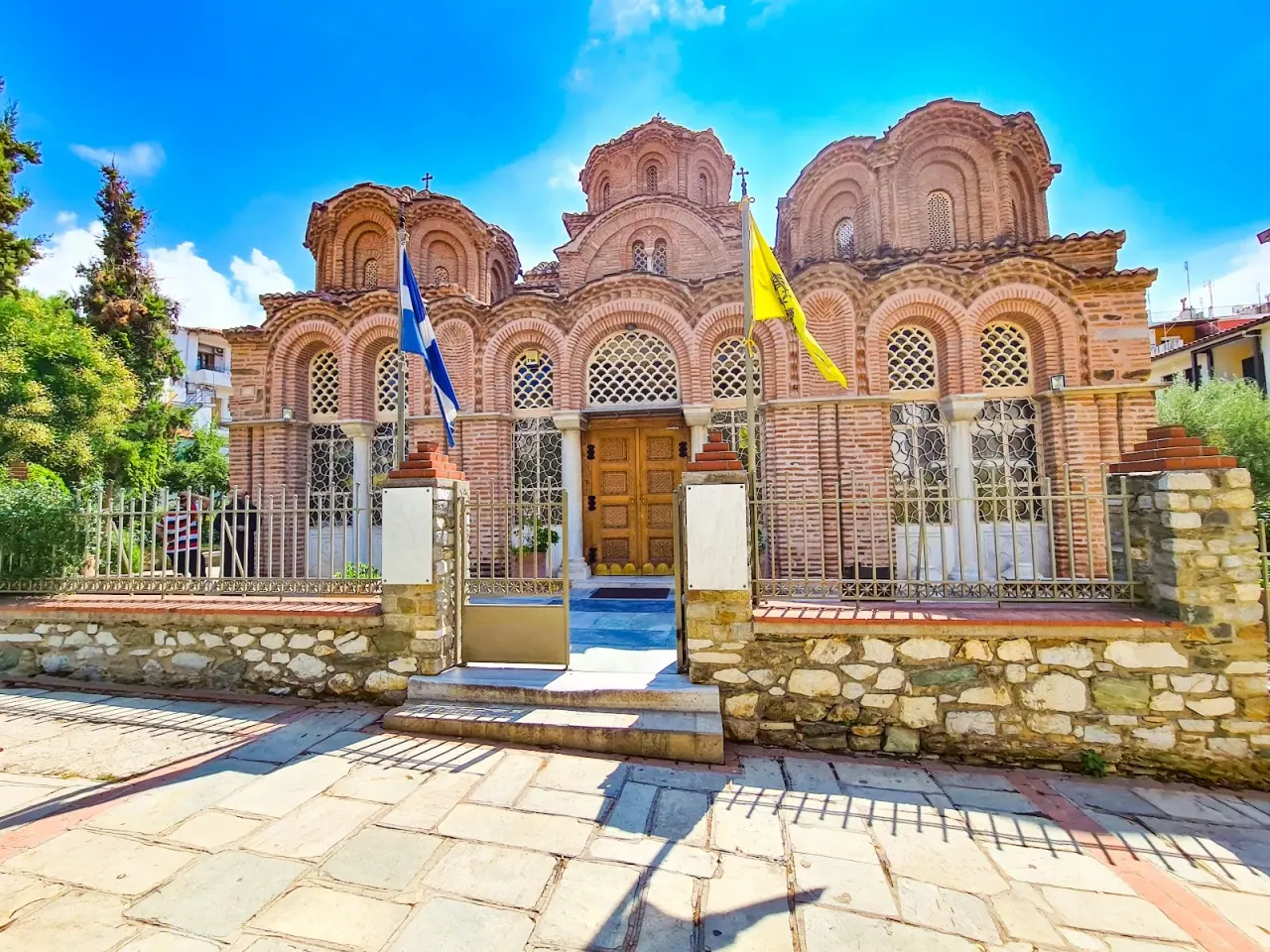
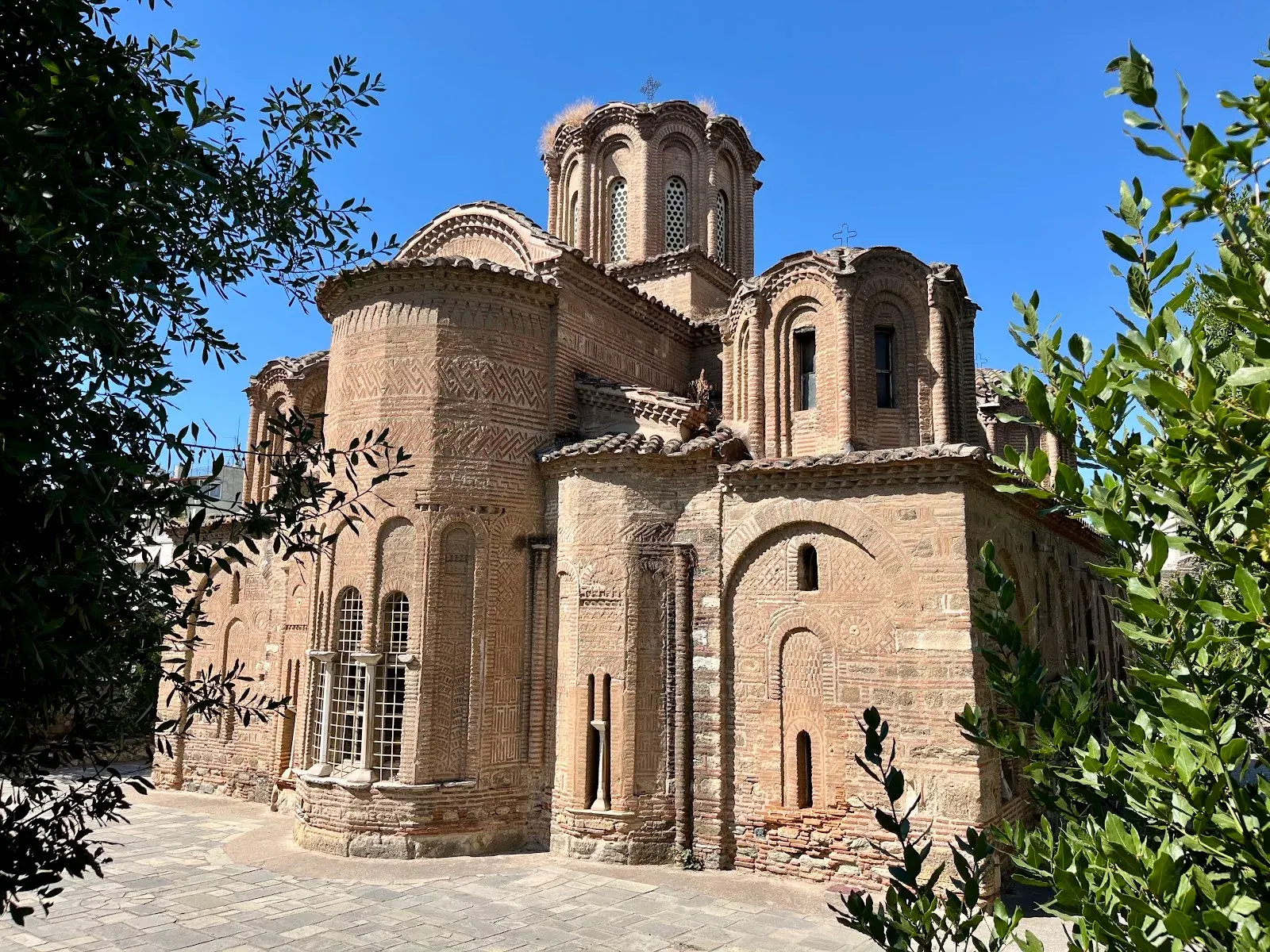
Built around 1310–1314 as the katholikon of a monastery, founded by Niphon I, Patriarch of Constantinople, whose monogram is worked into the brickwork. Its five-domed cross-in-square plan wrapped in an ambulatory follows the refined 'Constantinopolitan' fashion of the Palaiologan revival. Under Ottoman rule it became the Soğuk Su (Cold Water) Mosque, when its mosaics were plastered over and later recovered. It is one of the fifteen Paleochristian and Byzantine Monuments of Thessaloniki inscribed on the UNESCO World Heritage list in 1988.
Τι Θα Δείτε
Σε μια επίσκεψη
The extraordinary exterior — apses and domes clad in recessed arches, meanders, dog-tooth and chequer patterns in brick, with the founder's monogram set into the masonry — and, inside, surviving early-14th-century mosaics in the ambulatory vaults and Palaiologan wall paintings, beneath the harmonious five-domed roof carried on ancient columns.
Πώς να Επισκεφθείτε
A flat walk west from Aristotelous Square toward the western city walls; the church sits in a small garden. As a working church its hours can be limited, so mornings are the safest bet.
Καλύτερη Ώρα
Morning, for the light on the brickwork and reliable opening
Γκαλερί
Πώς να Πάτε
Καλό να Ξέρετε
For two things: its breathtaking brick exterior — among the finest decorative masonry of the late Byzantine era — and the early-14th-century mosaics and frescoes preserved inside from the Palaiologan artistic golden age. It is a UNESCO World Heritage monument, yet quiet and easy to reach on the western edge of the old town.
It was built around 1310–1314, in the Palaiologan period, founded by Niphon I, Patriarch of Constantinople. Under Ottoman rule it served as the Soğuk Su Mosque before returning to Christian use, and it has been on the UNESCO World Heritage list since 1988.
Διαβάστε Περισσότερα