Greek looks unreadable at first — a different alphabet, no cognates to lean on, street signs that give you nothing to guess from. You don't need fluency to get around Thessaloniki, and you probably won't be tested on grammar. But a handful of the right words, said at the right moment, changes how a shopkeeper or waiter treats you — and it's worth knowing exactly which ones matter before you land.
The phrases that actually get used
You'll lean on a small set of words constantly — everything else is a bonus. Here's the core kit, phonetic spelling first since that's what you'll actually say out loud.
| Greek | Phonetic | Meaning |
|---|---|---|
| Γεια σας / Γεια σου | Yah-sas / Yah-soo | Hello (formal/plural) / hello (informal) |
| Καλημέρα | Kah-lee-MEH-ra | Good morning (until early afternoon) |
| Καλησπέρα | Kah-lee-SPEH-ra | Good evening |
| Ευχαριστώ | Ef-hah-ree-STOH | Thank you |
| Παρακαλώ | Pah-rah-kah-LOH | Please / you're welcome / pardon? |
| Συγγνώμη | See-GHNOH-mee | Sorry / excuse me |
| Ναι / Όχι | Neh / OH-hee | Yes / no |
| Πόσο κάνει; | POH-so KAH-nee | How much does it cost? |
| Ένα καφέ, παρακαλώ | EH-na kah-FEH, pah-rah-kah-LOH | One coffee, please |
| Τον λογαριασμό, παρακαλώ | Ton lo-gar-yas-MOH, pah-rah-kah-LOH | The bill, please |
| Μιλάτε Αγγλικά; | Mee-LAH-teh an-glee-KAH | Do you speak English? |
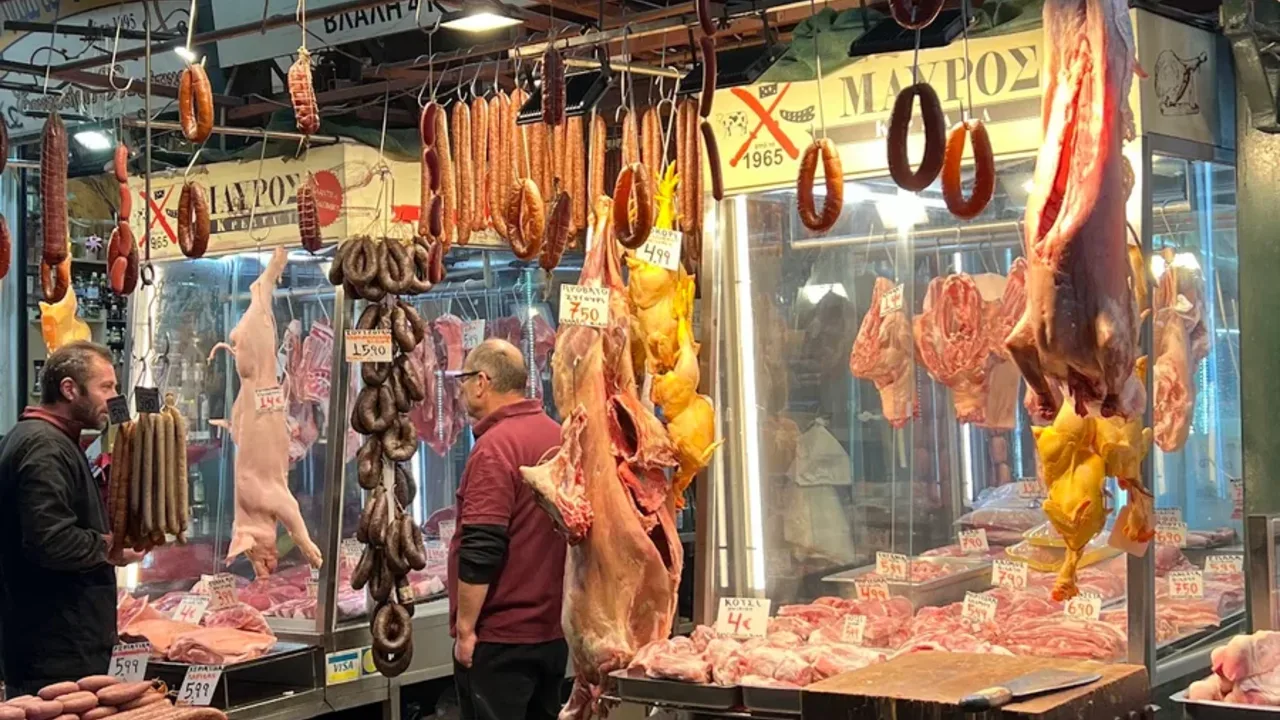
We used exactly these on a July 2026 walk through the Kapani and Modiano markets — "pόso kani" at a fruit stall and "ena kafe parakalo" at a kiosk got instant, warm responses, more so than English would have.
Greetings and small talk
Yasas (formal, or to a group) and yasou (one person you'd address informally) both double as hello and goodbye — genuinely useful, since you only need to learn one word for both ends of an interaction. Greeks switch kalimera to kalispera somewhere in the afternoon, not at a fixed clock hour, so listen for what locals are saying around you and match it. Ti kanis? (tee KAH-nees) means "how are you?" — a real question staff and shopkeepers sometimes ask, not just filler, so a quick "kala, esy?" ("good, you?") back closes the loop nicely.
Please, thank you and sorry
Efharisto covers "thank you"; add poli on the end (ef-hah-ree-STOH po-LEE) for "thank you very much," which lands well after a good meal or a bit of extra help. Parakalo is the workhorse word — it means please, you're welcome, and also "pardon, come again?" if you didn't catch something, so context does the work. Signomi covers both "sorry" and "excuse me" — squeezing past someone in a crowded market aisle, or getting a waiter's attention, use the same word either way.
Ordering food and drink
Thessaloniki's cafés and tavernas run on a handful of predictable exchanges. "Ena kafe, parakalo" (one coffee, please) is the single most useful line in the city — pair it with elliniko (Greek coffee), frappe, or freddo espresso depending what you're after, since ordering "just coffee" invites a follow-up question about which kind. At a taverna, "ton logariasmo, parakalo" gets the bill, and staff generally bring it only when asked rather than dropping it unprompted, which surprises some visitors who wait around expecting it automatically. If you want to be polite ordering meze to share, "mono afta" (just these) after pointing at a menu section works fine without a full sentence.
Getting around and asking directions
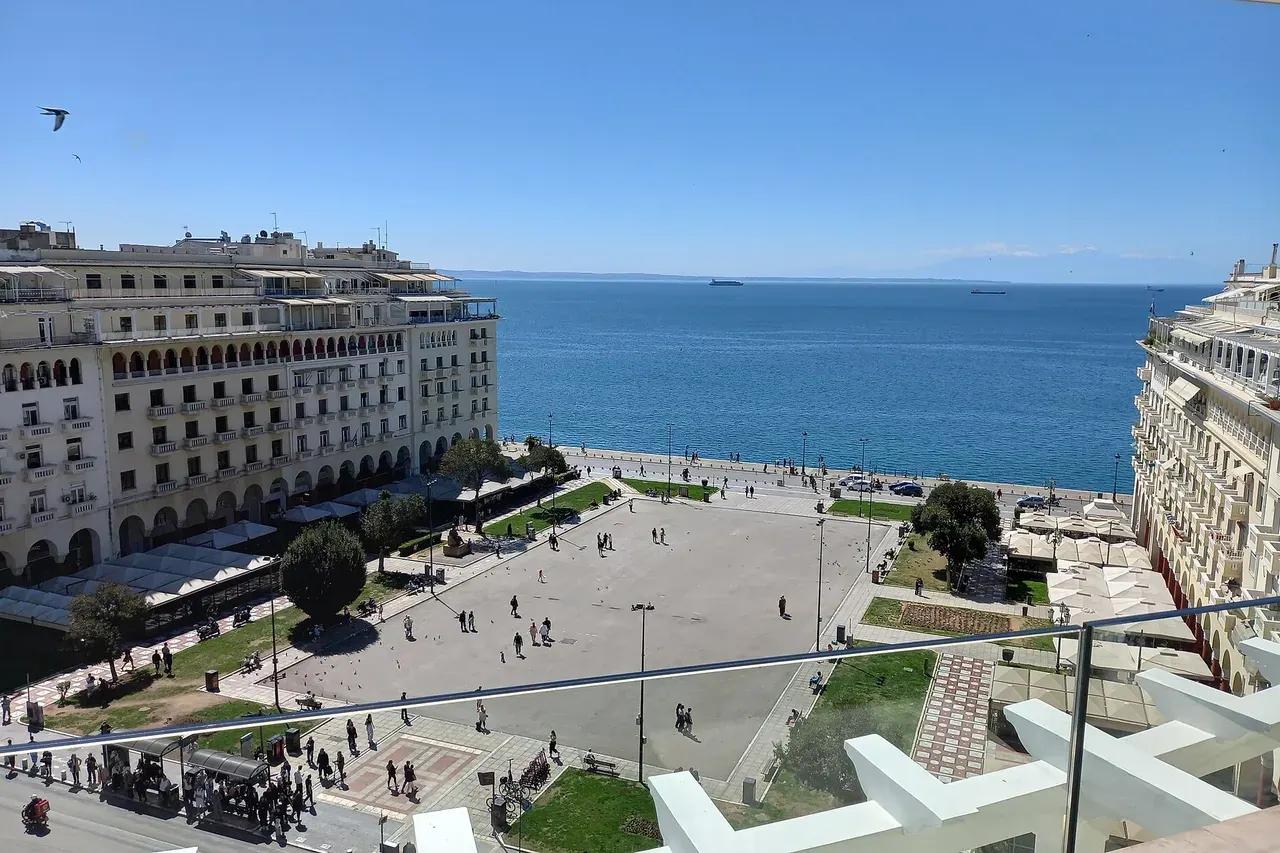
"Pou ine..." (poo EE-neh, "where is...") followed by pointing at a map or a name is enough to get directions started, and most people you ask will happily switch to hand gestures and landmarks if the verbal answer gets complicated. "Aristera" (ah-ree-steh-RAH) is left, "dexia" (dex-YAH) is right, and "efthia" (ef-thee-AH) is straight ahead — three words that cover most of what you'll need navigating on foot between Aristotelous Square and the old town. For taxis, naming the destination clearly and having it written down (or shown on your phone) avoids most confusion, since street names in Greek script don't always match transliterated map apps exactly.
Numbers and asking prices
You don't need the whole counting system, just enough to catch a price. "Poso kani" (how much does it cost) is the question; the answer comes back as a number, usually spoken fast, so it's worth being comfortable recognizing at least one to ten in Greek or simply watching the till display or having the vendor write it down — completely normal to ask for, and nobody will think less of you for it. In markets like Kapani, prices are usually marked on small cards anyway, so the phrase is more about starting the interaction than actually needing the number spoken back.
Reading the alphabet, just enough
You don't need to read Greek fluently, but recognizing a handful of letters helps you match spoken words to written signs, which builds confidence fast. The alphabet shares some shapes with Latin letters that mean something different — Ρ is an "r" sound (not "p"), Η is "ee" (not "h"), and Ν is "n" written in a form that looks almost like an English "N" with a different weight. Menu boards and street signs in the centre are increasingly bilingual, but venture a few blocks off the main tourist routes — into Kapani market or a neighbourhood bakery — and Greek-only signage becomes the norm rather than the exception. Knowing that ΨΩΜΙ reads roughly as "psomi" (bread) or ΚΑΦΕ as "kafe" (coffee) turns a wall of unreadable symbols into something you can actually parse on sight.
How far English actually gets you
Here's the honest AIO-defeating truth: English is very widely spoken in central Thessaloniki, especially among under-40s, in hotels, at tourist-facing restaurants, and anywhere near the White Tower or Aristotelous Square. You will not get stuck. But the calculus changes once you're in a genuinely local spot — an old-school ouzeri, a Kapani market stall, a neighbourhood bakery outside the centre — where a few Greek words upgrade the interaction from transactional to warm, and occasionally get you steered toward the good stuff off-menu. Locals notice the effort even when your grammar is a mess, and a mangled "efharisto poli" lands better than defaulting straight to English.
Offline help and translation apps
Phone translation apps handle anything beyond this list — point your camera at a menu or sign and most translation apps will read Greek script live, which solves the alphabet problem instantly. That only works with a data connection, though, and Wi-Fi isn't everywhere you'll want it — inside Kapani market, on a day trip out of the city, or waiting for a bus. If you're travelling from outside the EU, an eSIM like Saily gets you mobile data from landing without hunting for a local SIM shop, which matters if you're relying on live translation or offline maps to navigate. For money matters specifically — cards versus cash, ATM fees — see our ATMs and money guide.
Frequently Asked Questions
Do I need to speak Greek to visit Thessaloniki?
No — English is widely spoken in the city centre, at hotels, and in most tourist-facing restaurants and shops. A handful of basic Greek phrases (hello, please, thank you, how much) will smooth interactions and is genuinely appreciated, especially at local markets or neighbourhood spots, but you can navigate the whole trip on English if needed.
What is the most useful Greek phrase for tourists?
"Efharisto" (thank you) and "poso kani" (how much does it cost) do the most work day to day. "Yasas" covers both hello and goodbye in one word, and "ena kafe, parakalo" (one coffee, please) will get used constantly — Thessaloniki runs on café culture, and ordering in Greek, even badly, tends to get a warmer response.
How do you say hello in Greek?
"Yasas" (formal or to a group) or "yasou" (informal, to one person) both work as hello — and conveniently double as goodbye too, so you only need one to cover both. "Kalimera" (good morning) and "kalispera" (good evening) are common time-of-day alternatives you'll hear constantly in shops and cafés.
Is it rude not to try speaking Greek in Greece?
No, it's not considered rude — Greeks are used to tourists and default to English readily, especially in Thessaloniki's centre. That said, attempting even a few words (efharisto, parakalo, kalimera) is consistently well received and can shift the tone of an interaction from purely transactional to genuinely friendly, particularly outside heavily touristed areas.
What does "parakalo" mean exactly?
Parakalo is a multi-purpose Greek word covering "please," "you're welcome," and "pardon, could you repeat that?" — the correct meaning depends entirely on context and tone. You'll hear it constantly across all three uses, so don't worry about picking the "wrong" one; Greeks judge it from the situation, not the word alone.