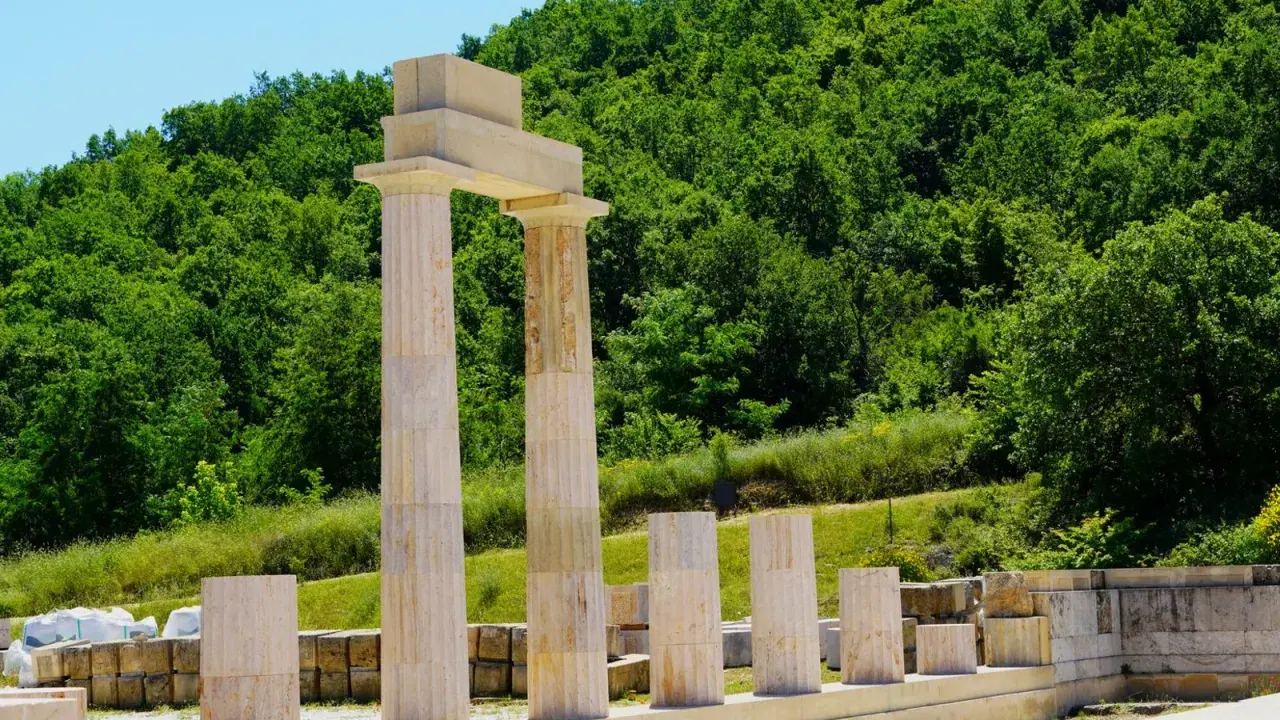
An hour west of Thessaloniki, draped across the foothills of Mount Vermio — the first stop on the same western run that reaches Nymfaio and the Florina highlands — sits a town that means three very different things to three different visitors. To Christians it's biblical Berea, where the Apostle Paul preached and was heard more gladly than anywhere else. To anyone who loves old streets it's "Little Jerusalem," a hillside packed with Byzantine churches and painted mansions. And to history travellers it's the gateway to Vergina, the royal Macedonian tombs just down the road. Most people skip Veria on the way to bigger names — which is exactly why it's worth a stop. Here's how to do it.
The day trip at a glance
Veria is close, layered and pairs perfectly with Vergina — a relaxed half-day on its own or the richer half of a full Macedonian-history day. The essentials:
| Detail | |
|---|---|
| Distance | ≈72 km · ~1 h from Thessaloniki |
| Drive / train / bus | Car ~1 h · train ~1 h · KTEL bus ~1.5 h |
| Best paired with | Vergina — royal tombs, 12 km on |
| Highlights | Bema of St Paul · Barbouta · 48 churches |
| Tour price | Guided Veria + Vergina ≈ €60 |
It's a town for walking, not ticking off sights — give it a slow morning and let the lanes do the work.
Biblical Berea and the Bema of St Paul
Veria — Berea in antiquity — is one of the oldest towns in Macedonia, and for Christian visitors it's hallowed ground. The Apostle Paul came here around 50 AD, and the New Testament records that the Bereans received his message so eagerly that they were "more noble" than the people of Thessalonica (Acts 17:11). It's a quiet compliment that locals have never forgotten.
A marble monument in the centre of town, the Bema (Step) of the Apostle Paul, marks where he is said to have spoken. It's decorated with mosaics — including one of Paul preaching — and it remains a fixed point on the footsteps-of-St-Paul pilgrim route that threads across Greece. You don't need to be religious to feel the weight of standing where one of history's most consequential conversations happened.
Little Jerusalem: 48 churches
That long religious history left a remarkable legacy in stone. The town centre holds 48 Byzantine and post-Byzantine churches, many tucked into courtyards and at the ends of lanes — so many that Veria earned the nickname "Little Jerusalem." Half the fun is stumbling onto them; you'll round a corner and find a tiny domed chapel wedged between houses.
The finest is the Old Metropolis, and the one museum you shouldn't miss is the Byzantine Museum of Veroia, housed in a beautifully restored early-20th-century flour mill (the Markos mill, built 1908–1911). It gathers icons and frescoes rescued from across the region under one roof, and it's the best place to make sense of what all those churches were for. Give it an hour — and note that, like most Greek state museums, it's closed on Tuesdays, so check the current hours before you go. Handily, the Byzantine and Archaeological museums of Veria are covered by the €15 three-day combined ticket that also includes the Vergina royal tombs — though note it's a seasonal ticket, sold roughly April to October only. So if you're visiting in season and pairing Veria with Vergina (and you should), that one ticket covers both.
The Barbouta Jewish quarter
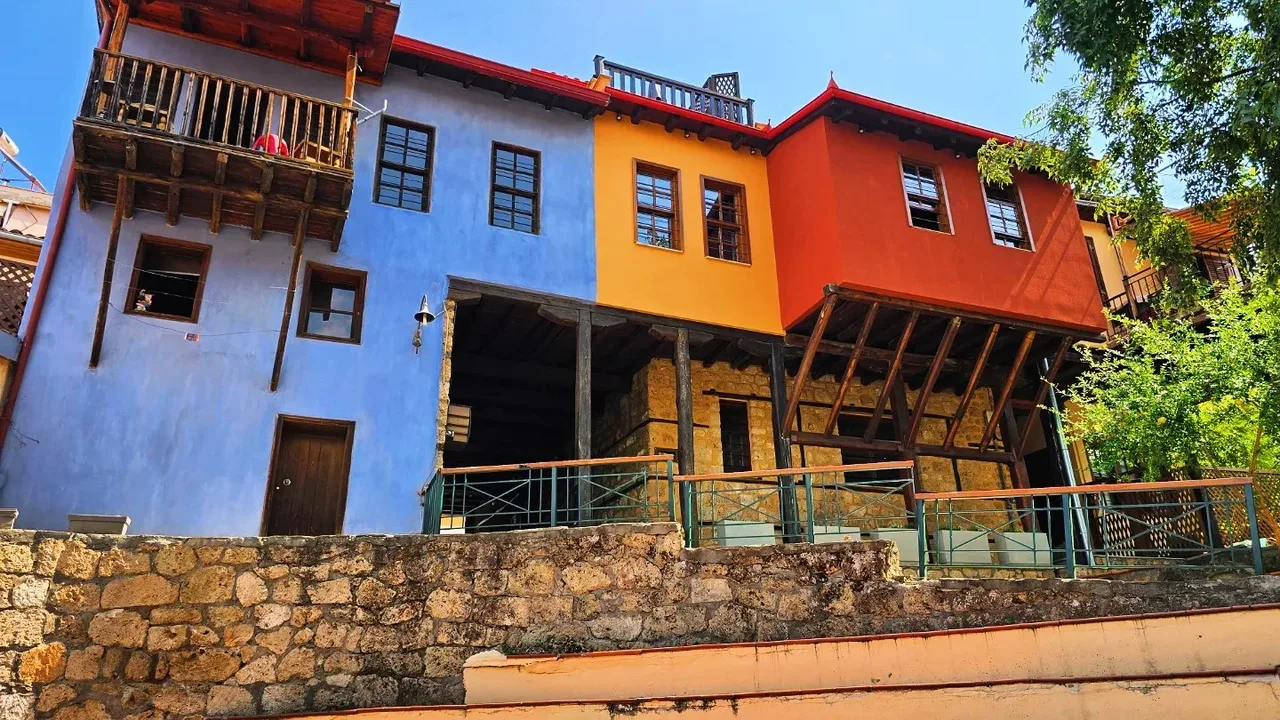
The most evocative corner of town is Barbouta, the restored Jewish quarter, where tall timber-and-stone houses lean over a branch of the Tripotamos river. At its heart stands the synagogue, rebuilt in its present form in 1850 on a far older foundation — the oldest surviving synagogue in northern Greece.
A Jewish community lived in Veria for roughly two thousand years, from Roman times until it was destroyed in the Holocaust in 1943. Today the lanes are quiet and carefully preserved, a memorial as much as a neighbourhood, and they're among the most atmospheric streets in Macedonia. Barbouta connects straight into the equally photogenic Christian old quarter of Kyriotissa, with its painted mansions and cobbled squares — walk one into the other and you've seen the soul of the town. If this side of the region pulls at you, our guide to Jewish heritage in Thessaloniki traces the wider story.
Pairing Veria with Vergina
Here's the move that makes Veria a full day: the royal tombs at Vergina lie just 12 km beyond. The pairing is almost too neat — the town where St Paul preached, then the buried palace and golden burials of Philip II, father of Alexander the Great. Early Christianity and the high water mark of the Macedonian kingdom, in one loop.
If you've got a car and a full day, add Pella — where Alexander was born — for the complete sweep, and read our Vergina day-trip guide before you go. If you'd rather not drive or plan, the Macedonian Treasures: Veria & Vergina tour from Thessaloniki (around €60, rated 4.8) covers both with a guide — an easy way to get the context without juggling logistics. It's listed among our day trips.
How to get there from Thessaloniki
Veria is an easy hour from the city, and you've got real options:
| Option | How | Best for |
|---|---|---|
| Train | Thessaloniki–Florina line, ~3x daily, ~1 h | Car-free, scenic |
| Bus | KTEL, roughly hourly, ~1.5 h | Frequent departures |
| Car | ~72 km · ~1 h via the A2/Egnatia | Pairing with Vergina |
The direct train is the simplest if you're going car-free — about three departures a day, an hour each way. KTEL buses leave roughly hourly and take about 1.5 hours. But if you want to chain Veria with Vergina (and you should), a car is the obvious call. For where Veria ranks against the alternatives, see our day trips from Thessaloniki and the Veria day-trip page.
Frequently Asked Questions
Why is Veria important to Christians?
Veria is the biblical Berea. The Apostle Paul preached here around 50 AD, and the Acts of the Apostles records the Bereans as "more noble" than the people of Thessalonica because they received his message so eagerly (Acts 17:11). A marble monument, the Bema of the Apostle Paul, marks where he spoke — a key stop on the footsteps-of-St-Paul pilgrim route.
What is the Barbouta quarter?
Barbouta is Veria's restored Jewish quarter, a tight cluster of timber-and-stone houses leaning over a branch of the Tripotamos river. At its heart is the synagogue, rebuilt in 1850 on a much older site — the oldest surviving synagogue in northern Greece. A Jewish community lived here for some two thousand years until the Holocaust in 1943; it's now preserved as a memorial.
How do you get to Veria from Thessaloniki?
Veria is about 72 km away, roughly an hour. The easiest car-free option is the direct train on the Thessaloniki–Florina line, which runs about three times a day and takes around an hour. KTEL buses leave roughly hourly and take about 1.5 hours, and by car it's about an hour via the A2/Egnatia motorway.
Can you combine Veria and Vergina in one day?
Yes — it's the classic pairing. Vergina's royal tombs sit just 12 km beyond Veria, so most visitors do both together: the town where St Paul preached and the buried palace of Philip II. With a car you can do it at your own pace, and many guided tours bundle the two into a single full day.
Is Veria worth a day trip from Thessaloniki?
Yes. It's an easy hour from the city and unusually layered — biblical Berea, 48 Byzantine churches, the haunting Barbouta Jewish quarter and painted old streets, all walkable in a morning. Pair it with Vergina's royal tombs just 12 km on and you've got one of the most rewarding history days the region offers.