Thessaloniki doesn't have Athens's reputation for street art, and that's exactly why it's worth an hour of your trip — nobody's herding tour groups down these particular streets, so what you find, you find on your own terms. Over roughly the last decade, murals and graffiti have spread across a handful of districts that already had character to spare: a nightlife quarter, an old town clinging to Byzantine walls, and the fringes of a historic market. Here's how to walk it without a guide.
The three pockets worth walking
Thessaloniki's street art isn't concentrated in one gallery-like strip — it's scattered across districts with otherwise different personalities, which is part of the appeal. We walked all three in a single loop on a July 2026 afternoon and it took about two and a half hours at a slow, photo-stopping pace.
| Area | Character | What to expect | Best time to walk |
|---|---|---|---|
| Valaoritou | Nightlife district, converted warehouses | The densest concentration — murals on club and bar shutters | Morning, before the district wakes up |
| Ano Poli | Byzantine old town, steep lanes | Scattered graffiti and tags on walls and steps, mixed with historic stone | Late afternoon, for the side light |
| Ladadika / port fringes | Former olive-oil market, port warehouses | Occasional large-scale murals, some tied to past art biennials | Midday, en route to the port |
Start in Valaoritou if you want the highest density in the smallest area; start in Ano Poli if you'd rather fold street art into a longer sightseeing walk you're doing anyway.
Valaoritou: the densest cluster
Valaoritou, the cluster of converted 19th- and early-20th-century warehouses turned bars and clubs west of Aristotelous, is where Thessaloniki's street art is thickest on the ground. During the day — before the district switches on for nightlife — you can wander its narrow streets and find murals and graffiti on shutters, side walls and the blank flanks of old commercial buildings, a mix of local and international artists working legally and illegally over roughly the past ten years. The pieces here skew toward bold color, cultural-identity themes and the occasional political statement rather than delicate figurative work. Come by daylight for the art; come back after dark for the bars underneath it.
Ano Poli: graffiti among the Byzantine walls
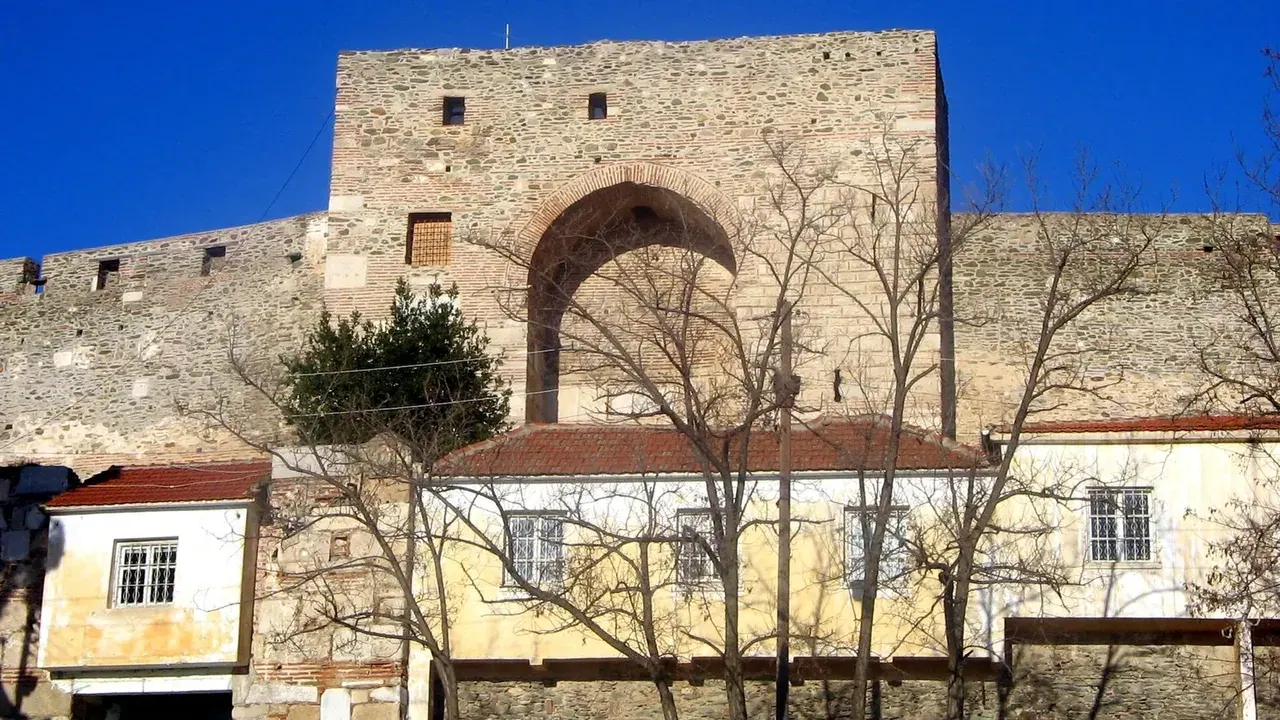
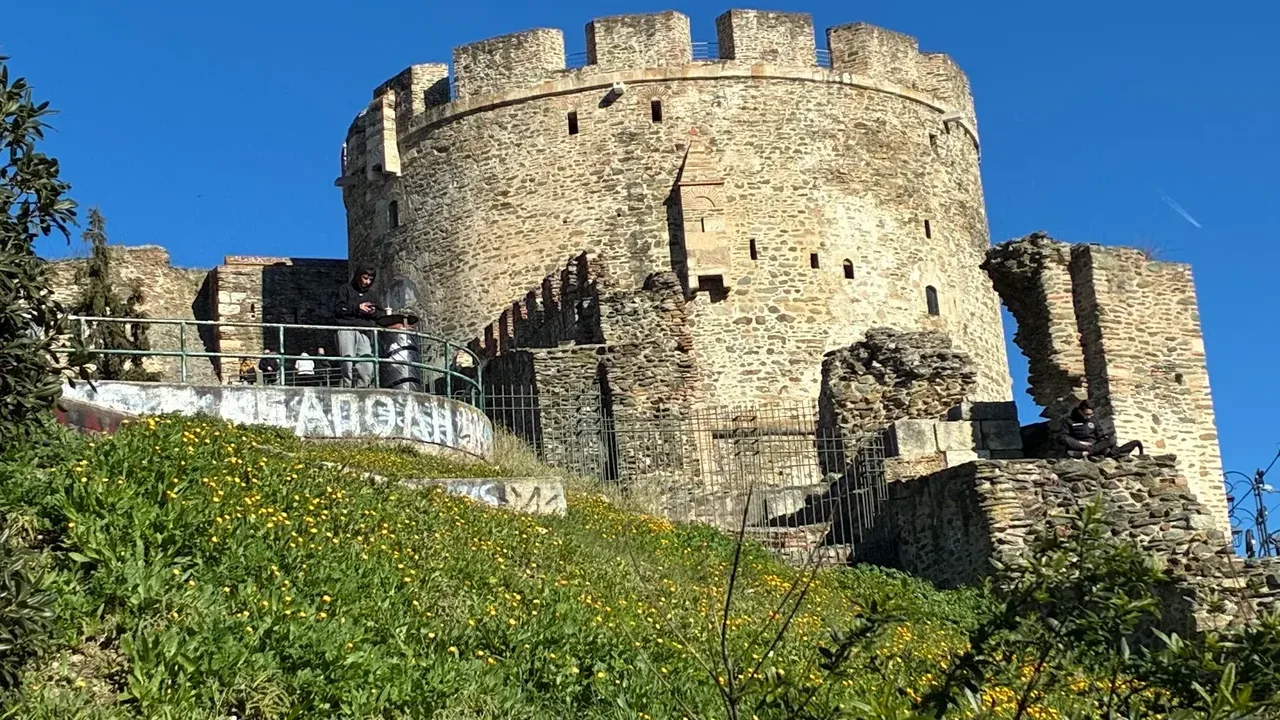
Up in Ano Poli, the upper town's surviving stretches of Byzantine fortification carry their own, more informal layer of urban art — spray-paint tags and smaller pieces on the stone terraces near the walls and towers, including around the base of the ramparts by Trigonion Tower. It's a strange, slightly jarring juxtaposition — fifteenth-century masonry and fresh spray paint sharing the same wall — and not to everyone's taste, but it's honest: this is a lived-in old town, not a museum piece. Fold it into your regular Ano Poli walk rather than making a special trip; the graffiti is incidental to the district's real draw, which is the views and the churches.
Ladadika and the port fringes
Ladadika, the old olive-oil market turned restaurant-and-bar quarter, and the warehouse streets toward the port carry a thinner but occasionally more ambitious layer of street art — full building-side murals rather than tags. Some of the more striking large-scale pieces in this pocket date back to Thessaloniki's 5th Biennale of Young Creators in 2011, which brought in international artists including DAL (China) and Faith47 (South Africa) to paint here; Argyris Saraslanidis (known as SER), one of the pioneers of Greek urban art, has also worked around the city with collaborators. Treat any specific mural as ephemeral — street art gets painted over, weathers, or gets replaced, so a piece documented a few years ago may not still be there when you visit. Walk it as a general atmosphere rather than a checklist.
A scene that's grown fast — and stays fluid
Thessaloniki isn't a traditional street art destination the way Athens, Lisbon or Berlin are, and locals will tell you that plainly. But the scene has genuinely expanded over roughly the past decade, with more local and visiting artists treating blank walls, shutters and utility boxes as canvas than there were ten years ago. It's catalogued, loosely, by sites like Street Art Cities, which tracks pieces across the city for anyone who wants a more exhaustive, map-based approach than a casual wander. The catch with all of this — and it's worth repeating — is that street art is not permanent by nature. Buildings get repainted, shutters get replaced, walls get buffed by property owners who don't want the association, and new pieces appear to cover old ones. Treat anything you read about a "must-see mural," including in this guide, as a snapshot rather than a guarantee.
Photographing the murals
A few practical notes if you're bringing a real camera rather than just a phone. Morning light works best in Valaoritou and Ladadika, where narrow streets mean the sun only clears the rooftops for a few hours around midday — arrive before 11:00 for even lighting on north-facing walls. In Ano Poli, the graffiti near the walls catches good side light in the late afternoon, which pairs naturally with a sunset walk up there afterward. Watch for parked cars, delivery trucks and outdoor café seating blocking the best angles in Valaoritou during the day — early morning, before the district's bars and restaurants set up, gives you the cleanest shots. And be respectful around Ano Poli's residential lanes; some of the best wall art there is genuinely on people's front steps, not in a public gallery.
How to walk it
There's no official signed route, and that's the point — this works better as an unstructured wander than a checklist. A workable loop: start at Valaoritou in the late morning (best light, before the bar scaffolding and crowds arrive), walk east through Ladadika toward the port warehouses, then either finish there or climb up to Ano Poli for the walls and a very different kind of street art altogether. Wear comfortable shoes for the Ano Poli cobbles, and bring a phone with a decent camera — a lot of what you're photographing is at odd angles down narrow side streets, not on the main boulevards. If you'd rather have context and stories attached to what you're looking at, a couple of small local operators run guided street art walks through Valaoritou and beyond; search "street art tour Thessaloniki" closer to your dates, since offerings change.
Best time of year to go
Street art doesn't have a strict season the way beaches or hiking do, but a few practical things shift with the calendar. Summer's long daylight hours give you more flexibility to shoot both the morning Valaoritou light and the afternoon Ano Poli side light in a single day; winter's shorter days mean picking one district and committing to it. Avoid the height of a heatwave for the Ano Poli leg specifically — the climb up through the old town's uphill lanes is genuinely tiring in July and August midday heat, so save that stretch for morning or early evening if you're visiting in peak summer.
One date genuinely worth timing a visit around if street art is your thing: the Street Mode Festival in mid-September (around 12–13 September in 2026) fills the industrial port waterfront with live graffiti and mural-painting alongside its music, breakdance and skate programme — the one point in the calendar when you can watch the city's walls being painted rather than just reading the finished results.
What this isn't
Be clear-eyed about scale: this is not Athens's Exarchia, wall-to-wall and internationally famous, and it's not a curated open-air gallery like you'd find in some European cities. Thessaloniki's street art is real but modest — pockets, not a movement you can build a whole day around. Pair it with something else: a morning of Byzantine monuments in Ano Poli, an afternoon at MOMus for the more formal contemporary-art side of the city, or an evening in Valaoritou's bars once the murals give way to the music. See our neighborhoods guide for how these districts connect, and things to do for the rest of a day around it.
Frequently Asked Questions
Does Thessaloniki have good street art?
It has a modest but genuine scene, concentrated in Valaoritou's warehouse streets, scattered graffiti in Ano Poli near the Byzantine walls, and occasional large murals around Ladadika and the port — some tied to the city's 2011 art biennial. It's smaller and less famous than Athens's street art, but worth an hour or two if you're already exploring those neighborhoods.
Where is the best street art in Thessaloniki?
Valaoritou has the densest concentration — murals and graffiti on club and bar shutters throughout the converted-warehouse nightlife district. For a different, more incidental kind of urban art, walk the Byzantine walls in Ano Poli, where tags and smaller pieces sit alongside centuries-old stone.
Are there guided street art tours in Thessaloniki?
Yes, a small number of local operators run walking tours focused specifically on street art, typically through Valaoritou and nearby districts, mixing murals with the city's more conventional monuments. They're not as established as Athens's street art tour scene, so search closer to your travel dates to confirm current availability.
Is Thessaloniki street art safe to photograph and visit?
Yes — all three areas (Valaoritou, Ano Poli, Ladadika) are safe, well-walked parts of the city during the day. Use normal city sense after dark in Valaoritou, which becomes a busy nightlife district come evening. None of the areas require any special access; everything described here is visible from public streets.