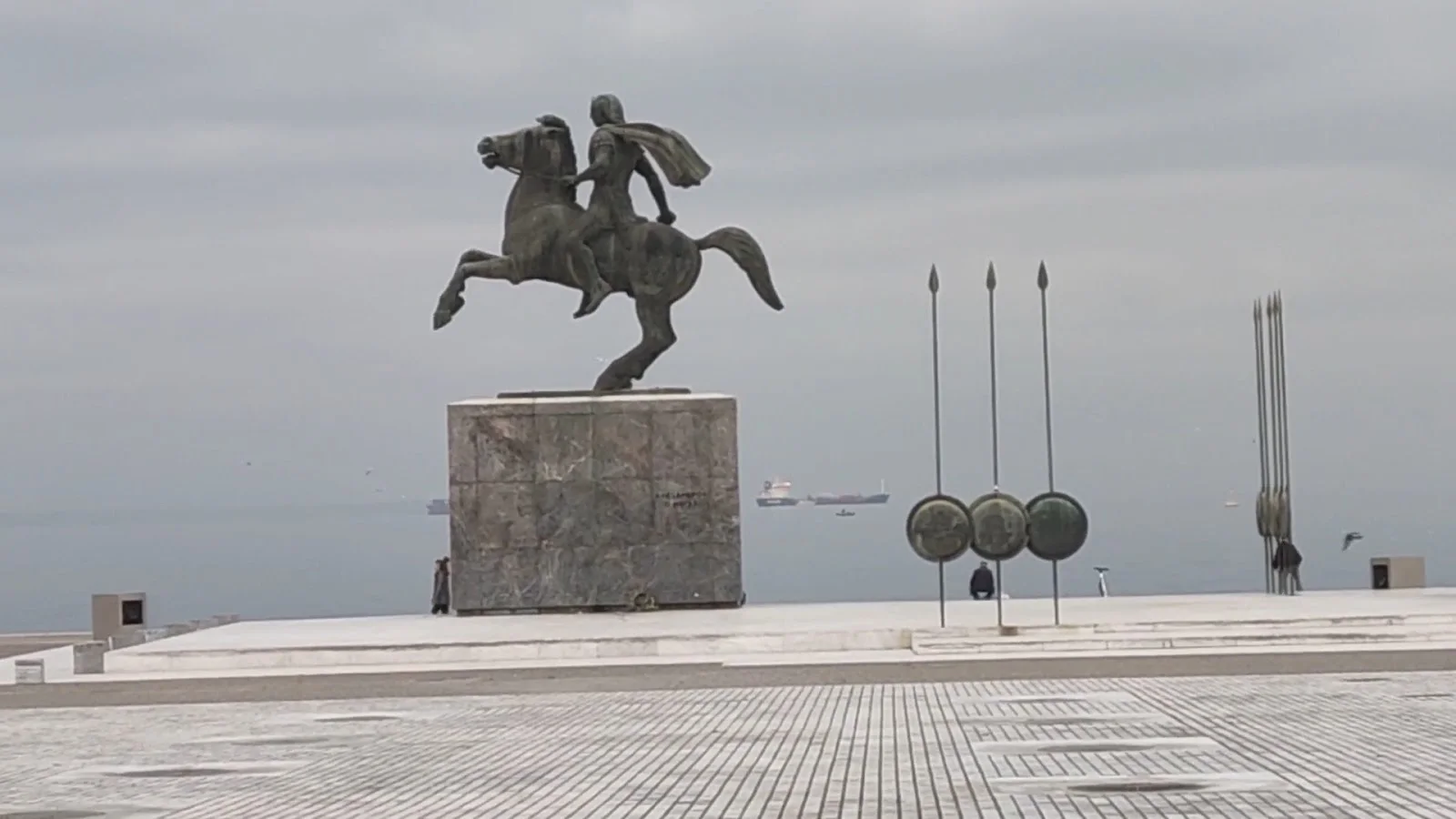
Halfway along Thessaloniki's seafront, a bronze Alexander the Great rears up on his horse against the open gulf — sword drawn, cloak flying, ready to ride into the sea. It's the city's monument to the Macedonian king who conquered the known world, and one of the most striking photo stops on the waterfront walk. Here's what it is and how to see it.
What it is
The statue shows Alexander astride his famous warhorse Bucephalus, mid-stride with sword raised. The bronze figure stands about six metres tall — and 11 metres with its stone pedestal, weighing close to four tonnes — which makes it the tallest equestrian statue in Greece. It was sculpted by Evangelos Moustakas (who worked through nine models before the final version), cast in Italy, and erected on the waterfront in 1973 with funds raised by public donation, then formally inaugurated on 30 August 1974 — Saint Alexander's name day, a date chosen for its symbolism. Beside it stands a row of tall sarissas (the long spears of the Macedonian phalanx) and bronze shields — five of them engraved with a snake, a Gorgon, a lion, an ox and a falcon — evoking the army that carried Alexander's empire from Greece to India. Behind the statue, a low wall carries a relief of the Battle of Issus (333 BC), where Alexander routed the Persian king Darius III.
Why Alexander belongs here
This isn't a random hero on a horse: Thessaloniki sits at the heart of Macedonia, Alexander's homeland. He was born just up the road at Pella, the ancient Macedonian capital, and his father Philip II lies in the great royal tombs at Vergina, an hour west — both easy day trips. The city's very name is a family tie: Thessaloniki was founded in 315 BC and named after Thessalonike, a half-sister of Alexander the Great (see our name origin page). The statue, then, is the modern city saluting the dynasty it grew out of.
The setting
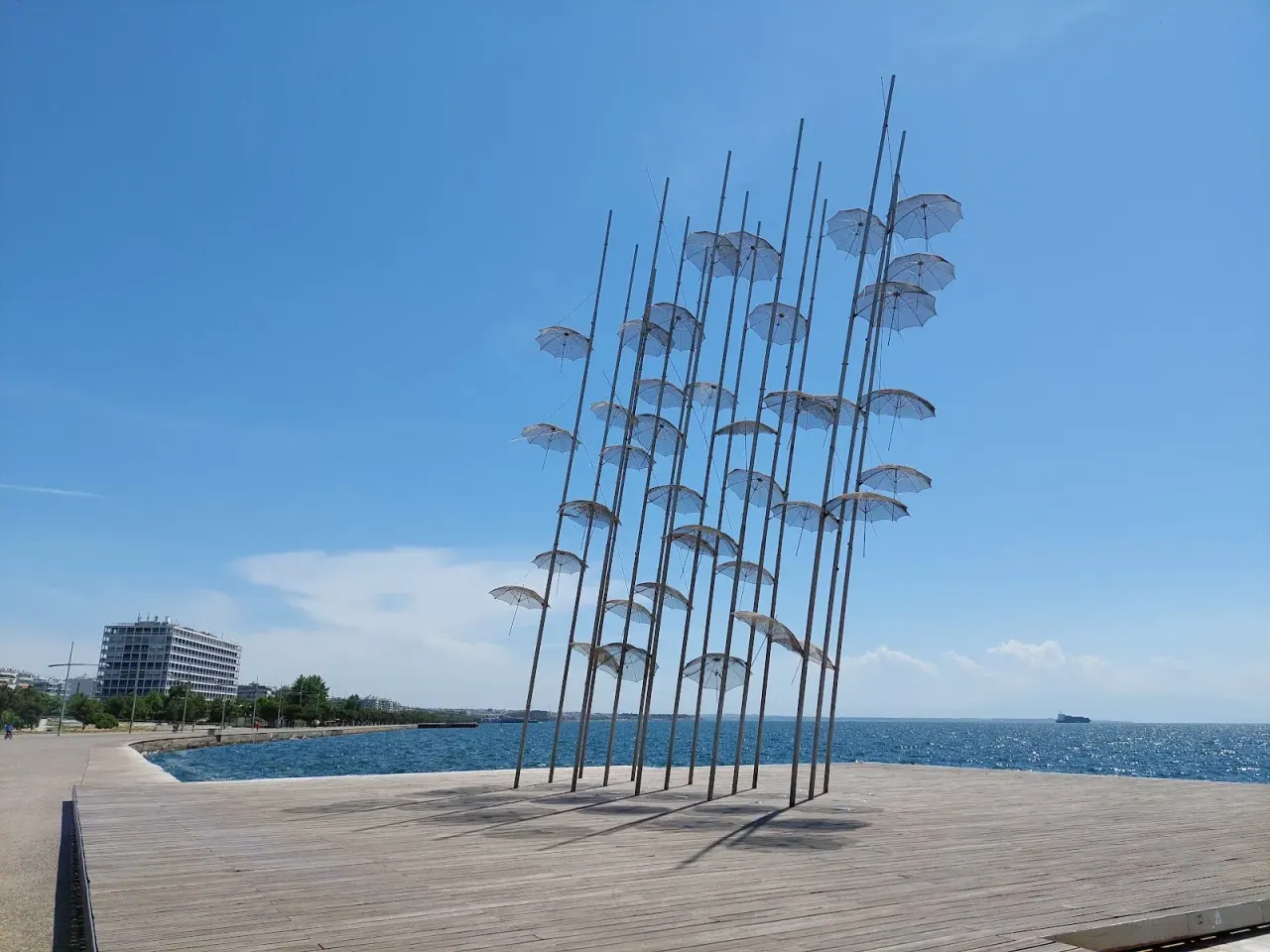
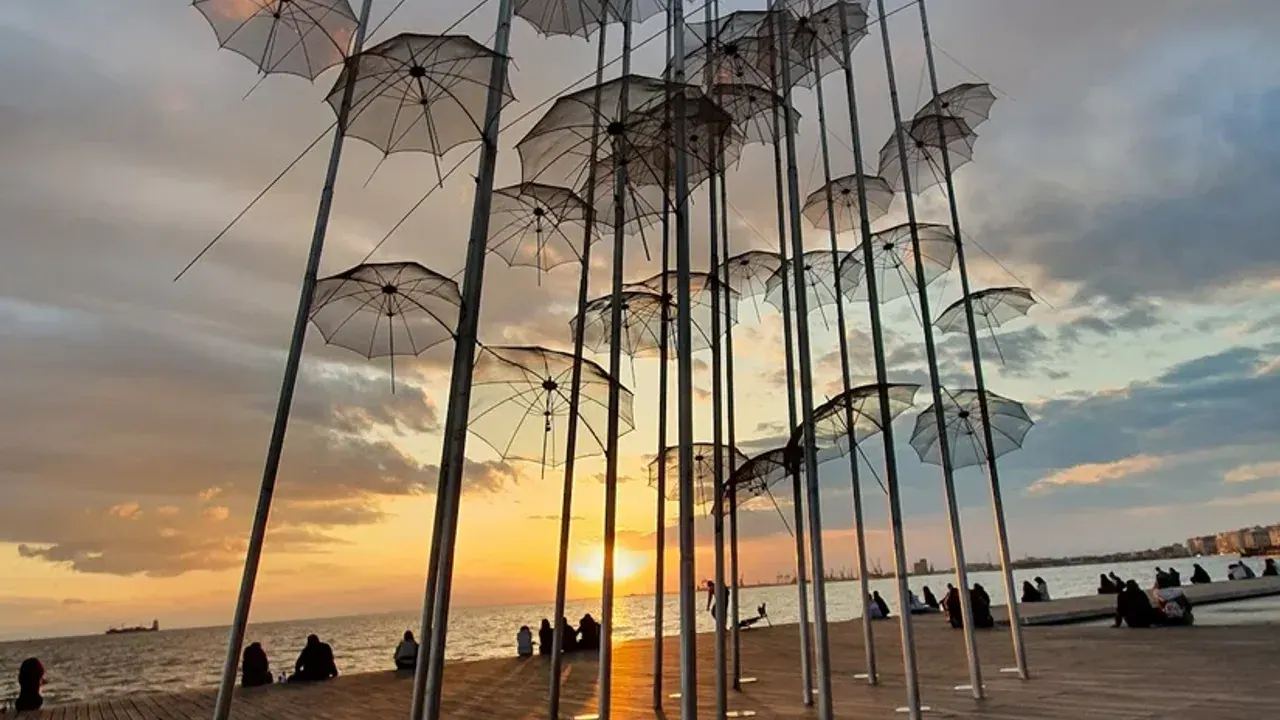
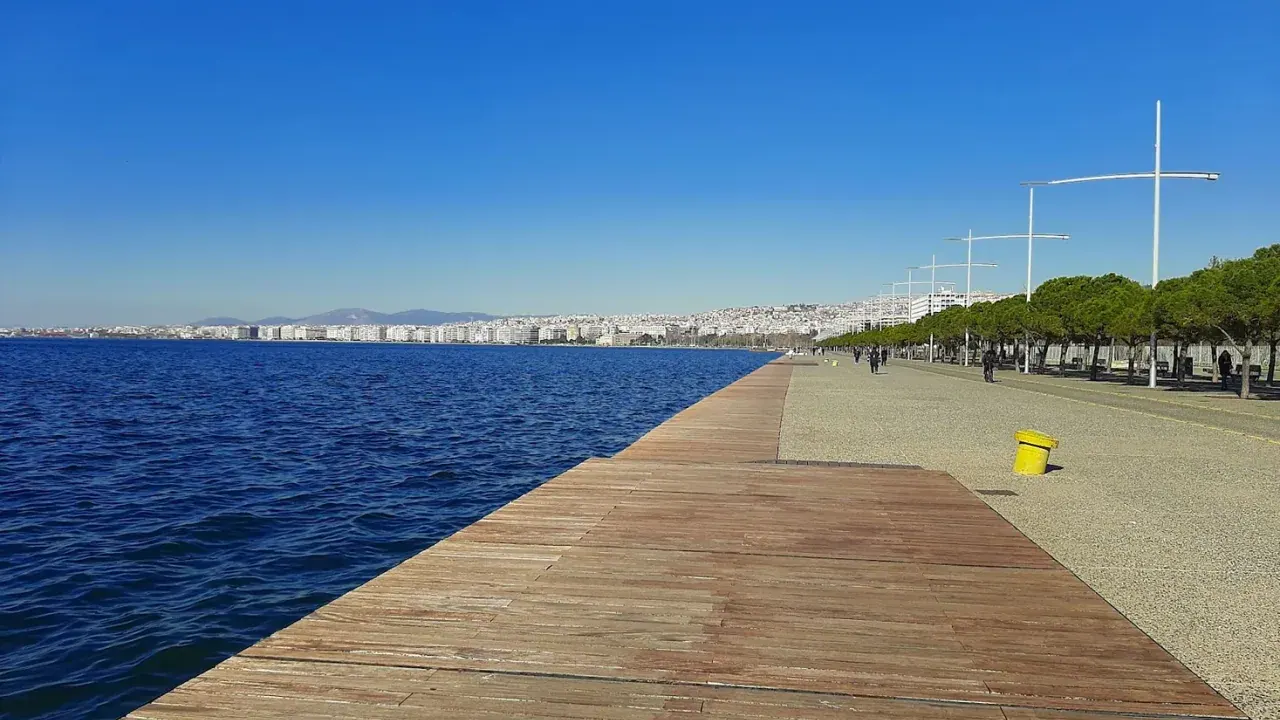
The monument stands on the Nea Paralia, the redesigned seafront promenade, about a 15-minute walk southeast of the White Tower and a short stroll from the Umbrellas sculpture further along. It faces west across the Thermaic Gulf, so like the rest of the promenade it's a fine spot near sunset, when the low light catches the bronze and the gulf turns gold behind horse and rider.
How to visit
- Where: on the Nea Paralia seafront, at the foot of Leoforos Megalou Alexandrou, ~15 minutes' walk southeast of the White Tower — pinpoint it on our statue map page.
- Cost: free — it's an open public monument, accessible at any hour.
- Access: the promenade is flat and step-free, easy on foot or by bike.
- When: any time; golden hour is best for photos.
Fold it into a seafront stroll with our waterfront walk guide, and pair the history with day trips to Pella and Vergina for the full Alexander story. It's a natural stop on any list of things to do and one of the city's best free things to do.
Frequently Asked Questions
What is the Statue of Alexander the Great in Thessaloniki?
It's a monumental bronze of Alexander the Great riding his horse Bucephalus with his sword raised, on the city's seafront promenade. Sculpted by Evangelos Moustakas, it was erected in 1973 and formally inaugurated on 30 August 1974 — Saint Alexander's name day; the roughly six-metre figure — flanked by Macedonian spears and shields — is one of the largest equestrian statues in Greece.
Where is the Alexander the Great statue and how do you get there?
It stands on the Nea Paralia (New Waterfront), at the foot of Leoforos Megalou Alexandrou, about a 15-minute walk southeast of the White Tower along the seafront. The promenade is flat and step-free, and the monument is free and always open.
Why is there a statue of Alexander the Great in Thessaloniki?
Because Thessaloniki lies at the heart of Macedonia, Alexander's homeland. He was born nearby at Pella and his father Philip II is buried at Vergina, and the city itself is named after Thessalonike, a half-sister of Alexander. The statue is the modern city honouring the Macedonian dynasty it sprang from.
How big is the Alexander the Great statue?
The bronze figure is about six metres tall and rises to around 11 metres with its pedestal, weighing close to four tonnes — the tallest equestrian statue in Greece. Cast in Italy by sculptor Evangelos Moustakas and erected in 1973, it's flanked by Macedonian spears and shields, with a relief of the Battle of Issus (333 BC) on the wall behind.
Is the Alexander the Great statue worth seeing?
Yes, as part of a walk along the waterfront — it's a dramatic, much-photographed monument facing the gulf, free to visit, and a short stroll from the White Tower and the Umbrellas sculpture. It pairs naturally with day trips to Pella and Vergina for the wider Alexander story.